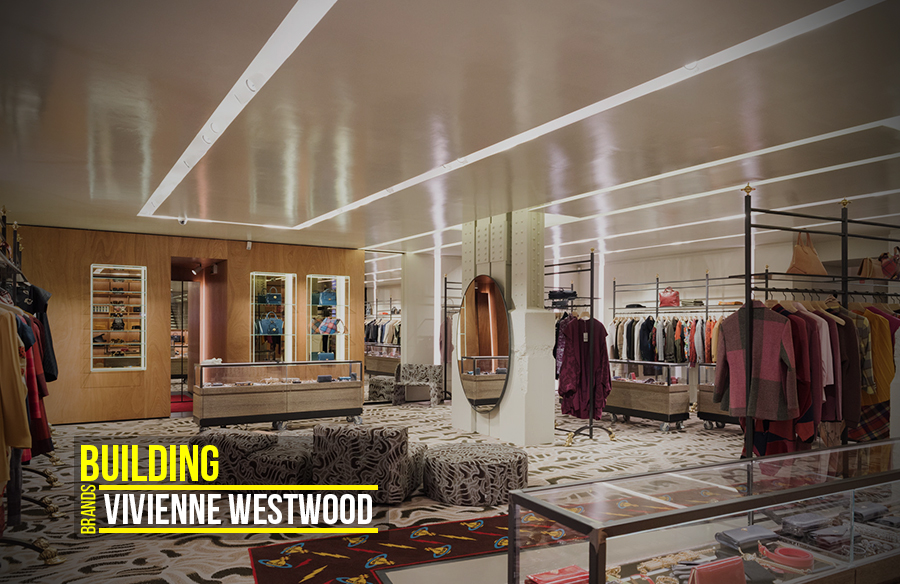
“Culture lives through controversy” are words spoken by Westwood herself. Vivienne Westwood was a British fashion Designer and Businesswoman. It was her contributions that made a difference in reviving modern Punk fashion. She was often criticised and featured in articles centred around the same due to her outlook on life. She believed that fashion or clothes rather were to be a reflection of the thoughts and ideas present in an individual’s mind. According to her, altering these ideas to better suit the way the society dressed and functioned was tainting the purity of those thoughts. It was for the same reasons that most of her clothes featured bold prints and had their own distinct style that was not replicable.

Brand’s Establishment
The establishment of the Vivienne Westwood brand was not as straightforward and went through its own trials and tribulations. Vivienne was involved in multiple endeavours before she landed on establishing the company ‘Vivienne Westwood Ltd’ in the 1980s when she was in her early 40s. Vivienne’s maiden name was actually Vivienne Isabel Swire. She met Derek Westwood and was married to him for three years. Her marriage ended when she met Malcom McLaren and co-founded ‘Let It Rock’ in 1971. It was her first experience of running her own business and the boutique focused on featuring more provocative clothes. Her next endeavour was called ‘SEX’ which was established in 1974 and was a pioneering force in establishing punk as a style of fashion. ‘World’s End’ was its successor, which became the flagship store for her most popular and successful investment, ‘Vivienne Westwood Ltd’. This remained as the main brand and from this stemmed many other sub companies such as, Vivienne Westwood Red Label, Vivienne Westwood Gold Label, Vivienne Westwood MAN, Vivienne Westwood Accessories. The brand also had multiple collaborations from its origin in the 1980s until now. She also received recognition in the film industry. She designed the iconic wedding dress Carrie Bradshaw wore to her wedding in the television series Sex and the City.

Iconic Designs by Vivienne Westwood
- The Pirate Collection (1981): This was relatively one of the first collections by the brand. It consisted of oversized clothes and marked the influence of history and culture in her designs. She has taken inspiration from multiple historical elements in her career. In 1988 she was credited with not only bringing corsets back into fashion but also radically changing the way the garment was worn. Previously worn as an inner wear it was now flaunted and worn on the outside. They were made in bold funky designs and colour and were extremely popular as they helped in making a women’s figure more appealing.
- Revolutionising the Corset (1988): In 2013 Westwood strongly advocated for environmentally sustainable fashion. It became the central theme in her brand’s imaging and has been religiously followed till now. “Committed to Sustainability‘ and “Craft and Heritage” are both advertised in her website today years after her passing. She was also an activist and took a stand on this in a political setting as well as she believed raising awareness about climate change was of utmost importance.
- Wedding Dress (2013): Vivienne Westwood also designed the wedding dress of Princess Eugenie of York. This showed that although she gained popularity for her provocative punk designs that was not all she was limited to. She was capable of designing classy modest looks that were merged with tradition. This expresses the range of her designing capability and provided a global stage to her designs

Challenges and Triumphs
Vivienne Westwood has faced multiple ups and downs in her career. As most of her designs were not aligned to the way fashion was looked at by the larger public she faced issues with sales. Her brand has also been the focal point of multiple controversies due to the same. These controversies have sometimes resulted in bad reputations to build amongst the eyes of the public which has also affected the sales. However, her strong belief in sticking to environmentally conscious practice has been appreciated greatly by the right audiences. Her cultural influence is also highly regarded. All these have allowed her to be involved in multiple global collaborations with artists, musicians etc,
In conclusion, Vivienne Westwood’s impact on fashion and culture remains profound and enduring. From her pioneering role in defining punk fashion with provocative boutiques like ‘Let It Rock’ and ‘SEX’, to her establishment of ‘Vivienne Westwood Ltd’ and its subsequent diffusion lines and collaborations, Westwood has consistently challenged norms and pushed boundaries.

Despite facing criticism and controversy over the years, particularly for her unconventional designs and outspoken activism, her commitment to sustainability has garnered significant praise and support. Today, Vivienne Westwood’s brand continues to resonate globally, with a strong presence in high-end fashion markets. According to recent industry reports, the brand maintains a robust retail footprint across major fashion capitals, with annual revenues reflecting steady growth despite fluctuations in consumer trends. Her legacy as a designer and advocate for environmental responsibility ensures that Vivienne Westwood remains a driving force in shaping the future of fashion, bridging innovation with ethical consciousness in the industry.
References:
Westwood, V. and Kelly, I. (2014) Vivienne Westwood. London: Picador.
Vivienne Westwood. Discover Collections. [online]. Available at: https://www.viviennewestwood.com/en-gb/collections/. [Accessed date: 21 July 2024].
Google Arts and Culture. 9 Standout Designs by Vivienne Westwood. [online]. [Available at:https://artsandculture.google.com/story/9-standout-designs-by-vivienne-westwood/ [Accessed date: 21 July 2024].