Zaha Hadid, known for some pioneering architectural designs that transformed city skylines, ended up changing the face of architecture as art. The paper discusses how Zaha Hadid Architects established and reshaped its brand in light of global recognition and challenges. Some of the strategic decisions and iconic projects are illustrated that earmarked its journey.

In the competitive realm of architecture, branding becomes a steed that differentiates firms and architects alike. Having a profoundly distinct style with a prescient attitude toward design, Zaha Hadid did not simply design buildings but created a brand synonymous with innovation and bold design. The paper is going to discuss some strategic moves and some high-impact projects that catapulted Zaha Hadid Architects into international recognition.
- Early Career and Influences
The architectural journey of Zaha Hadid thus began with a strong footing, based on avant-garde design principles taught and influenced by her education at the Architectural Association School of Architecture in London under famous architects like Rem Koolhaas and Elia Zenghelis. Dynamic forms and futuristic visions thus formed the hallmarks of early works, laying down the basic grammar of design.
In the early years of her career, Hadid produced a series of influential projects that established her as an experiential architect. Her first commission, the Vitra Fire Station, was characterised by angular geometry and dramatised spatial composition that typified her radicalization of conventional architectural norms. Indeed, this project not only heralded her coming as one of the most avant-garde deconstructivist architects but also paved the way for later work (Higgott, 2009).
- Creation of the Zaha Hadid Brand

This was central in establishing the brand Zaha Hadid: her unstoppable pursuit of innovation, and her capability to turn abstract ideas into functional architectural marvels. Designs that consisted of fluid forms and organic geometries became characteristic of her architecture. Projects such as the Rosenthal Center for Contemporary Art in Cincinnati, completed in 2003, have expressed the capability of putting form and function together in dynamic concepts that challenge conventional ways of thinking about architecture.

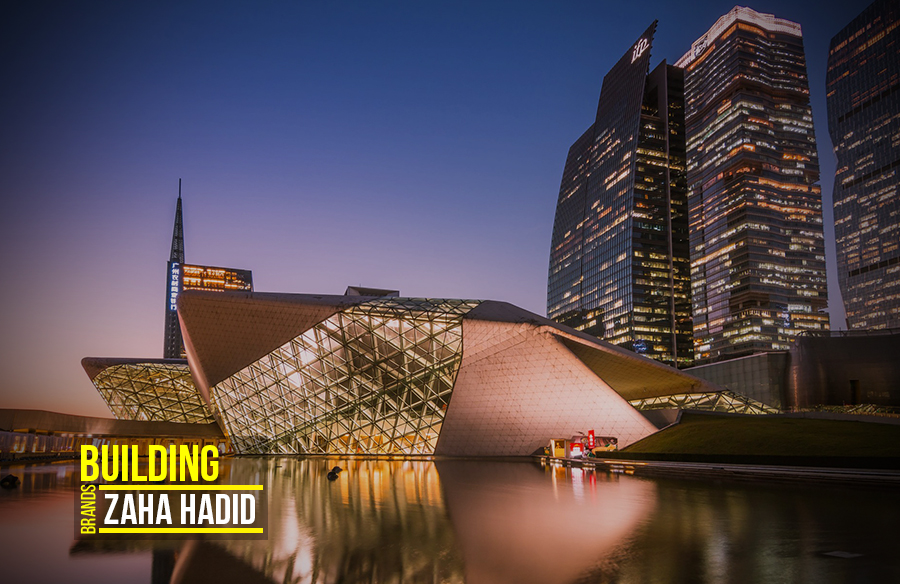
Strategically, Zaha Hadid Associates acquired a position as a global player through heavyweight partnerships with international firms and governments. This strategic expansion not only increased a portfolio of works but supplied the firm with global visibility and reputation. One such monumental work is that of the Guangzhou Opera House, completed in 2010, flowing effortlessly into its surroundings while encapsulating the fluidity prototypical of Hadid, further cementing her brand in global presence (Dernie, 2014).
- Global Expansion and Recognition

In the 21st century, Zaha Hadid Architects expanded across continents, undertaking ambitious projects pushing the potential of architecture. From the London Aquatics Centre for the 2012 Olympics to the MAXXI Museum in Rome, completed in 2010, she revealed her genius and the technical know-how of her firm in these structures.
Awards and other recognition followed in due course, and Zaha Hadid received numerous awards and other honours for her numerous contributions, not least in 2004 when she was awarded the most prestigious Pritzker Architecture Prize, thereby becoming the first woman ever to receive this distinction. Those accolades surely helped to confirm her vision of architecture and also created an icon of the profession (Nasar, 2007).

- Challenges and Adaptations
Despite its triumphs, Zaha Hadid Architects has long been under attack, with criticism coming thick and fast that its designs are either impractical or impossibly avant-garde. Some critics have complained that form often comes at the expense of functionality in some projects or marries less than harmoniously with the urban landscape around.
To adapt, Zaha Hadid Architects modulated their approach—innovative yet pragmatic. Innovations can be seen in projects like the Heydar Aliyev Center in Baku from 2012, in which bold design is combined with functional efficiency. This adjustment allowed the firm to stay avant-garde but respond more to practical concerns raised by critics and clients as well.
The untimely passing of Zaha Hadid in 2016 was a sad moment for architecture, though her firm continues its projects and collaborations. Under the leadership of Patrik Schumacher, Zaha Hadid Architects continues the quest for innovation, pushing the boundaries of architecture through projects that are based on digital technology and sustainability.
Looking forward into the future, the innovation and growth of Zaha Hadid Architects will be guided by the legacy that is underpinned by brave design and a vision for visionary architecture. The brand stays at the very forefront of shaping future cities while evolving urban landscapes and technological advancement reshape architectural possibilities.
From modest beginnings to worldwide recognition of what today is Zaha Hadid Architects, it is in itself a brand that exudes the undeniable power of branding in architecture. Not just creating an architectural brand but redefining boundaries on what architecture can do, Zaha Hadid embraced innovation, confronted convention and adapted to critique. Continuing her legacy through life serves as a guide for architects and designers worldwide, retaining this innovative capacity bedded into the future for growth in this ever-evolving field of architecture.
References:
Dernie, D. (2014). New Museums: Contemporary Museum Architecture Around the World. London, Laurence King Publishing.
Higgott, A. (2009). Zaha Hadid: Ideas and inspirations. London, Rotovision.
Nasar, S. (2007). The life and work of Zaha Hadid. New York, NY, Thomas Dunne Books.
Schumacher, P. (2016). The Autopoiesis of Architecture: A New Framework for Architecture. Chichester, West Sussex, John Wiley & Sons Ltd.
Sudjic, D. 2010. The Edifice Complex: How the Rich and Powerful Shape the World. London: Penguin Books.
Fiederer, L. (2024, July 11). AD Classics: Rosenthal Center for Contemporary Art / Zaha Hadid Architects. ArchDaily. https://www.archdaily.com/786968/ad-classics-rosenthal-center-for-contemporary-art-zaha-hadid-architects-usa
Zaha Hadid. (2024, July 14). Wikipedia. https://en.wikipedia.org/wiki/Zaha_Hadid
Martin, H., & Mafi, N. (2023, December 12). Iconic architecture: 17 of Zaha Hadid’s most spectacular creations. Architectural Digest India. https://www.architecturaldigest.in/gallery/iconic-architecture-17-of-zaha-hadids-most-spectacular-structures/