
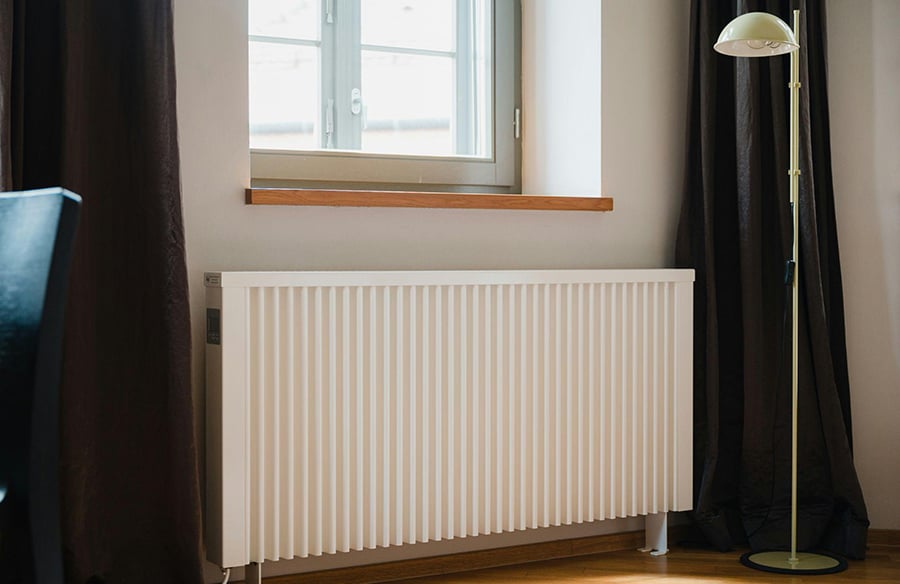
When winter sets in, the debate between a simple plug in heater and a full central heating system comes up in almost every household. Panel heaters are cheap, portable and easy to install, while central heating promises whole house comfort at a higher upfront cost. Deciding which one actually wins depends on the size of your home, how it is used day to day and how much you are willing to spend both to install and to run each option.
What panel heaters do well
Panel heaters are one of the simplest forms of electric heating available. They have no moving parts, run silently and are inexpensive to buy compared with almost any other heating option. Because they are portable, a panel heater can be moved from room to room as needed, which makes them a practical choice for smaller households, rentals or rooms that are only used occasionally.
The Ministry of Business, Innovation and Employment’s guidance on heating your home notes that electric resistance heaters such as panel heaters are best suited to well insulated homes that do not need a lot of heating, or to warm a single small room such as a bedroom or study. They are quiet, portable and convenient, and most come with a basic thermostat to help regulate temperature overnight.
The tradeoff is that panel heaters only heat the room they are in. If you want warmth throughout the house, you need one in every room, and running several at once can add up quickly on a power bill.
What central heating does well
Central heating takes a different approach, generating heat at one central point and distributing it through ducting, radiators or underfloor piping to multiple rooms at once. This can be powered by a heat pump, gas or, less commonly today, wood or solar systems.
The clear advantage of central heating is even, whole house warmth without needing to manage individual heaters in every room. Most systems also allow each room or zone to be controlled separately, so you are not forced to heat the whole house to the same temperature. For larger homes or families who spend time in several rooms throughout the day, this is a significant comfort improvement over relying on portable heaters.
The tradeoff is cost. Central heating requires a bigger upfront investment to install, and retrofitting an existing home can be disruptive depending on the layout and access to subfloor or ceiling space. Running costs vary depending on the heat source, but tend to be similar to the cost of using that same source in a single room, multiplied across the whole house.
Comparing running costs
BRANZ’s guidance on space heating energy sources places heat pumps at the most efficient end of the scale, while standard electric resistance heaters such as panel heaters sit in the middle range. This matters because a central heating system built around a heat pump will generally cost less to run per room heated than the equivalent number of panel heaters working independently, even though panel heaters are cheaper to buy in the first place.
That said, if you only need to heat one or two rooms, several panel heaters can end up cheaper overall than installing central heating you do not fully use. The equation only tips in favour of central heating once you are consistently heating three or more rooms across the day.
Installation and environmental considerations
Beyond upfront cost, it is worth factoring in how disruptive installation will be. A panel heater needs nothing more than a power point, while central heating, particularly ducted or underfloor systems, may require builders, electricians or plumbers and can take days rather than minutes to get running. If you are renovating or building rather than retrofitting an existing home, that disruption matters far less, which is why central heating is often planned in at the design stage rather than added afterwards.
Environmental impact is another factor worth a thought. A central heating system built around a heat pump produces far less in emissions than the same heat delivered through multiple standalone electric heaters, since heat pumps convert electricity into heat so much more efficiently. If sustainability matters to your household, that efficiency gap is worth weighing alongside the straightforward cost comparison.
Which one actually suits your home
For a small apartment, a single occupant home or a house where only a couple of rooms see regular use, panel heaters remain a sensible, low cost option. They are easy to install, cheap to buy and flexible enough to move wherever they are needed most.
For a larger family home where multiple rooms are used throughout the day, central heating usually wins on comfort and, over time, on running cost per room, even though the upfront investment is higher. It also removes the daily hassle of managing several individual heaters and remembering to turn them off.
A middle ground worth considering
Many households find the best solution is not choosing one over the other, but combining both. A central heat pump system for main living areas, paired with a panel heater for an occasionally used spare room or study, avoids paying to heat and install ducting for spaces that see little use.
The right answer depends entirely on how your home is used day to day. If you are mostly heating one or two rooms, a good panel heater will do the job without unnecessary expense. If you are trying to keep an entire home comfortable through winter, central heating built around an efficient heat pump will generally serve you better in the long run, even with the higher cost of getting there.