
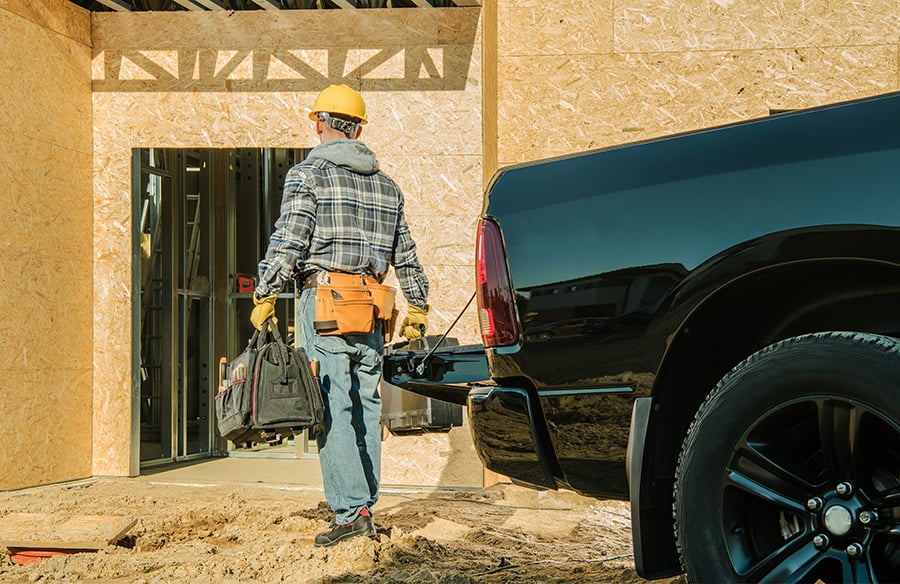
Among the most resilient work pickup trucks for construction sites that present real challenges are those of the three-quarter-ton and one-ton size, typically equipped with diesel engines and having durable frames. It is due to this fact that such vehicles provide not only adequate pulling and carrying capacity but also have strong enough drivelines that can withstand rough terrain, regular loading, and even a long service life. Real construction jobs usually involve vehicles like the Chevy Silverado 2500/3500 HD, Ford F-250/F-350 Super Duty, and Ram 2500/3500 models, which come with diesel engines.
The error that most customers make is purchasing a vehicle by its car and trim instead of by its duty cycle. A half-ton vehicle, with a cozy and luxurious interior, might look like enough capacity until it is overloaded with tools, pulled behind by a small equipment loader, and driven regularly through a broken terrain for about five years. Actually, it is the frame, the axles, the cooling system, and the payload rating that determine the vehicle’s durability, and not the sign on the tailgate
What Makes A Work Truck Actually Durable
The primary focus should be on the frame and strength of the vehicle. Trucks designed for heavy-duty work are equipped with fully boxed or reinforced ladder frames which can accommodate gross vehicle weights far exceeding 10,000 pounds. This type of frame is the main support against the continuous flex of driving on rough terrain with a full load. A light-duty frame that is subjected to such conditions for years will eventually succumb to fatigue and misalignment, resulting in problems like uneven tire wear and the truck drifting on the highway.
The drivetrain is the element where a work truck diverges from a lifestyle truck. Diesel engines create their peak torque at a low rev range, which is exactly what you want when you’re pulling a trailer uphill at a building site or trying to pull the truck off a soft shoulder. Modern heavy-duty diesels generate torque that is within the range of 850 to 1000 pound-feet, and a big reason why they don’t get very much strain when combined with a heavy-duty automatic transmission and a powerful rear axle. Gasoline engines can also do the task, yet they operate hotter and depreciate quicker when working continuously under heavy load.
Cooling and suspension systems finish the equation. Trucks that almost reach their towing capacity limits in the warm weather need the extra capacity of the radiator, the auxiliary cooler of the transmission, and the sturdier springs that are components of a proper towing or payload package. Choosing the wrong option that leaves you saving a few thousand dollars is how customers often end up with overheating transmissions and sagging rear ends a few seasons after buying the truck.
Matching Truck Class To The Job
The suitable size truck depends on your job rather than on what impresses you aesthetically. A half-ton like an F-150 or a 1500 Silverado can carry a crew with you, hand tools, and a trailer, and for a finish carpenter or an electrician, that truck might be the only one that they need for the rest of their lives. Their payload capacity is roughly between 1,700 to 2,300 pounds given the type of vehicle you get, but if you put on a topper, you add a generator, and you bring the material with you, all of that capacity will be gone quickly.
Three-quarter-ton trucks are the ones you go into after that, the tier for those who do most of the real jobs. The diesel engine a 2500-series has on board gives you the ability to load the truck with approximately 3,000 to 4,000 pounds worth of material, while the towing capacity will allow you to haul a skid steer, a dump trailer, or an equipment trailer filled to the max. For a general contractor, a plumber dealing with heavy pipe, or a landscaper who tows regularly, it’s usually the perfect point that’s right in the middle when it comes to what the truck can do and what the running costs are.
The one-ton trucks, the 3500 and F-350 classes, were designed to handle the heaviest daily loads and are for anyone planning to order a service body, a flatbed, or have dual rear wheels. Dual rear tires (commonly known as “duales”) help to even out heavy towing by dispersing the rear load over four tires while also making the truck more durable when the trailer is always at maximum weight. The downside is that dual rear tires make it a wider truck, which becomes difficult to control in narrow spots and a higher cost on tires too so, only at that point where the math of payload clearly demands one.
The Real Costs Over A Truck’s Working Life
Purchase price is the smallest part of the equation. A new heavy-duty diesel work truck runs from the low 50,000s into the 80,000s depending on cab and options, but the number that matters more is cost per mile over eight or ten years of service. Diesel trucks cost more up front and more to maintain per service, yet they hold value better and routinely run past 300,000 miles when maintained, which spreads that cost over far more working life than a gas half-ton typically delivers.
Maintenance and downtime drive the long-term math. Fuel, filters, brakes, and tires on a heavy truck cost more, and the emissions hardware on modern diesels adds its own service burden. Many fleet buyers keep older trucks running with upgraded cooling, suspension, and drivetrain components rather than replacing whole vehicles, and shops like Diesel Patriots supply parts that help owners keep high-mileage Duramax trucks reliable and working instead of parked. For a small construction outfit, a truck that stays on the road is worth more than one that spends a week a month in a bay.
Resale is the part buyers forget until it’s time to sell. A well-maintained three-quarter-ton diesel with a documented service history holds a strong percentage of its value, and industry data suggests heavy-duty diesels depreciate more slowly than comparable gas trucks precisely because the used market values their working life. Buying the right class the first time protects that resale rather than eroding it.
How Site Conditions And Region Change The Decision
Terrain plays a big part. If the terrain is full of deep mud, steep hills, and/or gravel fill, then four-wheel drive and the right amount of ground clearance to protect differential and exhaust from the mud is what you need. Still, if the site you are at is a nice, paved commercial site, four-wheel drive may just be the unnecessary cost you are looking at, plus the additional fuel cost. On top of terrain, climate also helps in shifting priorities. In the northern states and Canada, for example, there is road salt which destroys frames and brake lines. So here, undercoating and corrosion protection are at least comparable in importance with engine choice, and rusted frames will cause retirement of completely healthy trucks.
Huge factors affecting trucks operating in hot southern climates are cooling system capacity and transmission temperature management In particular for summer towing. Usually, fleets operating in different regions will select the trucks based on the most severe condition they will be exposed to rather than the average condition.
What To Weigh Before You Buy
Smart shoppers plan for their needs two years ahead rather than the current one. Teams that are enlarging, taking on larger projects, or bringing more equipment along very soon will go through an underspec’d truck very fast. A simple upgrade at the time of purchase is much less expensive than selling and buying back again. Pay more attention to the payload rating on the door sill than to the marketing leaflet since options and equipment weights affect payload more than most people think. Sometimes you can hardly tell a difference between a slightly used heavy-duty diesel and a new half-ton at almost the same price and usually the heavier truck’s working life and ease with repair are the determining factors for real site work.
Find out how the former owner used the truck before asking about mileage, prepare a realistic budget for the diesel maintenance work your truck really needs, and get cooling and towing packages even if the basic truck seems sufficient. It is the truck that your crew continues to use after a wet spring and a hot August that was built to survive the worst day at the site, but not just the average one.