
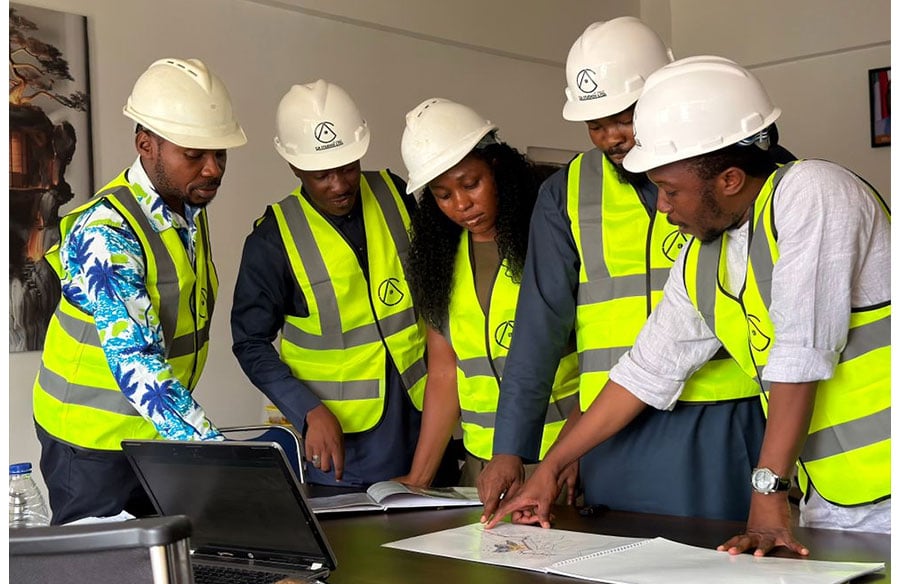
Modern construction projects operate under a level of scrutiny that would have been difficult to imagine a generation ago. Investors want predictable returns. Owners expect efficiency. Regulators require compliance. End users demand quality. Sustainability objectives continue gaining influence. At the same time, schedules remain compressed, and budgets rarely expand to accommodate every new expectation. A contemporary building project is increasingly measured by how effectively competing priorities are managed throughout the journey.
And this has elevated construction management from an operational function to a strategic discipline. Today’s project leaders are expected to understand finance, risk, technology, procurement, workforce dynamics, stakeholder communication, and long-term asset performance while still delivering a physical structure on schedule.
Let’s discuss this further below:
Leading Complexity
Large construction projects rarely struggle because people do not know how to build. More often, challenges emerge because hundreds of moving parts must remain aligned over extended periods of time. A schedule adjustment affects procurement. Procurement affects budgeting. Budgeting influences stakeholder expectations. Stakeholder decisions impact design. Every action creates a ripple effect throughout the project ecosystem. Effective leadership involves seeing those connections before they create problems.
This growing complexity explains why advanced education continues attracting experienced professionals seeking broader strategic capabilities. Interest in a doctoral construction management program online has expanded considerably because senior leaders want advanced expertise without stepping away from active projects. Online delivery allows professionals to continue managing teams and overseeing operations while pursuing higher-level study. Texas State University has become an appealing option because its program combines academic depth with practical industry relevance, helping experienced professionals strengthen their ability to navigate the increasingly sophisticated demands of modern construction leadership. In an environment where technical knowledge alone is no longer enough, strategic leadership has become one of the industry’s most valuable assets.
Building Time into the Process
Speed remains one of the most celebrated metrics in construction, yet the industry’s relationship with efficiency has become far more nuanced. Completing a project quickly remains important, but modern stakeholders increasingly recognize that speed without control rarely delivers lasting value. Projects that rush through critical milestones often discover that quality concerns, rework, and coordination problems have a way of erasing early schedule gains.
Many contemporary schedules are being developed with greater sophistication than traditional completion-focused timelines. Inspection periods, quality reviews, procurement realities, commissioning activities, and coordination checkpoints are increasingly integrated into project planning from the outset.
Bringing People in Early
Construction projects often develop momentum long before physical work begins. Decisions made during planning, design, budgeting, and stakeholder consultations frequently shape outcomes more dramatically than choices made after crews arrive on site. However, many costly project challenges can be traced back to conversations that happened too late or stakeholders who were not sufficiently involved during critical planning stages.
Forward-thinking project teams are placing greater emphasis on early engagement because it creates opportunities to identify concerns before they become expensive adjustments. Owners can clarify priorities. Designers can evaluate practical implications. Contractors can contribute constructability insights. End users can provide valuable operational perspectives. Bringing the right voices into the discussion early creates alignment that becomes increasingly difficult to achieve once construction activities accelerate.
Decisions Backed by Information
Construction has become remarkably data-rich. Digital project management platforms, building information models, progress tracking systems, drone imagery, procurement analytics, and performance dashboards generate enormous amounts of information throughout the lifecycle of a project. The challenge facing modern project teams is no longer access to data. It is determining how to use that information effectively.
Organizations increasingly rely on data-driven decision-making because it improves visibility into project conditions that might otherwise remain hidden. Emerging risks become easier to identify. Productivity patterns become more measurable. Resource allocation decisions become more informed. Rather than relying exclusively on intuition or historical assumptions, project leaders can evaluate real-time information before making critical choices.
Quality From Start to Finish
For many years, quality assurance was often viewed as something that happened near the end of a project. Teams completed construction, inspections occurred, deficiencies were identified, and corrections followed. While that approach remains familiar, modern construction increasingly treats quality as a continuous process rather than a final checkpoint.
Leading organizations are embedding quality considerations into every stage of project delivery. Design reviews evaluate potential challenges before construction begins. Procurement processes consider material performance alongside cost. Field inspections occur throughout execution rather than waiting for completion. Digital documentation provides greater visibility into compliance and performance.
Strategic Sourcing
Material availability, supplier reliability, lead times, transportation logistics, and product quality all contribute to whether a project progresses smoothly or encounters costly disruptions. Procurement decisions often shape outcomes long before materials arrive on site.
Modern procurement strategies have become increasingly sophisticated as supply chains grow more complex. Construction teams frequently evaluate suppliers based on a combination of cost, quality, availability, risk, and long-term reliability. The lowest price is not always the most valuable option if delays or performance issues create additional expenses elsewhere. Strategic sourcing helps support schedule objectives while protecting quality standards, making procurement one of the most influential yet underappreciated components of successful project delivery.
Visibility Creates Trust
Large construction projects generate an enormous amount of information, and stakeholders expect access to that information more than ever before. Owners want updates. Investors want performance metrics. Consultants want coordination details. Regulators want documentation. End users often want reassurance that progress aligns with expectations. In this environment, communication has become just as important as construction itself.
Transparent reporting creates visibility into project performance and helps reduce uncertainty among stakeholders. Rather than waiting for major milestones, many organizations now provide regular updates supported by dashboards, progress reports, digital platforms, and performance tracking tools. This level of transparency helps strengthen relationships because stakeholders feel informed rather than disconnected from the process.
Balancing Vision and Reality
Every construction project begins with a vision. Architects develop ambitious concepts. Owners establish objectives. Stakeholders imagine how the finished project will function and perform. As construction progresses, however, that vision must coexist with practical realities such as budgets, schedules, regulatory requirements, procurement constraints, and site conditions. The challenge lies in preserving project intent while responding to real-world limitations.
Construction teams spend much of the project lifecycle navigating this balance. Every decision requires consideration of competing priorities. A design feature may offer aesthetic value while affecting costs. A schedule adjustment may improve efficiency while creating implications elsewhere. The strongest project teams excel at identifying solutions that protect core objectives without compromising overall project performance.
Modern building projects exist at the intersection of efficiency, quality, and stakeholder expectations. Projects that consistently perform well are often those that recognize these priorities are interconnected rather than independent.