Artisan wall finishes for interiors are not chosen the way someone chooses a paint colour. Paint can be changed quickly. A crafted wall finish becomes part of the room’s character, so the decision has to start with the wall itself: its light, shape, repairs, nearby materials, and the way people will pass by it every day. A beautiful finish in the wrong place can make a room feel busy. A quieter one, used well, can make the whole interior feel more considered.
Before looking at texture boards, the room needs a slow look. A west-facing wall, a narrow stair, a dining wall with sconces, and a lobby seen from ten metres away all ask for different surfaces. Only after those details are clear does the question of where to buy venetian plaster become useful. The material has to fit the room, not just the saved image on a mood board.
Why artisan wall finishes for interiors depend on distance
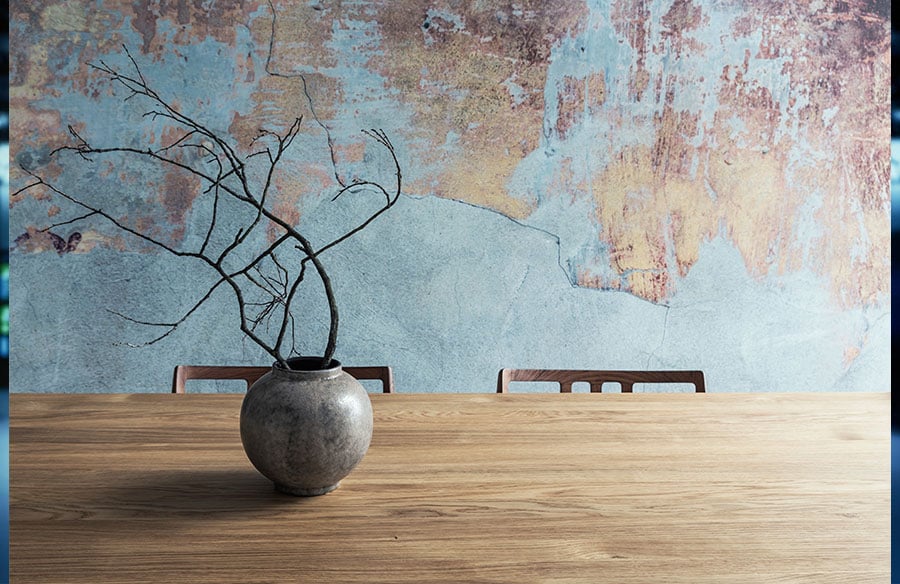
A wall finish has two readings. Up close, people notice trowel marks, polish, grain, and small shifts in tone. From across the room, they notice mood. That second reading is often more important.
A sample that looks elegant in the hand can feel loud across a full wall. The opposite also happens. A finish that seems too quiet on a small board may give just enough depth once it sits behind furniture.
| Where you view it | What you actually learn |
| From the doorway | Whether the wall feels calm or crowded |
| Beside the window | How daylight catches texture |
| Sitting down | How it works behind furniture |
| At night | Whether lamps make it too shiny |
A wall should be judged from the places where people will live with it.
The room usually tells you what it needs
Some interiors need depth because the architecture is too plain. Some need softness because the floor, stone, glass, or metal already feels hard. Some need almost nothing, because the furniture and light are already doing enough.
That is where artisan wall finishes for interiors can help, but also where they can go wrong. A finish should answer a problem in the room. It might warm up a white box, give a lobby a stronger first impression, or make a bedroom feel less flat. It should not be added just because the wall is empty.
Hand-applied wall surfaces work best when they support the space rather than compete with it.
Where artisan wall finishes for interiors often fail
The failure is not always dramatic. Sometimes the finish is well made, but the room feels wrong after installation. The texture is too active. The shine catches every lamp. The colour changes beside the floor. Or the wall looked good before the furniture arrived, then became too much.
| Situation | What can happen | Safer choice | Check first |
| Narrow hallway | Texture feels heavy | Softer movement | Side light |
| Dining room | Polish reflects too much | Lower sheen | Evening lighting |
| Feature wall | Finish fights artwork | Calmer surface | Art placement |
| Family space | Marks show quickly | More practical finish | Touch zones |
A strong finish does not need to cover the whole room. Often one wall is enough.
A sample board should work harder
A sample board is not decoration for the meeting table. It is a test. It should be moved around the real room before anyone approves it.
Use this quick check:
- Place the sample against the actual wall.
- Look at it in morning light and evening light.
- Hold it near flooring, trim, stone, wood, and fabric.
- Step back and view it from the doorway.
- Check it beside switches, sconces, or artwork.
- Ask what wall preparation is needed.
- Confirm how cleaning and touch-ups will work.
The last two points matter. A fine finish over a poorly prepared wall will still show trouble. The craft starts before the final coat.
What designers should ask before approving the surface
Artisan finishes for interior walls bring variation, and that variation is the point. Still, the room has to be ready for it. A plaster finish in a quiet study does not need to behave like one in a hotel bar. A wall behind a bed does not face the same wear as a stair landing.
Before choosing custom plaster finishes, ask:
- Will this wall be touched often.
- Should the surface be background or focal point.
- Does the room need warmth, depth, polish, or quiet.
- Will the finish still work after furniture arrives.
- Can the installer show a similar full-scale result.
- Will repairs be easy or obvious later.
The right finish should make the room easier to understand, not harder to decorate.
How crafted surfaces age in real interiors
Artisan wall finishes for interiors usually look best when they feel tied to the building. Small tonal movement, soft reflection, and hand-made variation can make a space feel less flat. But the finish still has to match real use.
A polished Venetian-style wall may suit an entry where light moves across the surface. A softer mineral finish may be better for a bedroom or study. A heavier texture may work in a restaurant, showroom, or reception area, where the wall must be noticed from farther away.
The best result feels almost obvious after it is installed. The wall does not look like a late decorative idea. It feels connected to the floor, light, furniture, and daily movement of the room. That is when a surface stops being background and starts doing architectural work.