When we think about architecture’s relationship with nature, our minds usually stop at sustainability: shiny panes of energy-efficient glass, low-carbon concrete mixes, or solar panels discreetly perched on rooftops. All of it is about harm reduction, doing less damage. But what if buildings weren’t just less harmful to nature? What if they actively gave something back?
This is where adaptive reuse and ecological restoration intersect with imagination. Instead of rushing to demolish and rebuild, architects want to ask a simple question. Can abandoned structures become homes not just for us, but also for birds, bees, butterflies, and whole ecosystems that cities once pushed away?It’s a radical reframing. A building ceases to be just a machine for living. It becomes a shared habitat, a place where concrete and chlorophyll coexist.
From Ruins to Reservoirs of Life
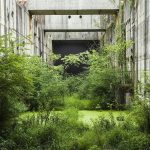
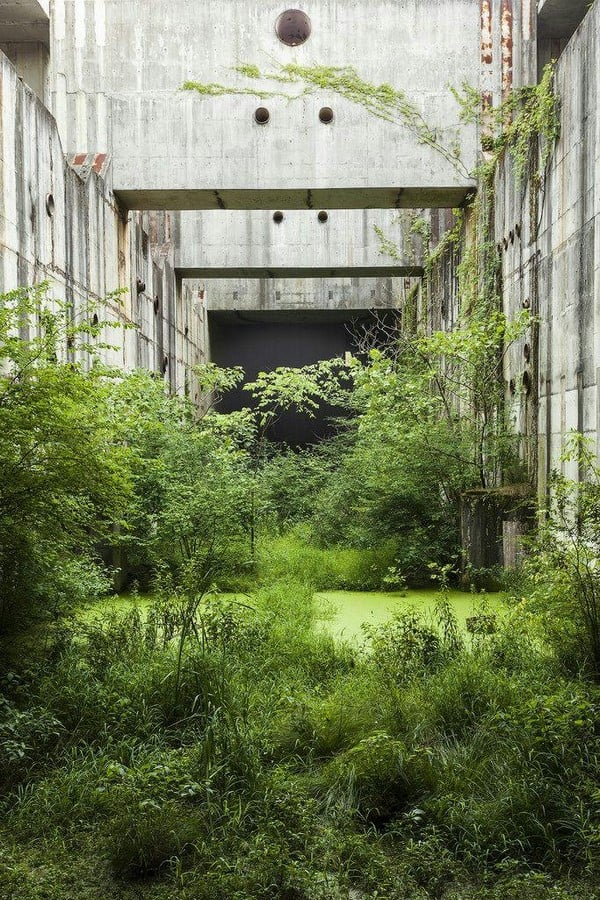
Step into an abandoned warehouse and you expect silence, broken glass underfoot, weeds in the cracks, air heavy with rust. Now imagine it reborn: walls draped in green, the roof a meadow alive with pollinators, hydroponic gardens where machines once roared. The emptiness was replaced by the hum of life returning. Sunlight spills through windows that once filtered smoke.This isn’t science fiction. It’s happening.
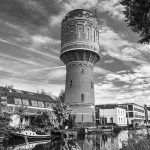
In Utrecht, the Netherlands, a disused water tower has been transformed into a vertical nesting ground for swifts and bats, while still inviting people to its observation deck (European Green Capital, 2018). In Detroit, hulking industrial warehouses, long abandoned, have been retrofitted with green walls and pollinator corridors. Once scars of economic decline, now seeds of ecological revival (Bahl & Marty, 2019).
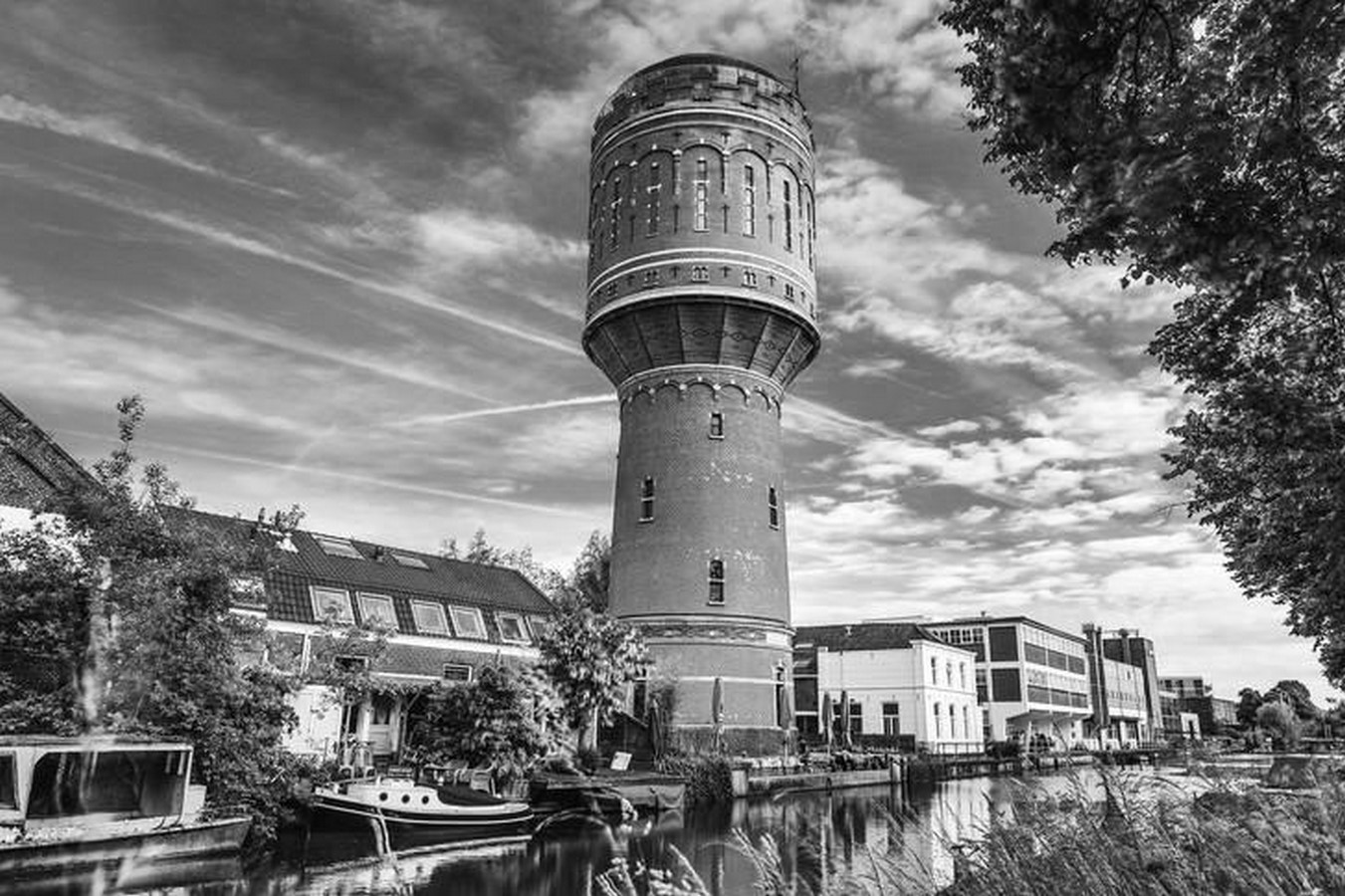
These interventions aren’t gestures of cosmetic “greening.” They represent a bigger change. The idea that buildings can act as living scaffolds. A bare wall is no longer just masonry; it can be a cliff for swallows. A roof isn’t only waterproofing; it can be a meadow for bees. Even the forgotten corners, those spaces once written off as useless voids, can be reclaimed as sanctuaries for urban wildlife.
Bosco Verticale, Milan – The Vertical Forest of Milan
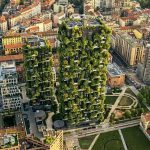
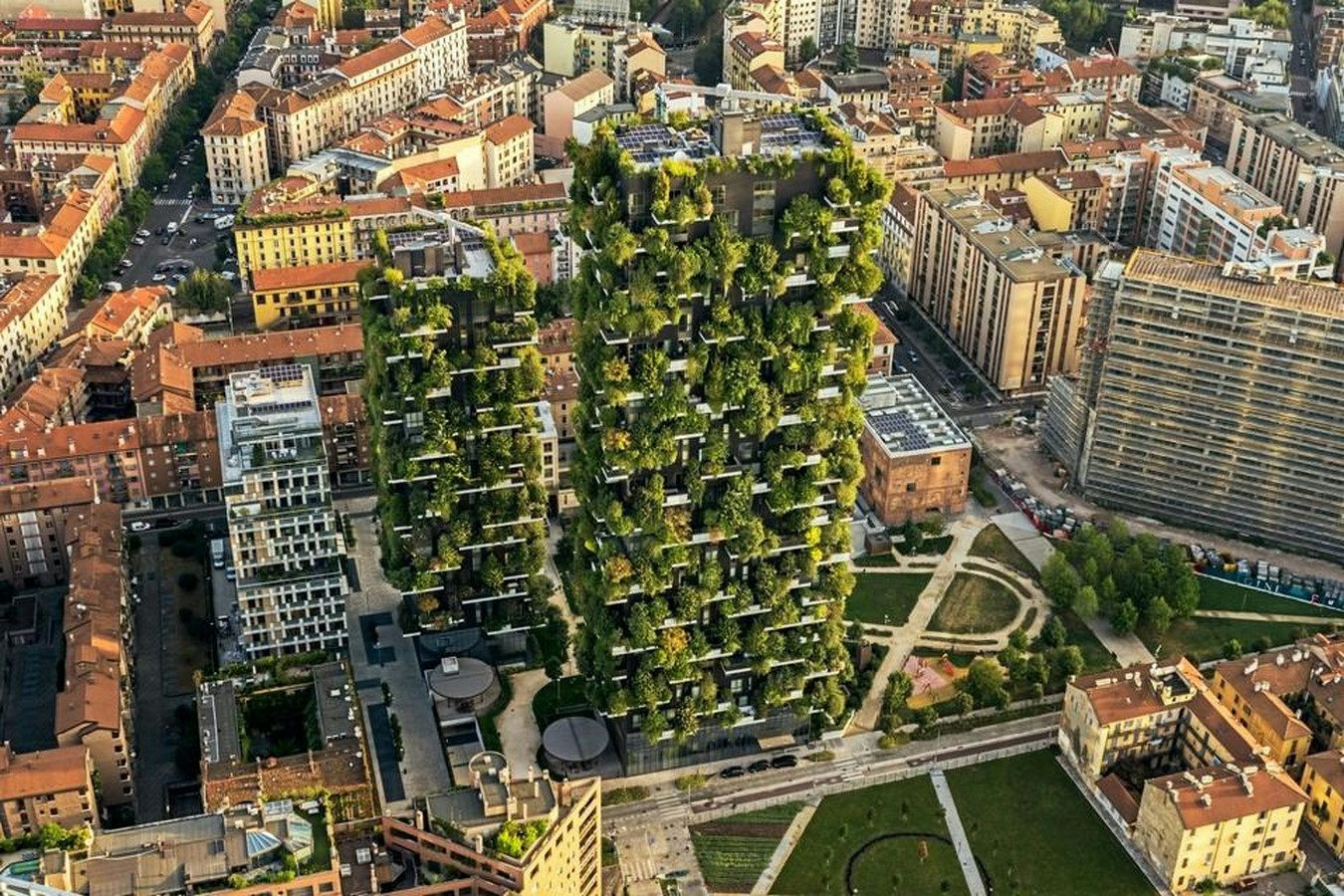
Few projects capture this idea as vividly as Milan’s Bosco Verticale — the Vertical Forest. Designed by Stefano Boeri and completed in 2014, the twin towers rise like living giants, their façades draped with more than 900 trees, 5,000 shrubs, and 20,000 plants (Boeri, 2015).
The façade is stunning, but the real triumph is the soundscape: the rustle of leaves at 100 meters high, the chatter of 20 different bird species, the low buzz of pollinators weaving through balcony forests. For residents, balconies become shaded forest clearings. Seasons aren’t distant scenes glimpsed on countryside drives; they play out daily, just beyond the balcony.
High Line, New York – The Meadow Above the City
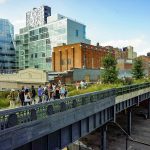
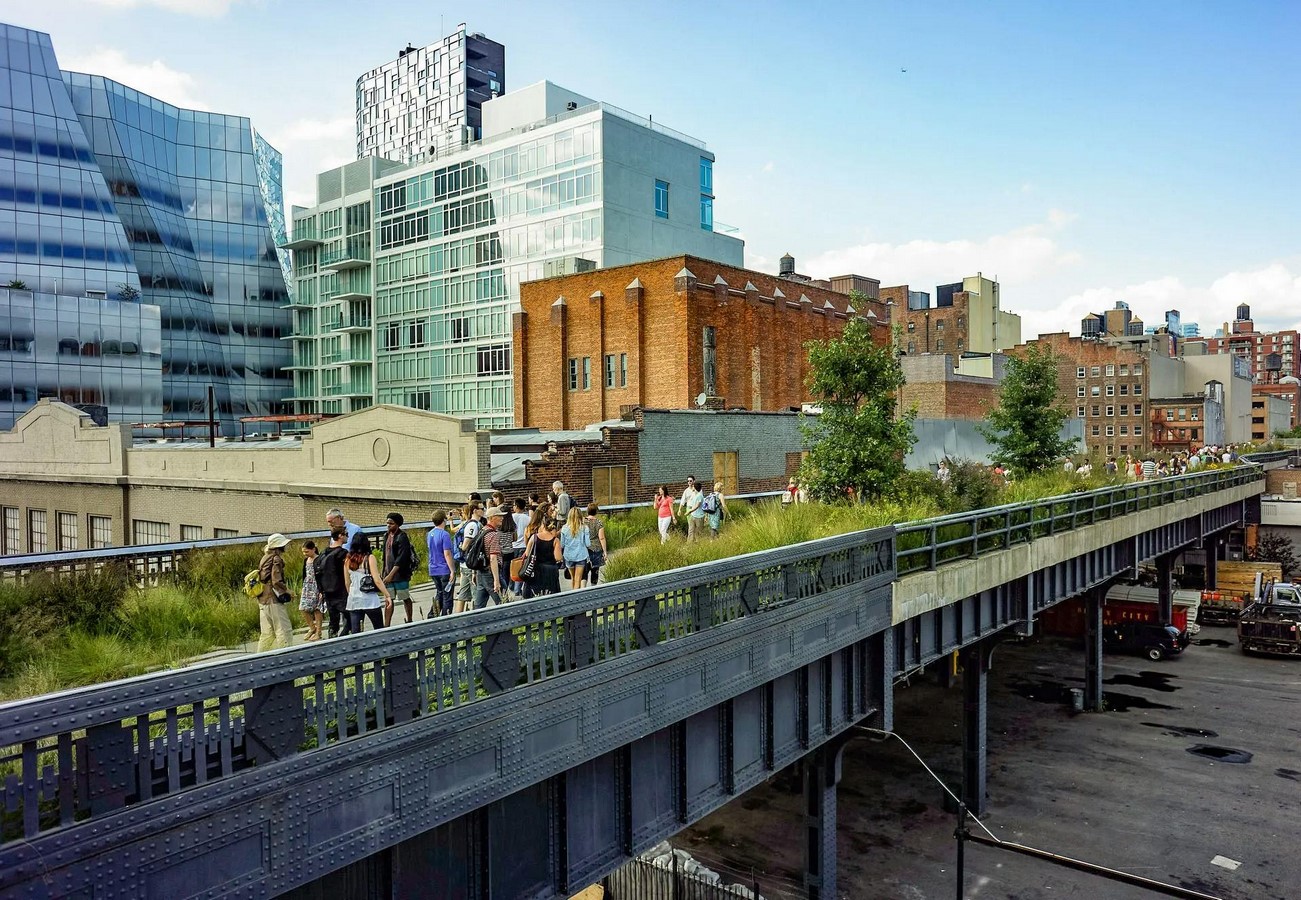
New York’s High Line shows how forgotten infrastructure can be reborn as refuge. Once an abandoned railway headed for demolition, it now stretches 2.3 km as a sky park, drawing over 8 million visitors each year (Friends of the High Line, 2020).
Its planting design is wild intentionally. Grasses, perennials, and shrubs mimic the spontaneous growth that had colonised the tracks during years of abandonment (Lindholm, 2015). Walk along it and you find yourself in an urban meadow suspended above traffic, butterflies flicker between wildflowers, sparrows dart overhead, and all the while the hum of Manhattan surrounds you. It’s proof that ecology doesn’t have to live on the city’s edge; it can thrive in its heart.
PARKROYAL on Pickering, Singapore – A Tower Where the Jungle Climbs
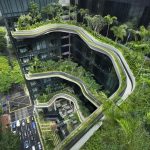
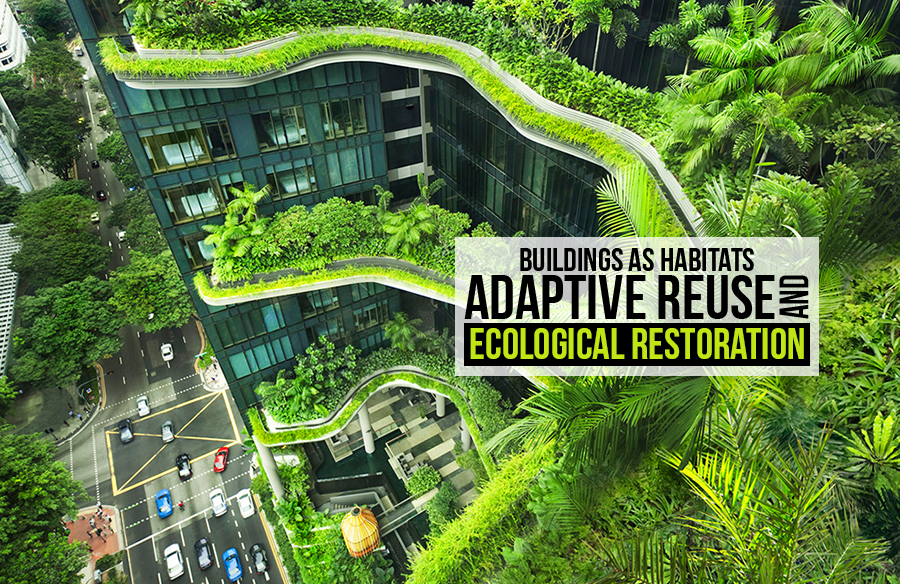
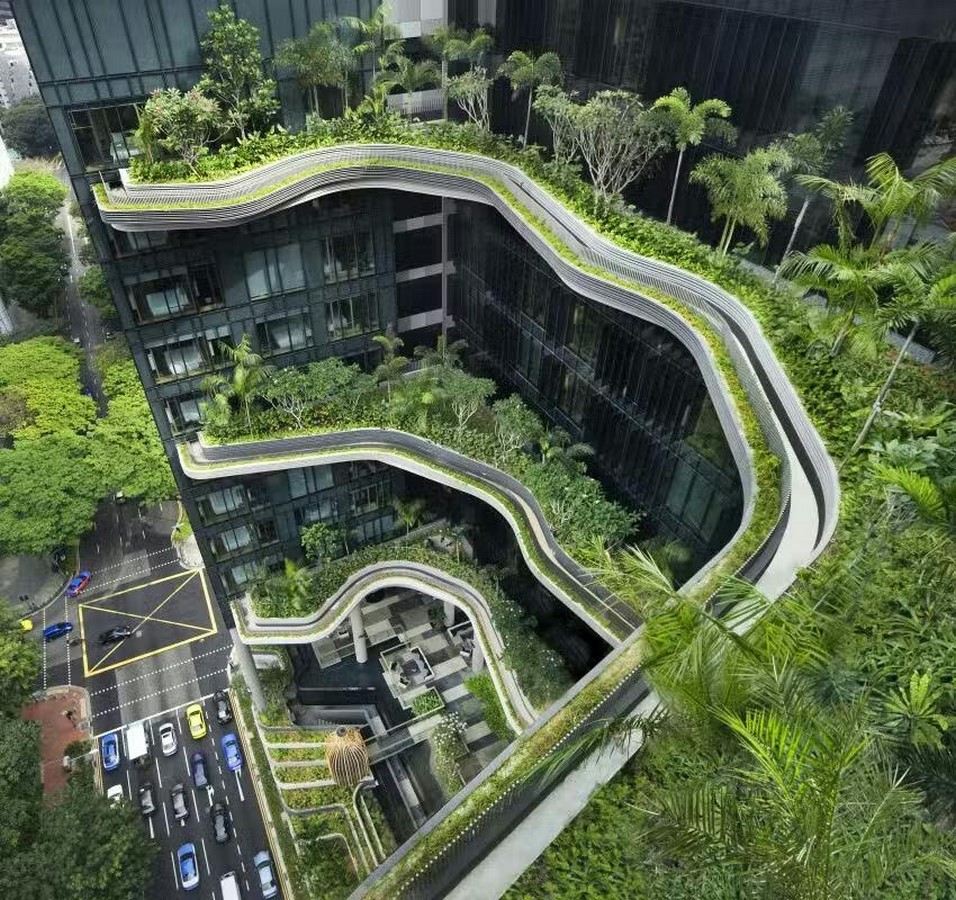
If the High Line celebrates the wild, Singapore’s PARKROYAL on Pickering demonstrates orchestration. The hotel’s 15,000 square meters of sky gardens, reflecting pools, and cascading terraces have been described as a “hotel-as-forest” (Tan, 2017).
From the street, it looks alive, as though the jungle had risen to meet the skyline. Birds flit between branches, breezes cool the streets below, and the gardens act as stepping stones for species moving across the city. It is luxury hospitality, yes, but also a bold reminder that commercial architecture can serve biodiversity as much as it serves business.
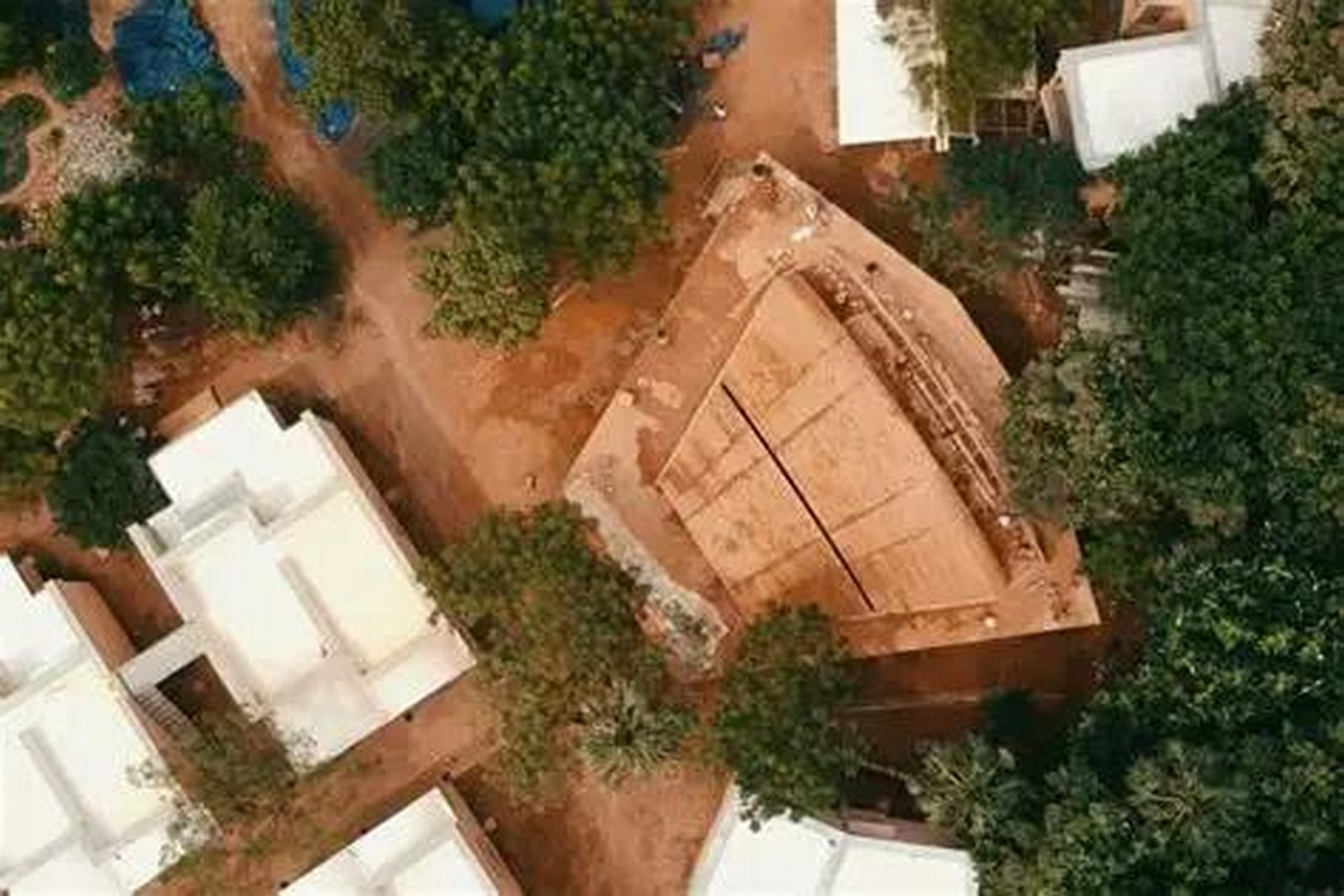
Sharanam Centre, Auroville – Architecture Rooted in Earth
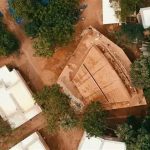
In India, ecological restoration often grows from vernacular wisdom. The Sharanam Centre for Rural Development in Auroville, designed by Jateen Lad, utilises stabilised earth blocks, courtyards, and rainwater harvesting to regenerate the land while serving its community (Lad, 2013). A barren site has been transformed into a living landscape, reforested and recharged with water systems that draw back birds and wildlife. It isn’t a glittering icon. It is quiet, modest, and profoundly effective, and that’s proof that ecological architecture doesn’t always need spectacle.
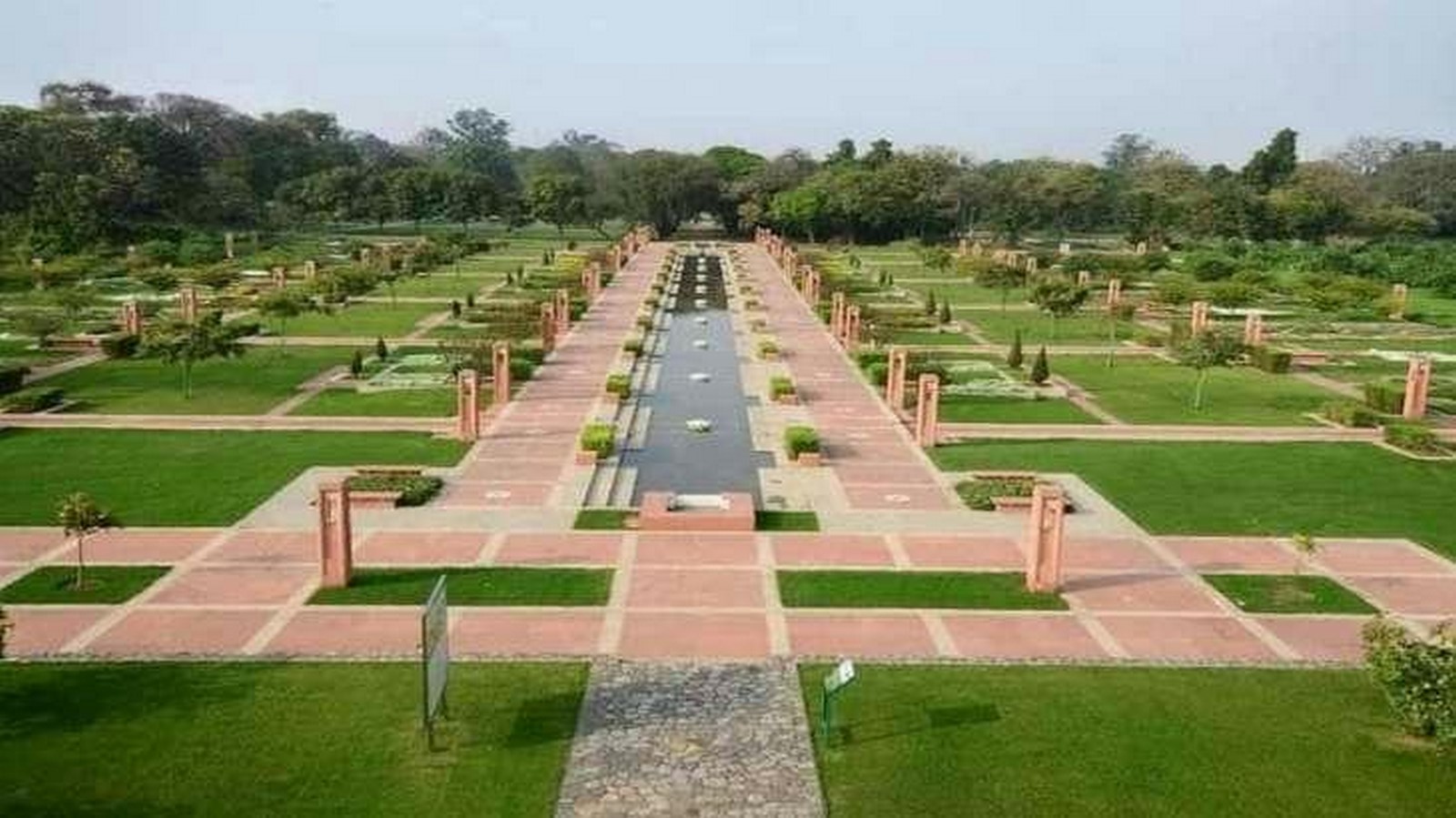
Sunder Nursery, Delhi – A Garden Where History Breathes
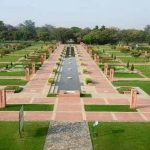
In Delhi, Sunder Nursery brings together heritage and ecology on a grand scale. What was once a neglected Mughal-era landscape has been revived into a 90-acre biodiversity and cultural hub. Over 300 tree species, restored tombs, wetlands, and ponds now draw migratory birds and everyday Delhiites alike (Aga Khan Trust for Culture, 2018).
Here, adaptive reuse is not just about giving old stone a polish. It’s about weaving culture and ecology together so tightly that they feel inseparable. A stroll through Sunder Nursery is proof: one moment you’re tracing the delicate carvings of Mughal domes, and the next, you’re distracted by the splash of a kingfisher diving into a pond or the shimmer of dragonflies darting low over lotus leaves. History and habitat don’t compete here, they share the stage.
Buildings as Ecological Bridges
For centuries, cities have drawn hard lines between themselves and nature. Highways carved across migration routes, glass towers threw birds off their flight paths, and sealed concrete left no room for a single root to push through. Adaptive reuse dares to flip that story: instead of acting as barriers, buildings can become bridges.
Take Singapore, for example. Even its most ordinary public housing blocks are being reimagined. Roofs once bare and hot now bloom with gardens. Podium levels sprout butterfly habitats. Individually, they seem modest. But together, they form green stepping stones that allow species to move through the city, quietly stitching fragments of nature back into the urban fabric (Tan & Khoo, 2015). One alone may not make headlines, but multiplied across thousands of blocks, they stitch invisible corridors of life across the city.
Why Adaptive Reuse Matters More than Ever
The carbon case is clear: demolition and new construction pump staggering emissions into the atmosphere. Reuse avoids that waste (Powter & Ross, 2005). But when paired with ecological restoration, the benefits multiply. You’re not just saving embodied carbon. You’re giving life back ; filtering air, cooling microclimates, and offering sanctuary to non-human species (Elmqvist et al., 2015).
And something subtler happens, too: a psychological restoration. When a child sees butterflies outside their classroom window instead of only in textbooks, or when a family shares a balcony forest with nesting birds, nature stops being “out there” and becomes “right here.” People begin to feel part of a shared habitat again (Beatley, 2011).
Challenges in Reimagining Buildings as Habitats
Of course, this vision comes with hurdles. Roof gardens dry out in droughts. Green walls need irrigation. Fire codes rarely imagine “bat roosts” as part of design compliance. Maintenance, liability, and policy gaps loom large (Meerow & Newell, 2017). Worse, there’s the risk of greenwashing, projects that slap greenery on façades for marketing photos without long-term ecological thinking. True restoration demands collaboration between architects, ecologists, and communities. And above all, patience: ecosystems don’t grow to match construction schedules.
Towards a Future of Living Architecture
Despite the challenges, the potential is irresistible. Architecture has always shaped how people live. Now it can shape how species live with us. Imagine if every adaptive reuse project began with questions like: Which birds might rest here? Which pollinators will feed here? Which ecological corridor will this connect? At a time of climate anxiety, these visions are not luxuries, they are necessities. They remind us that sustainability isn’t about doing less bad. It’s about doing more good. A derelict mill can hum with bats. A forgotten railway can bloom with wildflowers. A rooftop can buzz with bees that pollinate city orchards.
In the end, adaptive reuse and ecological restoration are not just strategies, they’re stories. Stories that tell us buildings can have second lives, not just as offices or cafés, but as ecosystems. They whisper that the concrete skeletons of our past don’t have to stay scars. With imagination, they can grow wild again.
References:
-
Aga Khan Trust for Culture. (2018). Sunder Nursery: A heritage park for Delhi. Aga Khan Development Network.
- Bahl, K., & Marty, D. (2019). Urban farms: Building resilience in Detroit’s neighbourhoods. Journal of Urban Regeneration and Renewal, 12(4), 362–375.
- Beatley, T. (2011). Biophilic cities: Integrating nature into urban design and planning. Island Press.
- Boeri, S. (2015). Bosco Verticale: A prototype building for biodiversity. Domus. Retrieved from https://www.domusweb.it
- Elmqvist, T., Setälä, H., Handel, S. N., van der Ploeg, S., Aronson, J., Blignaut, J. N., … & de Groot, R. (2015). Benefits of restoring ecosystem services in urban areas. Current Opinion in Environmental Sustainability, 14, 101–108.
- European Green Capital. (2018). Utrecht’s Water Tower biodiversity project. Retrieved from https://ec.europa.eu/environment
- Friends of the High Line. (2020). The High Line: A mile-and-a-half-long park in the sky. Retrieved from https://www.thehighline.org
- Lad, J. (2013). Sharanam Centre for Rural Development. Architecture + Design, 30(3), 44–49.
- Lindholm, G. (2015). The High Line, New York City: Reclaiming urban infrastructure for nature and people. Journal of Landscape Architecture, 10(1), 34–45.
- Meerow, S., & Newell, J. P. (2017). Spatial planning for multifunctional green infrastructure: Growing resilience in Detroit. Landscape and Urban Planning, 159, 62–75.
- Powter, A., & Ross, S. (2005). Adaptive reuse and sustainability of commercial buildings. Facilities, 23(9/10), 315–323.
- Tan, P. Y. (2017). Vertical greenery and urban biodiversity in Singapore. Urban Ecosystems, 20(6), 1379–1391.
- Tan, P. Y., & Khoo, E. (2015). Towards a sustainable relationship between green spaces and biodiversity in Singapore. Urban Forestry & Urban Greening, 14(2), 217–225.