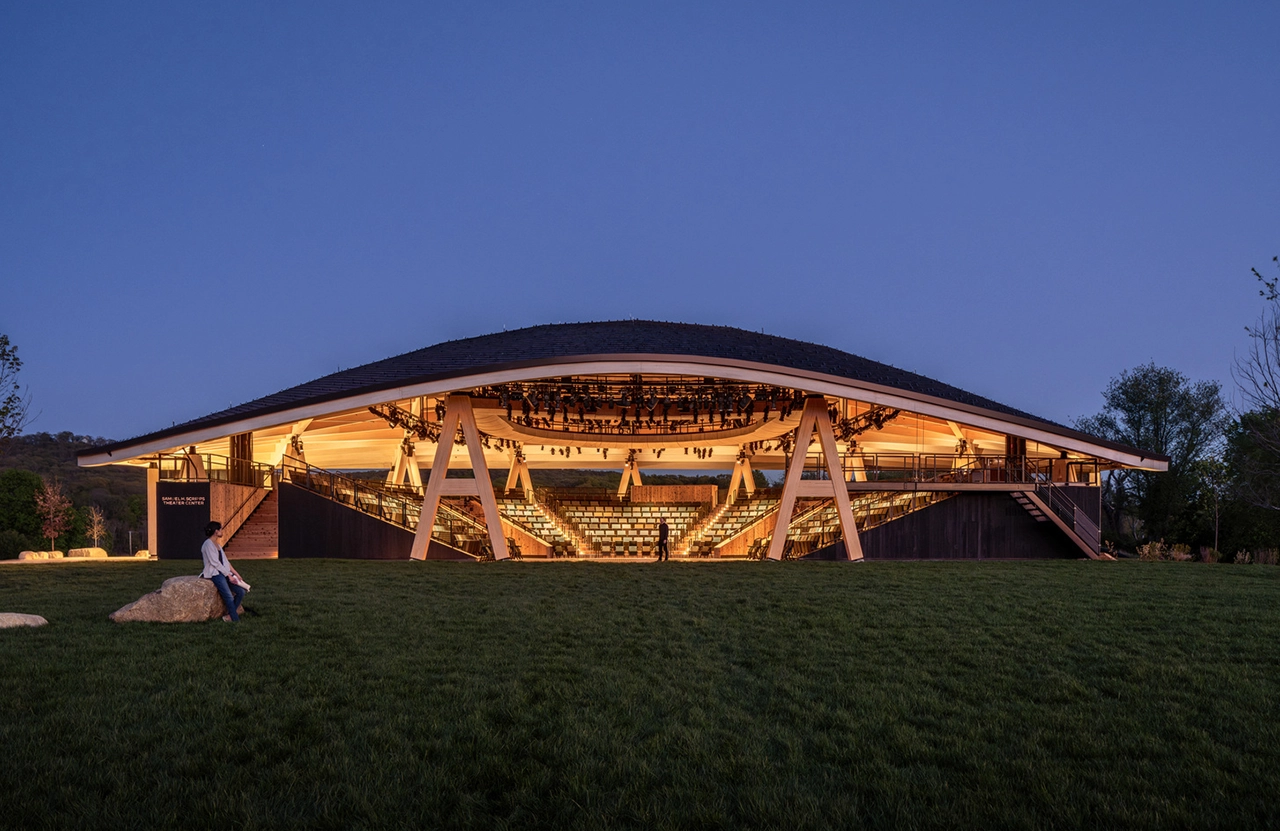
A new chapter in open air theatre performance architecture has arrived in the city of New York as Studio Gang completes the Samuel H. Scripps Theater Center for Hudson Valley Shakespeare. Located in Garrison town in New York’s Hudson Valley, the project establishes the theater company’s first permanent home nearly after four decades of operating in seasonal tent structures. The new centre done by Studio Gang blends architecture, landscape and performance into one single experience while strengthening the relationship between audiences and nature.
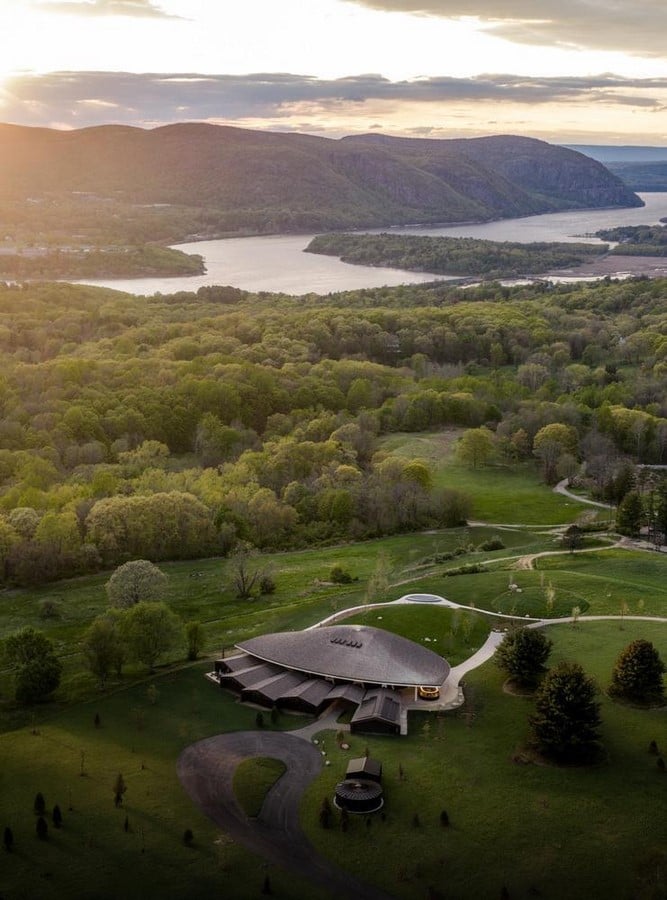
Designed by Jeanne Gang and her team in collaboration with Nelson Byrd Woltz Landscape Architects, the project reflects its long standing interest in connecting built environments with ecological systems and public interaction. Instead of creating a fully enclosed building, the design embraces openness and transparency, allowing nature to become an integral component of the theatrical experience. The project rethinks conventional theater design by removing strict boundaries between indoor and outdoor environments.
Hudson Valley Shakespeare has a long rooted history in outdoor performance theatre traditions. Founded in 1987, the organization was created with the main aim to present classical theatre in a setting where landscape and storytelling could coexist. Over the years, performances were held under temporary open air structures with the changing natural backdrops becoming a recognizable feature of the experience. The theatre company gradually expanded its programme and audience, creating the need for a permanent campus to support the activities.
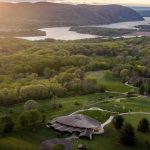
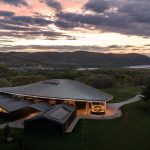
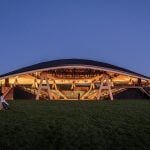
The campus spans across approximately 26,000 square feet and includes a 451-seat amphitheater along with rehearsal spaces, educational facilities, artist support areas, administrative offices, and public amenities. At the centre of the design is a dramatic timber- framed structure featuring a curved grid-shell roof supported by A-frame columns. The roof creates a sense of shelter while maintaining visual openness and creating a connection to the surrounding landscape
The form of the structure appears to emerge naturally from the terrain and mirrors the gentle movement of the surrounding topography. Unlike traditional theater buildings that isolate audiences from external conditions, the design intentionally welcomes natural elements into the experience. Seasonal changes, shifting light conditions, and weather patterns become part of the atmosphere and influence how performances are perceived.
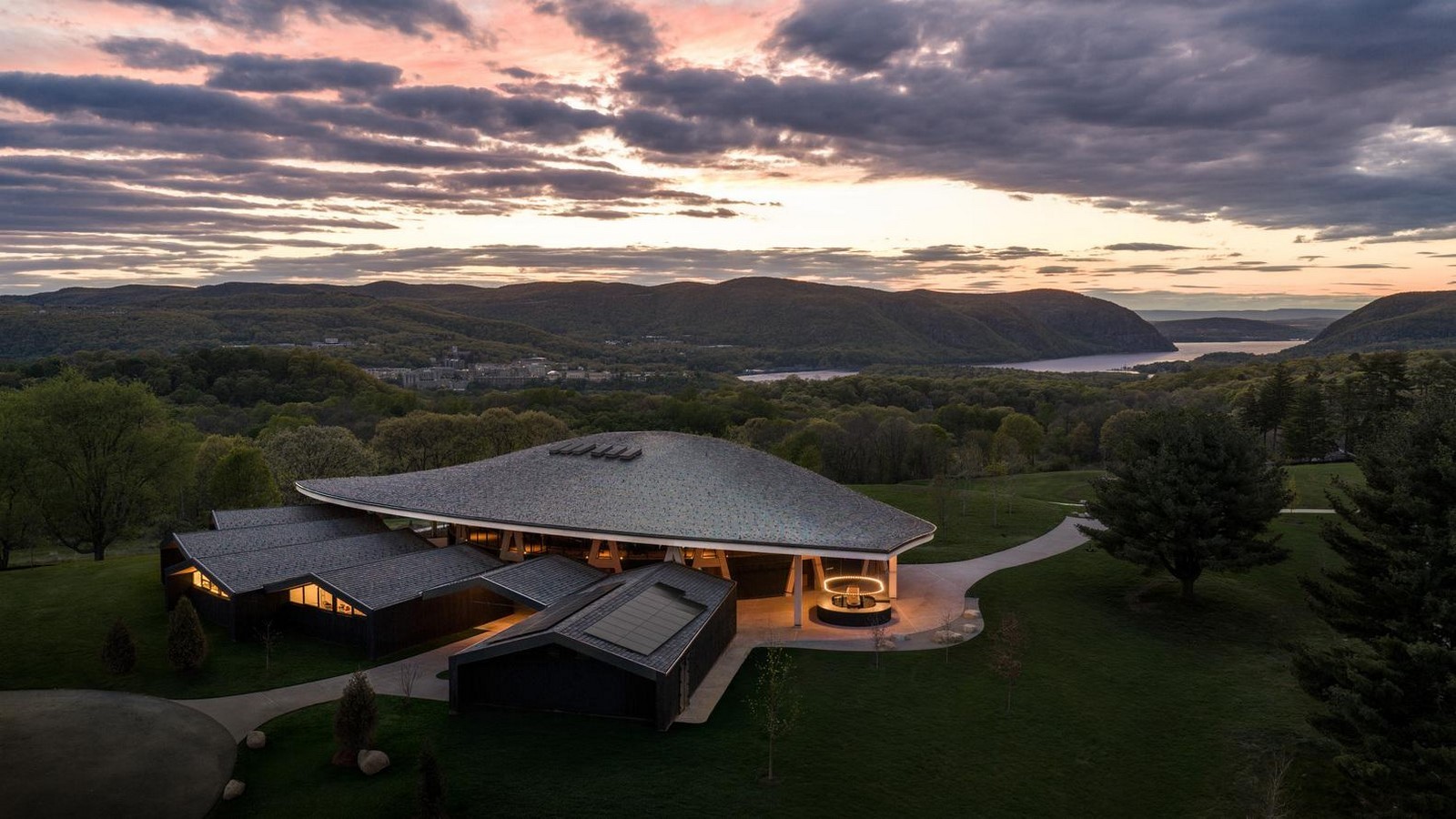
A significant feature of the project is the relationship between architecture and site. The stage and seating arrangement are carefully positioned to frame views of the Hudson Highlands, including notable landscapes such as Storm King Mountain and Breakneck Ridge. These surrounding landscapes function almost as an extension of the stage itself, adding depth and visual character to performances.
Sustainability was a major focus throughout the design process. The project incorporates low-carbon mass timber construction, photovoltaic roof panels, rainwater harvesting systems across the site. These strategies aim to reduce environmental impact while promoting ecological restoration. The theater is also targeting LEED Platinum certification and seeks to become the first purpose-built open-air theater in the United States to achieve this distinction and also achieve carbon neutrality by 2040.
Landscape design by Nelson Byrd Woltz Landscape Architects further strengthens the relationship between visitors and the site through native planting systems, and gathering spaces that encourage movement and interaction.
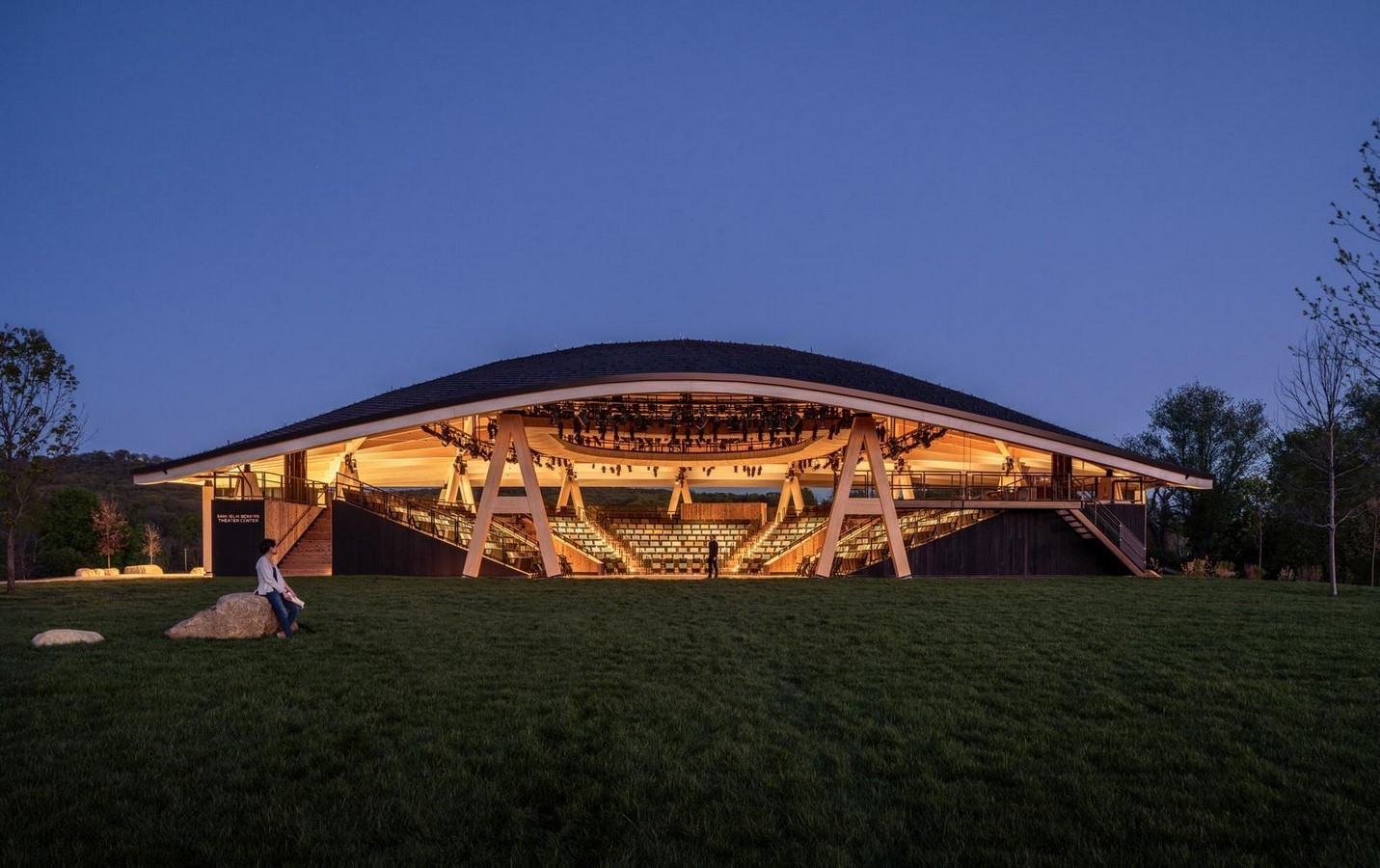
The Samuel H. Scripps Theater Center demonstrates how contemporary performance architecture can move beyond enclosed structures and establish deeper relationships between culture, ecology, and place. Through this project, Studio Gang creates a theater that functions not only as a venue for performance but also as a space where architecture and nature become active participants in storytelling.
REFERENCES:
- Studio Gang (2026) Samuel H. Scripps Theater Center at Hudson Valley Shakespeare. Available at: Studio Gang website (Accessed: 21 May 2026).
- Hudson Valley Shakespeare (2026) The Samuel H. Scripps Theater Center – Our Theatre. Available at: Hudson Valley Shakespeare website (Accessed: 21 May 2026).
- ArchDaily – Studio Gang Completes the Samuel H. Scripps Theater Center for Hudson Valley Shakespeare in New York. Available at: ArchDaily website (Accessed: 21 May 2026).