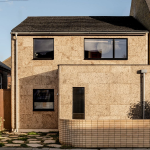
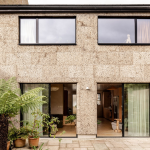
A retrofitted 1970s London house with exterior cork cladding is being applauded as it has introduced a sustainable alternative to any other conventional, energy-intensive cladding materials. ROAR Architects and Nina+Co aimed at making this house as low-energy, fossil-fuel-free as possible (Roar-architects.com, 2023). Expanded cork was chosen as the cladding material because of its thermal properties and eco-friendliness. It has also been awarded the 2025 Environmental Prize in New London Architecture and nominated for the RIBA 2025 Architecture Awards (Corticeira Amorim, the world’s biggest cork processing group, 2025).
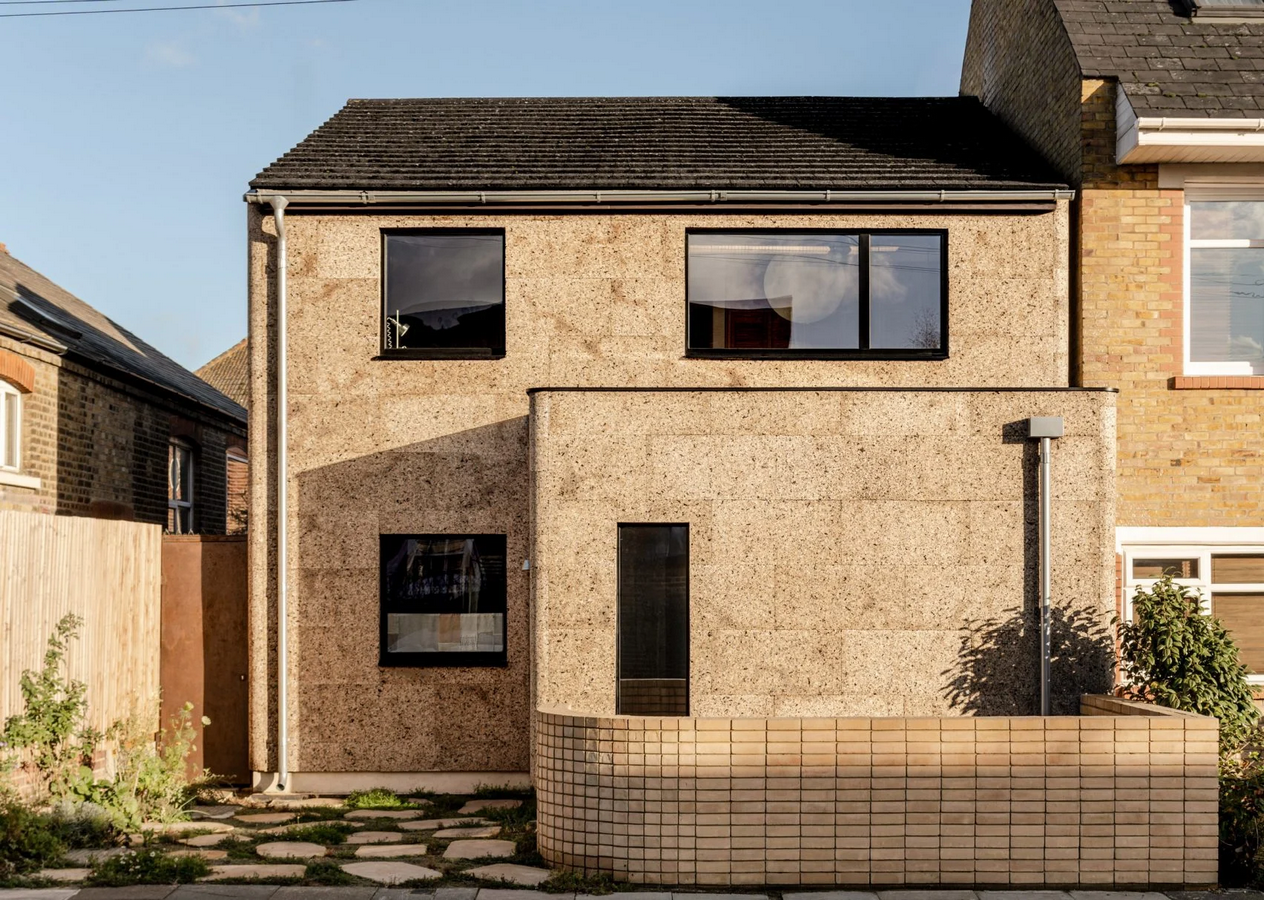
Architects, interior designers along with an energy consultant worked on this to ensure an energy-efficient house with all repair work using sustainable materials on a budget. The major work was to remove the gas pipeline, and thermal insulation and improve the air tightness of the house (Roar-architects.com, 2023). The ground floor was reconfigured to an open plan to accommodate the family’s requirements. The porch and garage were taken in to improve the insulation and circulation between the spaces on the ground floor (Jessel, 2025).
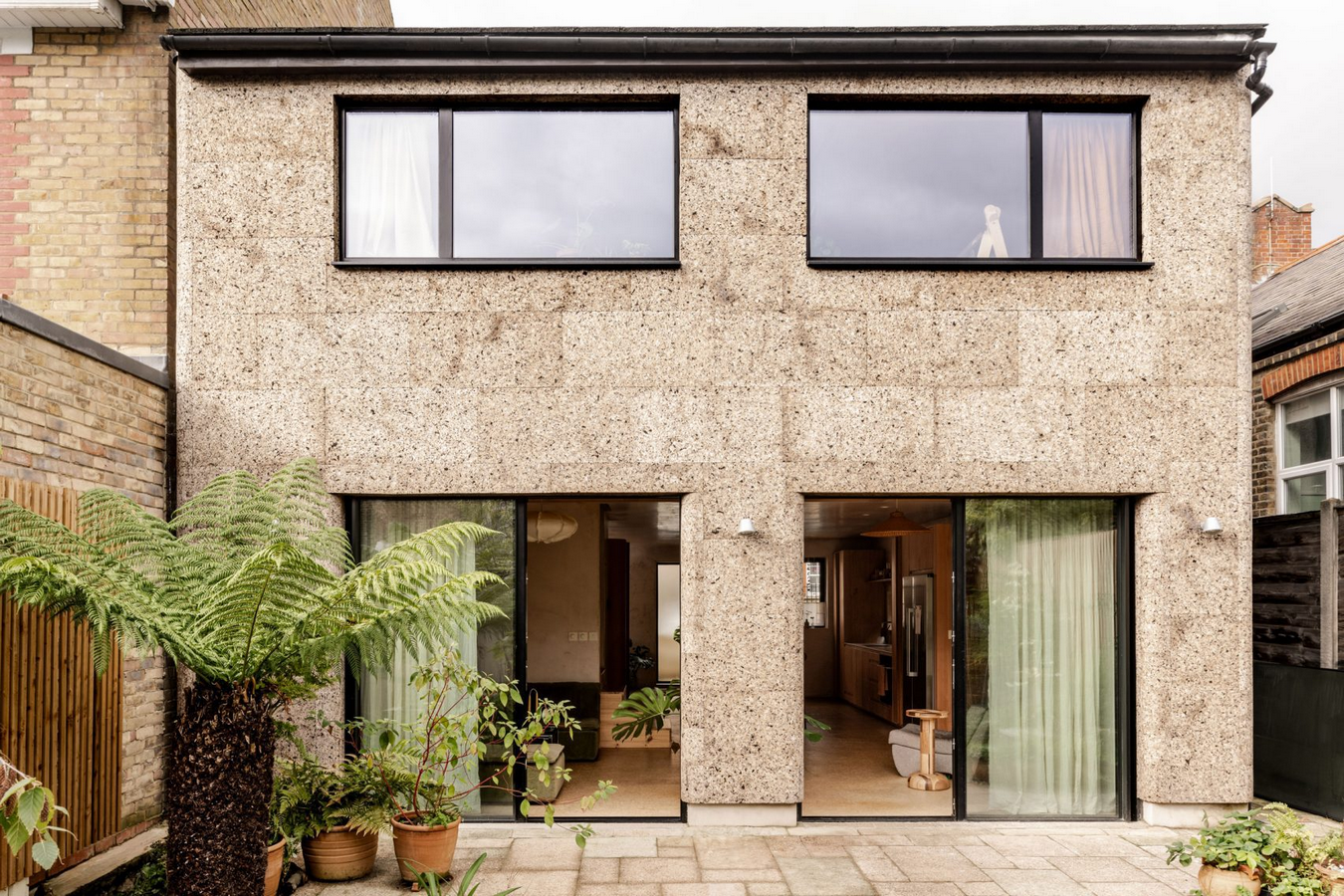
It was difficult to get cork cladding approved in the UK as it is still an unconventional choice for exterior cladding. However they worked with Portugal cork manufacturers to back up their decision with information and other case studies in London. They chose a redolent dark expanded cork for exterior walls. The interior walls are also plastered in lime along with leftover cork granules for further insulation (Jessel, 2025).
Cork panels are completely a natural material as they don’t require any synthetic binders for their installation. The panels are steamed to activate their natural binders. The architects expect that it will last for 10-15 years, after which a lime render would be required to seal it (Roar-architects.com, 2023).
Not only has this project broadened the potential of cork being used for exterior cladding, but it also exemplifies multiple other ways of mindfully reusing and repurposing the materials. The kitchen uses wood from Fallen & Felled – a company that turns naturally fallen trees into timber for furniture. The existing pine wood flooring boards were repurposed for the ceilings. Nina, the client as well as the interior designer has ensured the use of recycled plastic to make countertops (Jessel, 2025).
The cork surface and the rounded edges of the house sets it apart in the neighbourhood. Cork has given a tactility to the surface inviting neighbours and children to touch the surface and be intrigued by it. Such a project reminds the designers to explore the potential of the natural materials around us and how they could be used more extensively in architecture.
References:
- Jessel, E. (2025). Nina+Co and ROAR Architects swaddle London house with cork cladding. [online] Dezeen.com. Available at: https://www.dezeen.com/2025/04/27/ninaco-roar-architects-ninas-house-cork/ [Accessed 3 May 2025].
- Roar-architects.com. (2023). Nina’s House | ROAR. [online] Available at: https://roar-architects.com/projects/ninas-house/.
- Corticeira Amorim, world’s biggest cork processing group. (2025). Cork-clad house in London wins architectural award – News Detail – Media – News – Corticeira Amorim, world’s biggest cork processing group. [online] Available at: https://www.amorim.com/en/media/news/cork-clad-house-in-london-wins-architectural-award/5251/ [Accessed 3 May 2025].
Image Reference:
- French+Tye (n.d.). ROAR Architects and Nina+Co have swaddled a London house with cork cladding. Available at: https://www.dezeen.com/2025/04/27/ninaco-roar-architects-ninas-house-cork/ [Accessed 4 May 2025].