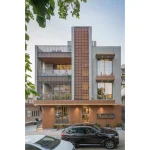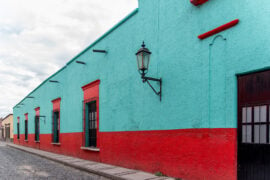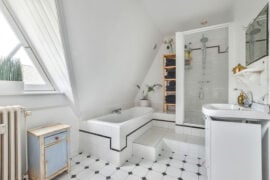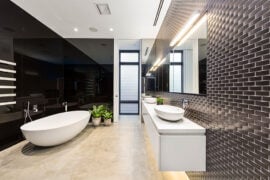
Real estate photography is generally explained in very simple terms, namely, to show the property clearly, to make the rooms seem welcoming, and to provide buyers with enough information so that they can understand the house before they even step foot inside the door. Although this serves as a broad definition, in Los Angeles the role often becomes a great deal more complicated. The city features an unusually wide variety of residential building styles, and this diversity affects the way a photographer has to deal with a property. A Spanish Revival house in Hancock Park, a mid-century home in Pasadena, a post-and-beam house in the Hollywood Hills, and a modern glass house with a view over a canyon might all be promoted through the same real estate websites, but they do not have to be photographed in the same way. The different styles alter the priorities, the composition, the treatment of natural light, and even the position from which the camera should be placed.
That point is important to real estate agents since for some properties the main way of selling them is by reference to their size, location and the facilities they have, while for others sales are also based on the design itself. A buyer might be drawn to the original woodwork, the relationship between the inside of the house and a courtyard, an unbroken view, a living room with careful proportions, or the way one room flows into another. If such features are not shown in the photographs, the listing might still appear clean and professional, but it could lose the exact thing which made the house worth noticing. At House of Pix, this is one of the first considerations when photographing homes throughout Los Angeles. The aim remains that of real estate marketing rather than architectural documentation, but gaining an understanding of the architecture can make the difference between merely showing a room and showing why that room is important.
Real Estate Photography Still Needs to Explain the Property
The main consideration in real estate photography is practicality. Buyers have to be able to see the kitchen, the living room, the bedrooms, the bathrooms, the outdoor areas and the basic way in which the various rooms relate to one another. A listing gallery shouldn’t become so artistic that a person going through it has no idea how the house is laid out. This is a major point of difference between real estate photography and architectural photography. While a designer photographer may take a lot of time perfecting a small number of images that have been carefully chosen, a real estate photographer must produce a full and useful visual tour of the property within a much shorter time frame.
The difficulties start when that practical need is turned into a rigid rule. It is natural to think that each room should be photographed from the broadest possible angle, typically from a corner, since this enables the photographer to show more of the room in a single picture. In a great many ordinary types of room this method works quite well. In homes with an unusual architectural style, on the other hand, showing more can at times convey less. Wide lenses can make furniture close to the camera look larger than it actually is, stretch the architectural details near the edges of the image, and cause important features to appear smaller than they do when seen in person. A photograph might show the whole living room without conveying what makes the room special.
Hence, the best real estate photography must combine thoroughness with good judgment. Certain photographs are intended to illustrate the floor plan and the size of the rooms, while others should highlight the feature which gives the listing its character. The photographer has to know whether a wide, general view is required or whether a more modest composition would be more effective for marketing the house.
Craftsman Homes Need More Than a Wide Corner Shot
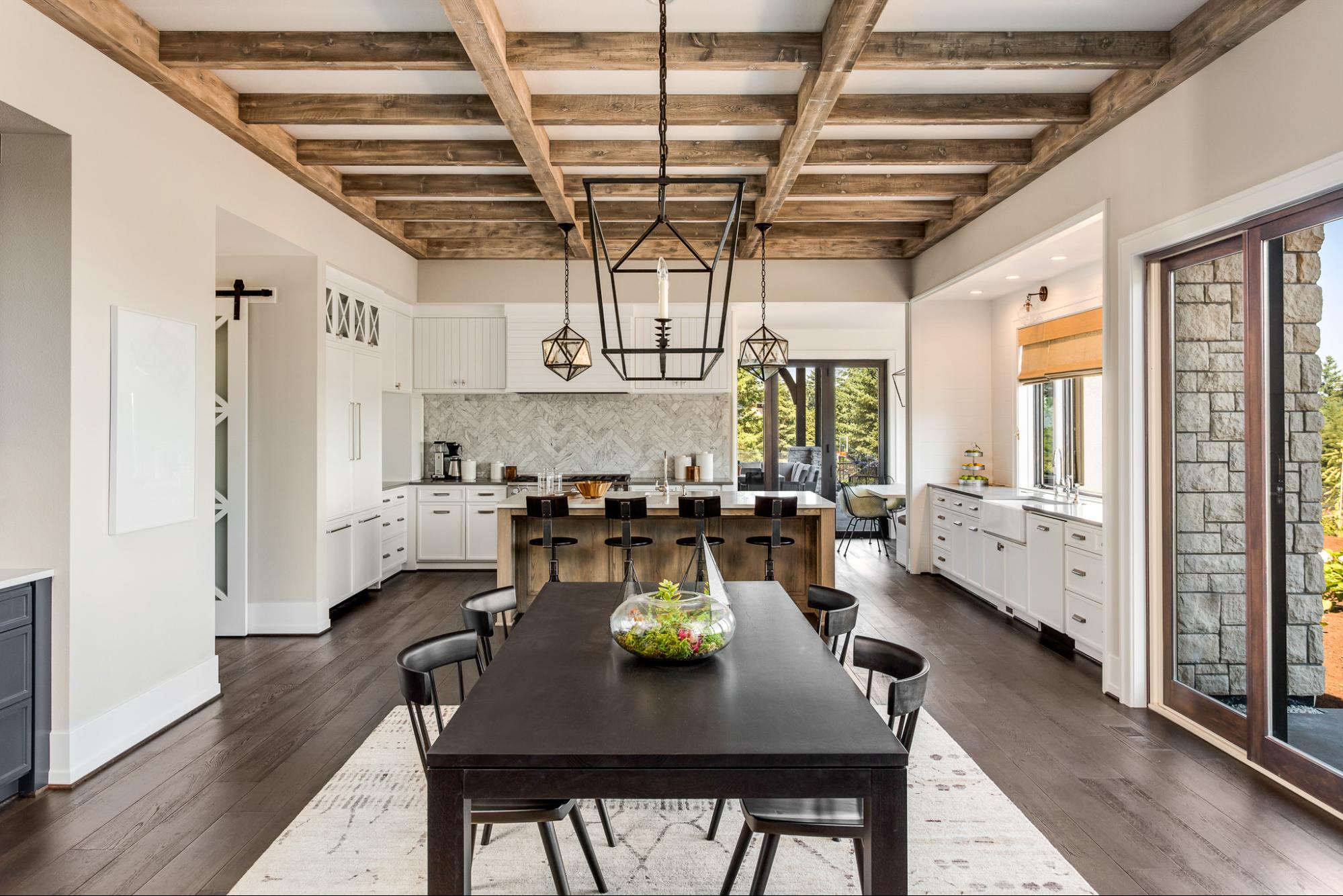 Older Craftsman houses provide a clear example of the importance of having an awareness of architecture. A great deal of their value lies in the materials and the quality of the work rather than in their large size. Among the property’s strongest features are the original woodwork, the built-in cabinetry, the ceiling beams, the fireplace surrounds, the detailed windows, and the way the rooms next to each other are arranged. If all the photographs are taken with an extremely wide lens, however, those features can end up being less important than the size of the room.
A single wide photograph might be sufficient to help the buyer get an understanding of the room, but it could also be advantageous to include a second picture taken with a more controlled camera position. By moving away from the corner, the fireplace can appear more naturally within the frame. Using a slightly longer focal length will prevent the cabinetry and woodwork from stretching towards the edges. In certain instances, a straight-on composition is able to show the symmetry or craftsmanship of the space much more effectively than a diagonal view.
It is just as important to consider the lighting. In older houses with wooden interiors, the sense of depth and warmth tends to vanish if all the shadows are harshly removed. Simply increasing the brightness does not improve an image. When a photographer eliminates too much contrast, dark wood can become flat, the texture may be lost, and a room which had seemed rich and three-dimensional in real life can start to look ordinary in the final photographs. Therefore, for an agent who is selling a well-preserved Craftsman house, the photographer must retain sufficient of the original character so that buyers can see why the house is special.
Spanish Revival Homes Are Often About the Spaces Between Rooms
Since some of the most prominent architectural characteristics of Spanish and Mediterranean-style houses are found in the areas where the different spaces meet, these homes pose a very different kind of challenge. Features such as archways, courtyards, shaded corridors, tiled staircases, recessed windows and walls covered with textured plaster are often more significant than the size of any single room. If the photographer treats the property as if it were a checklist and just takes photographs of the living room, dining room and courtyard separately, the buyer will never become aware of the relationship that unites those spaces.
In some cases the best real estate photograph of a Spanish Revival house is achieved by leaving part of an archway in the foreground so that it forms a frame for the room behind. Instead of having the doorway cut off, it may show a courtyard. A hallway can take the form of a visual route that leads the buyer through the picture. These compositions are not included merely for decorative effect; they serve to explain how the house actually feels when being walked through.
It is here that slight alterations in the camera position prove to be surprisingly significant; shifting the tripod a few feet to the left or right can make a difference as to whether one doorway in an awkward way overlaps with another, whether a courtyard is visible through an opening, or whether a feature which seemed intentional when seen in person vanishes entirely in the photograph. Since the agents benefit from a photographer who understands these relationships, the final gallery has the effect of presenting a connected property rather than a set of unrelated rooms.
Mid-Century Homes Depend on Geometry
 Mid-century houses also involve a number of photographic choices. A great many of the houses in Los Angeles and Pasadena from that period have a layout based on long horizontal lines, simple structural shapes, large areas of glass, open-plan arrangements and a strong connection between the interior spaces and the surrounding landscape. If these relationships are photographed carefully, the house appears to be calm, balanced and purposeful. But if they are photographed from the corner in a too aggressive way, then that visual order is lost.
Picture a living room having a long wall with a fireplace, low furniture and floor-to-ceiling glass that opens onto a garden or provides a view. Although a very wide diagonal photograph could in theory show everything, the sofa nearest the camera would end up being disproportionately large while the windows and the fireplace would seem to recede into the distance. The architecture would then appear busier and less intentional than it really is. Instead, a more straightforward composition can usually convey the room more effectively since horizontal elements stay horizontal, the window frames remain in order, the furniture keeps more natural proportions, and the exterior view takes up the place it was intended to have in the room.
It doesn’t mean that all mid-century homes should be photographed in a symmetrical way; rather, it means that the photographer should realize when the architecture possesses a definite visual structure and then refrain from contradicting it. For an agent, this can entirely alter the way buyers interpret the listing; instead of viewing an older house with large windows, they start to perceive the design.
Contemporary Homes Can Suffer From Showing Too Much
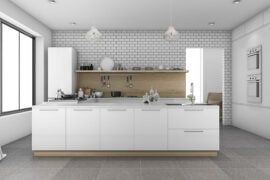
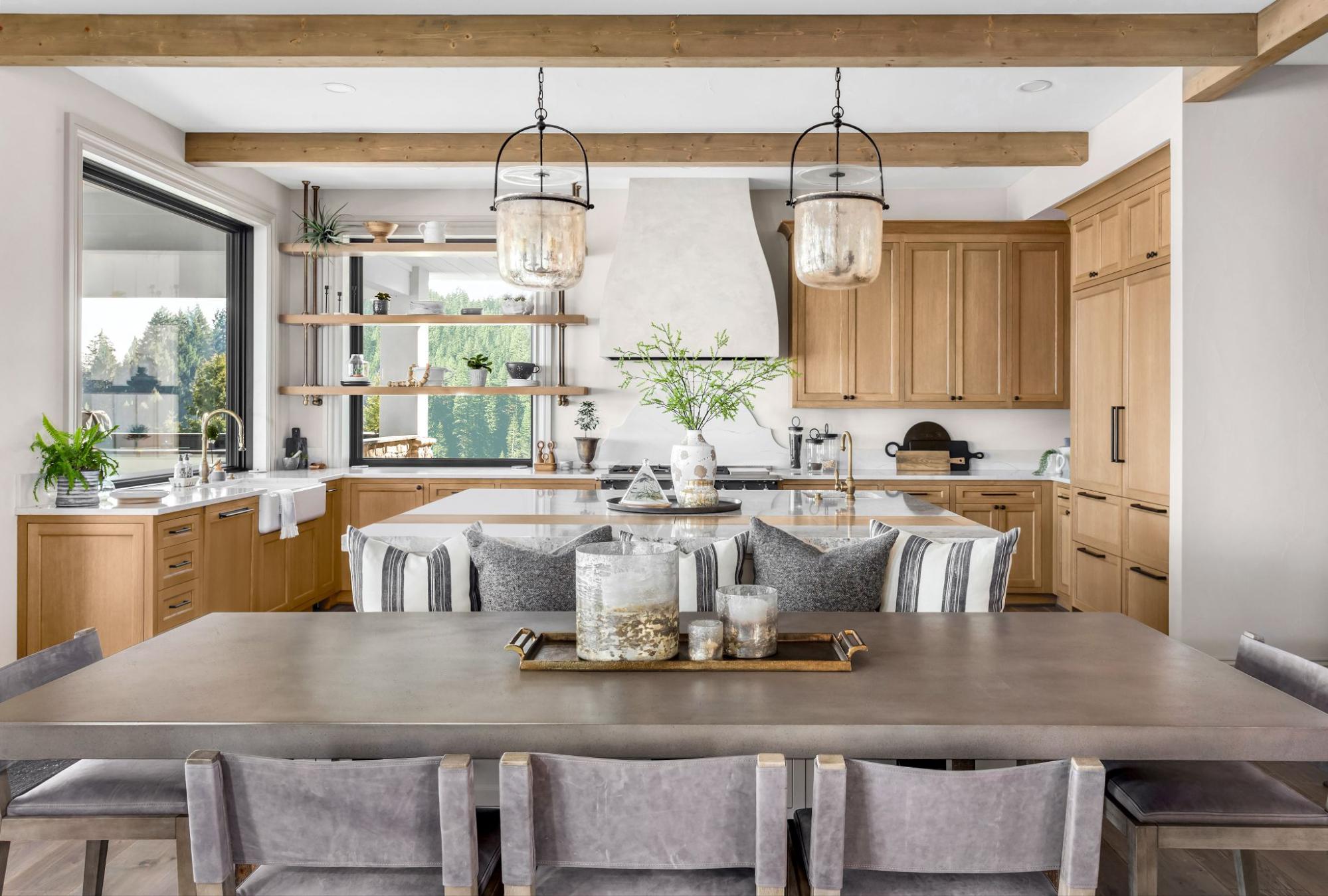
More recent houses in Los Angeles tend to cause the reverse issue. Rather than having too little to work with, the photographer might end up with too much. A single viewpoint could reveal a kitchen, a large island, the dining area, the living room, the staircase, the sliding glass doors, the pool and the view of the city. There’s a tendency to include all of these elements in a single photograph since the space looks impressive when seen in person.
The thing can quickly become visually confusing. A good photograph in the field of real estate must have a clear hierarchy; it should have something that draws the viewer’s attention first, with the rest of the image then supporting that element. For example, in a kitchen the island or the wall containing the range could be the focal point, while in a primary bathroom a freestanding tub placed up against a window might act as the point of interest. In a living room the focal point might be the way the fireplace, the glass doors and the exterior space relate to one another.
Even though a wide shot is useful since it enables the buyer to understand the open plan layout, it should not be the only way in which the property is presented. A second and more thoughtful composition can give the room a distinct identity. This is particularly important for estate agents who are selling modern luxury houses since buyers tend to be looking at a number of properties that have similar finishes and facilities. Photography that clearly highlights the most prominent feature of each room increases the chances of the listing appearing memorable.
When the View Becomes Part of the Room
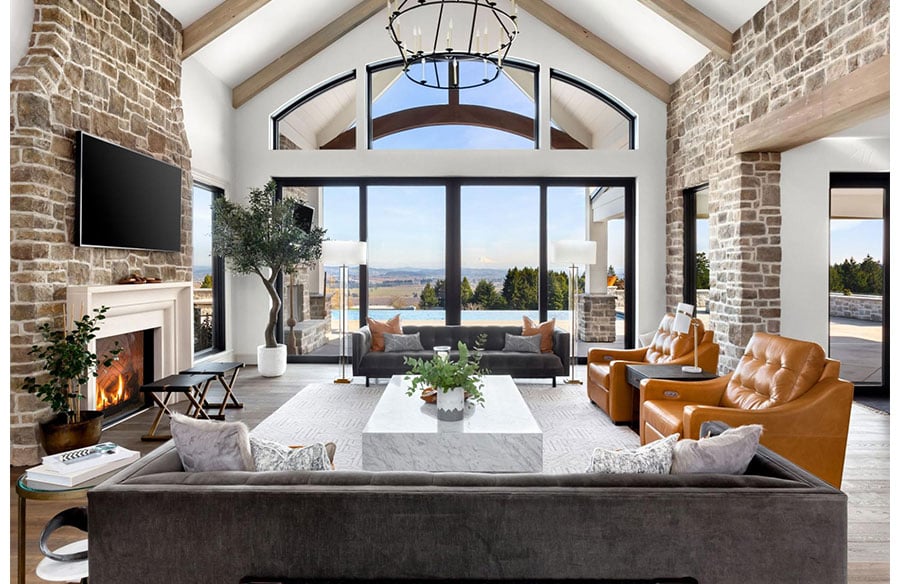
The view has perhaps the greatest influence on photography of real estate in Los Angeles. It is not necessary for a small window which opens onto a neighbouring property to take centre stage in a photograph, but in houses which have a living room looking out over the city, the canyon, or the ocean the situation is entirely different. In such homes the view is not merely background scenery; it can be one of the most valuable features being offered for sale.
The camera position must be adjusted in response to the situation. If you move the camera a few feet to one side, this can separate the window frame from the furniture. Either raising or lowering the camera a little might decide whether the horizon or the skyline stays in view. Using a different focal length can make the relationship between the room and the landscape seem more natural. Exposure also becomes important; if the windows become completely white, the photograph will lose a feature that the buyer has paid for. If the exterior is made unnaturally dark in an effort to show all the details, the image may come across as heavily processed and disconnected from how the space actually looked.
It is in this case that professional real estate photography in Los Angeles shifts from involving the application of a single technical procedure to all properties to consisting of an understanding of what the agent is really selling; in some houses that might be the amount of square footage, others it could be craftsmanship, natural light, architectural history, privacy, the idea of indoor-outdoor living or the way the house relates to its surroundings. The photographer must work out that value before deciding on how the property should be photographed.
Hillside Homes Need Context, Not Just Interiors
Hillside houses present another difficulty since the design generally doesn’t make much sense unless the site is seen. Even a nice collection of interior photos can’t show how the house is situated on the land, how the terraces link to the main living areas, where the pool is placed, or why some rooms have the views that they do.
In such homes, exterior photography becomes considerably more important. In some cases, the photographer has to go farther away rather than filling the frame with the façade. The slope, the landscaping, the retaining walls and the surrounding ground can all help to explain the property, and drone photography can also give information that is hard to communicate from the ground level, especially when the buyer needs to understand how the various outdoor areas relate to the house or where the house is situated in a canyon or hillside neighborhood.
For the agent the images do not just make the listing appear more dramatic; they also serve to reduce uncertainty. When a buyer looks at the photographs they start to grasp the relationship between the building, the land and the view before they see the property.
Lighting Should Change With the Home
A simple method of making different houses appear unnecessarily alike is to use the same kind of lighting on all of them. Those individual properties enjoy looking good with a bright and clean style of lighting. In other cases, however, they lose their individual character when all the shadows and tonal variations are eliminated.
A house in the Spanish Revival style might rely on the contrast between a shaded hallway and a bright courtyard. The interior of a Craftsman style could require sufficient depth in order to retain the richness of the wood. In the case of a modern white interior, a great deal more careful control of colour is needed since even a slight colour cast can become apparent on large walls and ceilings. A home with a lot of glass situated on a hillside would need a completely different approach since the balance between interior exposure and the exterior view becomes central to the overall appearance.
HDR, flash, ambient exposures and blended techniques are merely tools; the error lies in letting one of these tools become the visual style that is imposed on all properties. The final photographs should still convey the sense of the home that was actually photographed.
What Agents Should Really Look for in a Real Estate Photographer
Agents don’t require a photographer who talks to them about architectural history; they need one who pays attention to what is in front of them. This difference can be seen in the portfolio. Instead look at a number of houses rather than just one impressive listing. When all the living rooms seem to have been taken from the same angle, all the interiors are exceptionally wide and each property is given the same bright editing style, then the photographer is probably following a system rather than reacting to the individual house.
The portfolio should include a variety of examples. Certain rooms need to be broad in order that the layout can be explained. In other rooms a more settled atmosphere should be achieved. Key views must stay visible. The architectural lines should appear purposeful. Older houses should keep their texture and warmth, whereas modern spaces should appear clean without ending up sterile. Most important of all, the photographs must make it clear why one property is different from another.
It is in this respect that awareness of architectural design proves valuable in the field of real estate photography. Although the photographer has to help in selling the property, must ensure full coverage in the listing, work efficiently and supply images that are effective on the MLS, property websites and marketing campaigns, the best results are achieved when the camera does not have the composition already decided.
The design of the building can affect how the house should be photographed, and the photographer just has to realize when this is the case.