Old wood carries a story that new material simply cannot replicate. Architects and interior designers increasingly turn to salvaged timber not only for its visual character but also for the environmental and structural qualities it brings to a project. This shift reflects a broader change in how the building industry views sustainability and craftsmanship.
Why Reclaimed Timber Continues to Gain Ground
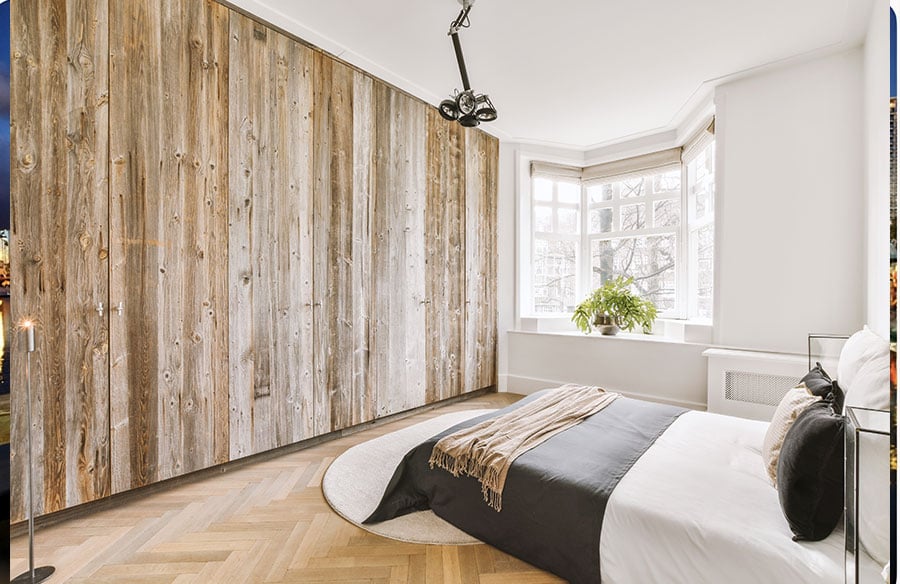
For decades, reclaimed timber was seen as a niche choice, mostly reserved for rustic interiors or heritage restoration projects. That perception has shifted considerably. Today, salvaged wood appears in minimalist apartments, corporate offices, and even large-scale hospitality projects. The reason is partly aesthetic: reclaimed timber has a depth of grain and patina that new wood needs decades to develop naturally. It is also partly practical, since older trees were often grown more slowly, resulting in denser, more stable wood.
There is also a growing awareness of embodied carbon in construction. Reusing timber from old barns, factories, or wine casks avoids the emissions associated with harvesting and processing new material. Specifiers who want to reduce a building’s environmental footprint without compromising on visual quality often find that reclaimed wood offers a rare combination of both.
Oak as a Material of Choice
Among the various species used in reclaimed construction, oak remains particularly sought after. Its density gives it excellent wear resistance, which matters greatly for flooring applications that see daily foot traffic. Oak also ages gracefully, developing a richer tone over time rather than looking worn out. When sourced from old structures, oak beams and planks often carry marks, nail holes, and surface irregularities that add authenticity without undermining structural integrity.
One product category that illustrates this well is Distressed oak flooring, which combines the durability of old-growth oak with a surface texture that feels genuinely lived-in rather than artificially aged. Unlike distressed finishes applied mechanically to new wood, flooring made from truly reclaimed oak carries a texture that developed over generations of use, which is difficult to replicate through manufacturing alone.
Practical Considerations for Specifying Reclaimed Oak
- Moisture content should be verified before installation, since reclaimed wood may have been stored in varying conditions.
- Sourcing transparency matters, as buyers should know the origin and age of the material.
- Finish selection affects both appearance and maintenance requirements over time.
- Board thickness influences how many times flooring can be sanded and refinished in the future.
Integrating Reclaimed Wood Into Modern Design
Designers often worry that reclaimed materials will clash with contemporary interiors, but the opposite tends to be true. The irregularity of old timber creates a natural contrast against clean lines, glass, and steel, giving a space warmth without making it feel dated. This contrast is one reason reclaimed oak flooring appears so frequently in modern renovations of industrial buildings, where the goal is to preserve a sense of history while updating the function of the space.
Suppliers specializing in reclaimed materials, such as Historisch Hout, work closely with architects to match specific tonal and textural requirements, since no two batches of reclaimed timber are ever entirely identical. This variability, while sometimes seen as a limitation, is often what gives a finished floor or ceiling its distinctive character. Matching boards for consistency while preserving natural variation requires experience, particularly when a project involves large surface areas that must feel cohesive despite the wood’s diverse origins.
As building codes and sustainability certifications continue to reward the use of reclaimed materials, it is likely that oak sourced from old structures will remain a staple in both residential and commercial design. Its combination of durability, visual richness, and environmental benefit gives it a lasting relevance that few new materials can match.