Architecture tends to be remembered for what we can see. The cantilever that seems to argue with gravity. The light that falls through a clerestory at four in the afternoon. The curve that turns a wall into a gesture. Yet most of what decides whether a building reaches its second or third generation happens at a layer we almost never photograph: the thin boundary between the structure and the weather. The envelope is the quietest part of any building, and it may be the part that matters most to the future we keep saying we want to build.
For much of the last century, the envelope was a story about assembly. We stacked materials, membranes, boards, sealants, and flashings, and we trusted the joints between them to hold. The difficulty is that buildings refuse to sit still. They expand in July and contract in January. They settle. They flex under wind and traffic and the ordinary vibration of a city going about its day. Every joint is a small negotiation waiting to be lost, and water, patient and unhurried, always finds the negotiation that fails first. A surprising share of the repair budgets that quietly drain schools, hospitals, and municipalities trace back not to dramatic structural failure but to this slow seepage at the seams.
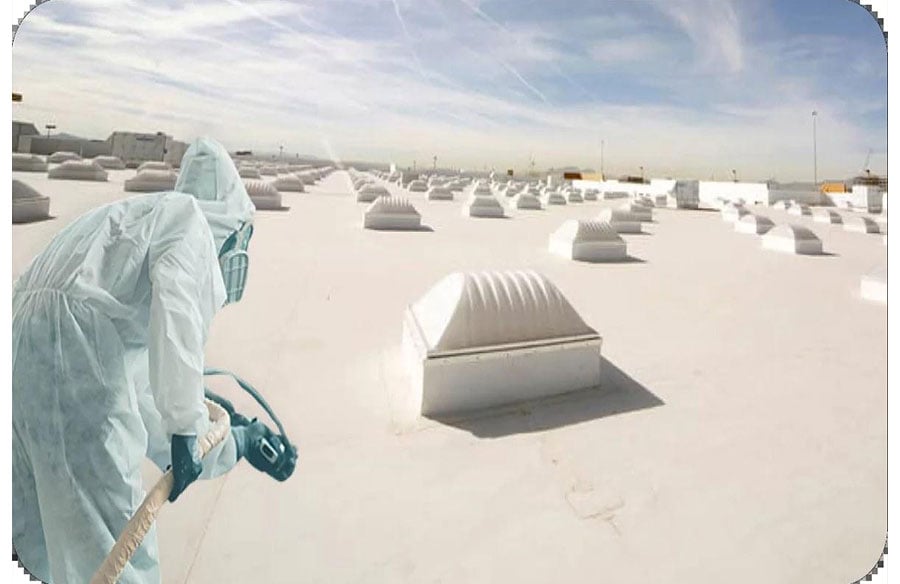
Over the past two decades, designers have been handed a different way of thinking about that outer skin. Instead of an assembly of parts held together at their edges, the outer layer can be applied as one continuous, seamless membrane. Sprayed elastomeric coatings such as polyurea go on as a liquid and cure within seconds into a flexible, monolithic film. Because there are no laps and no fasteners, there is nowhere obvious for water to begin its patient work. The membrane follows complex geometry, wraps penetrations and transitions, and moves with the substrate rather than tearing away from it. For an architect, that changes what is drawable. Forms that once frightened the waterproofing consultant become ordinary, because the protective layer is no longer fighting the design.
There is a deeper shift hiding inside this technical one. When the envelope stops being a collection of vulnerable joints and becomes a single continuous surface, resilience moves from something we bolt on at the end to something the building simply has. That distinction matters more each year. Storms arrive harder and more often. Freeze and thaw cycles grow less predictable. Coastal and industrial structures sit in chemistries that would have been considered extreme a generation ago. A skin that flexes, bridges hairline cracks, and resists corrosion is not a luxury in that climate. It is the difference between a structure that ages gracefully and one that is quietly failing behind a handsome facade.
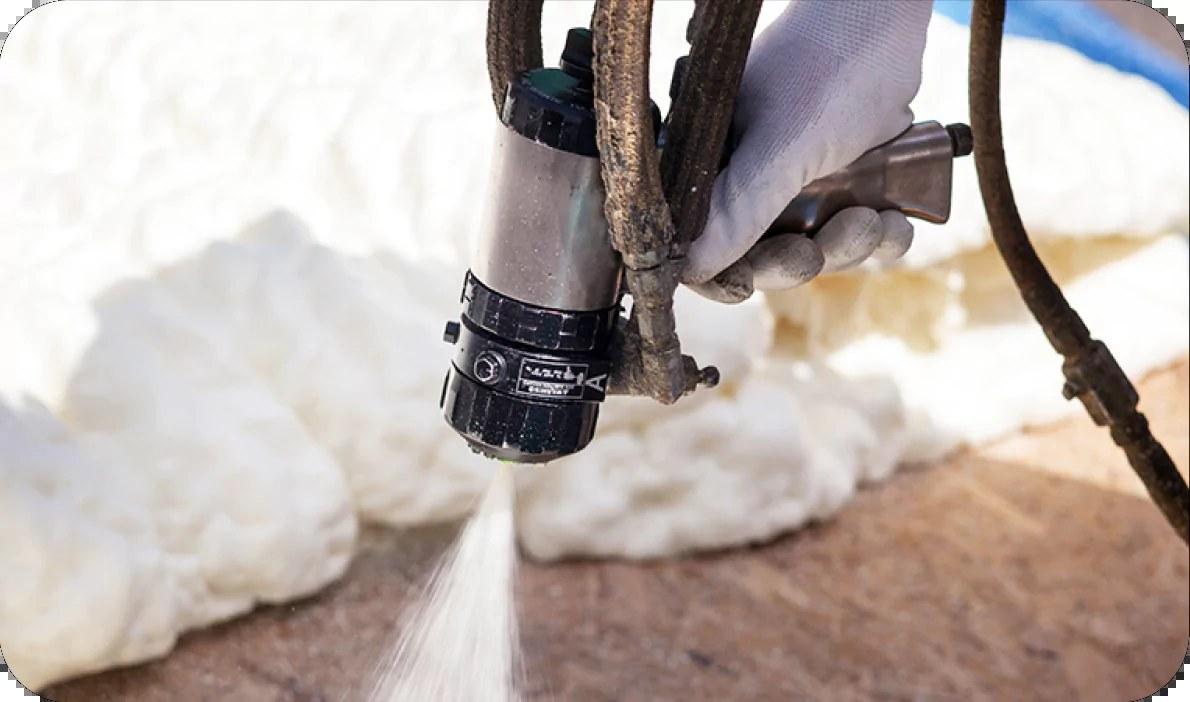
Performance at the surface is only half of the envelope’s job. The other half is thermal, and here the same logic of continuity applies. Sprayed spray foam insulation seals the gaps and thermal bridges that rob a building of the energy it works so hard to hold. Air moves through the smallest breaches, and traditional batts leave plenty of them at every stud, joint, and penetration. A continuous foam layer closes those paths, so the insulation a design specifies on paper is closer to the insulation the building actually delivers. In a discipline that now measures itself in carbon as much as in square meters, closing that gap between intention and reality is quietly one of the most consequential things a wall can do.
 None of this asks architecture to become less expressive. If anything, a dependable envelope frees the expressive parts to be braver. When the outer skin can be trusted to keep water out, hold heat in, and move with the building for decades, the visible architecture is liberated to do what it does best. The material honesty many of us admire in the work of Zumthor or in the careful tectonics of critical regionalism does not require exposed vulnerability. It requires that every layer, seen and unseen, does its work with integrity.
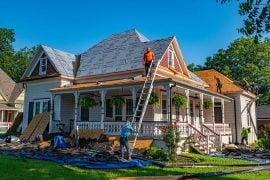
There is also a preservation argument, which the coming decades will make louder. The most sustainable building is usually the one that already exists. Adaptive reuse depends on our ability to give aging structures a second envelope, a protective layer that can extend service life without demolishing and rebuilding from scratch. A sprayed, continuous skin is unusually good at that task. It can be applied over concrete, steel, wood, and composite substrates, following what is already there rather than demanding it be torn away. Renewing the envelope, rather than replacing the building, may become one of the quieter climate strategies of the next twenty years.
So it is worth returning our attention, now and then, to the layer we forget. The seam that does not leak, the wall that does not sweat, the roof that shrugs off another decade of sun. These are not the images that win awards, but they are what allow the award-winning images to endure. If we are serious about rethinking the future of the built environment, we might start with its skin, and with the unglamorous, essential question of how a building keeps the weather where it belongs: outside.
This article is contributed by ArmorThane, a direct manufacturer of polyurea and polyurethane protective coatings and spray equipment since 1989.