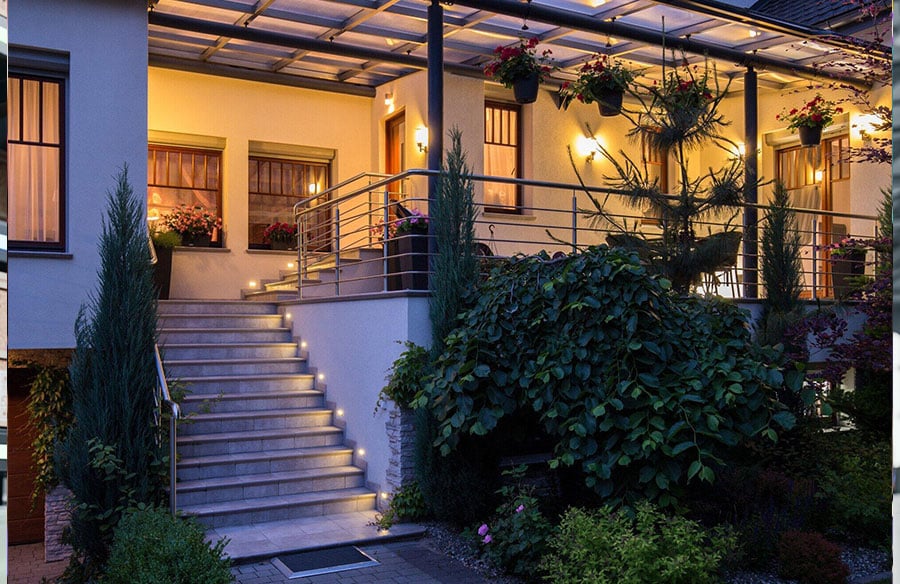
A well-lit exterior can make a building feel welcoming, safe, and distinctive after dark. A badly lit one can do the opposite: glare in neighbors’ windows, a hazy glow overhead, and an energy bill for light that never reaches the surface it was meant for.
Light spill is a familiar problem in dense neighborhoods, yet it is one of the easier ones to prevent. With a bit of planning, you can highlight a facade, guide people to the door, and keep the beam from wandering onto the street, the sky, or the property next door.
Why Exterior Lighting Matters
Exterior lighting does more work than most people give it credit for, and well-planned light supports several goals at once:
- Safety and wayfinding: lit steps, entrances, and paths help people move around while reducing the risk of falls or missteps.
- Security: visible entrances and clear sightlines make it easier to notice who is approaching, giving you better control over your property.
- Character: light can bring out texture, materials, and architectural details that disappear at night, such as accent walls or trees.
- Usability: lit terraces, entries, and parking areas stay functional after sunset.
- Presence: even a light glow signals that someone is home, which could help prevent crime when you are away for extended periods.
These benefits can be great for any property, but a lot depends on whether the light reaches the desired area. If not, there is a real risk of simply wasting energy. DarkSky estimates that at least 30 percent of outdoor lighting in the U.S. is wasted, mostly by fixtures that aren’t shielded, which adds up to about $3.3 billion a year.
The strategies below can help you keep your light working for the building rather than spilling past it.
Decide What Deserves Light
Before choosing any fixture, walk the property at dusk and list what actually needs illumination. Key spots might include entrances, steps, walkways, house numbers, and one or two features worth highlighting, such as a textured wall or a handsome entry.
Everything else can stay dark. Fewer lit surfaces means fewer fixtures, lower energy use, and less chance of light escaping. Include neighboring windows in your walk-through, since they are the places where spill does the most damage.
A short written plan that links each fixture to a purpose, such as safety, security, or accent, makes it much easier to say no to lights that don’t earn their place.
Choose Fully Shielded Fixtures
Shielding is one of the most effective ways to stop light from escaping. A fully shielded fixture directs light downward and keeps it from shining above the horizontal, so nothing reaches the sky or neighboring windows.
The problem is widespread: the National Park Service’s Night Skies team has monitored about 100 parks, and nearly every one showed at least some light pollution. So, especially if you are close to a nature reserve or can’t let light reach nearby properties, look for fixtures labeled full cutoff or dark-sky compliant. Alternatively, avoid bare globes and exposed-lamp lanterns, which throw light in every direction. Even a simple fixture swap can make a visible difference.
Aim Light Low and Close to Its Target
Place fixtures as close as practical to what they are lighting, and aim them down or across the surface rather than outward.
There are also some tricks: certain fixtures are created with a specific intended use in mind. When they are properly chosen and well-positioned, they can do a lot to reduce light spill. For instance, low bollards and step lights cover walkways without projecting into the distance, while narrow-beam wall washers or grazing fixtures keep light on the facade instead of past its edges.
Keep Brightness Low and Color Warm
More lumens do not mean better visibility, but, often, they mean glare, which makes surrounding areas look darker and harder to see. To avoid this counterproductive effect, choose the lowest output that does the job, and favor warm light of about 3000 K or lower, which scatters less into the night sky and is gentler on wildlife and neighbors. Plus, warm tones can also positively influence mood, as well as flattering brick, timber, and stone!
Add Controls So Light Works Only When Needed
To avoid wasting energy and causing more light spill than intended, consider setting up timers, photocells, and motion sensors. These keep lights from running when no one needs them and can help you control brightness at different times of the day.
For example, you can set entrance and path lighting at a low level from dusk to dawn, and use motion sensors to increase it next to doors and parking spaces. For facade lighting, program a curfew so decorative light switches off or dims late at night.
Smart controls make these schedules easy to adjust seasonally, and they cut energy use while reducing how much light spills out all night.
Use Light To Enhance Your Property Tastefully
Light as a concept in architecture isn’t reserved for museums, mansions, or commercial buildings. The same principles apply to an ordinary house, and they are easy to put into practice with a few changes:
- Swap bare porch bulbs for shielded wall lanterns or downlights.
- Light the path and steps with low fixtures instead of one floodlight.
- Use warm bulbs and the lowest brightness that feels comfortable.
- Add a timer or motion sensor to garage and side-door lights, so that they don’t become the main focal point.
- Check from the sidewalk and your neighbor’s yard for glare.
Last but not least, continue learning about how light creates a unique signature and can help your home become safer, more appealing, and more energy-efficient. Specialized resources, such as lovelighting.com, can help you stay on top of trends, learn more about new technologies, and discover new ways to realize stunning lighting designs without unwanted spill.
Lighting With Intention
Lighting a building exterior without light spill comes down to purpose and precision: decide what deserves light, shield and aim it carefully, keep it warm and modest, and let controls handle the schedule.
Do that, and the building looks better, the neighbors and the night sky are left in peace, and you pay for less wasted energy. Many of these steps can be done one fixture at a time, so you can improve the lighting gradually and continue learning about it in the process.
For more resources on leveraging light in architecture and design, visit Rethinking The Future.