Window replacement during home renovation is rarely just a matter of removing an old unit and fitting a new one into the opening. Windows sit at the intersection of facade composition, daylight, ventilation, thermal performance, and interior proportion. Changing them without considering the rest of the building can leave a technically improved house looking visually unsettled, while a carefully planned replacement can refresh the envelope without erasing the architecture that made the home distinctive in the first place.
For designers and homeowners, the useful question is therefore not simply which window performs best on paper. It is how the new unit will relate to the wall depth, trim, roofline, neighboring openings, interior finishes, and the climate conditions the facade has to manage.
Start window replacement with the facade, not the catalog
The most common mistake in replacement projects is choosing a product before studying the elevation. Window proportions often establish the rhythm of a residential facade. Narrow vertical openings, paired units, wide picture windows, and repeated head heights all contribute to the way the building is read from the street.
That makes replacement work especially sensitive on houses with a clear architectural language. A wider frame profile can reduce the visible glass area. Removing divided-light patterns can flatten a traditional facade. Changing trim dimensions around only a few openings may make those windows appear unrelated to the rest of the house.
Homeowners researching a window replacement company in Alpharetta, GA should therefore discuss more than product specifications. Existing opening dimensions, exterior trim, sill conditions, water management, and the appearance of neighboring windows all deserve attention before installation begins.
The company serves homeowners within a 50-mile radius of Marietta, covering Marietta, Atlanta, Alpharetta, Roswell, Cumming, Sandy Springs, Johns Creek, Milton, Woodstock, Acworth, and Canton. With more than 500 projects completed each year, its work involves a broad range of residential properties where accurate measurements and careful attention to existing architectural details are essential.
Window replacement during home renovation should follow the exterior work sequence
Windows rarely exist as an isolated construction package. They meet siding, masonry, flashing, interior drywall, trim, paint, and sometimes built-in cabinetry. If several of those elements are being renovated at the same time, sequencing becomes part of the design problem.
Replacing siding before deciding what happens to the windows, for example, can create unnecessary finish work later. The same applies when exterior painting is completed before deteriorated frames are removed.
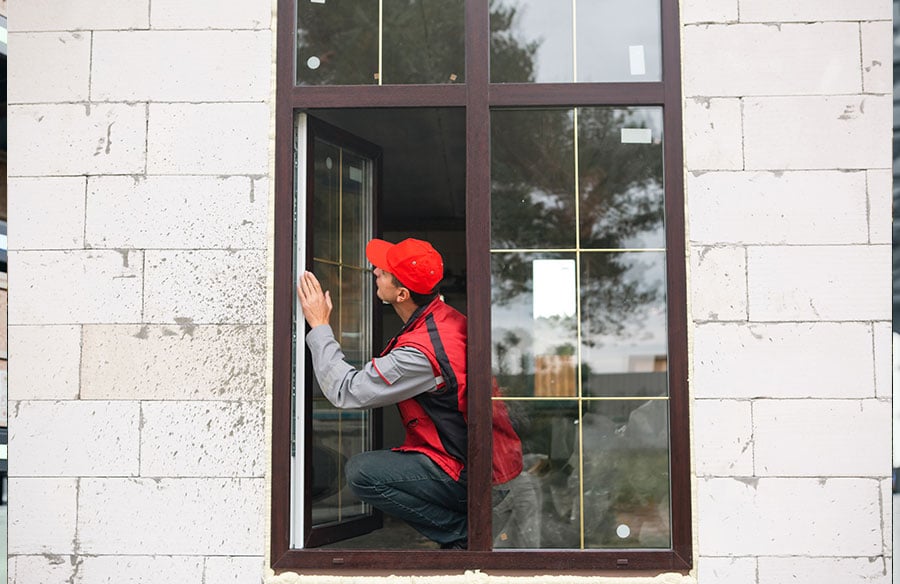
The installation process offered by the Marietta-based contractor begins with a free in-home measurement, during which homeowners can review window samples and receive a written final price directly from the owner. Once the details are agreed upon, the work moves through removal of the existing units, installation, sealing, and cleanup. A final walkthrough and warranty handover complete the project. According to the company, full-home window installations take one to two days, allowing homeowners to plan related renovation work around a relatively short installation period.
A coordinated renovation allows the window opening to be treated as an assembly rather than a decorative hole in the wall. That approach is consistent with broader exterior-renovation thinking, where window transitions, weather-resistive layers, trim, and drainage are planned together instead of being handed to separate trades with no common detail.
Questions worth resolving before installation
A short design review can prevent surprisingly visible compromises:
- Will the new frame preserve roughly the same glass-to-frame proportion?
- Does exterior trim need to be rebuilt or resized?
- How will head flashing and perimeter water management integrate with the existing wall?
- Will interior stools, casings, blinds, or built-ins need modification?
- Are other facade upgrades planned soon enough that the work should be coordinated now?
Daylight changes when frame geometry changes
Two windows with identical rough-opening dimensions do not necessarily provide the same amount of visible glass. Frame and sash profiles vary, and replacement systems may introduce additional material around the perimeter.
That difference matters most where daylight is already limited. A few inches lost around several windows can noticeably change the brightness of a room, especially on elevations with smaller openings.
The effect is also architectural. From outside, heavier frames can change the apparent scale of the openings. From inside, they may alter sightlines and make a window feel more enclosed.
This is one reason architects often think about the envelope and the interior as a single composition. A window belongs to both at once: it is a facade element from the street and a source of light, view, and proportion from the room.
Performance belongs in the design conversation
Visual continuity matters, but replacement windows are also building-envelope components. Comparing products means looking at thermal performance alongside appearance.
U-factor describes how readily heat moves through the window assembly, while Solar Heat Gain Coefficient indicates how much solar heat enters through it. Those figures should be considered together with orientation, shading, glass area, and local conditions rather than treated as isolated scores.
A large west-facing opening, for instance, creates a different problem from a shaded north-facing one. Matching every opening with the same glazing package may be convenient, but it does not always respond to how each facade actually receives sun.
Good replacement work balances comfort, daylight, and architectural consistency instead of optimizing one number at the expense of everything else.
Existing openings often reveal more than expected
Removing an old window can expose conditions that were invisible during the initial survey: deteriorated sheathing, failed perimeter seals, damaged trim, or previous repairs that did not manage water properly.
Those discoveries are not merely construction inconveniences. They can change the scope of the renovation because the new window depends on the condition of the surrounding wall.
For that reason, realistic planning should leave room for localized repairs once openings are exposed. Replacing a high-performance unit into a compromised assembly solves only part of the problem.
This is also where careful documentation helps. Before demolition, photographs of trim profiles, sill depths, interior casing, and adjacent finishes create a useful reference for reconstruction. Small details that seem obvious while the old window is still in place become surprisingly difficult to remember once it has been removed.
Replacement should improve the house without erasing it
There is a broader architectural argument for careful replacement rather than automatic reinvention. Existing buildings carry material, proportions, craftsmanship, and embodied resources that do not need to be discarded simply because one component has reached the end of its useful life. Contemporary renovation thinking increasingly treats repair and selective replacement as part of extending a building’s life rather than as a lesser alternative to starting over.
For residential projects, windows make that principle tangible. They can be upgraded for comfort and performance while still respecting the spacing, rhythm, and visual hierarchy of the original elevation.
The best window replacement during home renovation often looks less dramatic than expected. The house feels brighter, tighter, and more resolved, but the windows still appear to belong exactly where they are. That is a stronger architectural result than making every new component announce itself.