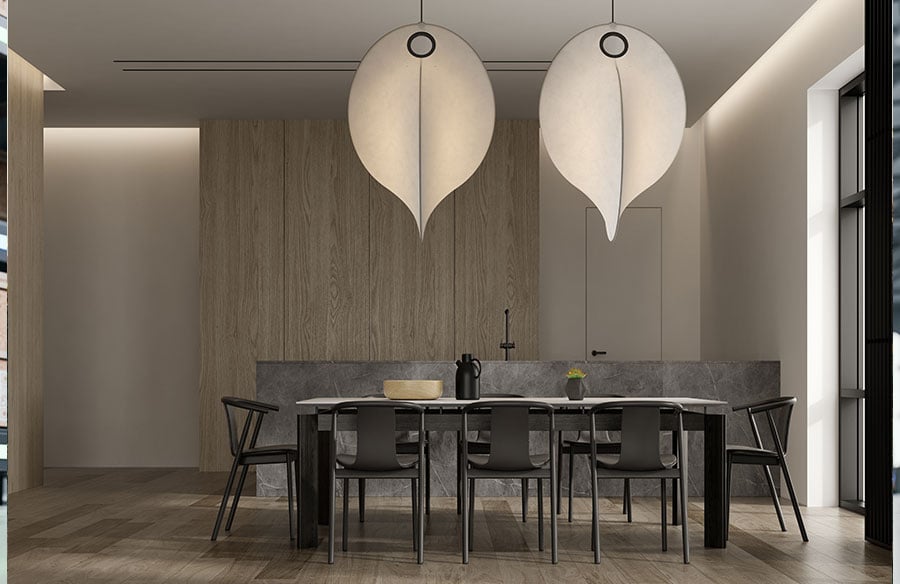
Imagine two living rooms with the same pale walls, timber floor, and generous windows. In one, a central ceiling light provides most of the illumination. In the other, a sculptural fixture anchors the seating area while wall lights reveal the texture of the plaster. The rooms have the same layout, yet feel different.
Lighting affects what we notice, where we gather, and how we read the dimensions of a space. That is why architectural lighting fixtures deserve attention early in residential design, not just when the furniture is being chosen. Some fixtures are meant to stand out. Others work best when they almost disappear.
When a Fixture Becomes Part of the Architecture
A light fixture is a physical object as well as a source of illumination. Its outline and position remain visible even when the light is off.
In a minimalist home, a slim linear pendant might follow the length of a kitchen island, echoing the geometry of the cabinetry. Against exposed timber beams or a richly patterned ceiling, discreet recessed fittings might be a better choice. They let the materials hold attention.
Contrast can be effective too. A rounded glass pendant can soften a room filled with straight lines and hard surfaces. A fixture need not match its surroundings. It simply needs a reason to be there.
Scale Changes How a Room Feels
Ceiling height affects the kind of fixture a room can accommodate, but furniture, circulation routes, and sightlines matter too.
In a double-height entrance, a suspended chandelier can make the vertical volume easier to appreciate. Over a dining table, a pendant brings light closer to the people sitting beneath it and gives the table a clear place within an open-plan room. In a narrow hallway, by contrast, an oversized hanging fixture may interrupt movement and make the space feel crowded.
Designers need to consider the fixture from several viewpoints: standing at the doorway, seated at the table, and walking beneath it. A light that looks perfectly balanced in an elevation drawing may feel intrusive at eye level. That is worth checking before installation.
Materials and Finishes Tell Their Own Story
A fixture’s material can establish a relationship with the rest of the interior before it casts any light. Brushed brass can complement warm wood and earthy stone, while dark metal creates a crisp contrast against pale walls. This relationship is equally important in bathrooms, where lighting fixtures, mirrors, and bathroom vanities work together to shape the space. Brass wall sconces can echo vanity hardware, while soft glass shades balance the textures of natural stone countertops or timber cabinetry. The goal isn’t to match every finish but to create a thoughtful connection between materials.
Glass brings another dimension to lighting design. Clear shades reveal the bulb and the fixture’s structure, while opal glass diffuses light for a softer appearance. Placement also affects how surrounding materials are perceived. A carefully positioned light can highlight the texture of a stone wall or the natural grain of timber, while broader, diffused illumination creates a calmer atmosphere. These subtle interactions show how lighting and architectural materials can complement one another without competing for attention.
Giving Each Space Its Own Light, Without Losing Cohesion
An open-plan home may contain a kitchen, dining area, and lounge in one continuous room. Each needs a slightly different kind of light, but they should not feel like three unrelated interiors.
Pendants can mark the kitchen island as a working surface. An expressive fitting above the dining table signals a place to gather. Floor lamps or sconces provide gentler light near the sofa in the evening.
The fittings need not match, but their shapes, finishes, or visual weight should relate. Comparing different residential lighting fixtures, including pendants, chandeliers, wall sconces, and ceiling-mounted designs, can help clarify which pieces belong together and which should take a supporting role.
Function still has to lead. A dramatic pendant over a kitchen island may look convincing in a photograph but perform poorly if it casts shadows across the worktop. Decorative light works best when it is supported by illumination where people actually need it.
Comfort Matters as Much as Appearance
The most striking fixture is not necessarily the most pleasant one to live with. An exposed bulb near eye level may create glare, and a beautiful shade may direct too little light toward a reading chair or countertop.
Beyond appearance, good selection involves light distribution, color quality, maintenance access, and whether a fixture can be dimmed with the intended controls. Warm lighting can feel inviting in a living area, but consistency and the activities taking place in the room matter more than following a single formula.
Decide early: finished ceilings and fixed wiring can limit fixture placement.
Extending the Design Beyond the Front Door
Exterior fixtures also influence the character of a home. Wall lanterns can give an entrance rhythm, while porch lighting reveals the depth of a doorway and makes the route easier to navigate.
Outdoor fittings need to suit the exposure of their location, not just the home’s style. Light should be aimed where it serves a purpose, with care taken to avoid unnecessary glare and spill into neighboring spaces. A well-lit entrance does not require an overlit facade.
A More Considered Approach to Residential Lighting
Lighting fixtures are among the few design elements that shape a room both as objects and through the light they produce. Their dimensions affect proportion; their finishes interact with surrounding materials; and their placement can quietly define how a home is used.
The best choices are rarely the most elaborate ones. They are the fixtures that make sense in their setting, provide comfortable light, and help the architecture feel complete.