Ranthambore Fort, a historic landmark that holds much of a cultural essence, stories from the past, a nature reserve and a lot. Located on the hills of the Aravali range and Vindhya range, the fort is a hill, built with amber coloured stone that makes it camouflaged with the mountain ranges. The strategic design of the fort is planned for defensive reasons for the royal Rajput families who once owned the fort.
The Prologue: Fort that blends
Ranthambore Fort is found on top of hills, yet feels unseen from the ground plains due to dense forest that covers the pathway to the fort. The fort, being in blend with the Aravali hills, makes it quite different by marking a name under the UNESCO heritage site, a home to multiple natural wildlife, which was somehow initiated by the government to make a tiger reserve near the fort named after it. Marking its location, the fort caters to multiple hill observatories, lakes at its feet for water supply to wildlife, and dense deciduous flora.
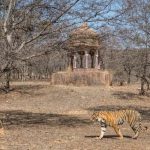
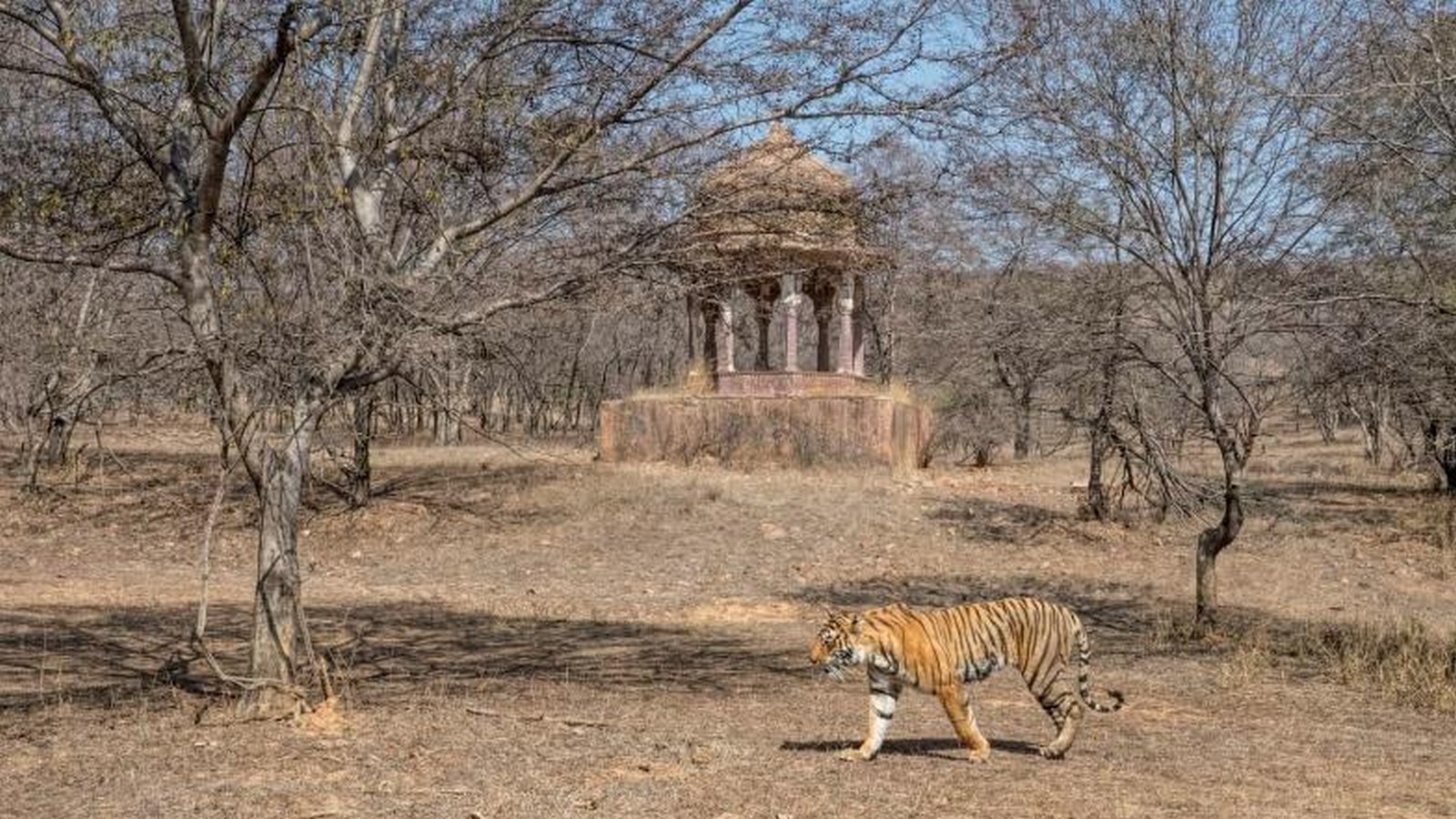
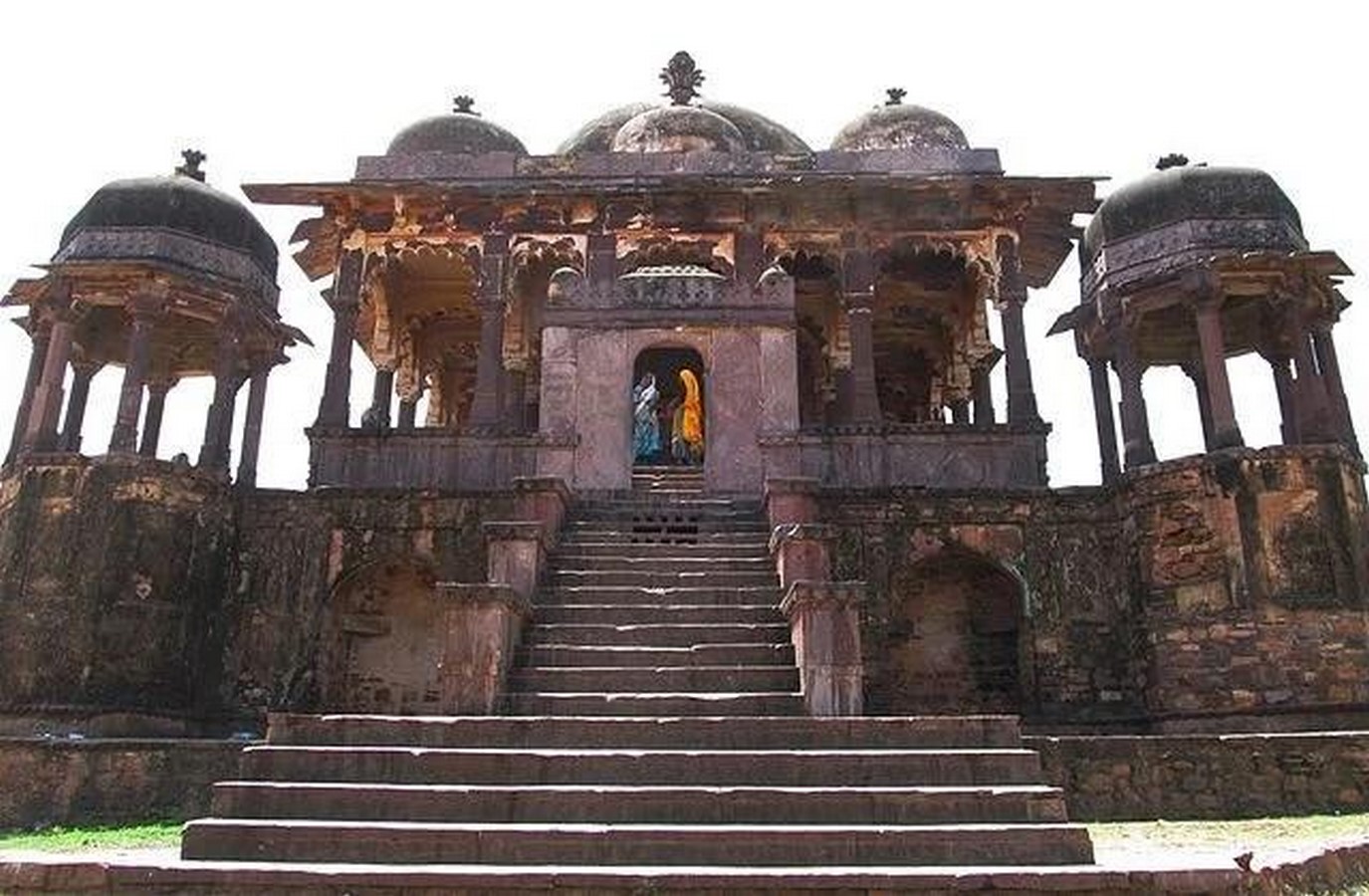
The fort forms multiple dome – like elevated structures that show the Indo-Islamic architectural design element. (fig. 1) The dome-like structures are locally called chhatris, which not only embrace the fort but also function as a part of natural elements for the wildlife. Multiple encounters by the locals and visitors claim that very rarely wild tigers have been seen near these chhatris, either sitting, eating, or resting. One of the largest chattri known as The Badi Chattri, like any other chattri, includes a Shivalinga under its dome.
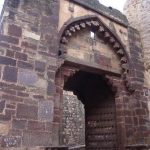
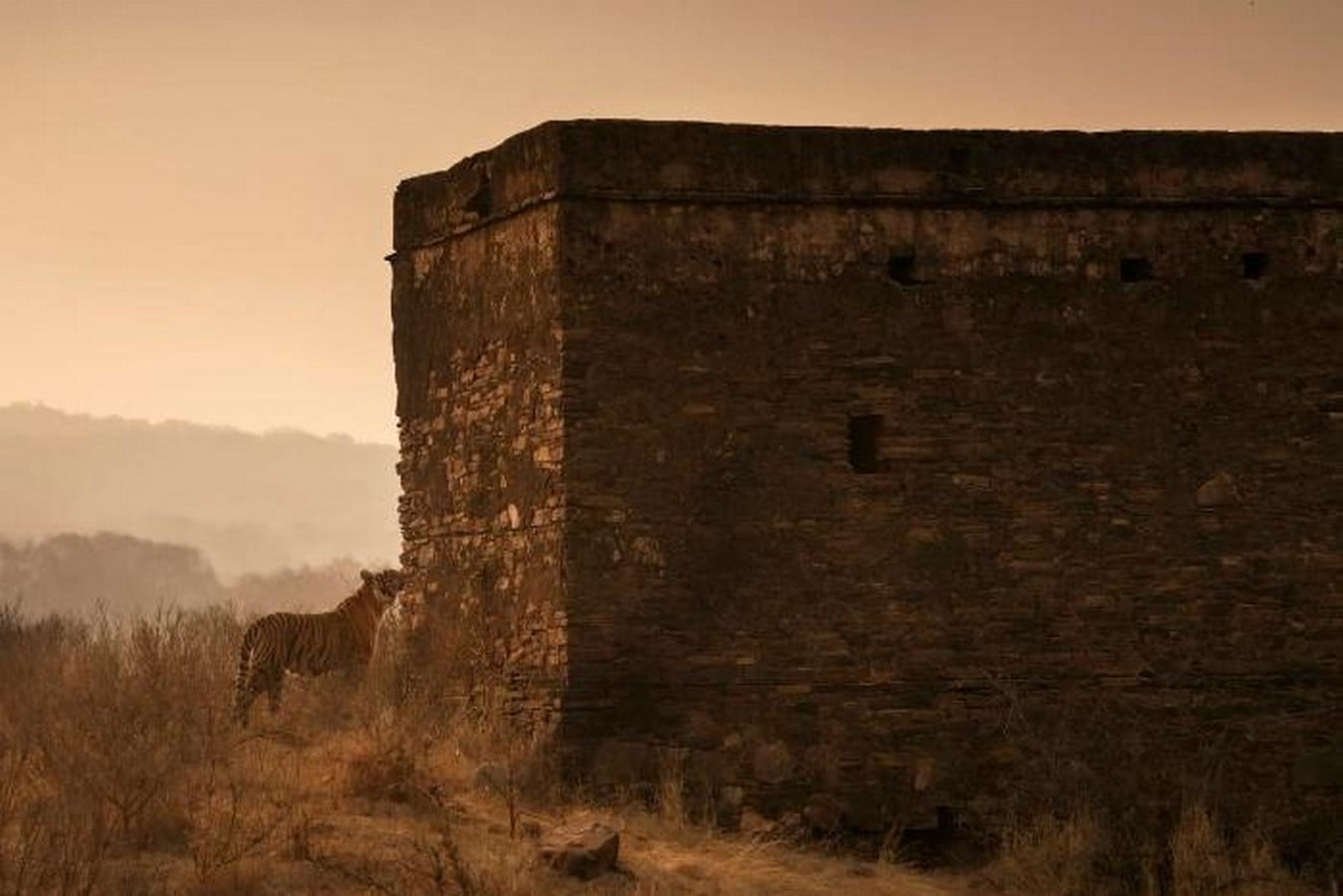
Many plain-looking buildings within the fort are seen with one doorway and walls surrounding three sides. These structures often functioned as resting houses for visitors in the olden times (fig.2). Whereas now these structures are often a place where wild tigers can be seen marking their territory and ownership over these built structures by spraying urine over them. (Singh, 2025)
Architectural Anatomy
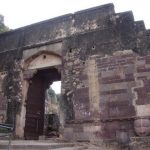
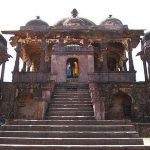
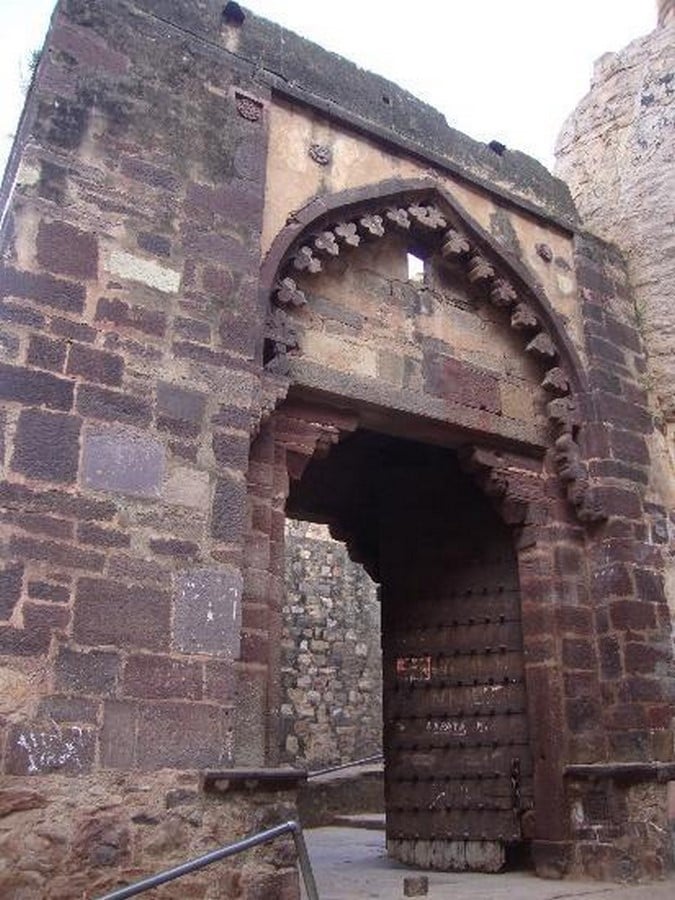
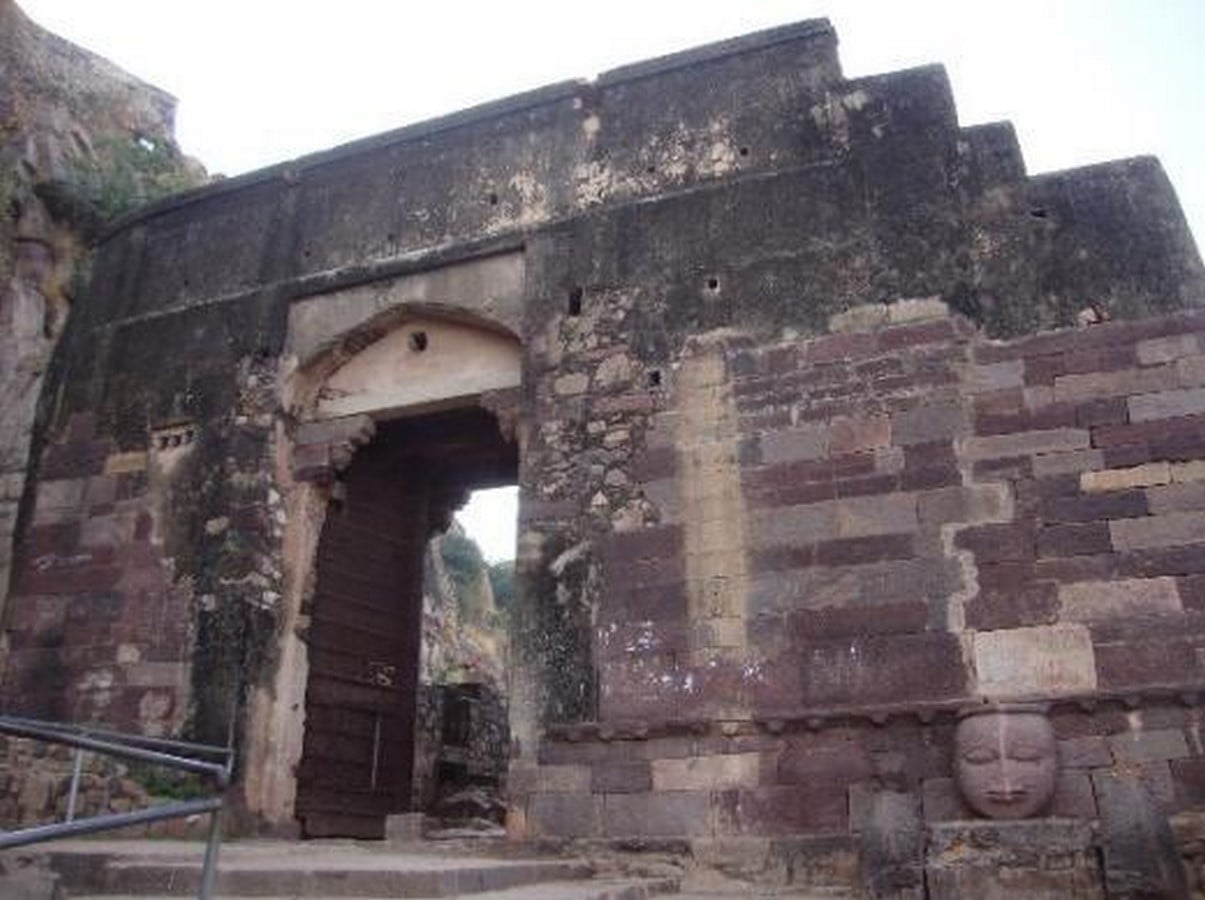
The strategically designed fort with multiple key defensive architectural features became one of the reasons why every other ruler from different dynasties wanted to conquer it. But as already said, due to its strategic design, it was invincible. The fort’s design consists of seven gates that create a smart illusion of sharp right-angle turns, creating z shaped paths and disrupting the attackers from invading the fort. Navlakha Pol, Hathi Pol, Ganesh Pol, Andheri Pol, Delhi Pol, Sat Pol, and Suraj Pol are seven exquisitely crafted gates of the fort, also known as “pols”, depicting the Rajput culture and history. (n.a,2024) Each gate has been designed with some relevance, tribute, or importance. In case one of the gates was conquered by the enemy, the inhabitants used to fall back, and the defence strategy was concentrated on the next gate. Most of the gates have huge nails embedded in them so that, in case the enemy was using the elephants to tear down the gates, the elephant would not be able to attack due to these huge nails. (fig.4) The Hathi Pol is specifically named in reference to this. Ganesha Pol is dedicated to the Hindu deity lord Ganesha. (fig.3) (n.a, 2013)
The strategic location of the building and large stone walls found at a height of around 700 ft provided natural barriers and commanding views from the fort. These large walls describe the stubborn nature of the architect of this golden age fort, Raja Hammir Dev Chauhan. The fort proudly stands with the ideas of Rajput military architecture, which can be seen in the massive sandstone pillars and soaring ceilings of the fort. Hammir Kachahari, found near the Delhi gate in the north-west direction of the fort, was built on a raised plinth and consists of a central chamber (19.50m X 11.90m), flanked by two rectangular chambers on either side. The ceiling of the palace is divided into two rows that create fifteen chambers in the palace. The structure is built using stone rubble in lime mortar, veneered by roughly dressed slabs.
Near the Hammir palace, the Battis Khamba Chhatri, a three-terraced structure, is seen approaching from the north through a flight of steps. The top tier of the structure caters to a roof that rests on thirty-two pillars. The outer row of the chhatri consists of six pillars, while the inner one, caters four pillars on each side. The lower part of each pillar consists of a square-shaped shaft, and the upper part of the pillar is mounted with an octagonal shape that is surmounted by a capital.
The Historic echoes
Ranthambore Fort is considered one of the very first settlements in the area surrounding Sawai Madhopur.in Rajasthan. The structure is believed to have been built during the mid-tenth century AD, but the history holds multiple theories. Some say Chauhan Rajput King Sapaldaksha’s reign was the period when the fort’s construction began in 944 ADS, while some believe it was built by King Jayant, who was also a Chauhan Rajput. Due to its location, the fort held an important part in the trade route between North India and Central India, which gradually made it coveted by the rulers of North India. The fort flourished and developed during the reign of the last ruler of the Chauhan dynasty, King Rao Hammir (1282 – 1301 AD).
The fort was attacked three times by the ruler of Delhi, Ala-ud-din Khilji, from 1300 AD to 1301 AD. After several failed attempts, the fort was conquered in 1301, marking the end of the Chauhan dynasty. The fort saw multiple changes during his reign until the next three centuries, until Akbar, the great Mughal emperor, finally took over the Fort and dissolved the State of Ranthambore in 1558. The Mughal rulers held the fort until the mid-eighteenth century. This is the reason Fort’s architectural style holds magnificent Indo-Islamic elements.
The Spiritual Heart within Fort
The Rajput king’s secularity can be seen with the provision of a temple and mosque within the fort. The Trinetra Ganesh Temple is one of the unique temples of Lord Ganesha where he’s worshipped in his very rare three-eyed idol along with his complete family, including his wives Ridhi and Sidhi, sons named Shubh and Labh and his beloved loyal vehicle Mushka. (Bhagat,2025)
It is believed that the temple was built by King Hammir as a devotion of gratitude. During the war with Khilji, when the fort lacked food and other supplies, being a devotee of lord Ganesh, he prayed, and one night he dreamt that the deity appeared before him and assured him that his troubles would end by morning.
At dawn, a miracle took place. An idol of Lord Ganesha with three eyes (Trinetra) appeared from the fort wall. After which, the king’s godowns were mysteriously filled with supplies, and the war ended. (fig.5) (Times Now News, 2024)
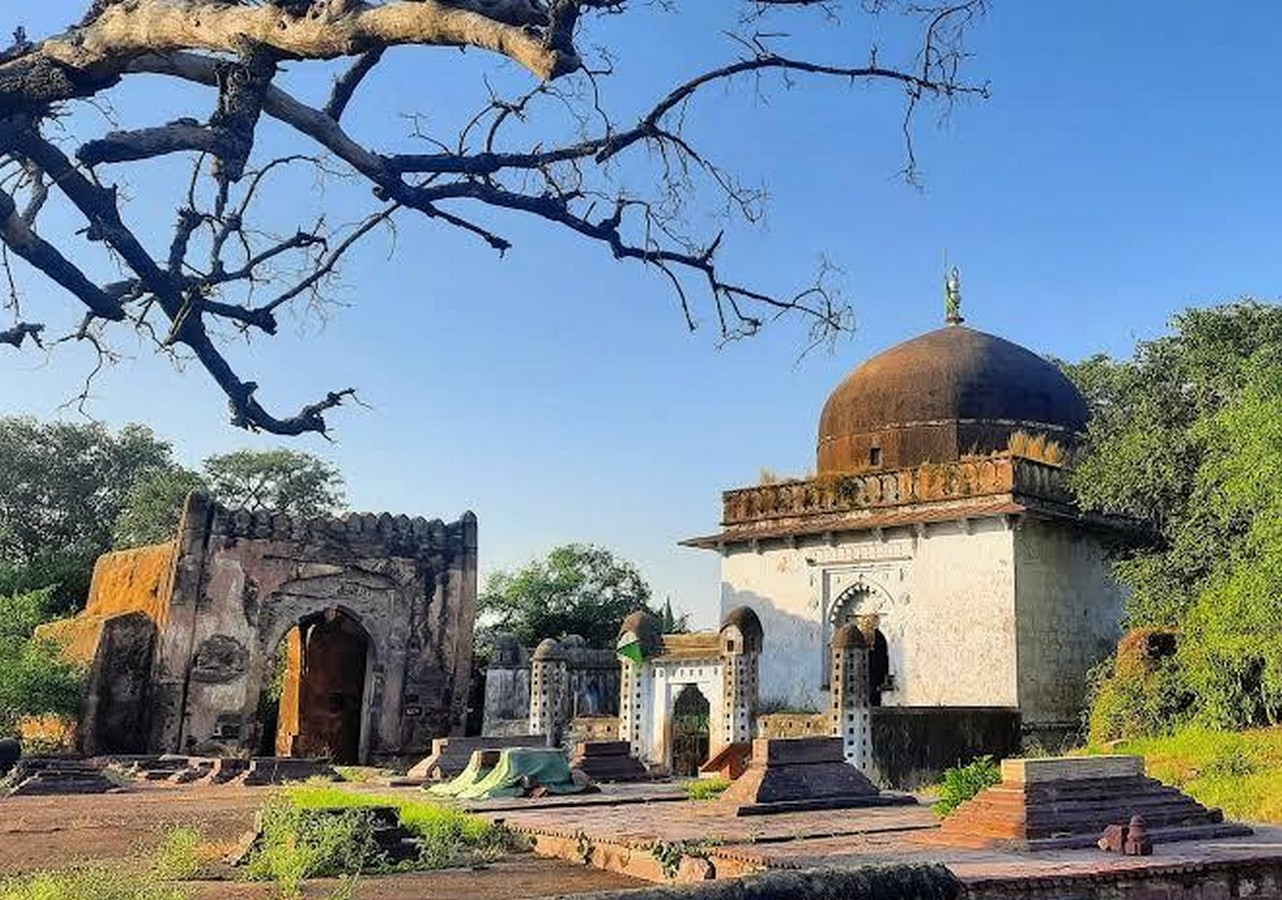
The Dargah Kazi Peer Janab built between the 13th and 14th centuries is a tribute to Kazi Peer Janab Sadrud-Din, a respected Sufi saint who devoted his life to serving the people and spreading the message of peace. The gate (Pol) found near the back of the dargah makes the entrance mystical to the space, promoting the idea of a transition where visitors pass from the materialistic world into a realm of spirituality. (The Islamic Heritage, n.d.) Enchanting the spiritual ambience and architectural charm, the cemetery in front of the dargah adds to the atmosphere of reflection, where the tombs of devotees are scattered beneath the sky, each telling its own story. The dargah’s complex, though of modest size, is a place of deep reverence. It is well-maintained by the caretakers of the fort’s mosque, ensuring the structure stays intact and accessible for all who seek spiritual solace. (fig.6)
Reference List for Content:
- Climber-Explorer (2013). Gates of Ranthambore Fort. [online] Climber-Explorer. Available at: https://climber-explorer.blogspot.com/2013/06/gates-of-ranthambore-fort.html [Accessed 1 Jan. 2026].
- Jungle Cave Ranthambore (n.d.). Ranthambore Fort. [online] Available at: https://www.junglecaveranthambore.com/ranthambore-fort.html [Accessed 1 Jan. 2026].
- Ranthambore Forest (n.d.). About Ranthambore Fort: Attractions and History. [online] Available at: https://www.ranthamboreforest.com/attraction/ranthambore-fort/ [Accessed 2 Jan. 2026].
- Roundglass Sustain (n.d.). Ranthambore: Majestic Forts and the Reign of the Tiger. [online] Available at: https://roundglasssustain.com/photo-stories/ranthambore-tiger [Accessed 2 Jan. 2026].
- Saini Safari Tours (n.d.). Ranthambore Fort: Architecture and Monuments. [online] Available at: https://www.sainisafaritours.com/RanthamboreFort.aspx [Accessed 3 Jan. 2026].
- The Islamic Heritage (n.d.). Dargah Kazi Peer Janab (Ranthambore). [online] Available at: https://www.theislamicheritage.com/detail/Dargah-Kazi-Peer-Janab-Ranthambore- [Accessed Jan. 2026].
- Times Now News (2024). Ganesh Chaturthi: This 700-year-old temple in Ranthambore is the only one in the world where Lord Ganesh is with his whole family. [online] Available at: https://www.timesnownews.com/spiritual/ganesh-chaturthi-this-700-year-old-temple-in-ranthambore-is-the-only-one-in-the-world-where-lord-ganesh-is-with-his-whole-family-article-152482114 [Accessed 3 Jan. 2026].
- Wildlense (n.d.). Ranthambore Fort: A Historic Marvel Amidst Wilderness. [online] Editorial Desk. Available at: https://wildlense.com/blogs/editorial-desk/ranthambore-fort-a-historic-marvel-amidst-wilderness [Accessed 3 Jan. 2026].
For Images:
- Fig 1 – Ranthambore Forest (n.d.). About Ranthambore Fort: Attractions and History. [online] Available at: https://www.ranthamboreforest.com/attraction/ranthambore-fort/ [Accessed 2 Jan. 2026].
- Fig2 – Ranthambore Forest (n.d.). About Ranthambore Fort: Attractions and History. [online] Available at: https://www.ranthamboreforest.com/attraction/ranthambore-fort/ [Accessed 2 Jan. 2026].
- Fig 3- Climber-Explorer (2013). Gates of Ranthambore Fort. [online] Climber-Explorer. Available at: https://climber-explorer.blogspot.com/2013/06/gates-of-ranthambore-fort.html [Accessed 1 Jan. 2026].
- Fig4 – Climber-Explorer (2013). Gates of Ranthambore Fort. [online] Climber-Explorer. Available at: https://climber-explorer.blogspot.com/2013/06/gates-of-ranthambore-fort.html [Accessed 1 Jan. 2026].
- Fig5 – Jungle Cave Ranthambore (n.d.). Ranthambore Fort. [online] Available at: https://www.junglecaveranthambore.com/ranthambore-fort.html [Accessed 1 Jan. 2026].
- Fig6 – Jungle Cave Ranthambore (n.d.). Ranthambore Fort. [online] Available at: https://www.junglecaveranthambore.com/ranthambore-fort.html [Accessed 1 Jan. 2026].