Most of us believe that a room’s color, furnishings, or style influences how we react to it. However, our emotional responses to constructed settings start long before those outward features become important. Beneath the surface, there are more subdued factors influencing our emotions. These are light, proportion, and scale. They are not ornamental decisions. They control our feelings of comfort, alertness, groundedness, and overwhelm in a given area. They function even before consciousness itself, before language, and before thought.
In this sense, design is more than just aesthetics. It’s sensory. A place speaks to the body first. We straighten up when confronted with a high ceiling, we soften in a warmly lit room, and we hesitate in a space that feels too narrow or too exposed. The effects appear subtle, but they shape the psychological character of the spaces we inhabit.
Scale: The Body’s First Conversation with Space
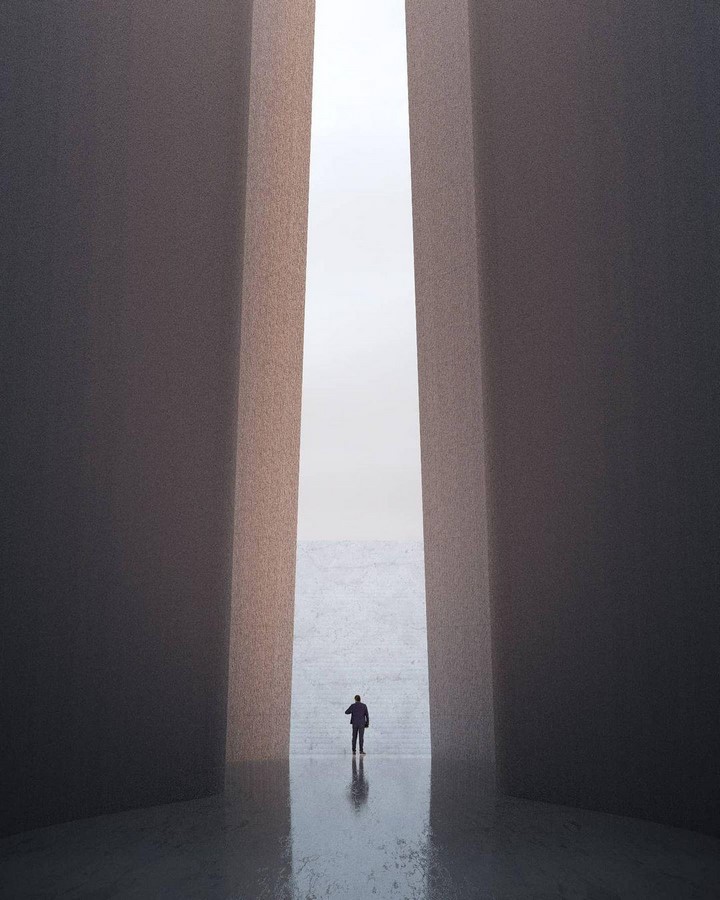
Scale refers to the direct spatial relationship between the human body and its environment. It conveys an emotional tone without the need for symbolism or explanation.
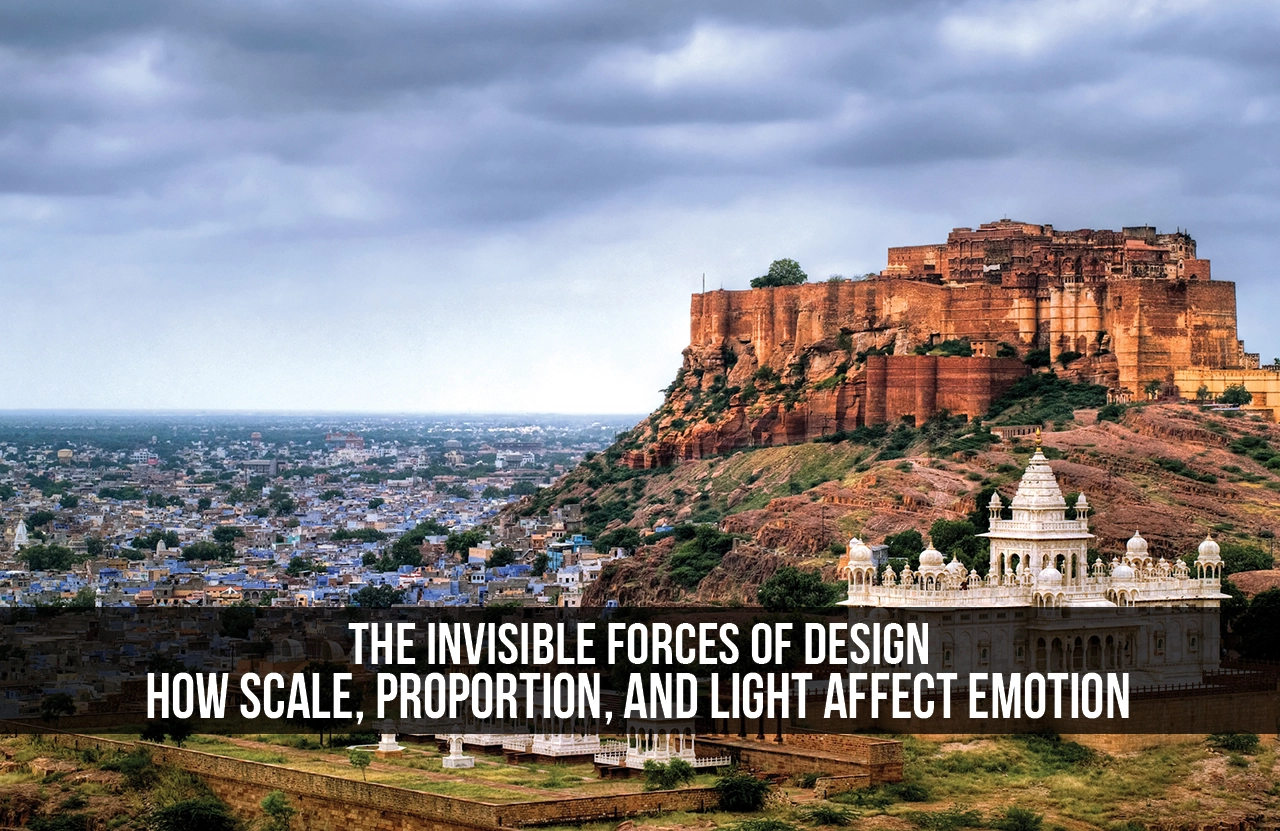
Take the Mehrangarh Fort in Jodhpur as an example. Its enormous stone walls rise majestically above the city, serving not just as a means of defense but also to evoke a sense of awe. The scale of the fort communicates power and permanence, making visitors acutely aware of their own smallness in the presence of history.

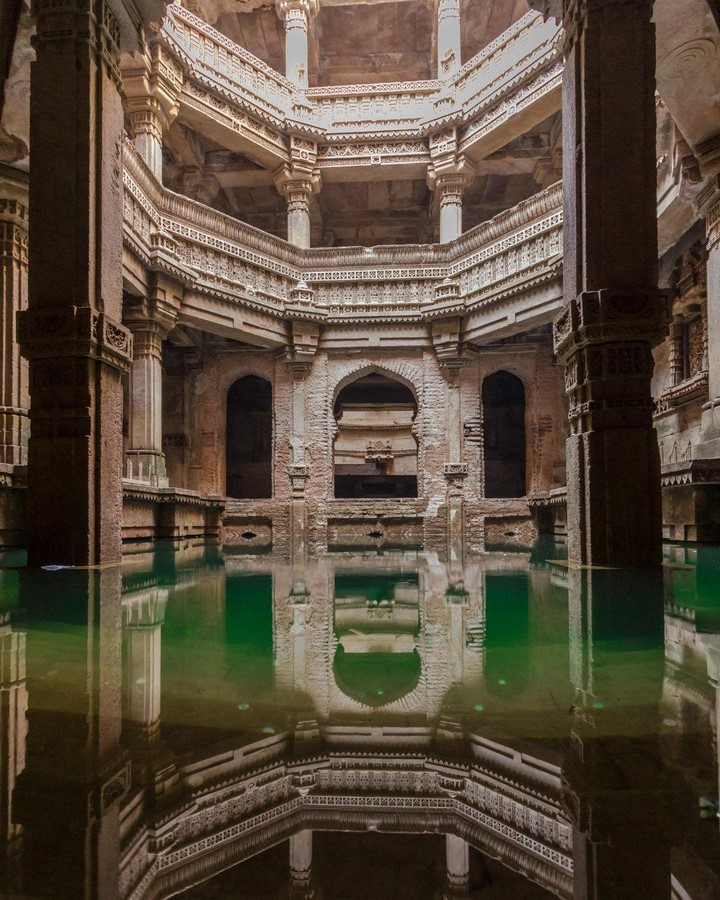
In contrast, consider the stepwells of Gujarat, like Adalaj ni Vav. Although these structures descend deep into the earth rather than rising above it, the experience of moving through them feels intimate. As you descend, the scale of the space changes step by step; the walls close in, the temperature drops, and the light shifts. This narrowing of the space encourages reflection, allowing your body to readjust to a sense of quiet.
At IIM Bangalore, designed by B. V. Doshi scale plays a social role. The corridors are neither too wide nor too narrow; they encourage walking, pausing, and conversation. The scale of the courtyards draws students outward and then brings them back in, choreographing movement like a gentle, continuous rhythm. Here, scale fosters a sense of community.
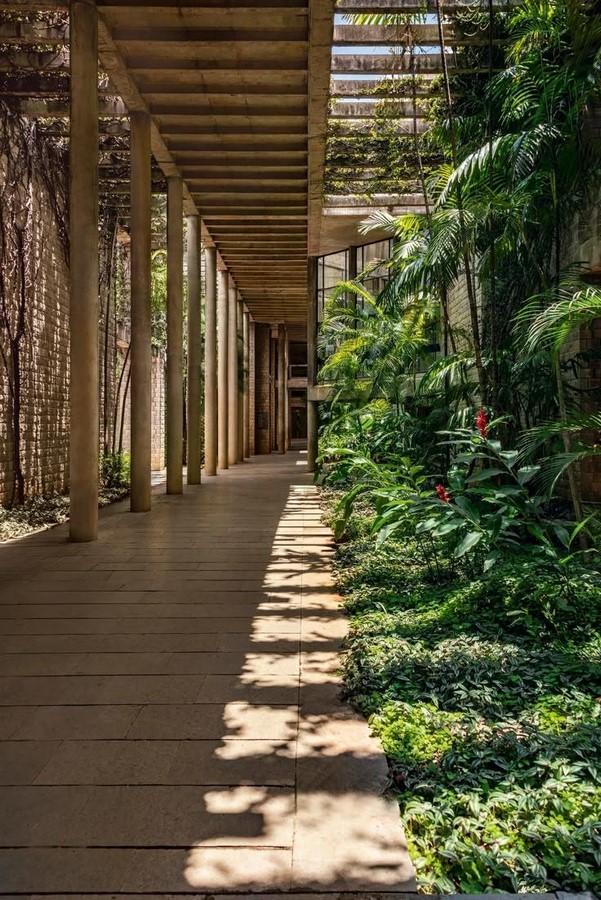
It is not just about being big or small; rather, it is about how space influences our presence and behavior, shaping our interactions before we even think about it.
Proportion: When Space Feels “Just Right”
Scale determines the size of something, while proportion governs how well the parts of a space relate to one another. A space with balanced proportions feels calm and natural, whereas distorted proportions can make a beautifully decorated area feel uneasy.
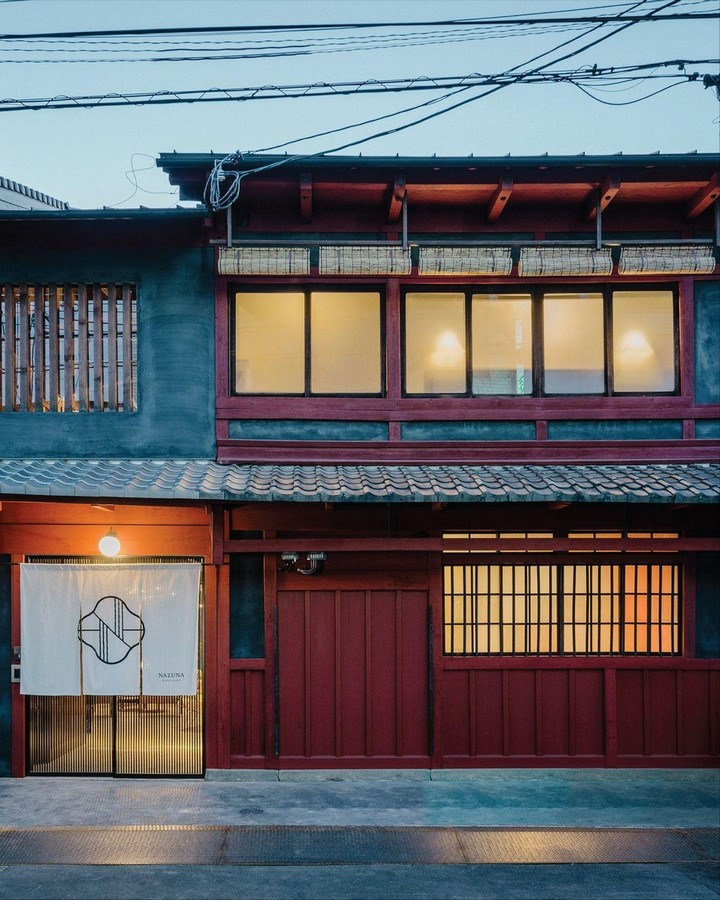
In Japanese Machiya townhouses, proportions are carefully calibrated to the dimensions of the human body and life rhythms. This includes aspects such as sitting on the floor, preparing food, and viewing the street through a narrow lattice screen. The rooms are not just aesthetically minimal; their proportions are designed to accommodate posture and movement.
In Frank Lloyd Wright‘s Fallingwater, the low ceilings near the hearth create a sense of compression, drawing the body inward, while the terraces open out toward the waterfall below. Here, proportion plays a crucial role in managing the transitions between interior and exterior spaces, as well as between enclosure and openness.
Similarly, in the Jaipur Havelis, internal courtyards are sized to optimize shade, airflow, and conversation. The height-to-width ratio of these spaces is not merely decorative; it reflects climatic intelligence translated into human comfort.
Proportion is not an abstract concept; it is a tangible experience. It distinguishes between a welcoming space and one that feels restrictive.
Light: The Composer of Atmosphere
Light animates architecture. It creates mood, directs attention, and makes surfaces come alive. More than any other force, light shapes the emotional tone of a space.
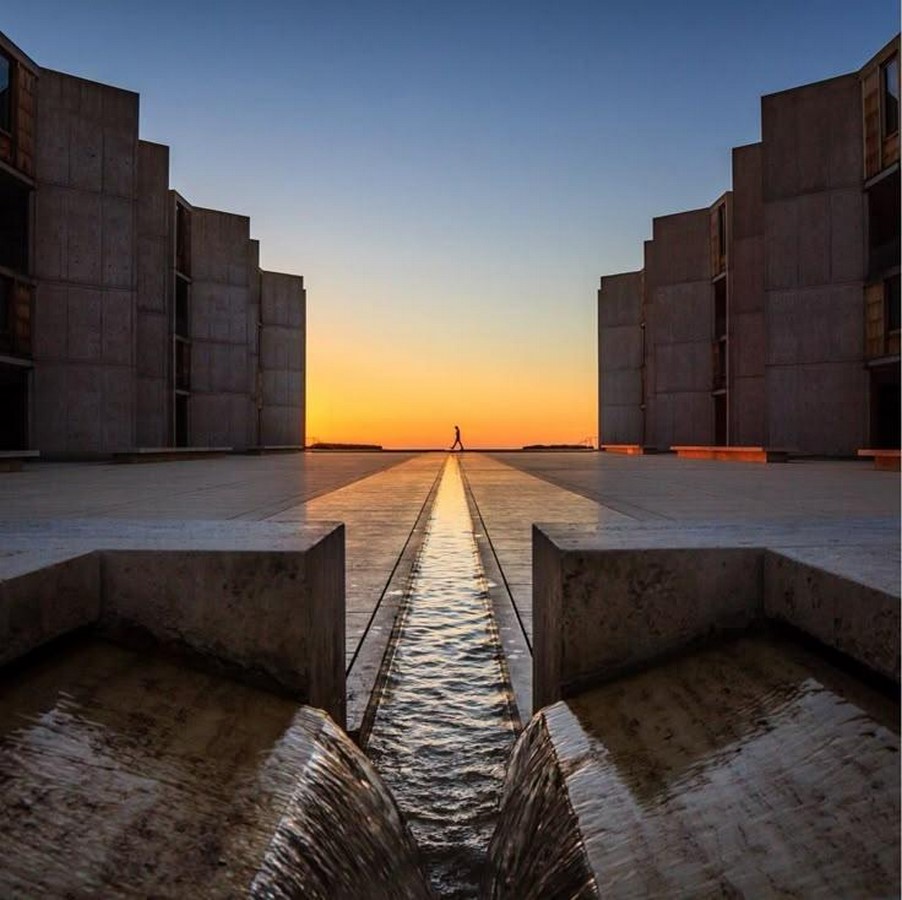
The Salk Institute in La Jolla, designed by Louis Kahn, is a clear example of this principle. At sunset, light travels down the central water channel and softly spills across the stone surfaces. The buildings seem to absorb the fading day, and the experience is not merely beautiful; it encourages a contemplative state of mind.
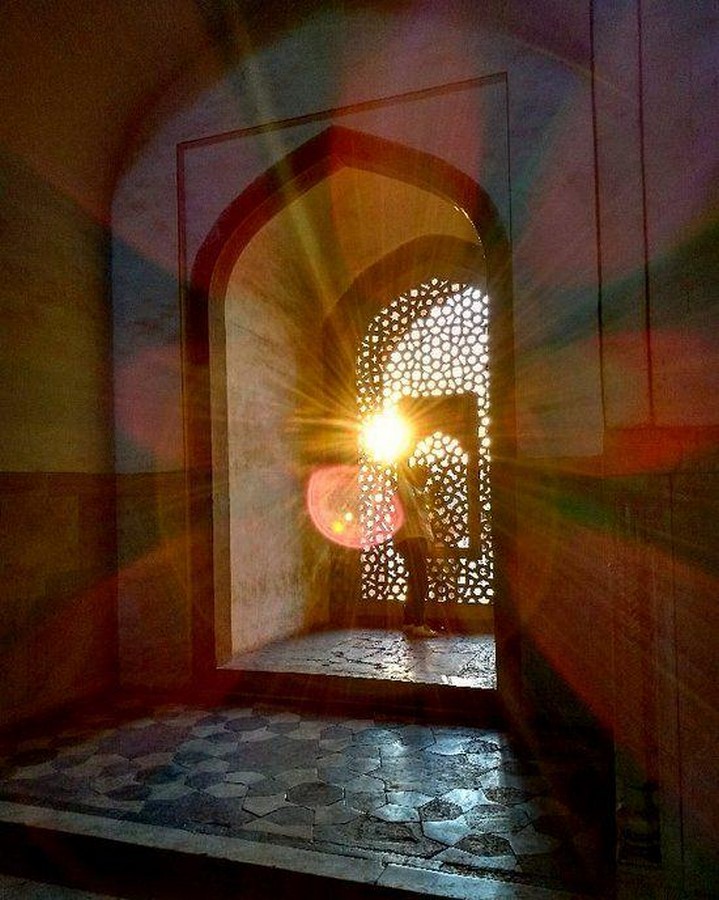
In Mughal architecture, from Humayun’s Tomb to the interiors of Fatehpur Sikri, light filters through jaalis, intricate stone screens. These perforations soften the sunlight, transforming harshness into a gentle radiance. The resulting shadows are delicate and shift throughout the day, creating an emotional effect of serenity.
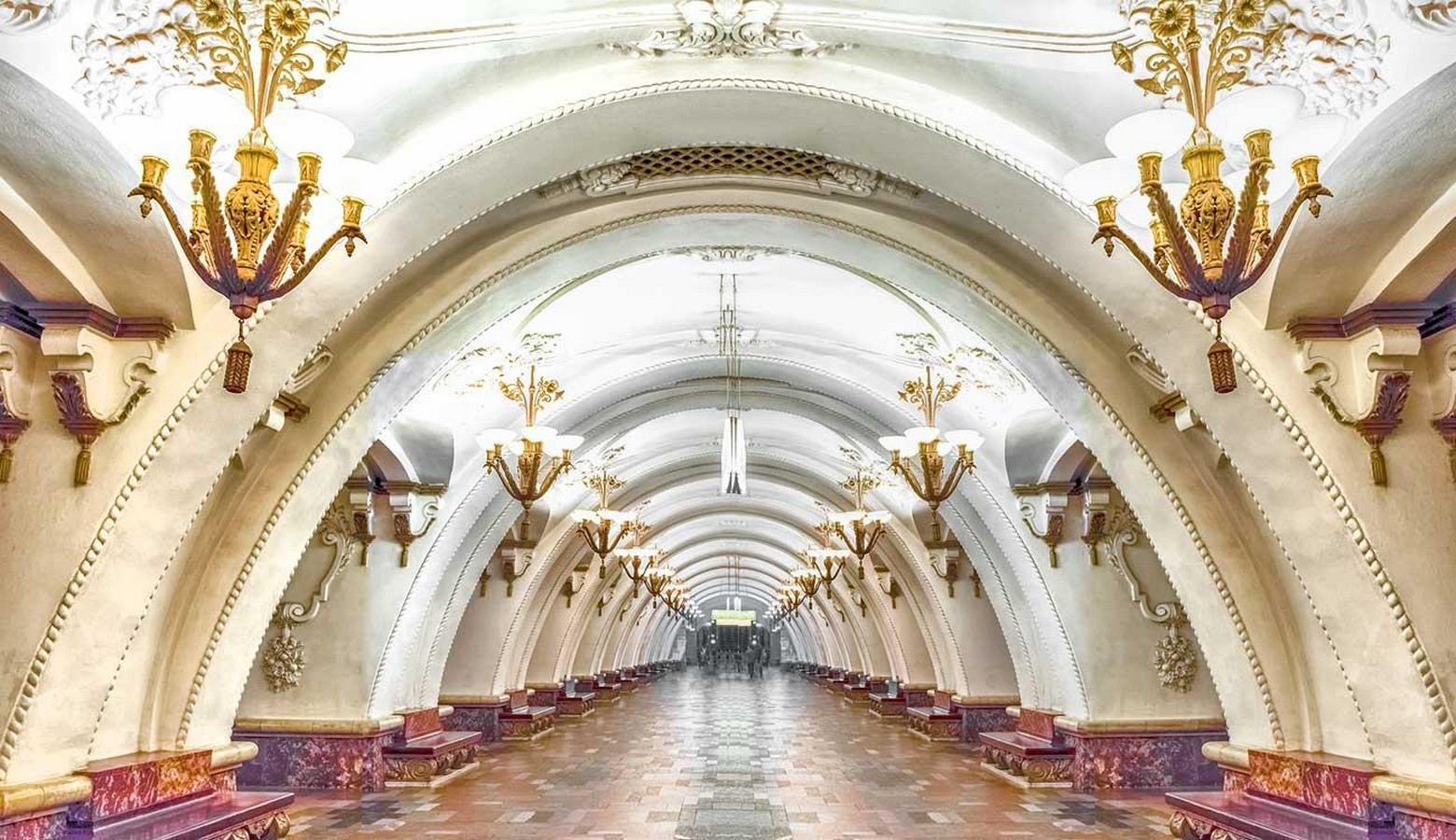
Even the old metro stations of Moscow surprisingly illustrate the emotional power of light. Grand chandeliers illuminate the underground halls as though they were palaces, asserting a sense of dignity in spaces typically associated with speed and urgency.
Light does not just reveal space; it scripts emotion.
When the Forces Converge: The Louvre Pyramid
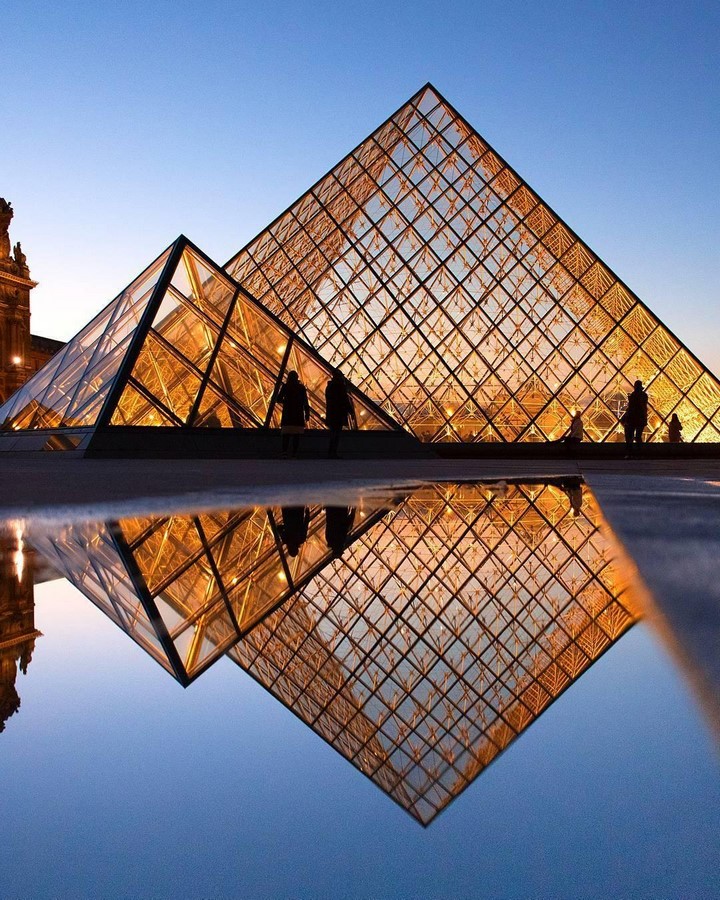
The Louvre Pyramid in Paris showcases the harmonious interplay of scale, proportion, and light. Its size is significant enough to establish a strong presence without overwhelming the historic wings surrounding it. The pyramid’s proportions are precise, geometric, and serene. Additionally, because it is constructed from glass, it interacts with light rather than obstructing it, creating the illusion of dematerialization at certain times of the day.
Visitors undergo a transformation toward a sense of ease, curiosity, and openness. The space acts as a threshold rather than a mere monument. The design succeeds because the invisible forces are perfectly balanced.
Our Everyday Environments Are Speaking Too
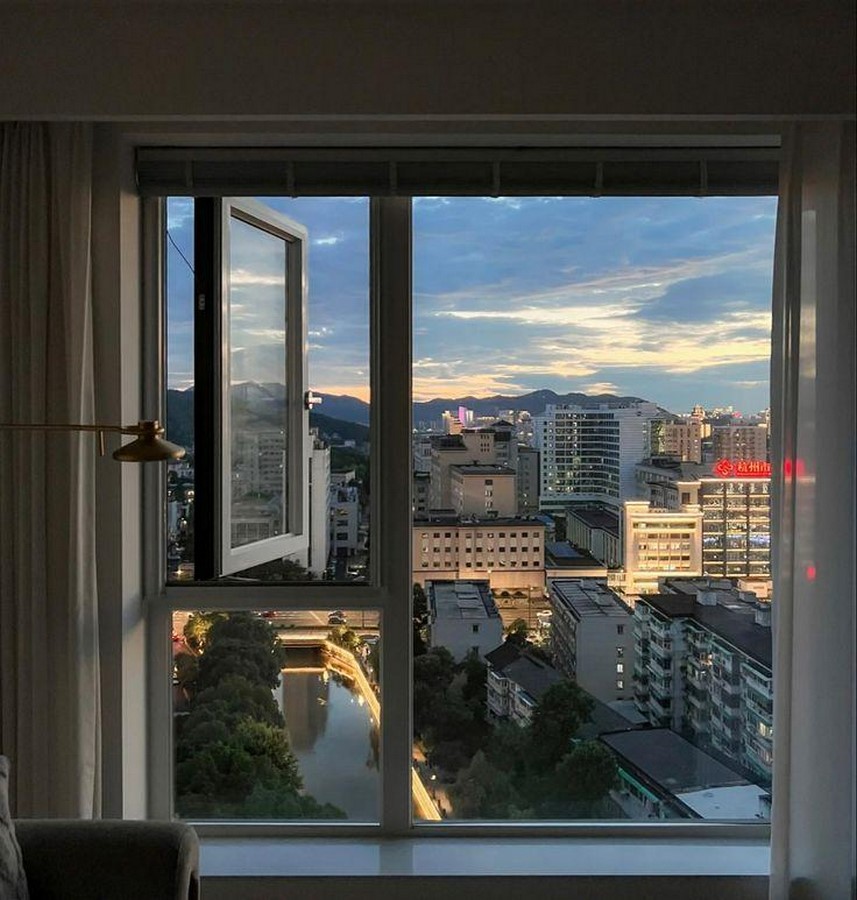
These influences extend beyond just iconic buildings; they impact our daily lives. For instance, apartments with low windowsills help us feel connected to the outdoors, while those with high windowsills create both emotional and physical separation from the street. A café that arranges seating closely together encourages conversation, whereas a café with too much open space may unintentionally emphasize feelings of loneliness. In workspaces, soft, indirect lighting can help improve focus, while harsh overhead lighting can reduce it.
We respond to these cues regularly, even if we don’t often identify them.
Why Noticing Matters
Understanding these forces alters our perception of design itself. It shifts the focus from style to experience, teaching us to interpret the emotional impact of spaces. As we gain this awareness, the world becomes more intentional. We start to comprehend not only whether we like a space, but also why it influences us the way it does.
This awareness opens the door to designing better homes, classrooms, workplaces, and public areas, not through trends or decorative elements, but by thoughtfully adjusting scale, proportion, and light.
Conclusion
The most significant aspects of design are frequently those that remain unnoticed. These elements evoke emotional responses before we consciously process them, influencing our experiences without overt acknowledgment. As we cultivate an awareness of these subtle design forces, our environments transition from passive backdrops to active participants in shaping our emotional landscapes.
References:
Burgess, R. (1991). The stepwells of Gujarat: In art and architecture. Mapin Publishing.
Centre Pompidou. (2018). I. M. Pei: Louvre Pyramid archival documentation. Paris, France.
(Original archival exhibition materials documenting the conception and proportional design reasoning.)
Dalsheimer, L., & Delaunay, F. (2007). The Louvre: All the paintings. Abrams.
Doshi, B. V. (2019). Paths Uncharted. Mapin Publishing.
(Contains his reflections on scale and sociality in projects like IIM Bangalore.)
Fletcher, B. (2019). A history of architecture on the comparative method (21st ed.). Routledge.
(General architectural proportional systems, including the Golden Ratio in classical and Renaissance work.)
Gould, S. J. (2002). Frank Lloyd Wright’s Fallingwater: The house and its history. Rizzoli International.
Government Museum, Mehrangarh Fort Trust. (2014). Mehrangarh Fort: Official guidebook. Jodhpur, India.
Kahn, L. I., & Brownlee, D. B. (1991). Louis I. Kahn: In the realm of architecture. Rizzoli International.
(Includes the Salk Institute’s spatial and light studies.)
Khan, S. (2017). Humayun’s Tomb and the garden of paradise: Space, light, and symbolic geometry. Oxford India Studies in Islamic Art.
Kumar, S. (2000). Domestic architecture of Jaipur: Townhouses and havelis. Jaipur Printers.
(Proportional courtyard typology.)
Mical, T. (2014). The architecture of the Japanese Machiya. Kyoto Design Institute.
Moscow Metro Museum. (2016). Moscow Metro: Architecture and light under the city. Moscow City Department of Transport Archives.