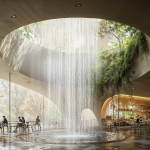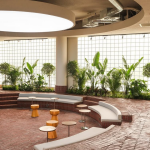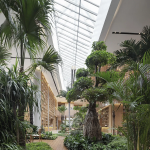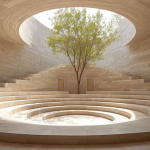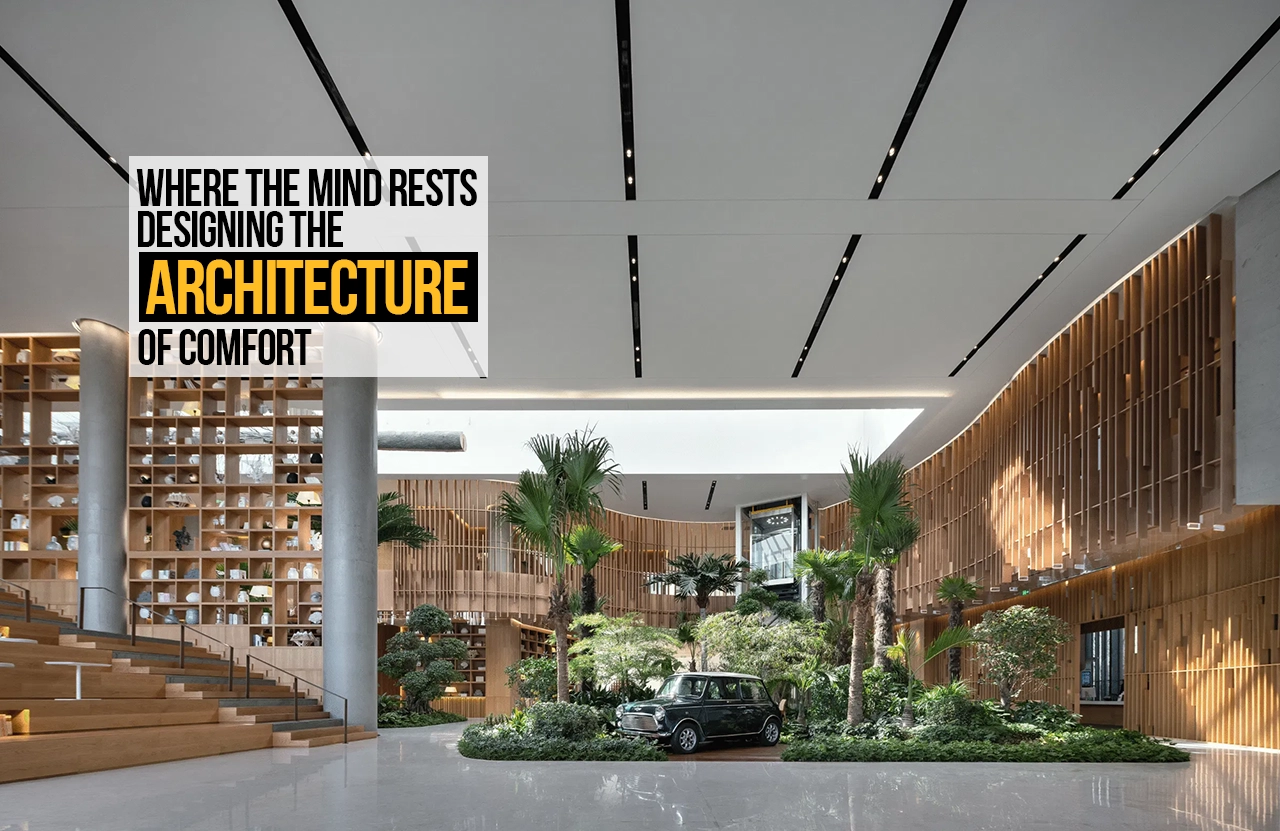
When Calm Becomes a Design Element
Some places make your body soften before your mind even catches up. A sunlit café that smells faintly of coffee and wood. Your grandmother’s verandah, where the air felt thicker, slower, kinder. Nothing spectacular happens there, yet something inside you exhales. That moment of ease is not a coincidence. It is designed.
Every curve of a chair, every slant of light, every texture under your fingertips is speaking to you quietly and constantly. Architecture does not just shelter us; it shapes our emotions. It teaches our bodies how to exist. When a space feels calm, it is because it is telling your nervous system that you are safe and that you can let your guard down.
Comfort is not a soft couch or a muted palette. It is a feeling, built from the invisible dialogue between psychology and design.
The Science of Calm: When Space Speaks to the Mind
Our brains never stop listening to space. Even when we are still, they are scanning light, sound, rhythm and shadow, asking the same ancient question: Am I safe here?
Recent research by Shen et al. (2023) found that specific home environments with restorative visual balance can alter neural activity and reduce stress. The findings reinforce what designers have always known: the mind listens to proportion, texture, and light.
Harsh lights, echoing corridors, and cluttered rooms keep our bodies alert. But when elements align, when light softens, when proportions feel right, when surfaces absorb sound instead of bouncing it back, the body begins to trust. Payedar-Ardakani et al. (2023) demonstrated through VR and EEG studies that balanced daylight directly influences emotional stability and focus.
Calm is not emptiness. It is coherence. It is the moment when architecture and emotion fall into the same rhythm.
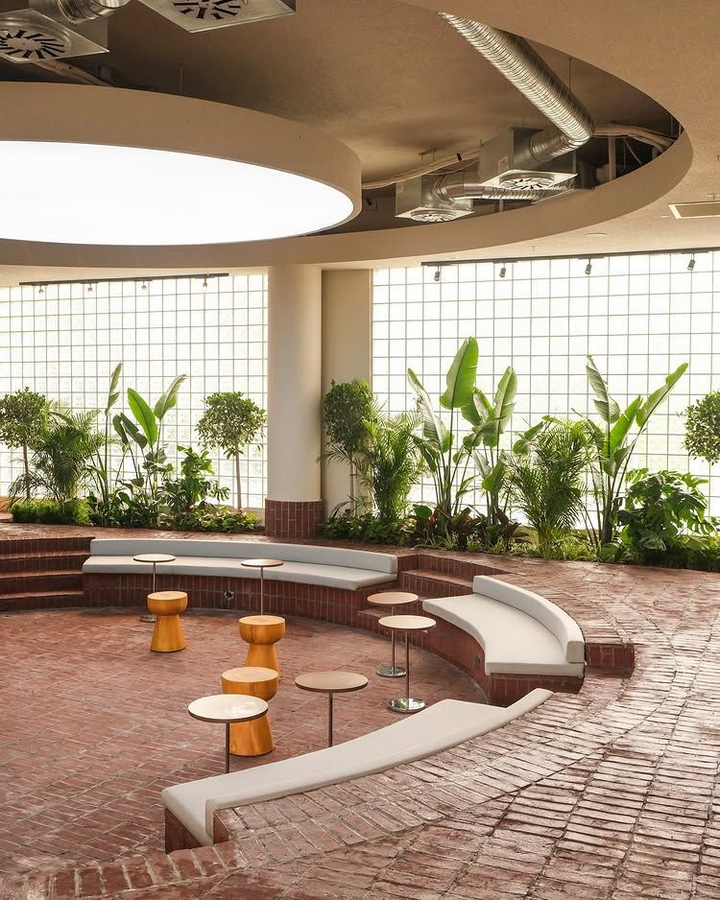
Biophilia: Why Nature Still Calms Us
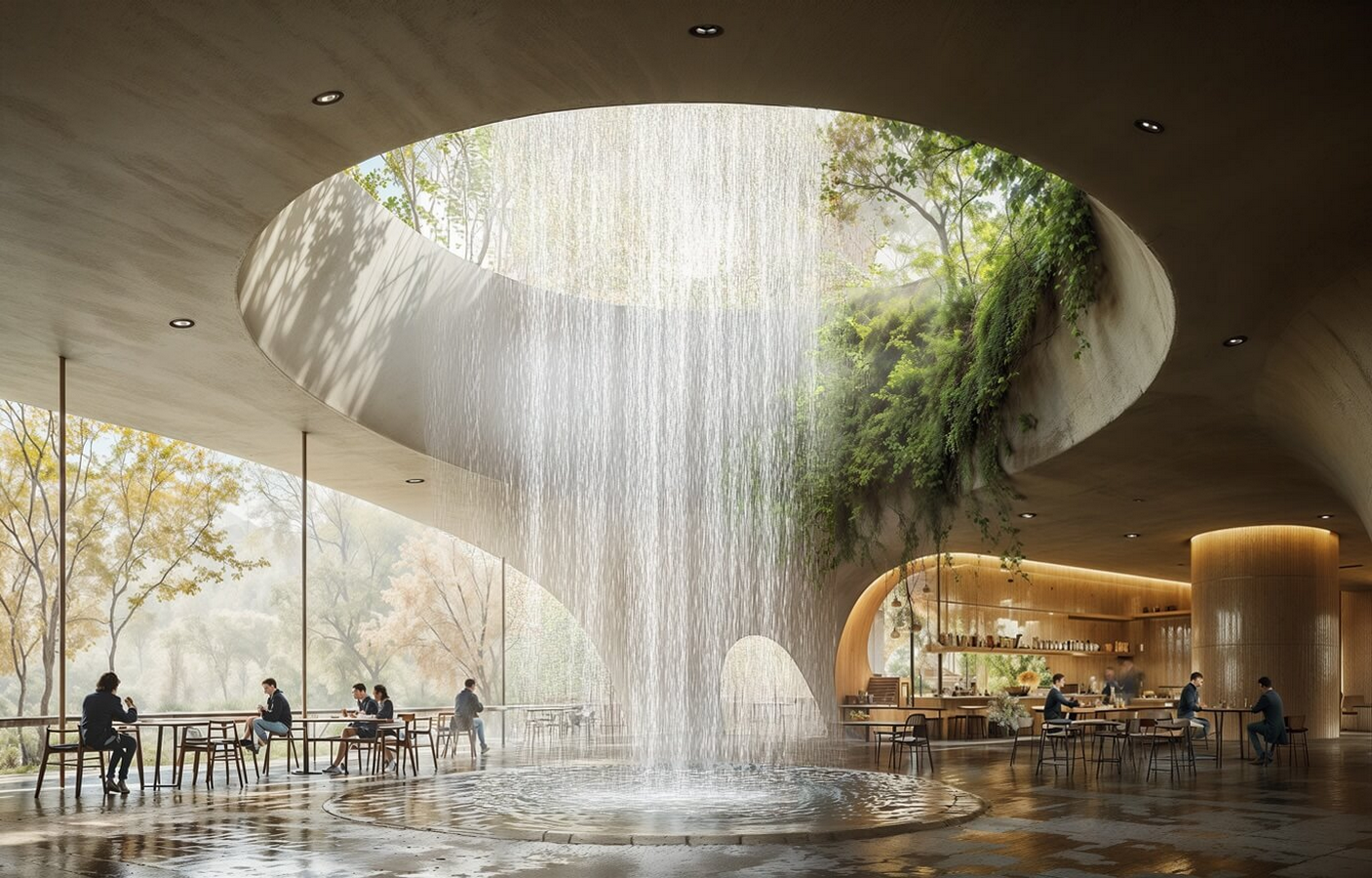
After a long day indoors, notice how your shoulders drop the moment you see green. That is biophilia at work, our built-in need to connect with living systems. Tekin et al. (2025) showed that even small natural features within interiors can reduce stress levels and improve cognitive recovery.
Architects have learned to translate that instinct into built form. Courtyards that hold patches of sky. Breezeways that carry the scent of rain. Light that shifts through the day, reminding us that time is still moving. At Maggie’s Cancer Centres in the UK, the architecture feels like an embrace. Timber beams, garden paths, and soft daylight whisper care rather than cure.
In Milan, Stefano Boeri’s Bosco Verticale turns balconies into forests. The city’s concrete quiets beneath the hum of leaves. Standing there, you feel smaller but also more alive. We do not crave nature for decoration. We crave it because it mirrors what is fragile and forgiving within us.
When we design with nature, we do not just build buildings. We build breath.
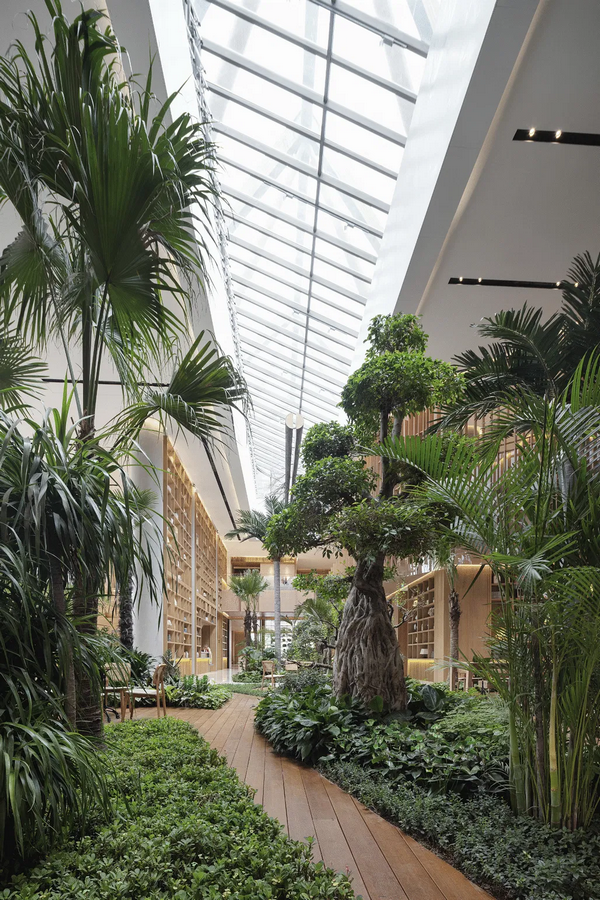
Proportion, Symmetry, and the Comfort of Order
Sometimes you walk into a room and something inside you settles. The space feels right, balanced, almost musical. You cannot explain it, but your body understands first.
Gestalt principles still hold true in modern neuroscience. Ren et al. (2025) found that visual order and proportional symmetry reduce mental fatigue and foster emotional clarity.
Tadao Ando’s Church of the Light is a perfect example of this quiet trust. A single cut of light crosses a wall of concrete. Nothing else competes. Every proportion feels deliberate, every silence intentional. It is architecture as meditation.
Comfort is not the absence of stimulation; it is the presence of harmony. It is the kind of balance that lets the mind rest because it no longer needs to solve the problem.
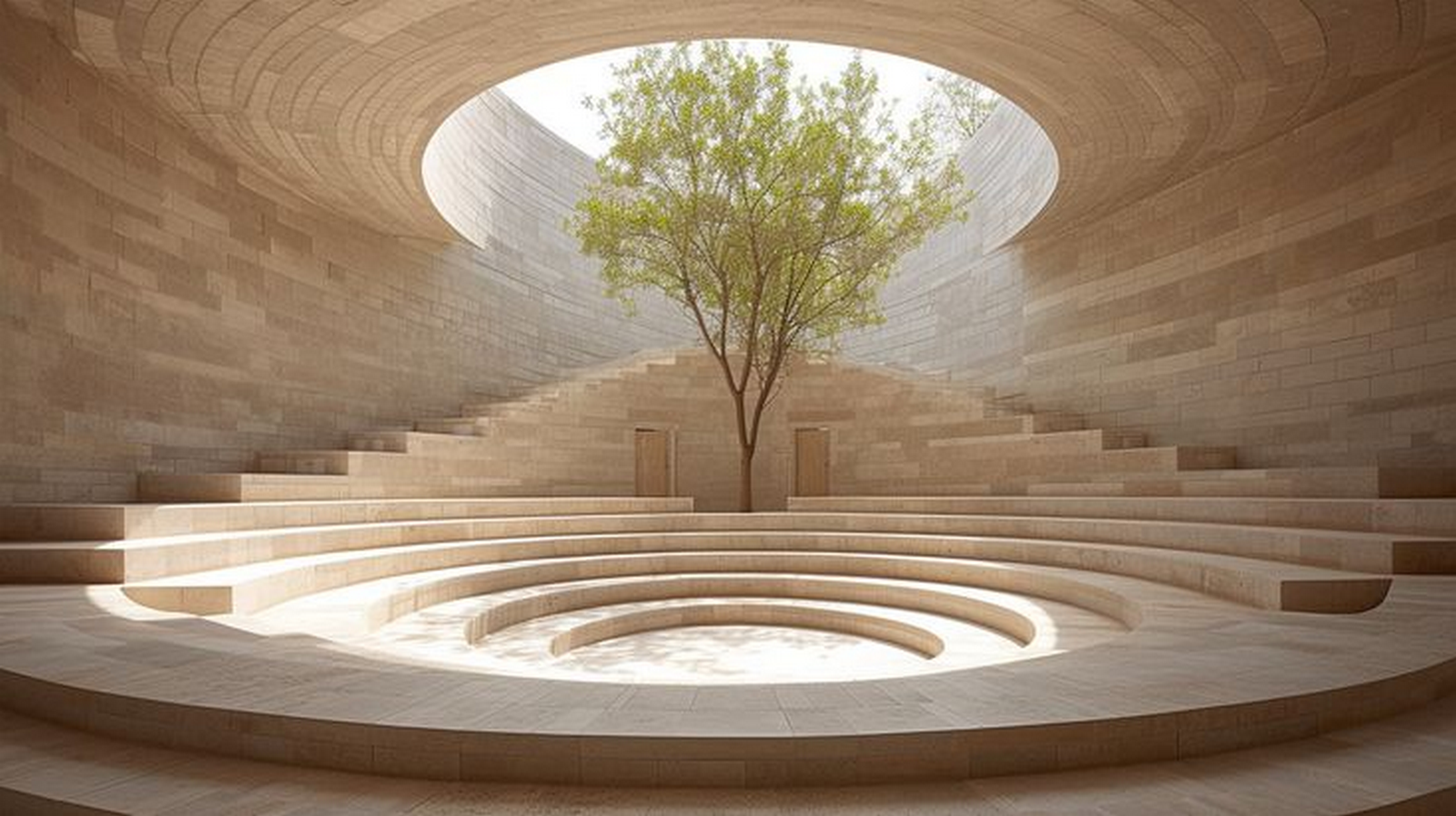
Designing for the Mind, Not Just the Eye
Think about the spaces you love most. Chances are, they are not the flashiest. Maybe it is the way the light moves across the floor in late afternoon, or the faint scent of old books, or how footsteps sound soft on wood. These are the details that stay.
Contemporary environmental psychology reminds us that calm depends on multisensory engagement, not visual perfection. Khogali (2025) argued that integrating behavioural science into architecture enhances collective wellbeing by addressing emotional and sensory needs. Natural textures such as timber, clay, and stone can activate comfort responses in the brain (Shen et al., 2023).
A truly calming space does not ask you to stop feeling. It teaches you how to feel at peace.

Personal Space and the Need for Control
Calm is not only about what surrounds us but also about how much control we have within it. Recent studies show that people feel calmer when they can adjust light, privacy, or distance to match their comfort level (Khogali, 2025).
A room that gives you options to sit alone, to gather, to open a window, or to turn toward or away, respects your rhythm. A corner seat by the window can feel like a sanctuary, a place to belong without performing.
Architecture, at its best, does not dictate behaviour. It gives permission. Calm is not silence or isolation. It is freedom, the feeling that you can exist as you are, without resistance.
When Psychology Meets Architecture
The dialogue between design and emotion is becoming increasingly measurable. The WELL Building Standard (2020) and recent studies in Frontiers in Psychology highlight how lighting, air quality, and acoustics influence mental well-being (Ren et al., 2025).
Yet what feels calming in one culture may feel empty in another. In Japan, serenity lies in ma, the quiet space between things. In Scandinavia, it lives in pale timber and natural light. In India, comfort comes through courtyards, filtered sun, and colour that feels lived in.
There is no single formula for peace. But across geography and time, the goal remains the same: to create spaces that honour the human need for stillness and belonging.
Designing for comfort is not indulgence. It is empathy, turned into architecture.
Designing for Emotional Sustainability
We live in cities that rush us. Screens flicker, traffic hums, and deadlines blur the hours. In a world like this, calm becomes an act of rebellion and architecture, a quiet kind of resistance.
A good building does more than shelter you. It slows your breathing. It reminds you that life happens in pauses too. Emotional sustainability means creating spaces that give back to our minds as much as they take from the earth.
The most beautiful buildings are not the loudest ones. They are the ones that hold space for rest, a courtyard that catches morning light, a library that hums softly with whispers, a home that lets wind pass through instead of shutting it out.
People might forget what the façade looked like or how many steps led to the door, but they will always remember the feeling, that rare moment when the world felt gentle.
Architecture cannot solve chaos, but it can offer calm. And sometimes, that is enough.
References:
Khogali, M.M.E. (2025) ‘Integrating behavioural science into urban planning.’ Frontiers in Psychology, 16, 1632523.
Payedar-Ardakani, P., Izmir Tunahan, G., Disci, Z.N. and Ozer, H.S. (2023) ‘The impact of changes to daylight illumination level on architectural experience in offices based on VR and EEG.’ arXiv, [online]. Available at: https://arxiv.org/abs/2311.05028
Ren, Q., Chen, L., Zhao, X. and Zhang, Y. (2025) ‘A study of space creation for healing landscape design in the post-epidemic era.’ Frontiers in Psychology, 16, 1618451.
Shen, T., Liu, R., Zhou, Y., Han, Y. and Xu, H. (2023) ‘Exploring the relationship between home environmental characteristics, restorative potential, and neural activities.’ Frontiers in Human Neuroscience, 17, 10548391.
Tekin, B.H., Izmir Tunahan, G., Disci, Z.N. and Ozer, H.S. (2025) ‘Biophilic design in the built environment: trends, gaps and future directions.’ Buildings, 15(14), 2516.
WELL Building Standard (2020) Mind and Comfort Features Overview. International WELL Building Institute.