Whimsical architecture refers to when certain elements or the entire form of a building, such as facades, openings, or ornamentation, are inspired by stories, toys, or are generally playful. It can also be described as architecture that defies conventional norms such as symmetry or the typical colour palette. Such a character could be expressed through exaggerated proportions or bright colours.
These buildings draw curiosity and stand out in the monotonous array of buildings. They add a bit of playfulness and exude a surreal quality. Whimsical designs are subject to major questions of why, reality, regulations and cost (https://www.creatomatic.co.uk and glm24). There is also a notion attached to whimsical architecture that the functionality of space often gets compromised in the aesthetic. The aim could be to simply create drama in the design and make the experience enjoyable for viewers or visitors, apart from being a functional space.
Not a lot of architects get an opportunity to design such whimsical buildings but several have adopted this character, bringing in fun elements to their designs. Antoni Gaudi and Frank Gehry are some of the well-known architects who have constantly experimented with this theme. Below are some of the projects that exemplify whimsical architecture either through ornamentation or form that challenge the typical aesthetic.
Whimsical character through Ornamentations
Antoni Gaudi has used unusual but intricate ornamentation on building elements to bring the whimsical character. His ornamentation style is highly inspired by nature and can be witnessed in the below projects.
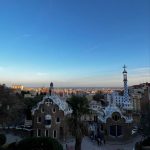
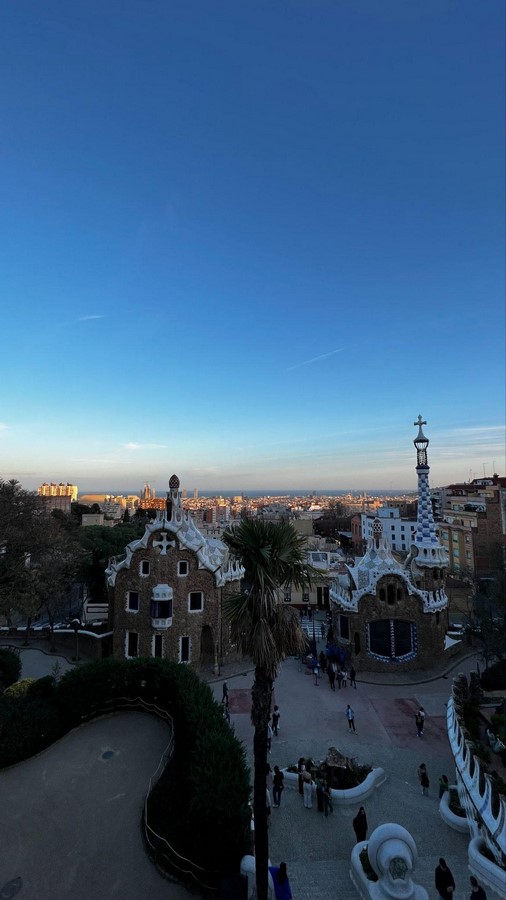
Park guell by Antoni Gaudi
Park Guell is a public park in Barcelona, Spain known as one of the best examples of whimsical architecture because of its attention to detail and ornamentation. It is also a UNESCO World Heritage site.
Gaudi has used a mix of natural and man-made materials to create the organic forms and textures of the pillars and surfaces (Barcelona). He has used bright, colourful mosaic tiles to create patterns on the roofs, pillars and even the parapets. The benches are wavy-like serpentine forms and are adorned with mosaic-covered scales and lizards (Barcelona). Each element of the huts in the park is outlined either with paints or coloured tiles, making it look whimsical, out of a fairytale.
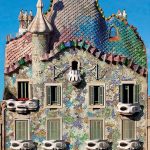
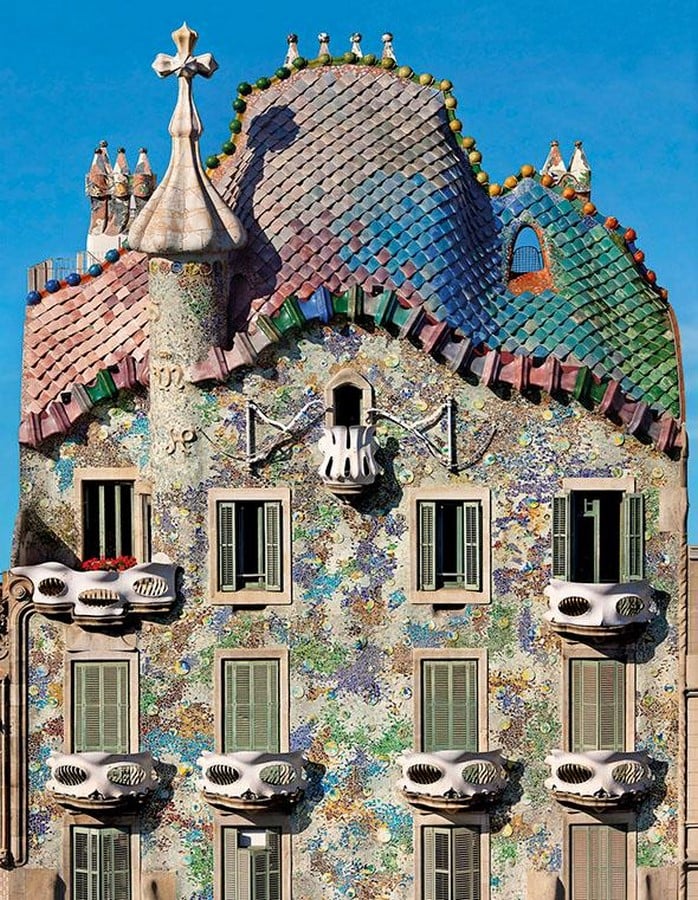
Casa batllo by Antoni Gaudi
Gaudi only designed the facade of this building using a mixture of materials like stone, glass and ceramics (“The Façade | Casa Batlló”). While the entire facade is smothered in floral elements, the mask-shaped balconies stand out in white.
One of the other features of whimsical architecture is that it cannot be interpreted in any way because there is no answer to why such an outlandish character is done. Some of the walls suggest the tree trunks and gaps between them are the windows but some have been interpreted as an aquatic landscape (“The Façade | Casa Batlló”).
Whimsical Architecture Through Form
In the below cases, the form is highly inspired by the animated world or peculiar forms that appear to not belong to the real world. Frank Gehry, Szotynscy & Zaleski architects created the drama by breaking and tilting the orthogonal shapes of the buildings.
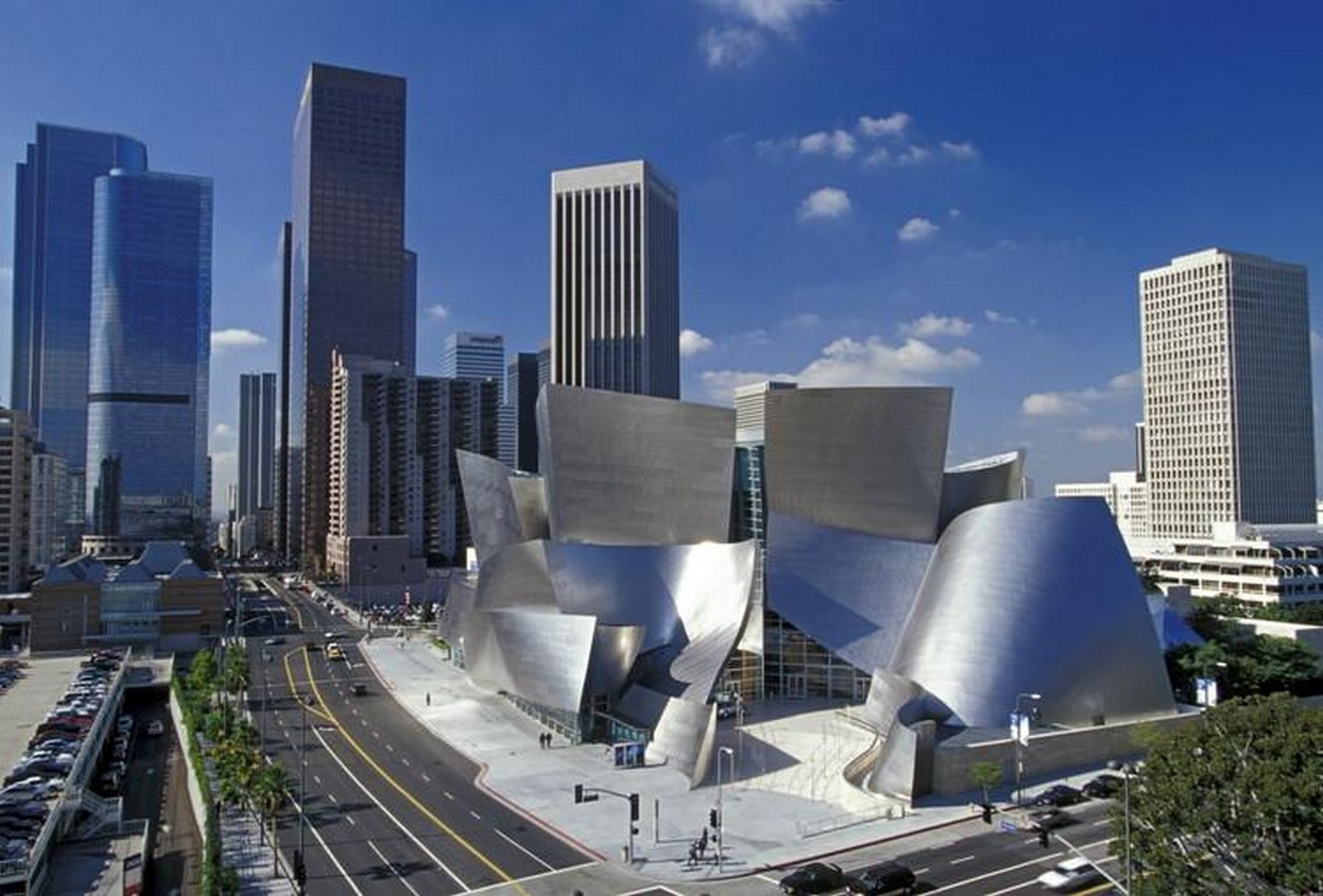
Walt Disney Concert hall By Frank Gehry
Frank Gehry is known for his different approach towards the exterior look of his projects. Most of his design’s looks stem from functionality. In this concert hall also, the broken curved facades are inspired by musical movements. The facade is cladded with a reflective stainless material which shines in the daylight. The silver shining facade breaks away from all the boxy buildings around it.
With this project, the authorities wanted to draw more people to the downtown area through this masterpiece while Gehry aimed to make it welcoming for the people and experience the wonder.
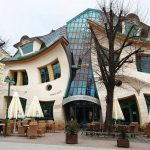
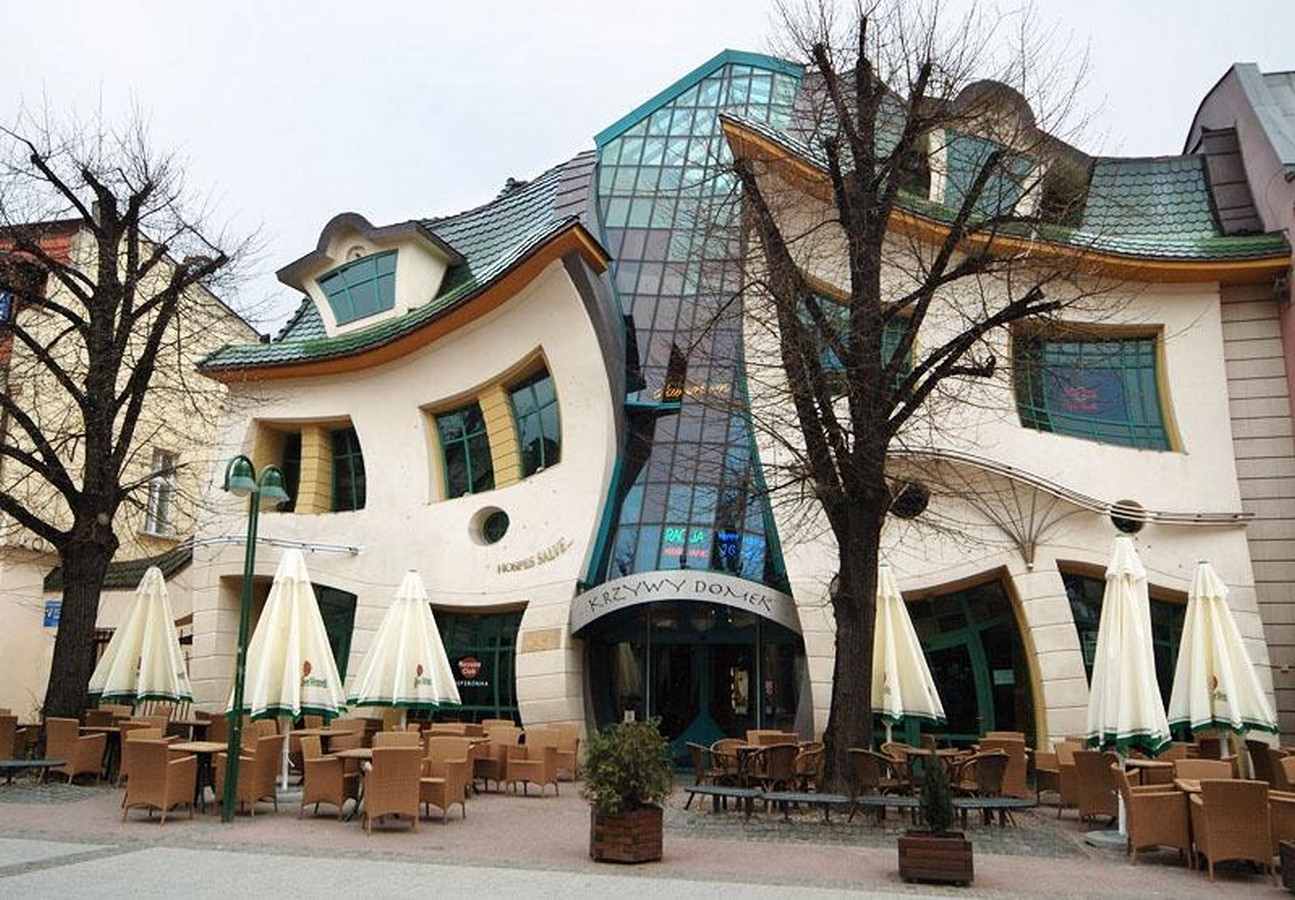
Crooked House by Szotynscy & Zaleski
The ‘ little crooked house’ was built by architects Szotynscy & Zaleski in Poland in 2004. The entire building is made of warping walls and a concave roof. The roof is cladded with emerald-coloured shingles and with similar coloured stained glass. ‘‘It was inspired by fairytale illustrations and drawings of Jan Marcin Szancer and Per Dahlberg as well as designs by Antoni Gaudí.’’ (“Krzywy Domek – Crooked House in Sopot, Poland | IDesignArch | Interior Design, Architecture & Interior Decorating EMagazine”).
The reason that such whimsical architectural character might have been chosen to attract tourists to this place as it houses shops, bars and restaurants.
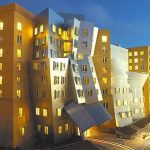
Ray and Maria Stata Center By Frank Gehry
Ray and Maria Stata Centre is a part of MIT, Massachusetts. With this design he challenged the typology of educational institutes which are often restricted designs, he described this design as a ‘party for drunk robots’ (“Stata Center | MIT CSAIL”).
The buildings are tilted and have angled walls with windows popping out. He has used bright colours along with metal in the interiors as well as the exteriors. He brought out the creativity and experimentation that this place would be meant for (“Ray and Maria Stata Center for Computer, Information, and Intelligence Sciences, Building 32”).

The above examples showcase how architecture was viewed as art and a way of expression through different mediums and inspirations. But with the increase in the importance of social media, whimsical architecture has found a new meaning. People are asking for dramatic spaces in their houses and some designs even have ‘Instagrammable spots’ to get recognised. Is there a difference in why past architects built unconventionally compared to why present architects are required to do so? Those architects aimed to break away from the mold and now the aim might have become to draw attention through unique designs.
References –
- https://www.creatomatic.co.uk, and glm24. “Architecture – the Rationalisation of Whimsy – GLM.” GLM, 7 June 2019, www.weareglm.com/architecture-the-rationalisation-of-whimsy/. Accessed 7 Mar. 2025.
- Barcelona, in. “Jae Bin Lee.” Jae Bin Lee, 17 Apr. 2023, www.jaebinlee.com/opinion/park-guell-antoni-gaudis-whimsical-masterpiece-in-barcelona. Accessed 7 Mar. 2025.
- “Krzywy Domek – Crooked House in Sopot, Poland | IDesignArch | Interior Design, Architecture & Interior Decorating EMagazine.” Idesignarch, 2 Feb. 2011, www.idesignarch.com/krzywy-domek-crooked-house-in-sopot-poland/.
- Crook, Lizzie. “Frank Gehry’s Walt Disney Concert Hall Is “a Living Room” for Los Angeles.” Dezeen, 27 May 2022, www.dezeen.com/2022/05/27/frank-gehry-walt-disney-concert-hall-deconstructivism/. Accessed 7 Mar. 2025.
- “The Façade | Casa Batlló.” Casa Batlló, 2017, www.casabatllo.es/en/antoni-gaudi/casa-batllo/facade/. Accessed 7 Mar. 2025.
- “Stata Center | MIT CSAIL.” Www.csail.mit.edu, www.csail.mit.edu/about/stata-center. Accessed 7 Mar. 2025.
- “Ray and Maria Stata Center for Computer, Information, and Intelligence Sciences, Building 32.” Capitalprojects.mit.edu, capitalprojects.mit.edu/projects/stata-center-building-32. Accessed 7 Mar. 2025.
Images:
- Jae Bin, Lee. Park Guell: Antoni Gaudi’s Whimsical Masterpiece in Barcelona, 2024, www.jaebinlee.com/opinion/park-guell-antoni-gaudis-whimsical-masterpiece-in-barcelona. Accessed 7 Mar. 2025.
- “Fachada de La Casa Batlló.” Casa Batlló, 2017, www.casabatllo.es/en/antoni-gaudi/casa-batllo/facade/. Accessed 7 Mar. 2025.
- Gehry Partners, LLP. AD Classics: Walt Disney Concert Hall / Gehry Partners, www.archdaily.com/441358/ad-classics-walt-disney-concert-hall-frank-gehry/5264acf3e8e44ef4c200021b-ad-classics-walt-disney-concert-hall-frank-gehry-photo. Accessed 7 Mar. 2025.
- iDesignArch.com. Krzywy Domek – Crooked House in Sopot, Poland, www.idesignarch.com/wp-content/uploads/Krzywy-Domek-Crooked-House_1.jpg. Accessed 7 Mar. 2025.
- capitalprojects.mit.edu. Ray and Maria Stata Center for Computer, Information, and Intelligence Sciences, Building 32, capitalprojects.mit.edu/projects/stata-center-building-32. Accessed 7 Mar. 2025.