When a building reaches its completion, we seldom reflect on the journey it took to become the structure we see; a form that balances aesthetics with functionality. While the focus shifts entirely to its usability, materials and construction techniques, what often goes unnoticed is the effort behind the seamless coordination that holds every element of the structure together. Most people are unconcerned with how well the construction process was scheduled, whether it faced delays, or the challenges encountered during the design phase. End users rarely think about the building’s services since routine maintenance is expected to handle any issues. Likewise, the cost of construction is often a concern unless there are loans to repay. Instead, people test the functional aspects of the building and its durability over time. This coordination is crucial in ensuring every detail is accounted for, and it is usually overseen by an architect.


Architects Owning Their Role in Problem Solving
Architects are not just designers; they are trained problem solvers with a rare ability to merge creativity, technical expertise, and a human-centric approach to address complex challenges. Architects recognize and acknowledge that construction typically follows the design. If the design is well coordinated between the various disciplines of architecture and completed with the necessary details that provides suitable direction for the construction, the end result will become self-evident.

However, most often this is not the case. The imposition of project constraints such as impossible deadlines and budget limitations force designers to churn out incomplete and uncoordinated design and cut corners, which create costly problems during the construction stage. At that time, the architect must be prudent and proactive to investigate the root cause and resolve the problem as quickly as possible. The most important role that an architect has on a project is to resolve technical problems without compromising functionality and with minimal cost impact.
Unraveling the Real Problem
The process often involves an iterative approach like the “Five Whys”, purported by Michael Lewarne. It is an interrogative technique introduced to explore cause-and-effect relationships for an underlying problem. By repeatedly questioning “why?”, typically up to 5 times for every problem like the curiosity in a child, each time directing the current “why” to the answer of the previous “why”, architects are led to the origin of an issue rather than superficially addressing the symptoms on the surface.
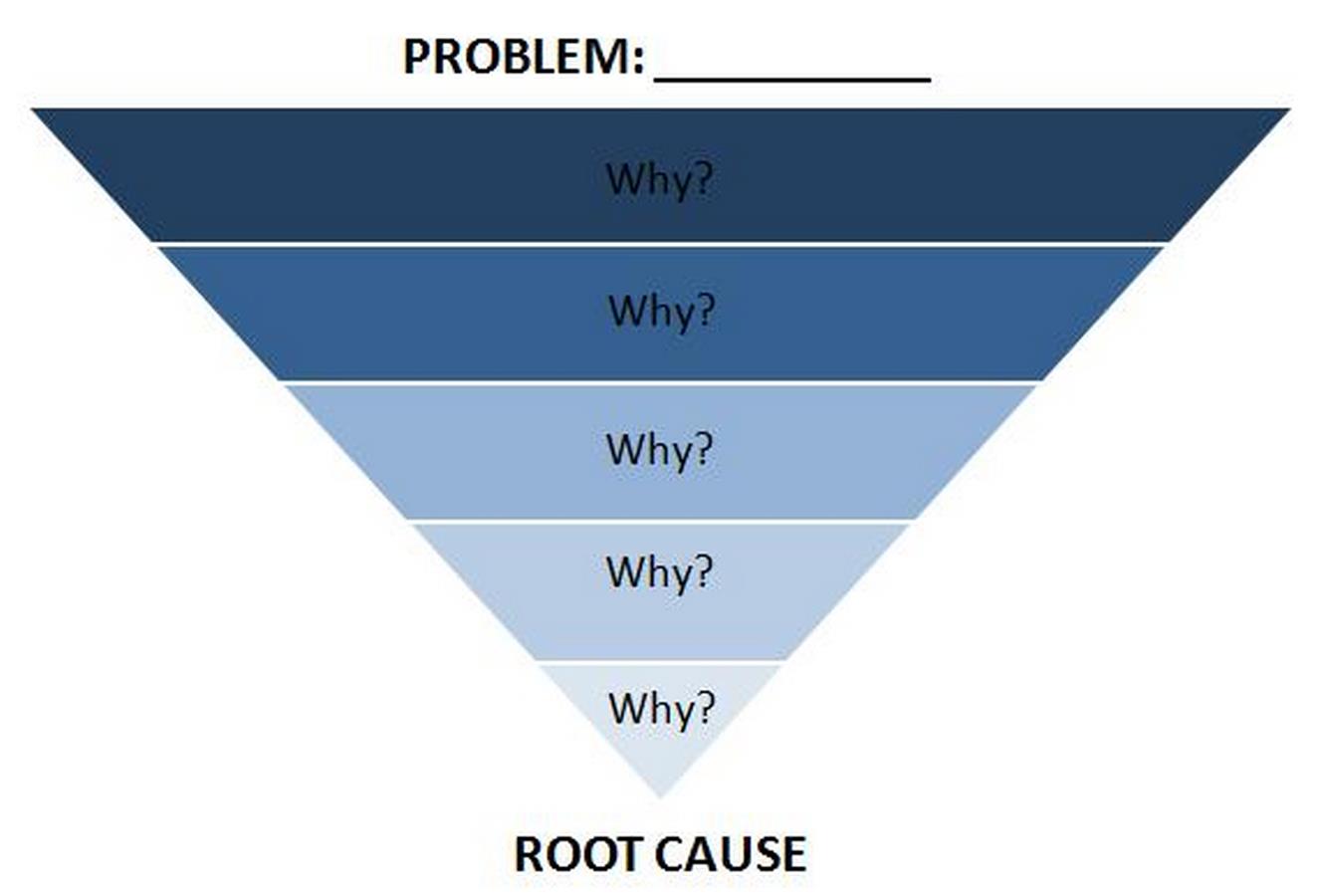
Take for instance, the investigation into thermal discomfort in a building during summer. The lead to the first “why”, would be the insufficient cooling of the air conditioning within the occupied space. When digging deeper into why the air conditioning is ineffective, it may be possible that the air conditioning system is undersized in capacity or inadequate for the space. It is often the inaccuracy of the heat load estimation that causes such miscalculations in buildings. This may be due to an incorrectly oriented building, which could be a result of a lack of thorough site evaluation and climate analysis during the initial design phase. Therefore, in this case, the understudy during the preliminary design stage was the root cause for thermal discomfort in that building.

While addressing a post-factum problem with solutions like replacing the air conditioning system can be an immediate fix, identifying and fixing the core problem can lead to additional adjustments to mitigate other potential failures. For example, if orientation had been a problem, strategic placement of shading devices or greenery could help offset the heat load instead. This strategy would ensure that similar mistakes do not happen in future design with continuous learning and improvement, encouraging better teamwork and communication protocols.

Navigating Complex Constraints and Tailoring Spaces to its Users
While problem-solving might sound easy, Architects do not just blindly jump into solutions — they have a deeper dig to investigate and determine the real issue. As Bryan Lawson explains, architects must balance structural, mechanical, electrical and plumbing systems abiding by budget and time constraints. They observe how people interact with spaces and tailor those observations into designs, by mapping user activities and studying human behavior over a long time to understand how the space will be used over the years.

The Architecture School: Forging Problem Solvers

The first semester of architecture school is usually baptism by fire. Initial assignments are related to product and furniture design, exploring small scales before the huge leap. One such institute asked their first-year students to select 2 objects at random, one natural and the other artificial. The students, without a clue as to why they’re given the task, pick the most easily available objects. The objects varied from leaf and hair clip to shoe and stone. The next assignment was to utilize these objects to draw a useful tool on paper. Once the tool was drawn, a prototype was needed, then a working model.
It was as if an obvious question was posed to the batch of 80 students – ready for the upcoming challenge. The lucky ones got into the grove early from school where they took Engineering Graphics (EG) as an elective. The luckier ones endured a perfectionist teacher who tore up hand-drawn sheets for the slightest of errors with the dreaded phrase, “REPEAT!”. Such endurance rendered those students infallible under pressure.

The exercise was an early eye-opener to the essential skills of keen observation, intricate detailing and subtle nuances on end-user routines that must be factored in the design to make any project go the extra mile from being appreciated not only for its aesthetics but also for its functional design and sustainability. Architects are shaped over those five years through a process of trial, error, and relentless improvement, striving to refine their craft with each lesson learned. They must ensure that their greatest advocates are those clients who utilize and appreciate the designs over a longer perspective.
Form Follows Function: A Solution in Itself
Architecture is not only a form, but it also houses life. “The beauty lies in the eyes of the beholder”. In architectural parlance, the stakeholder who has the maximum interaction and connection with the space — the end user— has the most significant influence on the success of the facility. Once the initial fascination and fad on the aesthetic form of the new build wears off, the functionality and longevity of materials used in the building will reign supreme. Architectural design adopts the form to suit and follow the functional requirement within the constrained spatial and budget criteria.
Most problems arise when a building’s design fails to align with its intended function as originally envisaged, requiring the end-user to compromise or adapt their routines to fit the space. The life that lives within the form is the architect’s client, and the satisfaction of the client is what defines the success of the architect’s design. The design that envisions life’s moments and spaces that naturally narrate stories for the morrow will outlive the novelty of the new build form.

Prevention is Better Than Cure
The prevalence of sustainability is considered a stepping-stone to prevention rather than cure. Most tend to adopt artistic materials and designs in the built forms then forget about sustainability. In simple terms, economic architecture is about designing solutions that fit the shoe; meeting specific requirements and constraints but also finding a balance between innovation and practicality. Sustainable materials with adaptive reuse address global challenges like resource depletion, environmental impact, and economic inequality.
Economic architecture is a concept that aligns design with financial constraints and prevailing economic conditions that can integrate architectural innovation without sacrificing sustainability. Architects prioritize longevity in many aspects, like promoting locally sourced materials, reducing the carbon footprint and ensuring that replacement resources are readily available within the region. Thus, the lifespan of the built form directly influences lifecycle costs and the long-term success of design; thus, making life cycle costing a critical consideration within sustainable architecture.

The Emotional Power of Architects: Will AI Overpower Architects in Problem Solving?
While artificial intelligence transforms industry after industry, the question inevitably arises about how it will affect the role of an architect. AI has many wonderful uses, such as automation and efficiency gains, yet nothing more fits the essence of an architect’s job. Architects create spaces that resonate emotionally with people. Most places are not just about dimensions and materials, they are about empathy and storytelling about the livability of space.
The 9/11 memorial in New York, is a profound example of how architecture can embody emotion, capturing the grief and resilience of the community. The pools, which commemorate loss with absence, are positioned as reflections that follow the exact footprints of the Twin Towers. The waterfalls transcend time and become the sound of continuing memory. The bubbling waters set off a soothing yet haunting effect. The bronze panels engraved with names make the tragedy personal and real to every visitor, allowing them to connect with the mourned individuals. While AI may assist with technical parts, it lacks an algorithm to very effectively develop emotional intelligence within spaces so that they possess meanings. AI can make effective optimizations for pre-defined parameters in problem solving, while architects bear out ambiguous or more complex problems. Adaptability remains the key in every situation or challenge thrown into an evolving humankind. Therefore, architects are still very relevant in this AI-oriented world.

In conclusion, Architects excel as problem solvers because of their unique ability to fuse imagination and technicality with a deep understanding of human-centric design. They analyze problems in depth, uncovering the core issues and devising innovative solutions that reconcile constraints and balance functional needs with design preferences. Be it technical challenges, user experience design, or sustainability, architects excel at turning obstacles into opportunities. They are extremely versatile, emotionally intelligent, detail-focused and creative, which makes them the best at designing environments that address challenges while uplifting and enhancing human life.
References:
- Lawson, B.R., Problem Solving in Architectural Design. Doctoral Thesis, School of Psychology.
- Lewarne, M. (2022) ‘Architects and problem solving: How might architects delve deeper into the problems they’re asked to solve or those that they’ve identified’, Bootcamp, 8 February.
- Brown, J. (2011) ’10 reasons Architects can fix it’, ArchDaily, 19 September.