Urbanization is an ever-growing force shaping cities across the globe, as more and more people shift to urban centers in search of better living conditions, work opportunities, and modern amenities. However, as cities expand and modernize to accommodate growing populations and technological advancements, an inevitable challenge arises: balancing development with preserving urban heritage. The significance of urban heritage, both as a carrier of history and a symbol of social identity, makes it vital to ensure that urban areas retain their unique identity while meeting contemporary needs.

Importance of Urban Heritage Conservation
Urban heritage is all in one collection of history, culture, and social memory. It includes everything from ancient architectural styles, historical monuments, streetscapes, and urban layouts, to smaller, everyday structures that represent the values of past generations. These buildings and spaces integrate the artistic, religious, and social values of the periods they were built and provide essential educational resources for understanding the history and culture of a place. As time passes, urban heritage intertwines with the social identity of the cities where they are located, contributing to a sense of pride and belonging among the local community.
The conservation of urban heritage goes beyond just safeguarding buildings; it involves maintaining the fabric of cultural continuity and offering a tangible connection to the past. Hence, urban heritage can be called a living, breathing element of the city, that informs contemporary culture, strengthens community identity, and fuels a city’s tourism and economy.

Balancing Development and Preservation: Challenges
The global urban heritage protection context faces significant challenges due to rapid urbanization where 68% of the world’s population is expected to live in cities by 2050. This growth puts pressure on both the environment and cultural heritage, threatening the preservation of historic buildings and areas. Despite international recognition, such as UNESCO’s World Heritage List, cities worldwide struggle with issues like industrial expansion, commercialization, and tourism, which threaten urban heritage. In Europe, where ancient Roman, medieval, and Renaissance buildings are prevalent, heritage protection is relatively effective but still challenged by modern demands. Meanwhile, regions in Asia, Africa, and Latin America face difficulties due to rapid urbanization, lack of funding, and insufficient technological resources. Effective preservation remains a global challenge nevertheless.

Adaptive Reuse of Historic Buildings
Adaptive reuse involves repurposing historic buildings for modern use while preserving their cultural and architectural value. This strategy helps cities meet contemporary needs, such as offices or residences, without demolishing heritage structures and reducing environmental impact by saving energy and materials. However, challenges arise in maintaining the building’s historical integrity, as balancing old architecture with modern needs requires innovation. The regulatory restrictions and high restoration costs can further complicate the process, especially in developing regions with limited funding.

Technological Integration for Sustainability
Integrating modern technologies into heritage buildings is important to make them more sustainable and environmentally friendly, but it comes with many challenges. Sustainable systems like insulation, solar panels, and climate control can save energy. Still, they might not fit well with the original design or materials, risking damage to the building’s historical integrity. These technologies can also be expensive and require big changes that could alter the building’s character. Additionally, public and community acceptance can be a challenge, as modern interventions may be perceived as a degradation of the heritage value of the structure.

Economic Sustainability
Preserving historic buildings, especially for cities with limited budgets, can be expensive. While urban development often provides quick economic growth, heritage preservation creates long-term value by attracting tourism and supporting cultural activities. The challenge lies in making heritage conservation financially sustainable.
To address this, cities must explore different funding sources, such as government grants, private investments, and community support. The strategies to promote heritage tourism, including culture in the local economy, and encouraging businesses around heritage sites can also be helpful.

Cultural and Social Acceptance
One of the biggest challenges in preserving urban heritage is getting cultural and social support. While historic buildings are important to a city’s identity, not everyone may understand or value their significance. Many people today might care more about convenience, technology, or business than preserving culture. Hence, proper communication, awareness, and community participation in the decision-making and implementation are important to create a sense of responsibility for their history.

Kathmandu: Post-Earthquake Reconstruction and Urban Growth
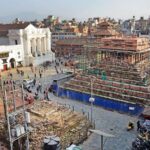
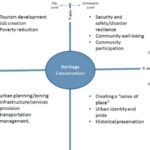
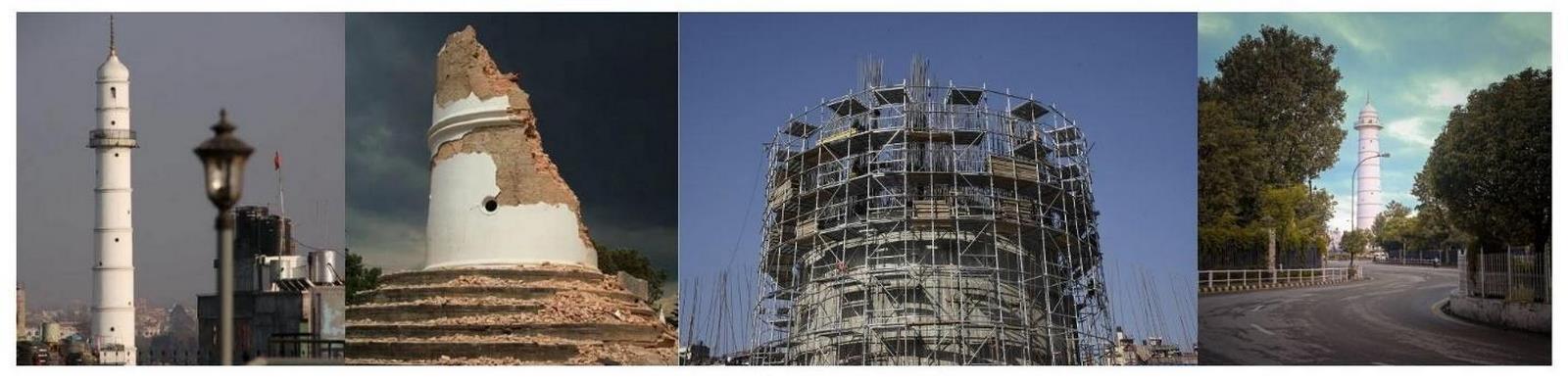
It is a global challenge to achieve a delicate balance between the two imperatives of development and heritage conservation. This can be understood best through the study of the urban heritage state in Kathmandu after the earthquake as Nepal encompasses thousands of cultural heritages that are quite significant to the identity of Nepalese people. At the same time, Nepal faces a pressing need for poverty reduction, infrastructural development, and improvement of the standard of life of people. This creates a difficult problem for Nepal: How can the country meet its development objectives while preserving its rich cultural legacy?

This struggle became particularly evident after the 2015 earthquake, which caused widespread damage to Kathmandu’s historic sites and accelerated urban reconstruction. While foreign aid and investments provided an opportunity to rebuild, they also posed challenges for heritage preservation. Urban expansion driven by population growth and rural-urban migration has intensified, threatening historical neighborhoods and open spaces. The government’s emphasis on rapid reconstruction to meet the needs of a growing population has often conflicted with heritage preservation. Traditional Newari architecture, a hallmark of old Kathmandu, has been replaced by modern, incompatible buildings due to weak urban planning regulations and implementation, resulting in haphazard development around and on the heritage sites.
Balancing Development and Preservation: Strategies
Creating comprehensive policies that outline the rules for urban development and heritage preservation, ensuring that the preservation of urban heritage is prioritized in the face of growth and expansion.
Incorporating advanced technologies in the renovation of heritage sites to improve their functionality while maintaining their original architectural character.
Fostering public-private partnerships to generate funds for heritage preservation and ensuring that economic incentives are available for the adaptive reuse of heritage buildings.
Promoting cultural awareness and public engagement initiatives that educate residents about the importance of their city’s heritage and encourage participation in preservation efforts.
Integrating heritage protection into urban planning ensuring that new developments are designed in harmony with the historical context and cultural significance of the surrounding area.
Enhance Community Participation by involving community members through meetings, workshops, and surveys to understand their needs and perspectives.

To sum up, balancing development and preservation in urban heritage conservation is a multifaceted challenge that requires collaboration, innovation, and commitment. While modernization is inevitable, it should not come at the cost of losing a city’s historical and cultural essence. Hence, cities can ensure that their heritage remains a vibrant part of their identity for generations through sustainable adoption and inclusive approaches.
References:
Clausius Scientific Press, Canada. (2024). Architectural challenges of urban heritage conservation from a sustainable development perspective. [online]. Available at: http://166.62.7.99/assets/default/article/2024/02/21/article_1708521961.pdf [Accessed 19 December 2024].
Authorea. (2024). Cultural Heritage Preservation and Urban Development Conflicts in South Asia: Case Studies from Kathmandu and Lahore. [online]. Available at: https://advance.sagepub.com/users/846220/articles/1235628-cultural-heritage-preservation-and-urban-development-conflicts-in-south-asia-case-studies-from-kathmandu-and-lahore [Accessed 18 December 2024].
Research Gate. (2017). Balancing Heritage Conservation and Sustainable Development – The Case of Bordeaux. Available at: https://www.researchgate.net/publication/320860609_Balancing_Heritage_Conservation_and_Sustainable_Development_-_The_Case_of_Bordeaux [Accessed 20 December 2024].
Nepal Journals Online. (2024). Balancing Development and Heritage Conservation in Nepal: An Analysis with Reference to Legal and Policy Framework. [online]. Available at: https://www.nepjol.info/index.php/unityj/article/view/63177/47742 [Accessed 19 December 2024].
Research Gate. (2024). Cultural Heritage Conservation in Urban Areas: Integrating Traditional Knowledge and Modern Planning Practices. [online]. Available at: https://www.researchgate.net/publication/382855179_Cultural_Heritage_Conservation_in_Urban_Areas_Integrating_Traditional_Knowledge_and_Modern_Planning_Practices [Accessed 20 December 2024].
GDRC. (2020). Heritage and Conservation Strategies: Understanding the Justifications and Implications. [online]. Available at: https://www.gdrc.org/heritage/heritage-strategies.html [Accessed 19 December 2024].
BDP. (2019). Top 10 Challenges of Adaptive Reuse. [online]. Available at: https://www.bdp.com/en/campaigns/old-buildings-new-beginnings/top-10-challenges-of-adaptive-re-use/ [Accessed 23 December 2024].