This article examines the evolution of smart cities within the context of urban planning and design. The origin of smart cities dates back to the 1970s, when an urban data project was conducted in Los Angeles, titled ‘A Cluster Analysis of Los Angeles’ (Global Data & Strategic Intelligence, 2020). Arguably, in 1994, Amsterdam became the first smart city, due to their virtual and digital city creation (Global Data & Strategic Intelligence, 2020). In this article, the significance and the growth of such cities shall be discussed.
The Metaphorical Smart City:
De Digitale Stad, or, The Digital City, was an initiative envisioned in Amsterdam in 1994. Although it was not a direct piece of architectural infrastructure or proposal, the themes behind the initiative resonate with the binding theme of commonalities, within smart cities. Here, the commonality is not an aspect communicated through spatial language, but rather, through a ‘community-driven, commons-based internet’ (UNESCO, n.d), and, comparative to the modern-day internet, De Digitale Stad was more remote and conducted on a smaller scale, as the ‘operation is dictated by a small group of big tech companies’ (UNESCO, n.d). To communicate this initiative to the general public in a more succinct manner, the metaphor of using the city was implemented (UNESCO, n.d). When assessing the manner in which the initiative was proposed, perhaps one could argue that the use of a city as a metaphor for connectivity and commonality inspired the use of technological implementations into large-scale schemes conducted on a physical and architectural level.
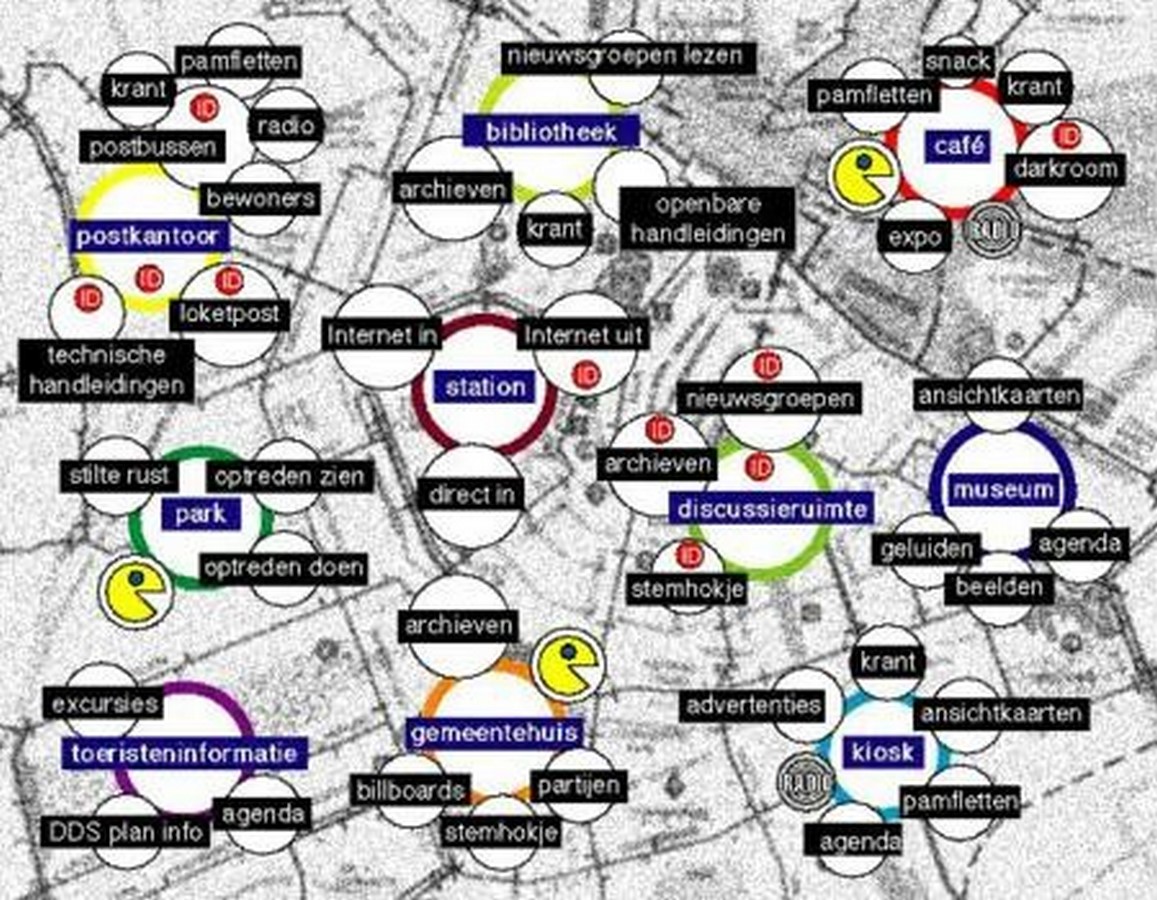
In order for this metaphor to be translated into an architectural approach through physical schemes within the built environment, the emphasis on ‘full citizen participation’ (Montes de la Barrera, 2020, p.11) is imperative. This is defined by the ‘bottom-up model’ (Montes de la Barrera, 2020, p.11) where the binding theme of commonality is enhanced through ‘physical proximity or virtual presence of homogeneous groups of people’ (Montes de la Barrera, 2020, p.11). The sense of locality that is present within the bottom-up model can be utilised to enhance grassroots operations, and this was present in the 2000s, where the first integration of smart cities and urbanisation occurred when experimentation with public services led to improved ‘smart street lighting, waste management systems, and energy efficient buildings’ (Inam, 2024), suitably described to be aspects of the ‘ubiquitous city’ (Montes de la Barrera, 2020, p.19).
The Integration of Sustainability Into Smart Cities:
Over the recent years, the emphasis on integrating sustainable practices into the built environment has increased, due to net-zero targets in designing buildings. Given that 80% of the world’s population is expected to be within cities by 2020 (Babar, 2016, p.18), finding ways to implement sustainable technologies may appear to be difficult, due to the high urban density, however a study that investigated the ‘the integration of the urban natural resources and smart city technologies’ (Hui et al., 2023, p.21) concluded that converting green spaces into sources of renewable energy, utilising them as natural filtration systems that improve the quality of air and water, and ‘designing them as public spaces’ (Hui et al., 2023, p.21) can encourage social, economic and environmental growth. These require implementing smart systems, such as sensors, that analyse factors like air pollution and temperature (Hui et al., 2023, p.21).

Interestingly, the integration of sustainability in smart cities does not only pertain to environmental aspects, but also other aspects that relate to three concepts: ‘concerns around justice or inclusivity (but, more broadly, the strength and legitimacy of democratic governance); privacy; and sustainability’ (Burch, 2021, p.3).
Envisioning Further Development in Smart Cities:
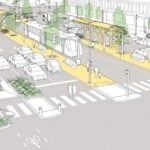
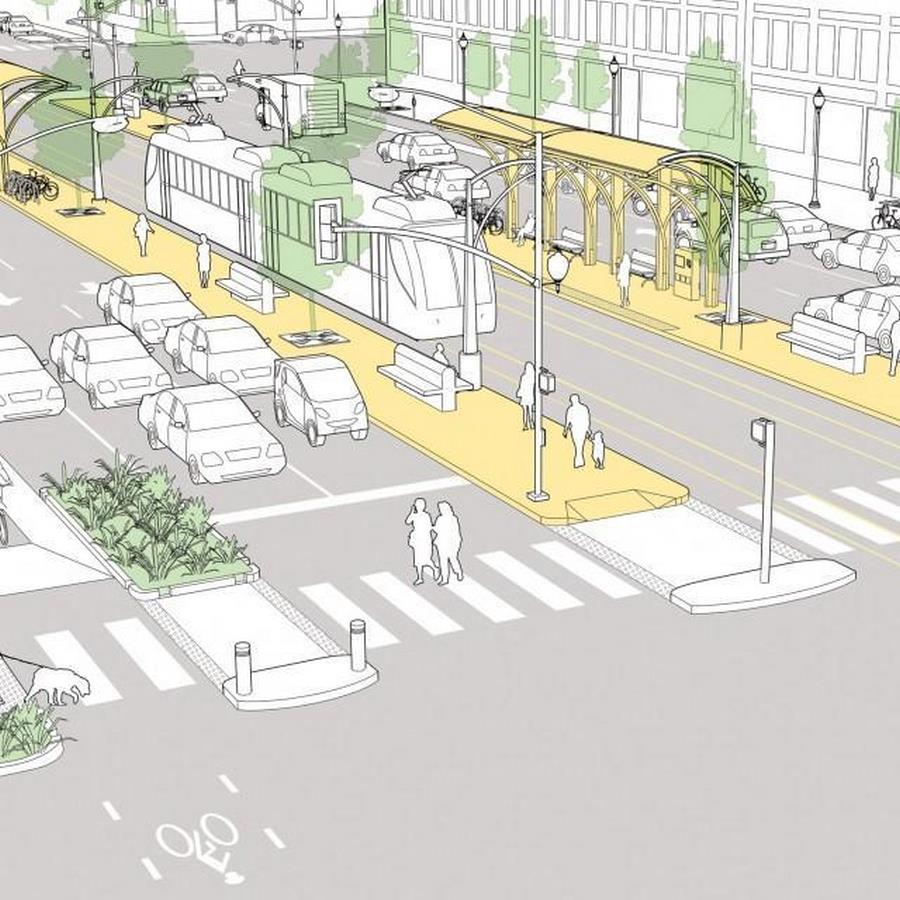
For the majority of this technology-driven era, the notion that “smart cities are the future” has been prominent, since the origin of the first metaphorical city. However, in assessing which aspects are needed to sustain or further develop the coalition between technological advancements and sustainable practices within smart cities, the general acknowledgement is that through envisioning solutions on both a local and government level scale, through ‘top-down and bottom-up governance’ (Burch, 2021, p.6). Learning from the data about past global events can also help mitigate a plateau in sustainability (environmental and socio-political), such as COVID-19. Architectural systems such as ‘active transit corridors’ (Burch, 2021, p.6) are currently being embedded into many of the world’s sustainable smart cities, which help mitigate the aforementioned plateau.
However, when assessing the commercial extravagance behind the smart-city schemes, especially those that communicate extremely futuristic, and perhaps, slightly dystopian ideologies, it poses the question of whether more vernacular practices could be implemented to maximise sustainability potentials within the scheme. For example, an ongoing commercial scheme that claims to be the ‘future of urban living’ (NEOM, n.d) is The Line, part of NEOM, in Saudi Arabia. Spanning across 170 kilometres, the idea of having an entire ecosystem within two mirrored facades that claims to run on 100% renewable energy seems commendable, however, does not address urban connectivity in a socially sustainable method, as it proposes a layered city scheme. This is shown through data that states that commuting in The Line will take, on average, an hour, and 47% of the population would commute for even longer, whereas in Seoul, ’25 million people commute for less than 50 minutes’ (Complexity Science Hub, 2023). Thus, this may have led to a decrease in the project’s scale, as the scheme is now expected to stretch a ‘mile and a half by 2030’ (Beaumont, 2024).

In summary, this article has presented a range of aspects that facilitate the evolution of a smart city, from navigating technological metaphors and implementing them into bottom-up and grassroots approaches. The constant amongst all the aspects mentioned is the theme of smarter and better connectivity and commonality, that continues to bridge the gap between society and sustainable practices.
References:
- Babar, A. (2016). Smart Cities: Socio-Technical Innovation for Empowering Citizens. AQ: Australian Quarterly, 87(3), 18–36. Available at: http://www.jstor.org/stable/24877697 [Accessed: 31/12/24]
- Beaumont, P. (2024). End of the Line? Saudi Arabia ‘forced to scale back’ plans for desert megacity [online] Available at: https://www.theguardian.com/world/2024/apr/10/the-line-saudi-arabia-scaling-back-plans-105-mile-long-desert-megacity-crown-prince [Accessed: 31/12/24]
- Burch, S. (2021). Accelerating a Just Transition to Smart, Sustainable Cities. Centre for International Governance Innovation. Available at: http://www.jstor.org/stable/resrep30264 [Accessed: 31/12/24]
- Complexity Science Hub. (2023). Why Saudi Arabia’s “The Line” is not a revolution in urban living [online] Available at: https://csh.ac.at/news/why-saudi-arabias-the-line-is-not-a-revolution-in-urban-living/#:~:text=While%20all%20of%20the%20energy,resources%20are%20not%20considered%20here. [Accessed: 31/12/24]
- Global Data & Strategic Intelligence. (2020). History of smart cities: Timeline [online] Available at: https://www.verdict.co.uk/smart-cities-timeline/ [Accessed 30/12/24]
- Hui, C.X. et al. (2023) Greening smart cities: An investigation of the integration of urban natural resources and smart city technologies for promoting environmental sustainability. Sustainable Cities and Society 99(2023) 104985. Available at: https://doi.org/10.1016/j.scs.2023.104985 [Accessed: 31/12/24]
- Inam, M. (2024) When Did the Smart City Concept Begin? A Timeline [online] Available at: https://minnovation.com.au/smart-cities-2/when-did-the-smart-city-concept-begin-a-timeline/ [Accessed: 31/12/24]
- Montes de la Barrera, J.O, (2020). A Historical View of Smart Cities: Definitions, Features and Tipping Points [online] Available at: https://papers.ssrn.com/sol3/papers.cfm?abstract_id=3637617 [Accessed: 31/12/24]
- NEOM. (n.d) The Line [online] Available at: https://neom.com/en-us/regions/theline [Accessed: 31/12/24]
- UNESCO, (n.d). DDS: De Digitale Stad/The Digital City [online] Available at: https://www.unesco.org/en/memory-world/dds-de-digitale-stad/digitalcity#:~:text=On%20January%2015%2C%201994%2C%20De,unknown%20world%20of%20the%20Internet. [Accessed: 31/12/24]
Image URLs:
- https://lab.kb.nl/about-us/blog/dutch-museums-world-wide-web
- https://hopu.eu/key-verticals-build-sustainable-smart-city/
- https://nacto.org/publication/urban-street-design-guide/streets/transit-corridor/
- https://www.theguardian.com/world/2024/apr/10/the-line-saudi-arabia-scaling-back-plans-105-mile-long-desert-megacity-crown-prince