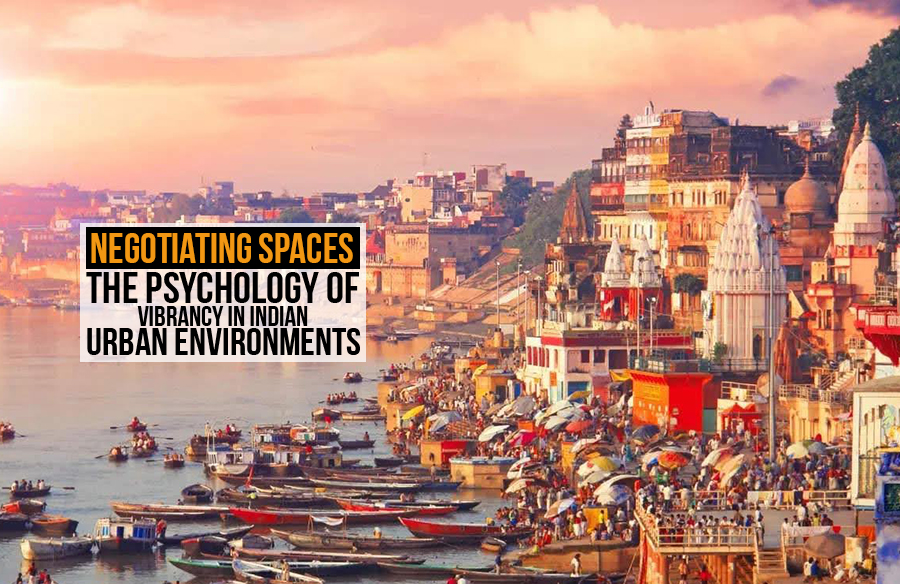
Urban spaces in India are diverse, complex, and constantly changing, with the dynamics of history, culture, and socio-economic factors. Transitional spaces, where people interact, negotiate, and navigate, have immense psychological significance in shaping our relationship with the city. These spaces, often in between, are public meeting points, transport hubs, markets, and more. In this article, we will explore the psychology of these spaces in Indian cities and the ways they contribute to vibrancy. We will analyze how diverse assemblages of social, cultural, and sensory elements shape the urban experience.
These spaces are contested, transformed, and redefined with cities expanding further. Psychology, though, is very intimately entwined with what has to be the most distinctive and meaningful aspects, social, emotional-culture-when invoked and realized through these spaces. Here we present a detailed case, highlighting how preserving adaptation- and developing transitional space fosters vibrancy and encourages inclusion in sustainable contexts with urban psychology.

1. Transitional Spaces in Indian Urbanism: An Understanding
Transitional spaces are those zones between more defined spaces like residential or commercial areas. These include streets, squares, alleys, public parks, and transport hubs—essential elements of the urban fabric. Indian cities are particularly known for their vibrant transitional spaces that blend the old and new, modern and traditional, informal and formal.
Transitional spaces are characterized by fluid movement between various spheres of social engagement. For example, in the street markets of Kolkata or the narrow alleys of Old Delhi, different people from various backgrounds congregate. These are, thus, multi-layered spaces where people negotiate their physical, emotional, and cultural territories.

Psychological Significance
Psychologically, these spaces give the urban dweller a sense of belonging and identity. According to Lynch (1960), urban spaces influence the mental maps of cities in terms of spatial awareness and attachment. Thus, transitional spaces play an important role in helping individuals connect with their city and create a sense of place.

2. The Role of Assemblages in Urban Psychology
Assemblages are how different elements—human, environmental, and social—come together to create a particular urban experience. In transitional spaces, these assemblages form the context within which people interact and negotiate their surroundings.

2.1 Social Assemblages: Creating a Collective Urban Identity
Social assemblages are often found in Indian cities-in-market, public squares, and commune-and in the form of collective spaces such as the temples and ghats; there is a social equilibrium whereby different groups of society amalgamate, creating another quality of urban vibrancy.
For instance, the Mumbai or Delhi streets are not merely thoroughfares but social sites where sellers, performers, pedestrians, and vehicles meet and interact with each other incessantly. Such interaction provides a collective identity to people living in cities, which public spaces offer as an arena for negotiating class, caste, and community identities.
2.2 Cultural Assemblages: Tradition Meets Modernity
Such assemblages are formed in cities like Varanasi or Jaipur, where tradition and modernity meet. The ghats of Varanasi represent spaces of spiritual and social convergence, where rituals like the evening Ganga Aarti take place. Such spaces are also home to a constant flux of local and tourist populations, each contributing to the social and cultural fabric of the city.
Preserving cultural practices and rituals in urban contexts is necessary to ensure a sense of place. Deleuze and Guattari (1987) have stated that the interrelation between space, time, and human actions forms a dynamic assemblage that continuously reshapes the urban experience.
2.3 Sensory Assemblages: Engaging the Senses
Sensory engagement in transitional spaces is a vital aspect of their vibrancy. The visual stimuli of colourful markets, the auditory buzz of conversations and street performances, and the olfactory experiences of food and incense contribute to a sensory assemblage that is unique to Indian urbanism.
The aroma of spices in a market, the view of colourful textiles, and the ringing of a temple bell evoke a multi-layered, immersive environment that has deep impacts on human psychology. Kaplan and Kaplan (1989) have discussed the psychological effects of natural and built environments, where they have focused on how sensory involvement influences emotional states and memory. The richness of transitional spaces in Indian cities reinforces cultural ties and evokes emotional connections with the environment.

3. Psychology of Urban Vibrancy
The vibrancy of urban areas may be conceptualized in terms of dynamics and the fluidity that characterizes places. For Indian cities, vibrancy is about emotional, social, and sensorial responses from spaces instead of just being visually active. Vibrant spaces can create a sense of excitement, participation, and belonging, so an urban collective consciousness is experienced.
3.1 Public Interaction Psychology
The public nature of transitional spaces in Indian cities enables constant interaction among people. Such interactivity is critical for urban vibrancy since it creates a sense of collective life and community. The more public spaces are used, the more vibrant they become.
Public parks, busy intersections, and religious spaces become hubs of communal interaction, where people negotiate their social roles. The emotional and psychological experiences tied to these spaces include a sense of security, attachment, and comfort. For example, the sense of calm and connection felt by visitors to a park-like Delhi’s Lodhi Garden demonstrates how green transitional spaces can influence urban dwellers’ psychological well-being.
3.2 Role of Memory and Attachment
Psychologically, people form attachments to spaces in which they have regular contact and familiarity. These are reservoirs of collective memories, influencing the way people live and interact with their environment. The role of memory and attachment defines the vibrancy of transitional spaces. A market or street that has been in use by generations of families may carry emotional weight far beyond functionality.
In cities like Ahmedabad, the legacy of traditional markets like Manek Chowk embodies a blend of cultural heritage and urban memory. The memories of old vendors and generations of buyers shape the atmosphere, creating a nostalgic yet ever-evolving space that embodies both past and present experiences.
4. Contestation and Transformation in Transitional Spaces
As Indian cities urbanize, the transitional spaces and their nature continue to contest. Modernization, redeployment of the city spaces, and privatization do not favour vibrancy in many cases. Increasing formalities and regulations within public spaces gradually reduce informal relations and activities around those spaces.
4.1 Impact of Urbanization on Vibrancy
As cities expand and change, traditional public spaces are being gradually taken over by formal, commercialized spaces. The shift from informal markets to modern shopping malls or changing traditional public squares into gated communities is changing the social fabric of Indian cities.
This shift to urbanization is the place where efficiency and profitability drive such designs that often undermine the emotions and cultural needs of places. For example, taking away the beauty of access and fluidity in spaces like MG Road in Bangalore with flyovers or making shopping malls less-than-inviting and not as rich as public space.
4.2 Challenges of Gentrification
Gentrification is another major factor that affects the psychology of urban spaces. The transformation of lower-income neighbourhoods into high-end commercial or residential areas often results in the displacement of the original inhabitants, altering the social and cultural dynamics of transitional spaces.
For example, the ongoing gentrification of areas such as Mumbai’s Dharavi or Delhi’s Shahjahanabad affects the sensory and social assemblages that once made these areas vibrant. The displacement of informal street vendors and artisans undermines the unique sensory and cultural dynamics that these spaces once held.
5. Negotiating Urban Change: Strategies for Vibrant, Inclusive Spaces
To ensure that Indian urban spaces remain vibrant and inclusive, strategies must be implemented that preserve the psychological, social, and sensory assemblages of these spaces.
5.1 Preserving Informality
One important characteristic of maintaining the liveliness of transitional spaces is that of maintaining informality. Indian cities thrive on informal practices such as street vending, impromptu cultural performances, and community gatherings. Informal practices inject life into public spaces and add to their psychological significance.
Urban policies should recognize and support these informal practices, making sure they remain integrated into the urban fabric. Thus, cities can maintain the specific vibrancy of their transitional spaces by fostering a balance between formal and informal urban elements.
5.2 Participatory Design
Participatory urbanism-where communities are involved in the planning and design of public spaces-is very important in encouraging inclusive urban environments. Some initiatives include revitalizing public parks or community markets and promoting local involvement to develop spaces that meet different needs.
The Jaipur Literature Festival, for example, transforms a traditional public space, the Diggi Palace Courtyard, into a vibrant, culturally rich transitional space. By engaging the local community and global visitors, the festival creates a unique intersection of culture, commerce, and community.
Indian cities are dynamic, diverse, and in perpetual evolution, both through their histories and contemporary influences. Transitory spaces have emotional as well as psychological significations where social interaction, formation of memory, and all types of sensory engagements take place, though urbanization, gentrification, and giving a preference to formality rather than informality make life quite dull in such environments.
Understanding the psychology of urban spaces and realizing the worth of sensory, social, and cultural assemblages would ensure that Indian cities continue to be vibrant, inclusive, and responsive to their people’s needs. It will be through both policy and design that negotiation of space is done and will define the future of Indian urban environments to be more diverse, vibrant, and resilient than the Indian society.
References:
Appadurai, A. (1996). Modernity at Large: Cultural Dimensions of Globalization. University of Minnesota Press.
Banerjee, T. (2001). The future of public space: Beyond invented streets and reinvented places. Journal of the American Planning Association, 67(1), 9-24.
Beatley, T. (2011). Biophilic Cities: Integrating Nature into Urban Design and Planning. Island Press.
Deleuze, G., & Guattari, F. (1987). A Thousand Plateaus: Capitalism and Schizophrenia. University of Minnesota Press.
Gehl, J. (2010). Cities for People. Island Press.
Jacobs, J. (1961). The Death and Life of Great American Cities. Random House.
Kaplan, R., & Kaplan, S. (1989). The Experience of Nature: A Psychological Perspective. Cambridge University Press.
Lefebvre, H. (1991). The Production of Space. Wiley-Blackwell.
Lynch, K. (1960). The Image of the City. MIT Press.
Phadke, S., Khan, S., & Ranade, S. (2011). Why Loiter? Women and Risk on Mumbai Streets. Penguin Books.History: Proto-Manifestos of Indian Architecture
Tzortzi, J. N., & Saxena, I. (2024). Threshold Spaces: The Transitional Spaces Between Outside and Inside in Traditional Indian Dwellings. Heritage, 7(12), 6683–6711. https://doi.org/10.3390/heritage7120309
ArchiTangle. (2024, June 26). The Kinetic City & Other Essays — ArchiTangle. https://architangle.com/book/kinetic-city
Times of India. (n.d.). Exploring the beautiful ghats of Varanasi. Times of India Travel. https://timesofindia.indiatimes.com/travel/destinations/exploring-the-beautiful-ghats-of-varanasi/articleshow/107570888.cms
Dey, P. (2022, October 28). The oldest markets in India that are still thriving! Times of India Travel. https://timesofindia.indiatimes.com/travel/things-to-do/the-oldest-markets-in-india-that-are-still-thriving/photostory/95146247.cms