Who is at fault?
Sometimes if you want to stand out, you at first have to blend in, by Anthony T Hincks. Blending two different styles, traditional and modern, is a unique technique to make people feel included under one umbrella. But while blending, one should not lose oneself in the process or the other one will dominate and become powerful.
True traditions are known by the older generation and at present, the education as well as the societal systems are not capable enough to pass down these sacred traditions to the younger generation in India. The younger ones are alienated from their own culture. Who is at fault here? It will always be the previous generation who never stood up and fought for the culture and practices they possessed. Thus, slowly and gradually these practices start becoming extinct.
A Makeshift
India is a diverse country with the largest democracy in the world, but our younger generation, Generation Z and Generation Alpha knows very little or nothing about our cultural practices and heritage. They are more towards the Western culture and style. Highlighting a few Western practices such as living alone or in a nuclear family, being an atheist, partying and going to clubs, even on Diwali and Holi, and eating all packaged food- pizza, burgers, cold drinks, etc. Not knowing about our historical beliefs and just living in an imaginable bubble.
Indo-western outfits are famous all over India and western dresses are viral throughout. But what about Indian attire? It’s just for the festive season and not for daily use. Indian sarees are not publicized in a positive light. They are always regarded as difficult to wear. But, do people know that there are different sarees for different geographical conditions, purposes, tasks, climates rituals, etc.? One example of a traditionally draped saree is the Coorgi Saree from Karnataka, also known as Kodagu Saree. It is worn with a matching headscarf and the pleats of the saree are draped under the left shoulder and secured over the right shoulder called the molakattu. It has a satyalogical origin and helps Coorgi women climb up and down the hills while planting coffee. Another example is of Nauvari saree also known as the Kasta saree from Karnataka. This style of saree is draped using 9-yard fabric hence the name Nauvari. This saree resembles Dothi-style drapes and the pleats are tugged at the back. It is also known as Akanda Vastra which means they do not need any other clothing to support them. This style is very suitable for physical movement and even wars were fought while wearing them. Rani Laxmibai is an unparalleled example of bravery and courageousness. The Queen of Jhansi was a Marathi. She wore the Nauvari saree when fighting as a freedom fighter for India’s independence from the Britishers.


Youngsters should understand and know that it is their responsibility too, to be connected to their traditions, or one day no one will know their origin. Cultural disintegration is on the rise due to globalization, lifestyle shifts, economic development, social media, technological advancements, etc. There are pros and cons of everything. Similarly, Generation Z is trying to adapt to the makeshift of the present time, from conventional means to flexible ones. But it is the shift only where one can decide what to take forward with them and what not. India is a diverse country and is evolving into the world’s third-largest economy, there is a lot of pressure on the working force that is majorly now Generation Z. Talking about Generation Z, they are a little different from the previous generations. They are a go-getter, who values their time, work-life balance, flexibility as well as mental health. For them to lead India’s economy may not be appreciated by the previous leaders as they are not dictators who say “Do or Die”, rather they believe in “Do or Try”. This work mantra may initially project that they are not being serious about their work whereas they want to try different fields to hunt their true interest. Thus, they can work in any and every field. This generation is more dynamic and can fight any situation. The only concern is being influenced by Western culture where they ought not forget their ethical values and beliefs.
Perspective Shift

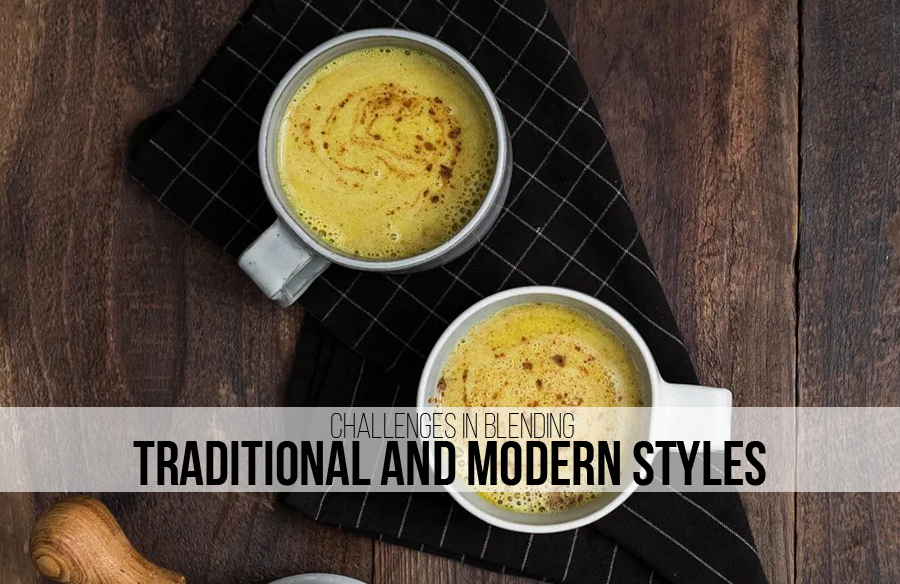
Turmeric latte and antioxidant drink that became extremely famous in the US, UK, Australia, and South Africa. And at that very time Indians were struck by the fact that it is “Haldi Doodh” that our generations drink for years to heal wounds and for healthy living. It is our recipe that is getting appreciated outside India and Indians are not even concerned about it. What type of hypocrisy is this? Indians only appreciate something when foreigners do, otherwise, it is all trash. It is our fault and a deep practice to not support our indigenous practices, traditions, values, etc. People need to inquire about their perspectives on their own culture.
Every country is facing some or the other difficulty but none abandons their traditions, knowledge, culture, heritage, etc. It is an alarming time for Indians to start valuing their traditions and practices so that the younger generations can hold on to something when the older generation will be passed on to their future generations. There are a lot of challenges in blending two different cultures but it is worth it until the result is harmonious for both the contributors.
Citations for websites:
Ankita Shukla (2024). The struggle between tradition and modernity why some Indians struggle to embrace their cultural garments. [online]. Available at: https://timesofindia.indiatimes.com/life-style/fashion/buzz/the-struggle-between-tradition-and-modernity-why-some-indians-struggle-to-embrace-their-cultural-garments/amp_articleshow/112593618.cms/ [Accessed 17 Nov 2024].
Patrick Deneen (2016). How a generation lost its common culture. [online]. Available at: https://www.mindingthecampus.org/2016/02/02/how-a-generation-lost-its-common-culture/ [Accessed 17 Nov 2024].
Tulsi Silks (2023). Types of traditional saree draping styles from different states in India. [online]. Available at: https://tulsisilks.co.in/blogs/types-of-traditional-saree-draping-styles-from-different-states-in-india?srsltid=AfmBOooV8g5zeWXYofVO4_j4xZUMWb-2l-31pSfm1SD7esuOrhtyrwoa [Accessed 17 Nov 2024].