“We shape our buildings; thereafter they shape us.” This quote by Winston Churchill encapsulates the impact that architecture has on people’s lives. Social architecture is a tool that can be consciously used to create spaces that go beyond just catering to people’s basic functional and aesthetic needs. It is a form of architecture that comes from a deep understanding of the wants and needs of the people, their ambitions and goals, and creates spaces that bring people together on common grounds while keeping their differences in mind. From enhancing inclusivity and accessibility to fostering health and well-being amongst citizens, social architecture can achieve multiple social goals and increase the efficiency of people in a space.

Intergenerational design: creating spaces for all
Intergenerational design aims to reduce the generational gap that persists in today’s society and bring together people from all age groups. It is a unique approach to the integration of social architecture. It facilitates an exchange of knowledge and values and helps in promoting mental health and well-being as well. Intergenerational design involves designing multifunctional spaces that can have numerous activities going on simultaneously, from storytelling to exercise routines, increasing interaction among different age groups.
An example of intergenerational design is the Aegis Living Lake Union – Seattle, Washington, USA. Aegis Living focuses on developing new senior living homes near where seniors presently live, ensuring that they transfer to a caring community that does not cut them off from friends, family, and community life. (Olivia Richardson, 2023) In addition to being a green building that meets the criteria for the Living Building Challenge, it has ample spaces flooded with natural light for people to come together. An assisted living space with a Montessori-inspired daycare on-site facilitates interaction between children and senior citizens.

Participatory Design
Participatory design is a practice that involves the users of the space in the design, planning, and execution process. It works on the belief that the users of the space know their requirements in the best way possible and can effectively contribute to the design process. Participatory design enables the creation of spaces that are more tailored to the client’s needs, functional, and better suited for the users. As an innovative approach to social architecture, participatory design makes the clients feel like their opinions are valued and respected. It enables them to feel more connected with the space and develop a sense of comfort with the environment.
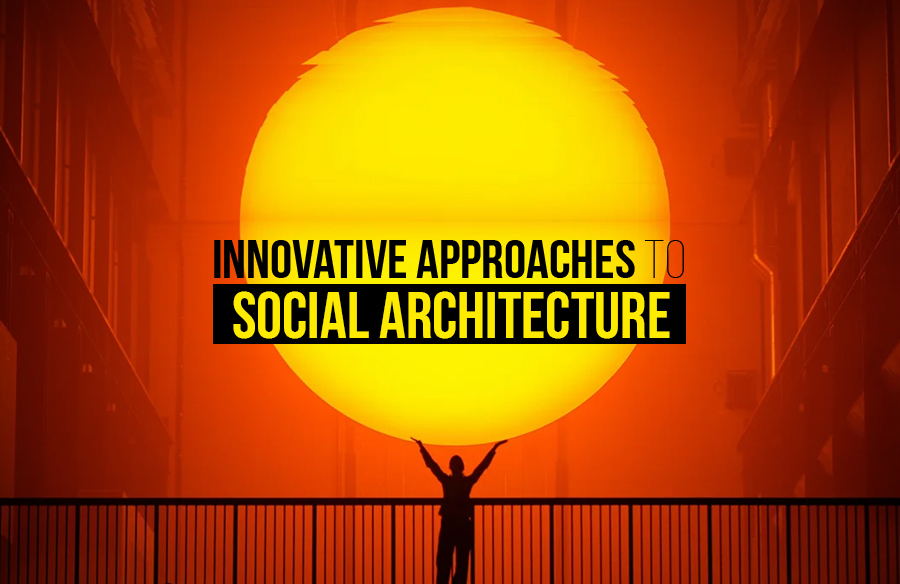
Participatory design is not just limited to the initial design process of the space and this can be seen as an example in Tate’s Modern Turbine Hall, London. It involves people in installations and exhibits at the hall that serve community interest. This ensures that public involvement is not just limited to the initial design process but continues after execution. The installations mostly aim to provide people with an interactive and immersive experience.

Adaptive Reuse
This is a practice that involves repurposing an old structure in a way that serves a new purpose. It can be called upcycling in the context of architecture. Adaptive reuse preserves cultural heritage while adding value to the existing structure. A sustainable approach towards social architecture, and adaptive reuse allows the community to reconnect with the existing structure in a new light and honor their heritage. It also serves as a medium for enhancing social equity as it creates spaces that are accessible and open to the community.
Tate’s Modern Turbine Hall in London serves as an example of adaptive reuse. Started as a power station in London, it is now one of the leading contemporary art museums in the world. Redesigned and repurposed by architects Herzog & de Meuron, it still retains its old charm while serving a new purpose. It has transformed into a cultural hub while being a vital addition to the art scene in London. A popular destination for tourists, it has boosted economic growth in the area. It is an open and accessible space for the general public and fosters an inclusive environment. Adaptive reuse allows for cultural and economic growth while being an innovative approach to social architecture.

As cities continue to grow, evolve, and expand, the need for social architecture will only increase, making it an indispensable practice. It becomes vital for architects and interior designers to embrace social architecture and innovative approaches that can help them inch closer to the objective of creating community-centered spaces. Focusing on social architecture through new and innovative approaches not only expands the scope for it but also makes it a more widely used practice. While intergenerational design bridges the age gap and makes people connect, participatory design allows people to be involved throughout the process. Adaptive reuse allows for cultural preservation while enhancing social equity. Together, these 3 innovative approaches will foster the creation of spaces that are deeply collaborative, and inclusive, and attain societal goals through social architecture.
References List:
- Olivia Richardson (2023). Aegis Living Lake Union – ULI Americas Awards for Excellence Winner. [online] ULI Americas. Available at: https://americas.uli.org/aegis-lake-union-uli-americas-awards-for-excellence-winner/ [Accessed 10 Nov. 2024].
Image References:
- My life through a lens (2016). Together, We Create. Available at: https://unsplash.com/photos/white-and-black-together-we-create-graffiti-wall-decor-bq31L0jQAjU [Accessed 10 Nov. 2024].
- Magda Biernat , M. (2023). Aegis Living . Available at: https://americas.uli.org/aegis-lake-union-uli-americas-awards-for-excellence-winner/ [Accessed 10 Nov. 2024].
- Olafur EliassonThe Weather Project 2003. (n.d.). Available at: https://www.tate.org.uk/visit/tate-modern/turbine-hall [Accessed 10 Nov. 2024].
- Osterlund, R. (n.d.). The Turbine Hall. Available at: https://www.tate.org.uk/visit/tate-modern/turbine-hall [Accessed 10 Nov. 2024].