Hue is more than an ornamental element in building construction. Instead, it is a psychological weapon to arouse, mould, or narrate. When it comes to architectural design, especially in Jaipur, an Indian State known for its vibrant culture, more emphasis is laid on the relevance of colours in cultural history and identity. Jaipur nicknamed the ‘Pink City’ is famous for its beautiful castles dressed in varying colours as per the fascination of Rajasthan. Be it the cool ending warm shades of the Hawa Mahal or the majestic shades of the City Palace, they have almost turned out to be the monuments of the history and culture of the particular region instead of being solely architectural sights.
The article will highlight the interesting aspects of colour theory as used in the young palaces of Jaipur. It will provide examples of how these colours are employed on purpose to cause certain feelings and improve the experience and relationship between people and buildings. In doing so, the role of colour in the forming of the architectural image, and the corresponding emotional state of the people who come to these famous places will be established as well. The present research seeks to demonstrate how colour can alter the appearance of buildings and more importantly how it enriches the overall character of Jaipur as a city and people who visit can appreciate it.
1. Hawa Mahal (Palace of Winds)

Hawa Mahal is a beautiful structure situated in an area that is known for its novel pink sandstone which has earned a lot of characters the nickname of “Pink City.” The colour was selected as in Rajasthan; pink stands for companionship and therefore the people are sending out the message of warm welcomes to all visitors.

Calm and romantic feelings are allowed by the soft pink colours, creating an atmosphere that intrigues and inspires people. The unique shaping of the grill along with the pink tint carries an element of intrigue and amazement without feeling heavy or clumsy.
Hawa Mahal shows how a single hue has the potential to express the love for one’s culture and the beauty of architecture, which results in creating a stunning image that resonates with the visitors with the historical and aesthetic sense of the city.
2. City Palace

The City Palace employs a pastel colour palette dominated by yellows, pinks, and whites with blue, green, and gold accents standing out. Such a palette is perfect for the intricate frescoes, beautifully crafted gates, and walls of the palace.
The warm colours are welcoming and fit for a king as an echo of the heritage of the palace, and its royal background while the complicated embellishments give a sense of richness and class.

The opposition of the warm with cool colours is visually satisfying and also provokes the desire to break the boundary of the space.
The City Palace demonstrates the extent to which a harmonious and royal exponential colour increment can recreate cultural grandeur with a warm feel in hospitality though the visitors are surrounded by luxury.
3. Amber Fort

The Amber Fort amalgamates yellow and light pink sandstone, which helps to create warm earthy colours that are in tune with the Aravalli hills around it. The inner rooms for example the Sheesh Mahal (Mirror Palace) include cooler colours and reflective surfaces that are a departure from the otherwise warm colour of the fort’s exterior.

Yellow and pink is a colour scheme that connotes royalty and strength while reflective spaces such as Sheesh Mahal, bring back an element of shock and surprise. The earthy colours contain an image of stability and solidity, rooting the fort deep into the harsh landscape it occupies.
The Amber Fort exhibits how the natural colour palette can get a dignified ambiance of the structure, providing a shield yet an encouragement while soft warm tones in the interiors deliver an unhealthy shock of luxury.
4. Jal Mahal (Water Palace)

Jal Mahal is an Indian palace situated in the middle of Man Sagar Lake. The lake’s pale blue-green contrasts beautifully with the light sandstone colour of the palace. Such an arrangement provides a pleasing view as the palace is distinct yet blends well with the natural scenery.
The governed sandy surfaces of the palace as well as the rippling surface of the water create an eerie stillness. Calmness is achieved by the use of appropriate colours that contribute to the essence of the structure as a retreat. There is a geographical takeaway: The Indian Duck Palas in the Lakes demonstrates that the building’s harmonious colouring scheme can be achieved using simple and modern earthy colours which make the palace a floating desert oasis.
5. Nahargarh Fort

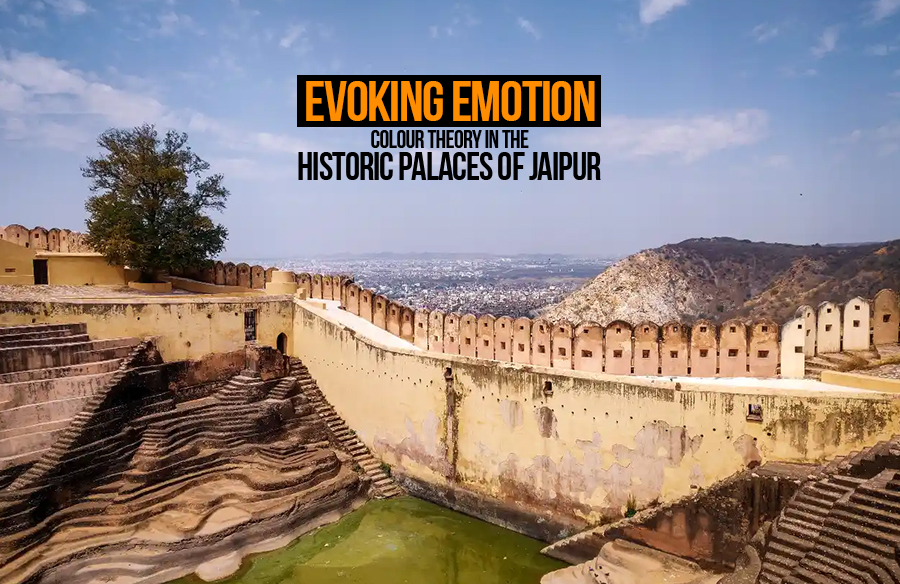
The tonal quality of the fort incorporates a lot of pale yellow and ochre paint which is in tandem with the sand and mountains that dominate the area. The cool shades are in sharp contrast to the highland tropical rain forests, grassy terrain, and vegetation beneath it.

The warm and natural colours fit seamlessly in the atmosphere creating a feeling of timelessness and strength. Such a combination of colours and the environmental conditions around the fort seem to imply that the fort is built to last as it is in its natural setting.
The colour scheme of Nahargarh Fort serves not only as an architectural element but also reinforces the purpose of the fort’s geographical location with its surroundings as if it is part of the landscape.
6. Patrika Gate (Jawahar Circle)

Even though Patrika Gate is not one of the original historical palaces, it pays homage to the colourful heritage of the region with pink, blue, green, and yellow colours where each colour has significance to the Rajasthani culture and identity.

The brilliant colours tend to create a joyous, party-like environment that instils cultural pride and happiness. The elaborate detailing and the designs of the gate makes it both welcoming as well as alluring, epitomising the rich culture of Rajasthan.
Patrika Gate shows how effective use of bright colours inspired by culture evoked a sense of pride and joy giving warmth and celebration of the local tradition.
It’s not just for aesthetic purposes that Rajasthan’s pink city uses colour in design, but rather a way of communicating the cultural ideologies, appreciating the visitors, and stimulating them emotion-wise. While the Hawa Mahal’s pink colour stands for warmth and hospitality, the rust colour in Amber Fort, and Jal Mahal is geared towards balance and integration with mother nature. The bright hues of the Patrika Gate showcase the ethnic pride and festivity. Through these different colours and layers of experience, the palaces of Jaipur take the visitors into a world, in which the colours set the themes with respect to the sacred land and its people reminding them of the glorious past of the state of Rajasthan and its people without fail.
Citations:
Porter, T. & Mikellides, B. (1976) Colour for Architecture. London: Studio Vista.
Tillotson, G. (2006) Jaipur Nama: Tales from the Pink City. New Delhi: Penguin Books.
Rego, V. (2012) The Pink City of Jaipur: A Glorious Heritage of Rajasthan. Jaipur: Roli Books.
Singh, R. & Kaur, P. (2014) ‘Amber Fort and the Mughal Influence on Rajasthani Architecture’, Journal of Architectural History, 22(3), pp. 145-159.
Mehta, A. (2019) Rajasthan’s Palaces: Icons of Royalty and Design. Mumbai: Marg Foundation.
Patel, N. (2020) Jaipur Forts: The Strength of the Desert. Udaipur: Heritage Publishers.