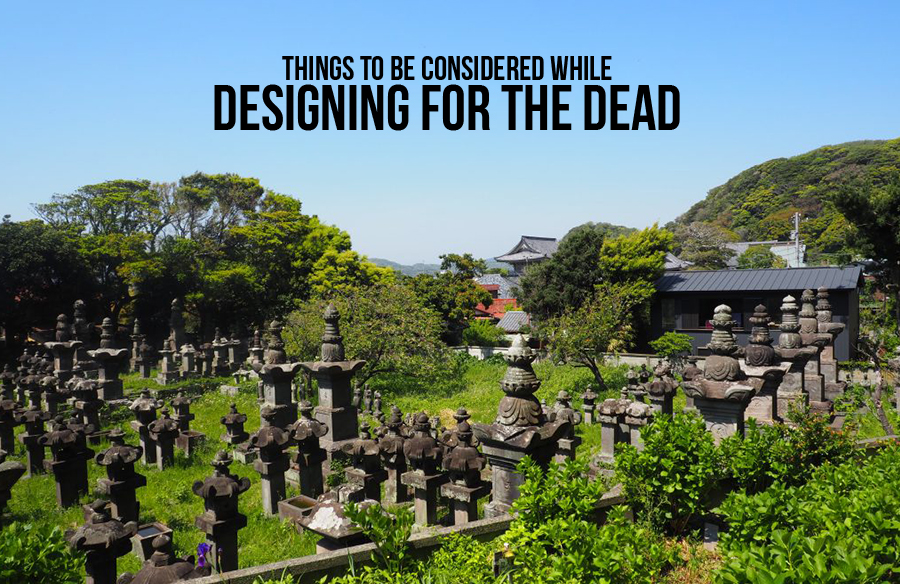
Designing for the dead is a serious and special duty that touches on social, cultural, psychological, and spiritual spheres. In addition to honoring the deceased’s memory and navigating intricate death-related rituals and beliefs, the places and items are made for the desires of the living. Designing for the dead reflects shifting perspectives on mortality in the modern world, and incorporates a range of disciplines, including architecture, urban planning, art, and even computer design. To create meaningful settings for both the deceased and the living, certain criteria must always be considered whether constructing cemeteries, monuments, tombs, or virtual spaces for memory.

Cultural Sensitivity
Cultural differences in funeral customs must be deeply respected and understood when designing for the dead. For instance, while cremation or sky burial may be the standard in some cultures, burial in the ground is considered a necessary practice in others. The designer must take into account the particular religious and cultural values of the departed and their community. Individuality and permanency may be given priority in cemetery architecture in Western cultures, but transitory or communal areas may be more suitable in other traditions.
For instance, haka, or family gravesites, are shared by several generations in Japan and serve as a reflection of a shared memory. Individuality is valued in many Christian traditions, on the other hand, and headstones often include personal information about the departed. It is critical to recognize that these customs are not just utilitarian but also highly symbolic, frequently mirroring ideas on the afterlife and the ongoing relationship between the living and the dead.

Inclusivity and Accessibility
The living, particularly the relatives, friends, and communities who use these areas, must be taken into account while designing for the dead and it is essential that all visitors can access it. This entails making routes accessible to the elderly and disabled, offering shade, seats, and shelter, as well as establishing areas where people may peacefully grieve and think. Additionally, inclusion encompasses religious and cultural diversity. Spaces should be designed to suit various funeral customs and beliefs, allowing for ceremonies that may range significantly in terms of formality, length, and rituals.
Aesthetics and Symbolism
When designing for the dead, the aesthetics carry significant symbolic weight. These areas must strike a balance between solemnity and beauty to both symbolize the finality and dignity of death and provide consolation to those who are grieving. Symbolism is frequently used by designers in the use of shapes, colors, and materials. For instance, green areas represent rebirth and tranquility, whereas marble is typically utilized in tombs because of its association with perseverance and purity. Furthermore, culturally particular gestures might be significant. Because red is associated with pleasure and success, it is seldom used in tombs in many East Asian civilizations; instead, black or white may be more fitting. In a similar vein, other cultures believe that water helps direct the soul of the deceased.

Psychological Considerations
The psychological needs of the living must be taken into account when designing for the dead. People deal with grief in different ways, and it’s a very personal experience. Designers need to make spaces that encourage introspection, comfort, and recovery, perhaps just as important as public areas that promote collective grieving and memory are private areas where mourners can be left alone with their thoughts. Apart from the physical surroundings, people’s perceptions of a location may also be influenced by sensory components like light, music, and even smell. A peaceful, contemplative environment that aids in the mourning process can be produced by the soft glow of sunshine, the subtle rustling of leaves, or the soothing sound of running water.
Technological Integration
In modern architecture, technology is increasingly playing a significant role when designing for the dead. Technology is changing how we connect with these areas, from interactive memorials that use augmented reality (AR) to GPS-enabled graves that assist families in finding the precise location of their loved ones’ last resting place. Designers need to think about how new technology may improve memorization without taking away from the experience’s seriousness and dignity. For example, augmented reality apps give users access to audiovisual content about the deceased’s lives or historical details about them. This enhances the experience of going to a tomb or memorial.

Future-Proofing Designs
When designing for the dead, designers must change along with the way society views death. Future-proofing entails taking into account how these areas will be utilized and cared for in the future. This might entail creating monuments that can vary with nature or terrain or preparing for shifts in funeral customs, such as the growing acceptance of natural burial or cremation. Designers should also think about how these areas could be interpreted by future generations. A memorial’s significance may change in a century, therefore it’s critical to keep this long-term outlook in mind while designing it.
Designing for the dead is a delicate and intricate process that takes into account cultural, technical, psychological, and environmental factors. Whether designing a war monument, a conventional cemetery, or a digital place for memory, designers must carefully strike a balance between the demands of the living and the dignity of the deceased. In addition to taking into account how the design will appeal to future generations, it is imperative to respect the legacy of the departed. With this method, cemeteries are elevated above the level of simple resting sites and become enduring monuments that represent culture, history, and communal memory, strengthening the bond between the past and present.
References:
Etlin, Richard A. The Architecture of Death: The Transformation of Cemetery in Eighteenth-century Paris. MIT Press, 1987.
Tarlow, Sarah. Bereavement and Commemoration: An Archaeology of Mortality (Social Archaeology). Blackwell, 1999.
Verdery, Katherine. The Political Lives of Dead Bodies. Columbia University Press, 1999.