Sacred Spaces as Portals to the Divine
Sacred spaces are more than just physical structures; they are environments designed to foster a profound encounter with the divine. These spaces are designed to transport the user into a realm of sanctity, enabling a connection with a force greater than the individual. Architecture plays a pivotal role in shaping this spiritual journey, guiding users through a space that feels removed from the ordinary world.
Temples, cathedrals, and mosques exemplify this concept. These structures serve as physical manifestations of a portal to the divine, where architecture helps create a symbolic passage into the sacred. The spatial elements within these buildings, such as scale, light, and form, are carefully crafted to enhance this experience, leading visitors on a journey that transcends the physical and approaches the spiritual.

The Role of Architecture in Transitioning Between Realms
As Christopher Alexander points out in his book Pattern Language: “In all cultures, it seems that whatever it is that is holy will only be felt as holy if it is hard to reach, if it requires layers of access, waiting, and gradual unpeeling.” Sacred architecture often mirrors this idea, where approaching the divine requires a slow, deliberate passage through multiple layers, much like peeling back the layers of a spiritual journey.

In sacred spaces, visitors are not simply walking from one room to another; they are navigating through a sequence of realms, each one designed to feel more sacred than the last. This gradual progression mirrors the spiritual preparation necessary to approach the divine, with each space acting as a step closer to the ultimate encounter with the sacred.
Architectural Transitions
This progression is carefully guided by architectural elements, from changes in scale and lighting to the arrangement of thresholds and transitions. This layering not only enhances the sense of journey but also elevates the spiritual experience, allowing the user to connect more deeply with the divine as they move closer to the sacred heart of the space.

In Hindu temples, the journey begins in a wide, open courtyard, gradually drawing the traveller inward through smaller, more intimate chambers. With each step, the world outside fades, and the sacred realm grows nearer as if the very walls guide the soul toward a divine embrace—a journey from the vast to the intimate, from the earthly to the eternal.
Sacred Geometry in Form and Space
The first impression of a building emerges from the way its walls rise, its ceilings soar, and its mass and space unfold before us. These physical dimensions—length, width, and height—shape the soul of a space, giving it form and presence. Since the dawn of civilization, grand structures like pyramids, stupas, domes, and towering spires have embodied significance and permanence.

In Form, Space, and Order, Frank Ching speaks of these volumes as the three-dimensional expression of a point in space—an anchored, silent energy at rest. In sacred architecture, such forms serve a higher purpose, becoming vessels for divine energy. At the very core of the sanctuary, these volumes symbolise the holy, sacred field of presence, drawing us into the realm of the divine.

The Sacred Ascent
The way a person enters a sacred space sets the tone for the rest of their journey. Whether ascending the grand staircases of temples or stepping onto the elevated platforms of Greek sanctuaries, each step becomes a ritual in itself. The act of rising, both physically and symbolically, signals the transition from the ordinary to the divine. As the ground beneath elevates, so too does the spirit, leaving behind the mundane and entering a realm set apart. This gentle ascent stirs a sense of reverence, preparing the mind and soul for the sacred experience that lies ahead.

Awe in Architecture
As one enters, the volume of a sacred space envelops them, shaping the journey that lies ahead. In this context, scale and proportion serve as the silent language of architecture, conveying meanings that transcend the physical.
Sacredness has long been intertwined with monumentality; high cathedrals, colossal pyramids, and towering gopurams evoke awe and reverence through their grandeur. Their immense scale not only inspires wonder but also serves as a poignant reminder of the humble human presence within the vastness of the universe, prompting quiet reflection before the infinite. Together, the interplay of volume and monumentality leaves visitors with a profound sense of the spiritual weight of the divine.

Light and shadow in Worship
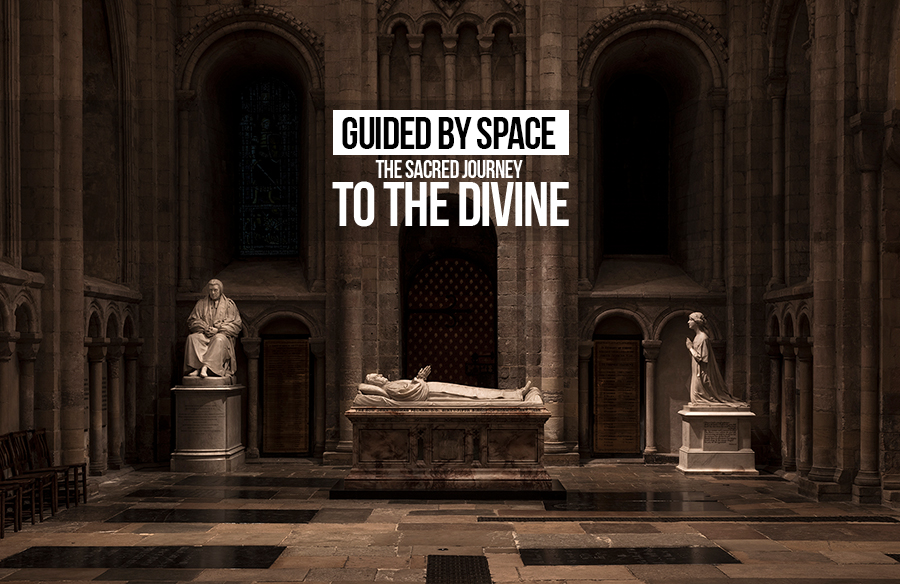
Light and shadow dance within a sacred space, revealing its physical essence. They guide the eye to the scale, materials, and fenestration, forging a symbolic connection to the world beyond. In Buddhist halls, the chaitya or sun windows, rose windows in churches and mosques, and flickering diyas in the dark sanctum sanctorum of temples create an interplay of light and darkness, blurring the lines between the profane and the sacred.

In these sacred areas, the contrast is often heightened, with limited light streaming in to create a dramatic ambience that underscores the presence of the divine. The more sacred spaces feature an exaggerated play of light and shadow, setting a tone of reverence and awe.

Architecture as a Bridge to the Sacred
Ultimately, architecture is instrumental in cultivating moods of reverence, worship, and contemplation. It is remarkable how something so tangible and physical can profoundly influence the inner journey a worshipper embarks on when they close their eyes, guiding them toward the divine.

References:
Alexander, C. (1990). A pattern language. München: Fachhochsch., Fachbereich Architektur.
Ching, F.D.K. (1979). Form, space & order. New York ; London: Van Nostrand Reinhold.
TEDx Talks (2023). The Lullabies of Liminality and Symbolism in Architecture | Bijoy Ramachandran | TEDxNitteDU. [online] YouTube. Available at: https://www.youtube.com/watch?v=Yr_HPgNVp-Q [Accessed 13 Oct. 2024].
www.youtube.com. (n.d.). Architecture: An Ultra-sensory Narrative | Bijoy Ramachandran | TEDxCET. [online] Available at: https://www.youtube.com/watch?v=6eJcDWhsZHs [Accessed 13 Oct 2024].