

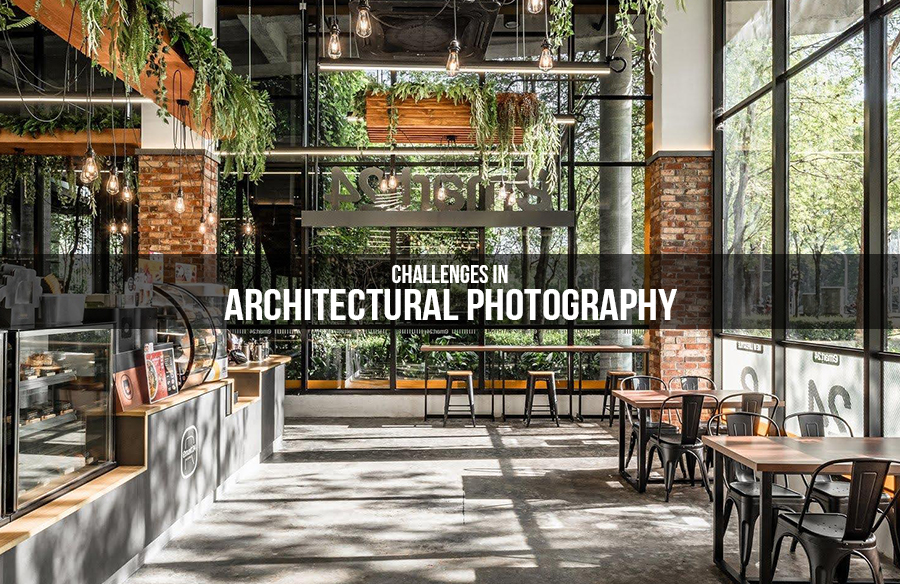
Visual communication is a powerful tool for narrating spatial stories in architecture, with its steep tradition rooted in architectural photography. How can the “eye” capture the hapticity of space and frame the narratives of space? Dissecting The Space Storyteller’s works, let’s look at how stories can be built through the stillness of photographs and the challenges that unfold in photography practice. The Space Storyteller is an interior and architectural photography practice founded by Su Ping Ong, who started her earlier career in interior design. In 2019, she made a pivotal decision to pursue photography. Their works evoke emotive stories.
In literature, writing a narrative is writing a story. As a story is written, the plot elements of exposition, rising action, climax, falling action, and resolution, together with the language tools of narrative writing, are used to create a story. What happens when a story is not written but photographed? In contrast to words, the need to compress the story into a single frame is a challenge, especially given the rapidly evolving demands of the profession and technological advancements.
Being a Space Storyteller
Every design has a story, and Su Ping Ong, an interior designer turned photographer, is uniquely positioned to capture these narratives. When she first walks through a project with a designer, she asks them to share the story behind the design. This understanding of the design intent guides her in composing shots that capture the essence of the design.

For example, in her recent shoot of BarKar KL for Spacemen Studio, the designer, Edward Tan, explained that the design revolved around Primordial Community Cooking. The user journey begins with a walk through a “primordial forest” before arriving in an “earthen cave” with a roaring fire burning within. She sought to capture (and subsequently enhance in post-processing) the sense of that heat and warmth in her shots and the earthy darkness of a cave.

Another example is Rumah Tela by IDENT-3. A 200-year-old wooden kampung house, dismantled from its original location and reassembled in Batang Kali, where it is living a second life as a nature retreat. The wood is weathered and dark in colour, almost grey. There is a sense of nostalgia and antique charm to the house. “On the day of the shoot, skies were overcast, which initially I was disappointed by, but I ended up pleasantly surprised by the resulting moody ambience. And I went with it for my shoot. I also adjusted the colours during post-processing to convey that enigmatic moodiness,” Su Ping explained.
In The Space Storyteller’s works, several architectural photography techniques capture spatial stories. They include the composition of the frames to show the connection between spaces, creating a tapestry of view and spatial layering, and human elements demonstrating the spatial use and sense of scale. Placing the human figure or objects helps direct viewers’ eyes to the image’s focal point.
Challenges in capturing stories
Balancing between the aesthetic and functionality of space when telling a story through photography is a challenge. Photographers are tasked with capturing the beauty of architecture while conveying its purpose and functionality. Striking this balance is difficult, especially with modern designs prioritising unique forms. Su Ping humbly shared, “When composing my shots, I ask myself this: What is the story I am trying to tell here?” Though sometimes the story is straightforward, for example, “I want to show an elevation-like view of this cabinet”, Su Ping explores an exciting take by adding furniture in the foreground to show context.

One of the challenges in architectural photography is balancing artistic integrity with the client’s needs. Architects and developers often have specific branding and marketing objectives, and photographers must align their work with these goals while maintaining their artistic vision. Su Ping Ong shares her approach, which involves understanding the purpose of the images to manage expectations before the shoot and proposing additional angles to provide fresh perspectives.

With the wide acceptance of digitalisation in architectural photography, the issue of post-production and authenticity emerged. For example, digital editing has become a significant part of architectural photography. However, there’s an ongoing debate about how much editing is too much. Some argue that over-manipulation can lead to unrealistic representations, while others see it necessary to emphasise design elements. In the works of The Space Storyteller, the primary guide is the “design intent” and purpose of the photographs. Post-production focuses on omitting elements that distract from the design intent, such as sprinklers, plug points, stray wires/cables, and other irrelevant reflections.

Natural light is pivotal in architectural photography, and its unpredictability can pose challenges. Finding the right time of day and weather conditions for exterior shots is often tricky, and there is often limited luxury of waiting for good weather. On the other hand, interior shots have lighting difficulties, particularly in dark spaces or those with mixed lighting sources. To tackle the issue of mixed lighting sources, Su Ping sometimes shoots the same shot in two lighting conditions (lights on and off) and blends the shots in post-processing.

Capturing scale is another challenge for architectural photography. Conveying a building’s accurate scale can be difficult, especially with large or intricate structures. Photographers must creatively use angles, lenses, and context (including people or surrounding environments) to highlight the scale of the architecture. Whenever possible, include human figures in shots to convey a sense of scale.
Emerging technologies such as drones have revolutionised architectural photography by allowing aerial shots that showcase buildings from new angles. However, operating drones presents legal, technical, and safety challenges, especially in urban or restricted areas. As immersive technologies become more prevalent in design presentations, photographers are experimenting with VR and AR. This adds complexity, as photographers must now consider creating content that translates well across different mediums. While it poses challenges, it has an exciting prospect. Photography (like any other skill) is a continuous journey of learning, discovery, and improvement. We can only be inspired continuously by keeping an open and curious mind.
Conclusion
Architectural photography is powerful in capturing and narrating spatial stories. Unfolding stories through static images remains challenging as they are juxtaposed between reality and imaginary, aesthetic and functionality, manual and technology, light and dark, and proximity and distance.
References:
The Space Storyteller. (2024) The Space Storyteller. [online]. Available at: https://space-storyteller.com [Accessed 21 September 2024]
Ng, V. and Ong, S.P. (2024). An Interview on the challenges of architectural photography.







