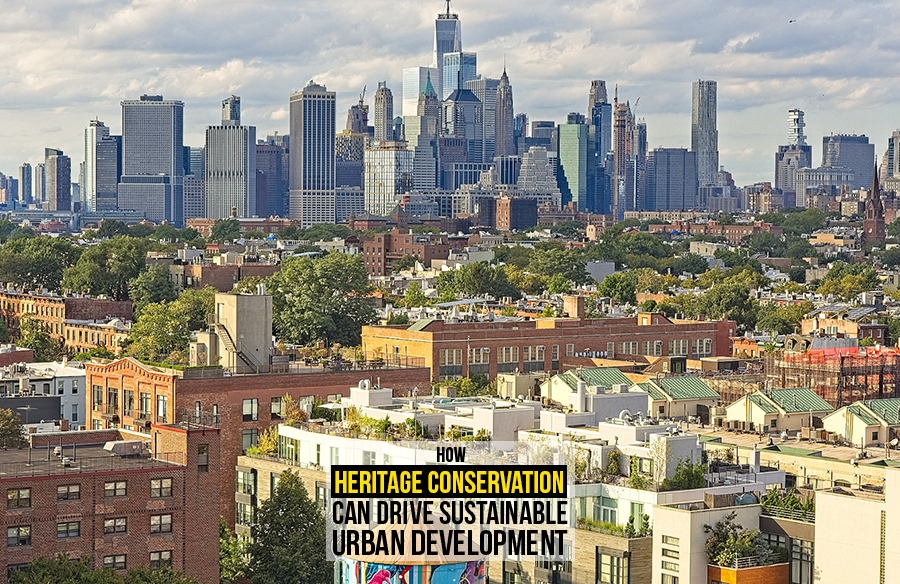
The twenty-first century is characterised by urbanisation, with a large number of the global population currently living in cities and the changing landscape around the world due to urbanisation. This presents both opportunities and difficulties for sustainable urban development and the need to protect cultural assets arises.

Apart from protecting cultural identity, heritage conservation is also critical for achieving sustainability. Through heritage conservation cities can preserve the historic structures, the environment, and other cultural aspects that help define a community’s identity and sense of place.
The goal of sustainable urban development is to satisfy current needs while saving resources for future generations and protecting the past. This covers resilience to outside forces like natural disasters and climate change, as well as environmental sustainability and economic growth. Urban planning techniques and historical conservation can work together to accomplish these goals.
Sustainable Urban Development and Heritage Conservation:

Promoting resilience, inclusivity, and prosperity serves as the foundation for integrating sustainable urban development and heritage conservation. Historic neighbourhoods and heritage sites frequently serve as pillars of the community’s identity and cultural vitality. Cities may promote growth and modernization while keeping their unique character by safeguarding these assets.
Cities that successfully strike a balance between sustainable growth goals and historical preservation can reap numerous benefits. These include increased opportunities for tourists, higher property values, and a greater sense of community pride. Furthermore, heritage conservation encourages eco-friendly tourism practices that reduce negative impacts on area cultures and surroundings while promoting economic growth and job possibilities.
Economic Benefits:

The preservation of cultural assets provides several financial benefits. Historic sites and structures attract tourists, generating revenue for adjacent businesses, accommodation facilities, food establishments, and cultural groups. Cities such as Amsterdam and Venice are good examples of how cultural heritage can sustain robust tourism industries that promote job creation and economic growth.
Furthermore, heritage-driven restoration programs can promote the local economy by adaptively reusing historic structures. Cities can reduce construction costs and promote sustainable urban development by transforming ancient structures into modern applications such as offices, residential lofts, or mixed-use developments. This will not only safeguard architectural heritage but also create new economic and financial prospects in historically significant areas.
Environmental Benefits:

Heritage conservation encourages adaptive reuse. Heritage buildings are built with sustainable materials keeping natural ventilation in mind to enhance energy efficiency and reduce the need for artificial heating and cooling systems. Cities that are able to conserve their current infrastructure can mitigate the negative environmental effects of new development which benefits long-term sustainable urban development and economy.
Conservation helps to preserve green spaces and urban biodiversity. Incorporating green infrastructure such as historic gardens, parks and landscapes into conservation efforts can help with maintaining the ecological balance of metropolitan regions providing habitat for native species. This can help communities improve air quality, reduce the effects of urban heat island syndrome, and become more resilient to climate change.
Considerations and Challenges:

In order to effectively integrate and balance preservation with contemporary urban needs, a number of obstacles and considerations must be overcome when heritage conservation is the driving force behind sustainable urban development.
1) Maintaining historical authenticity and satisfying modern infrastructure requirements—like accessibility and safety standards—often clash in importance. This may result in convoluted decision-making procedures and possible project execution delays.
2) Money is a major obstacle because heritage conservation initiatives frequently need large sums of money for the upkeep, restoration, and adaptive reuse. It is essential to find funding sources and strike a balance between environmental objectives and commercial viability.
3) Efforts to apply selective preservation tactics across several jurisdictions and administrative levels may be complicated by the considerable variations in regulatory frameworks and bureaucratic procedures.
To encourage sustainable urban development while safeguarding cultural assets, it is critical to address gentrification issues, provide fair participation in decision-making processes, and engage the community and the public’s opinion. To achieve long-term results that respect and improve urban history, effective problem-solving requires interdisciplinary teamwork, adaptive planning solutions, and proactive stakeholder engagement.
In summary, heritage protection poses a number of obstacles to the advancement of urban sustainability, yet integration is still necessary to create resilient, culturally vibrant communities. Resolving problems between modernisation and preservation calls for well-rounded methods that give community involvement, adaptive reuse tactics, and creative funding sources first priority. Cities may benefit from the economic, social, and environmental advantages of conserving their cultural legacy by negotiating regulatory obstacles and obtaining long-term support. In the end, making heritage conservation a priority in urban planning not only improves the quality of life for locals but also draws tourists, boosts local economies, and guarantees that coming generations will inherit lively, inclusive cities. The preservation of cultural assets is evidence of cities’ dedication to sustainable development as they continue to change and endure cultural identity.
Reference list:
UNESCO (2015). World Heritage and Sustainable Development. [online] Unesco.org. Available at: https://whc.unesco.org/en/sustainabledevelopment/.
Giliberto, F. and Labadi, S. (2021). Harnessing cultural heritage for sustainable development: an analysis of three internationally funded projects in MENA Countries. International Journal of Heritage Studies, 28(2), pp.1–14. doi:https://doi.org/10.1080/13527258.2021.1950026.