

Architecture is a visually dominant field having little to almost negligible need for using words. Articulation of words is considerably less valued when compared to visual representations. But words and writing are just an expression of our ideas and the narrative we try to build with our design. Writing helps us to articulate our thoughts into an understandable perspective for the normal user. Architectural critiquing, analysis, documentation, and narrative-building, are a few things that help to convey in a finer articulated form for the general user. A few writers have brought about an impact, by their publications on how architectural writing should be. Let’s Get To Understand Their Contributions.

Apurva Bose Dutta
Apurva Dutta is a significant contributor to architectural journalism and documentation. She has constantly emphasised the importance of communicating architecture in every forum. She has had 18 years of experience in being associated with various organisations as an author, journalist, curator, editor, and educator. She has also constantly advocated for the importance of documentation of a project in architecture to preserve and reflect ideas from them.
Her publication includes the book “Architectural Voices of India: A Blend of Contemporary and Traditional Ethos” which showcases various architectural projects of architects around India highlighting the diverse architectural landscape of India. The book is simple and discusses the architect’s inspiration, ideologies, determination and mindset while designing the projects. Her approach towards writing has been to convey and make the reader understand complex architectural ideas, perhaps even to people with non-architectural backgrounds.

Bill Schmalz
Bill Schmalz is among the reputed architects known for his publications and guide on “architectural writing”. He wrote the book “The Architects Guide To Writing” which is a resourceful guide on how architects can represent their design in a more articulated form through words. In general, architects do not excel well in communicating their designs and concepts. The book approaches these challenges and makes the reader understand how one can write and communicate their ideas, and put forward a thematic representation of their visualisations. This book empowers the architects to confidently represent their works more so for the clients and the public in general.

Alexandra Lange
Alexandra Lange is a well-known historian who has played a crucial part in architectural criticism and its analysis. In her book “Writing About Architecture: Mastering the Language of Buildings and Cities”, she offers insights into some of the works of the best architectural critiques of the twentieth century, some of which include Ada Louise Huxtable, Lewis Mumford, Herbert Muschamp, Michael Sorkin, Charles Moore, Frederick Law Olmsted, and Jane Jacobs. She simplifies some of the successful methods to approach architectural criticism. The book also includes important essays discussing a building or a project categorised based on typology to make the reader understand the depth of architectural criticism.
Alexandra is a frequent contributor to a variety of publications, she is known to have consistently outlined the importance of critiquing through writing making society to be able to judge from a professional perspective.

Carter Wiseman
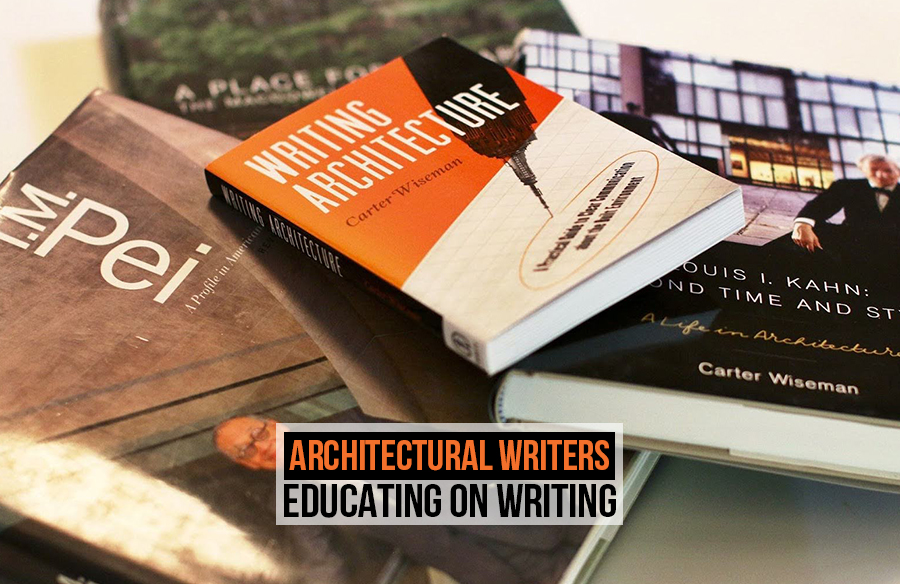
Carter Wiseman is an architect with a background in history and criticism of over 30 years in writing, editing and teaching architects how they can articulate their projects. Wiseman is known for many publications, including “Louis I Kahn: Beyond Time and Style: A Life in Architecture; IM Pei: A Profile In American Architecture; A Place for the Arts: The Macdowell Colony, 1907-2007”. These books have created a stir in architecture, and Carter simplifies the projects for the reader to understand and look at his perspective to comprehend the design.
He also wrote a book on “Writing Architecture: A Practical Guide to Clear Communication about the Built Environment” in which he talks about the process, methods and value of architectural writing. The book is very creative in tackling problematic issues that the writer thinks are crucial to successful architectural clarity of thinking. He emphasises how our life is within the built environment, and that architecture is a very complex form of art. He uses different themes from varied perspectives using excerpts from writers in various genres and backgrounds.

The commonality between all the writers mentioned above is that they have contributed to writing and criticism in Architecture, through their publications. They have been able to document and analyse architectural projects in a manner that needs to be adopted by design studios to be able to articulate and put the point across in the most clear style of communication.
All of these writers have provided a handbook for the generations to come on how to go about architectural writing, as it is a less discussed topic but a very important one to help architects communicate with words. This helps the architects convey their perspective or take on design and becomes a guide to the public in understanding architecture.
The works of these historians and architectural writers have brought about a dynamic perspective on the architectural discourse. With continual efforts and contributions of many such architectural writers in the modern world, it will only help change the architectural diaspora into a simplified understanding bridging the gap between society and the public.







