The Blueprints of Power
“Cities have the capability of providing something for everybody, only because, and only when, they are created by everybody.” (Jacobs, 1961), said Jane Jacobs, Journalist, Activist, and Pioneer of the design approach “eyes on the street”, championing the cause of the public; urging the design of democratic spaces that embrace the notion of safety for all.
Similarly, there have been plenty of other torchbearers within and beyond the tapestry of Architecture. They are catalysts in the complex concoction of socio-political variables, and policymaking, introducing interventions into the physical realm as a response, for however truncated a duration of time.
This is an exposition that intends to take a peek at matters of National identity, the various Movements, Political commentaries, and Urban-scale revolutions that shaped history in the past and making history in the present. These are some of the blueprints of the power Architecture holds in breaking conformity and obsolescence – influencing and being influenced by politics.
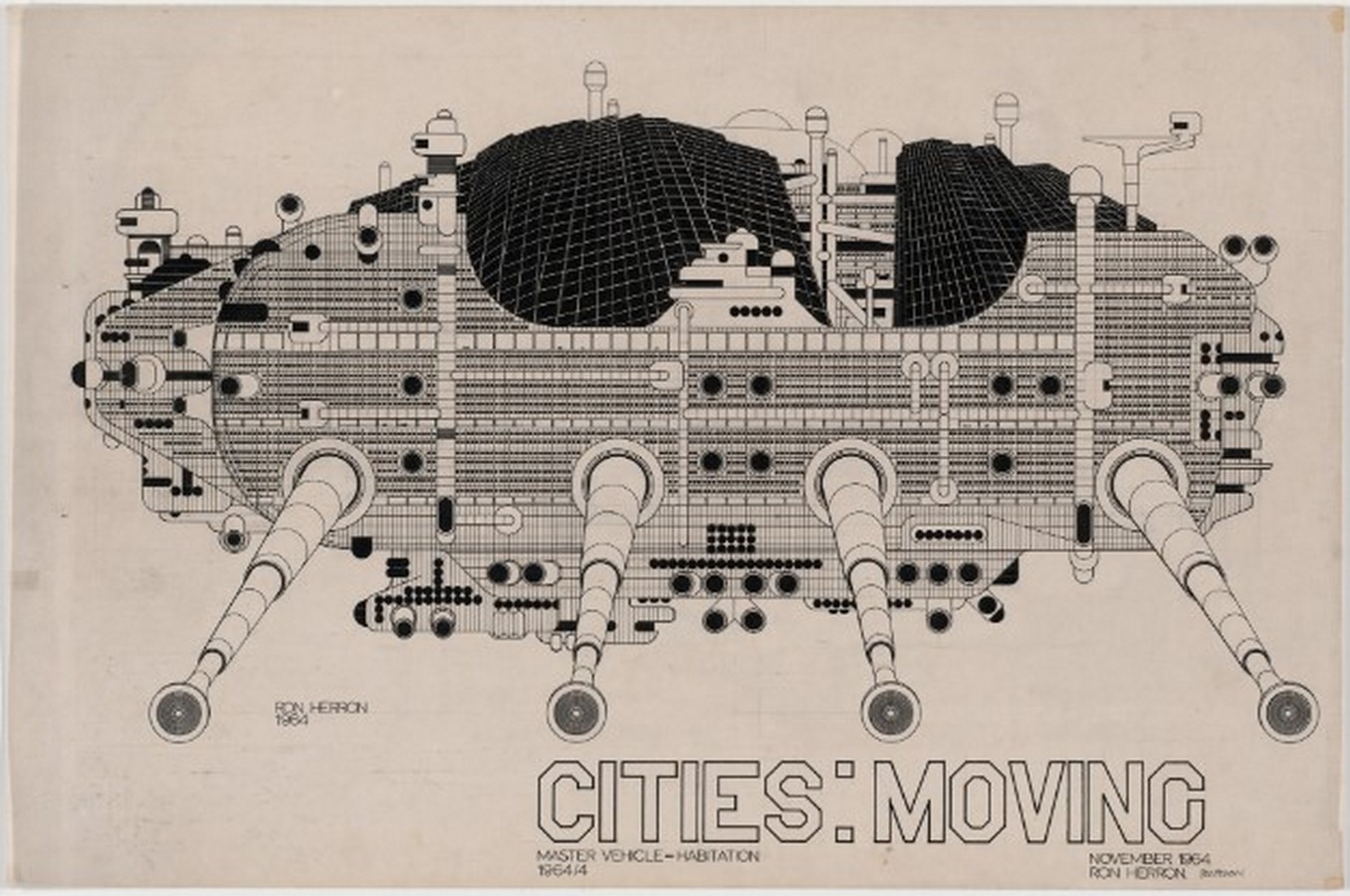
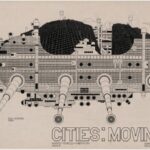
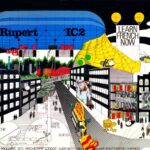
The drawing above created by one of the founding members of the Archigram movement is a standing example of a visual political commentary: The walking city is a fictional proposal that holds no pragmatic truth to it but provokes minds to think further and farther away into the future, envisioning a modernity that preserves resources of the metropolis. Read ahead to view more architectural responses to the influence of politics.
National Identity and Architectural Form
This delves into the profound interplay between a nation’s identity and the structures that define its landscape. “The Earth is littered with the ruins of empires that believed they were eternal,” said Camille Paglia; here we find the echo of history’s impermanence. This section explores how post-colonial nations utilize architecture as a canvas weaving their identity intricately into the fabric of colonial history.

Case study of Post-Colonial Identity of India
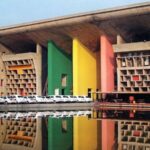
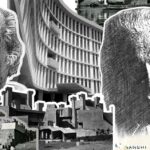
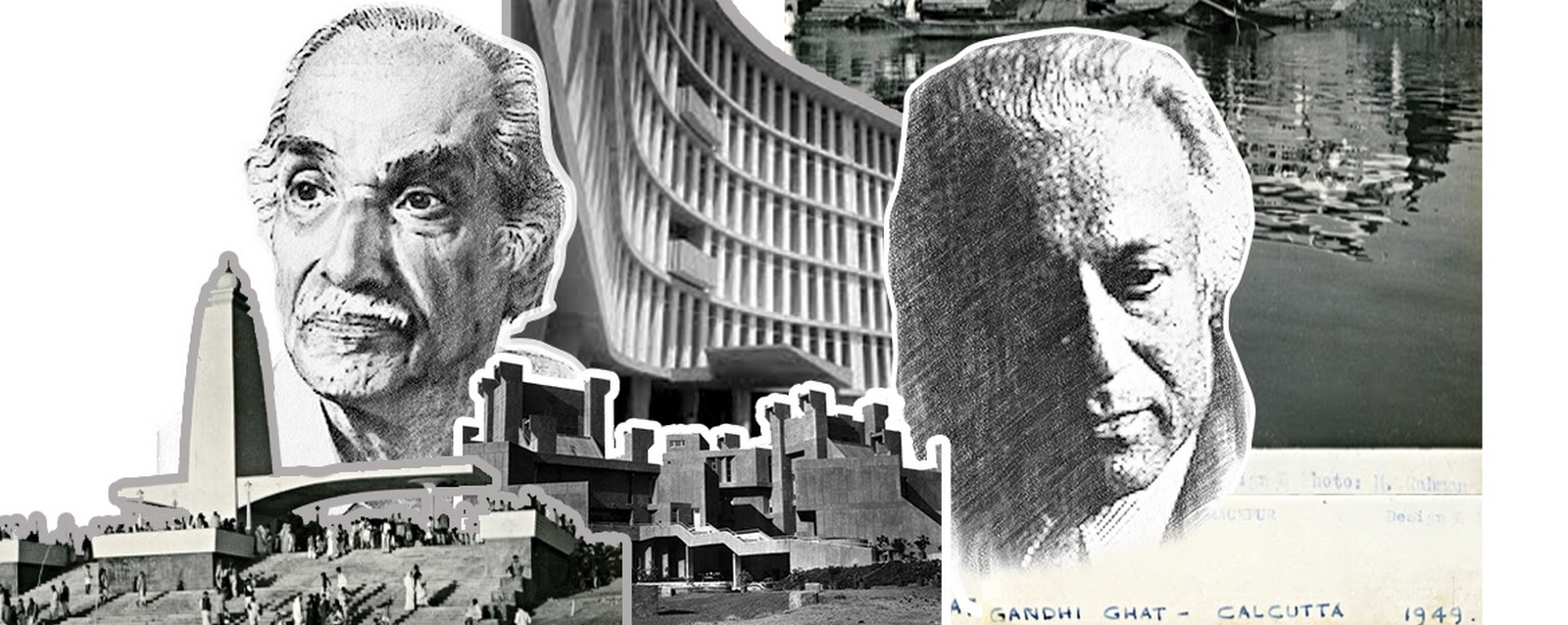
Upon threading on the wider plane of resistance put up by Indians, the British Government premeditated the country’s independence and assigned two young Indian architects -Achyut Kanvinde and Habib Rahman to venture abroad. These architects studied the Bauhaus philosophy under the guidance of the renowned architect and designer Gropius at Harvard and MIT. Having grasped the design paradigms of the Bauhaus movement, they adapted these principles for India, shaping the discipline for an extended period. Many documentations affirm that these architects brought Bauhaus to India, disseminating “modernity” internationally and influencing the design language of the nation.
Gropius, the architect and educator, articulated a manifesto for Bauhaus, declaring, “The final goal of all artistic activity is Architecture.” On the surface, Bauhaus is characterized by an emphasis on clean lines and planes, prioritizing functionality. It discards extravagant decoration in favor of simplicity. It is often stated that the Bauhaus school returned to its basics, adhering to the fundamental rules of design and finding beauty in the unpolished, practical, and clean. Cities like Calcutta and Delhi bear evidence of this influence.
The Bauhaus architects provided a clear direction to the nearly independent nation regarding a modern and ecological approach to architecture, influenced by the country’s politics. In the face of a large population and limited resources, it was not merely a luxury but a necessity for the time.
Francis Kéré’s efforts toward Post-Colonial Architecture in Africa
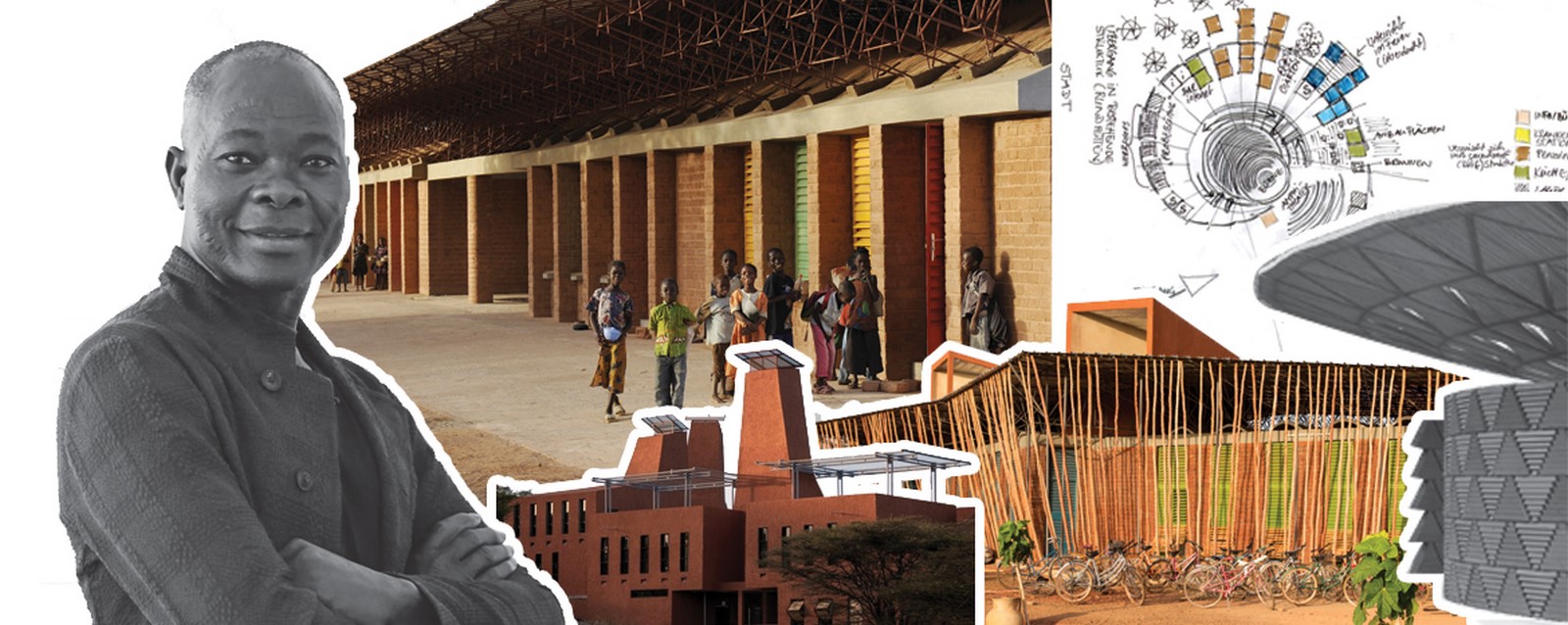
In shaping Africa’s post-colonial identity, Francis Kéré emerges as an architect who transcends conventional boundaries. In addition to redefining the aesthetics of modern African architecture, his design language serves as a vehicle for the communication of cultural continuity, resiliency, and a sustainable future vision.
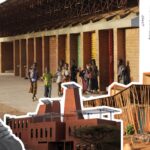
His use of architecture is evidence of the marriage of modern style with a deep regard for the rich cultural diversity of Africa. Kéré’s works often feature distinctive geometric patterns and vibrant colors inspired by local traditions. His creations demonstrate a synthesis of cutting-edge architecture and a profound appreciation for regional artistry, from the Gando Primary School, built to meet Burkina Faso’s pressing need for educational infrastructure, to the Opera Village, a cultural center that combines modern design with local materials.
A key component of his architectural philosophy is sustainability, which is demonstrated by the eco-friendly materials and traditional building methods he employs. The resulting structures are examples of intentionally planning for and reacting to socio-political forces, in addition to meeting the particular requirements of the people they serve.
The Politics of Architectural Movements
Architectural movements encapsulate shared principles that guide design philosophies and construction practices. Each movement serves as a reflection of the cultural and political context in which it emerges, giving rise to diverse expressions of architectural thought. Movements like the Gothic Revival, Bauhaus, and Postmodernism demonstrate the dynamic evolution of ideas and forms within the field of architecture. Besides movements that reflect the construction of structures, some result in written treatises and critiques by prominent architects and designers of the time.
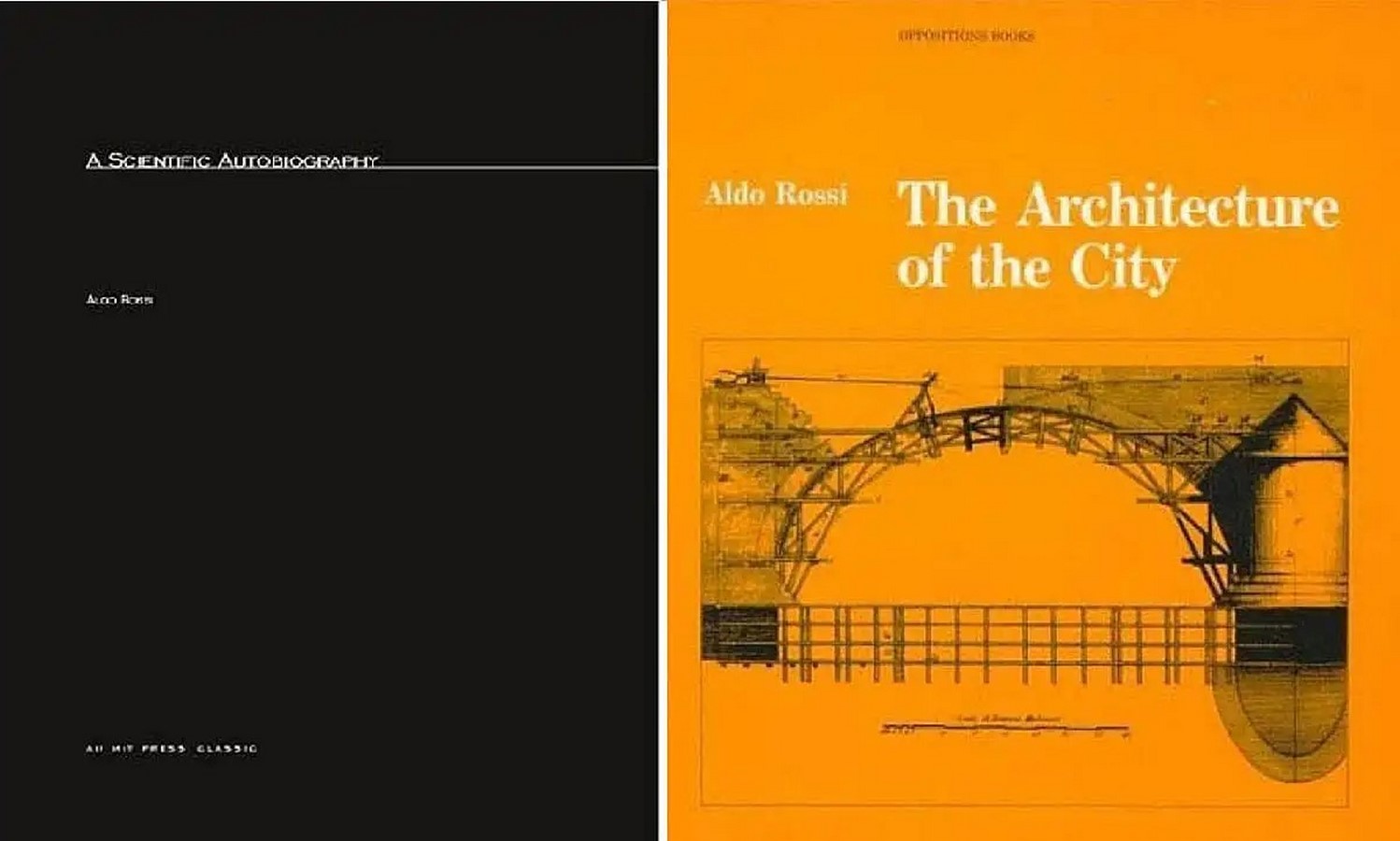
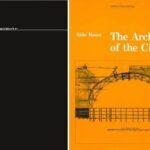
Aldo Rossi’s “Architecture of the City” is regarded as an important work that provides a thorough examination of the symbiotic relationship between politics, urban form, and architecture. His treatise enforced the notion that the city is an architectural representation of political structure, history, and collective memory.
Rossi intertwines architecture with the fabric of society, asserting, “… if the architecture of urban artifacts is the construction of the city, how can -politics, which constitutes the decisive moment, be absent from this construction?” (Rossi, 1982) In this passage, he highlights the city’s function as a living archive, in which the social and political forces that have molded it throughout time are attested to by its physical structure.
The book argues that the city is a collective representation of the public space rather than just a collection of individual structures. According to Rossi, a city’s collective representation of the public sphere makes it the most accurate and thorough record of a society’s political past. In this view, urban design manifests political ideals and historical continuity. The intricacies of urban form are critically addressed in Rossi’s work, which acknowledges the multi-layered character of the city as a result of stratified history. As a consequence, the book emphasizes how crucial it is for architects to recognize and take into account the complex character of cities, providing an insightful viewpoint on the constructive relationship that exists between politics and design in urban settings.
Architectural commentaries
The Archigram movement
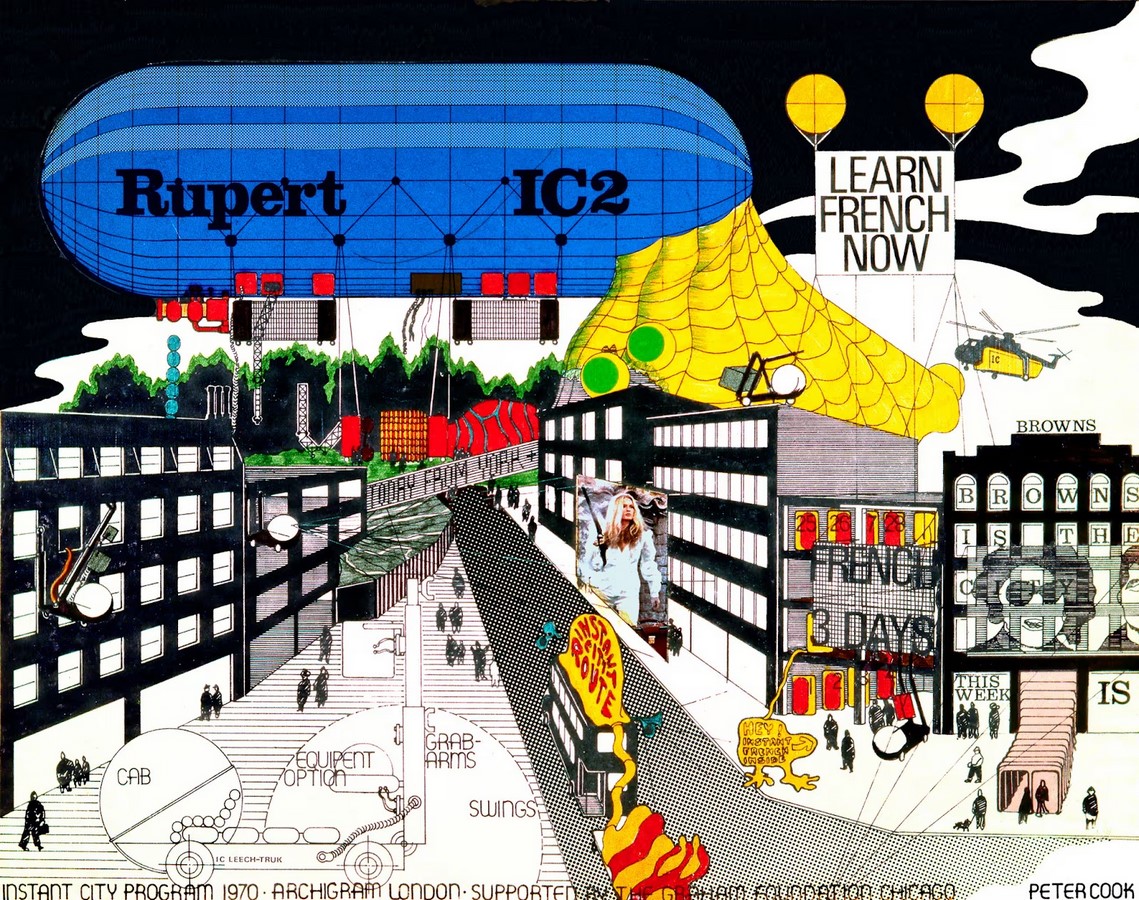
The Archigram movement was inextricably linked to the socio-political milieu of the 1960s, a decade marked by dramatic cultural transformations, anti-establishment feelings, and a desire for radical change. As postwar reconstruction efforts began following World War II, architects in the Archigram movement found themselves responding against the perceived stodginess of established architectural principles. The era’s socio-political upheavals, such as the civil rights movement, anti-war rallies, and developing youth culture, fostered a climate conducive to experimentation and dissent.
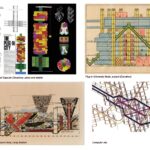
Archigram’s counter-cultural approach to design was essentially a political remark on the establishment’s rigidity. The movement’s rejection of static, permanent buildings matched the rejection of societal institutions that were seen as obsolete and repressive. Archigram’s designs, such as Walking City and Plug-in City, were more than just architectural concepts; they were manifestos against the prevailing urbanization at the time. The Walking City, for example, envisioned a mobile urban form capable of adapting to the changing needs of a society in flux, expressing the need for a more adaptable and responsive socioeconomic structure.

Simon Sadler’s book, “Archigram: Architecture without Architecture,” serves as a critical lens for exploring the movement’s political elements. Sadler dissects Archigram’s theoretical foundations, exposing how the architects aspired to question established standards while adopting a futuristic vision of the 1960s zeitgeist. As a result, the Archigram movement exemplifies how political and cultural factors impact architectural discourse, with its avant-garde concepts expressing not only a new architectural language but also a rebellious spirit against the sociopolitical restrictions of the time. Amid societal change, Archigram emerged as a radical voice.
The Situationist International movement
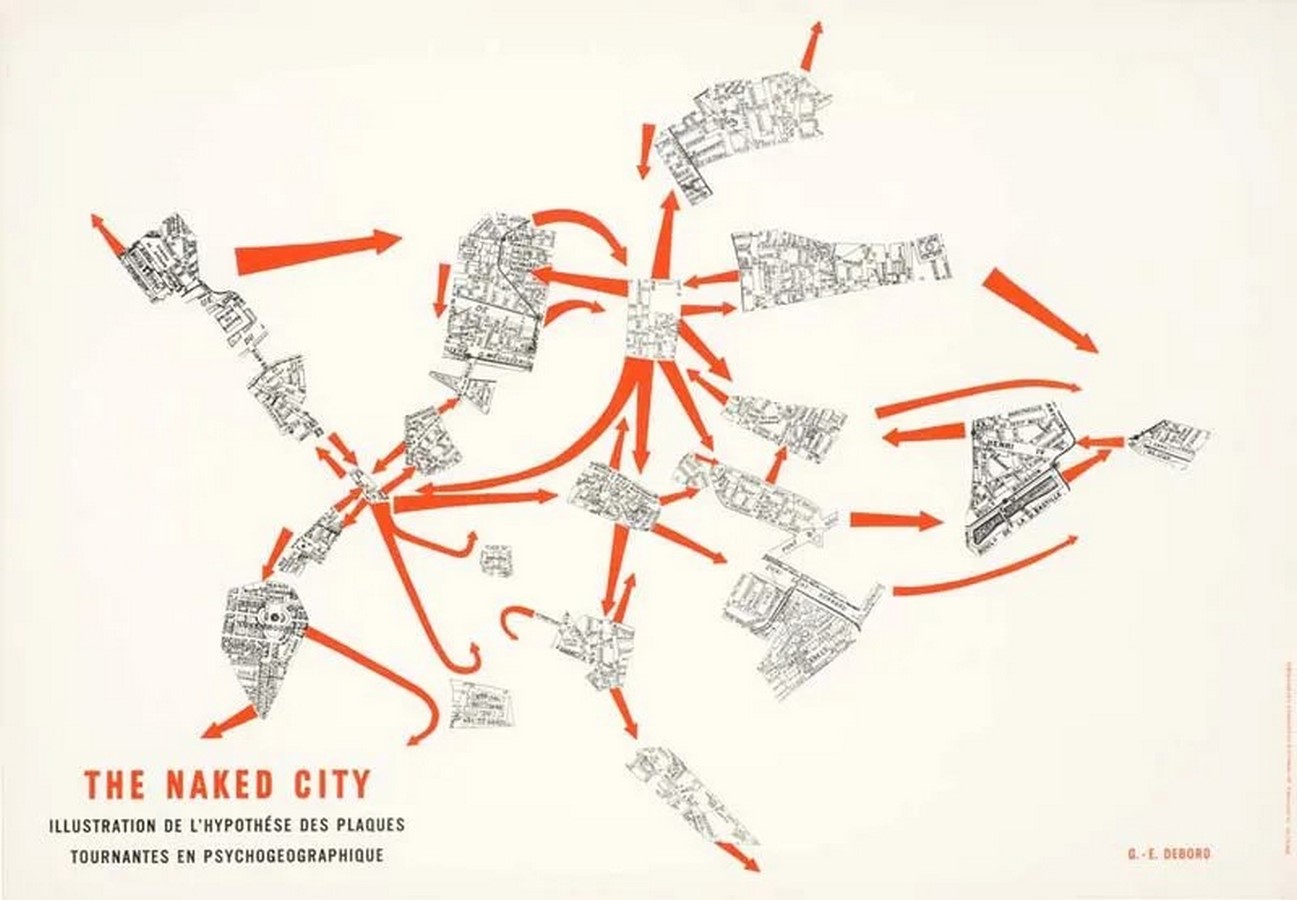
The Situationist International movement, led by renowned leaders such as Guy Debord, used architecture as a powerful tool for political critique in the mid-twentieth century. The movement emerged in the aftermath of World War II to dismantle the passivity of ordinary life and challenge the alienation caused by modern capitalist society. The concept of the “derive,” or spontaneous roaming across urban landscapes to break down the existing order and unveil hidden aspects of the city, was central to their approach.
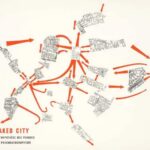
The Situationists considered architecture as more than just physical structures; it was also a mirror and perpetrator of societal structures. The built environment, in their view, was a canvas onto which political and social ideologies were inscribed. The derive, as a radical act of drifting through urban spaces, became a subversive means of reclaiming the city and disrupting the established narrative. For example, the drawing ‘The Naked City’ represents the conditions created by the city’s areas that attract or repel people.
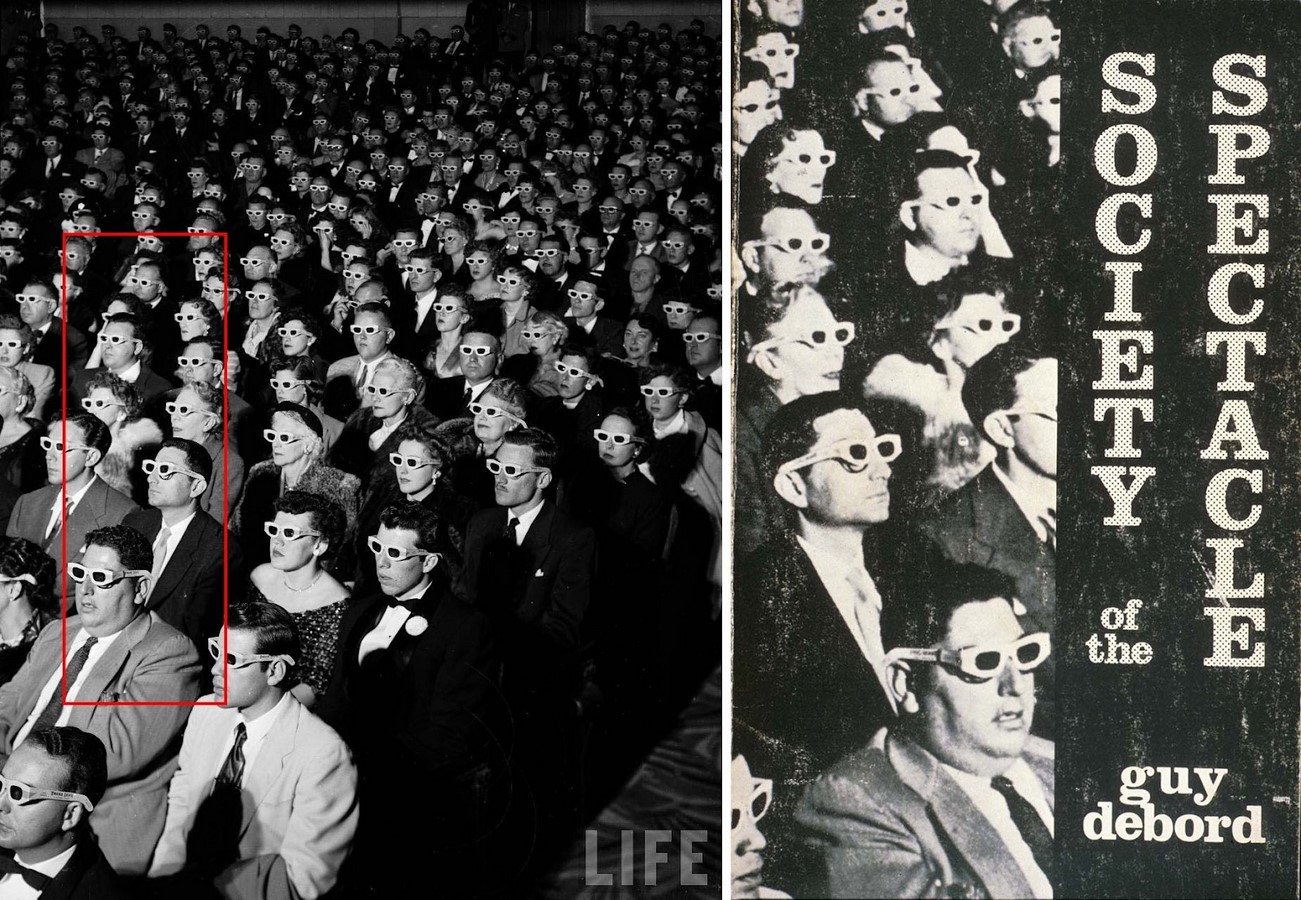
Guy Debord’s important work, “The Society of the Spectacle,” is a valuable resource for comprehending the Situationist International’s critique of modern society, including its views on architecture and urban areas. Debord’s text delves into the concept of the spectacle, where he argues that contemporary life is dominated by images divorced from lived experience. This critical examination extends to the architectural realm, revealing how the built environment is manipulated to reinforce the spectacle; Spectacle implies an untrue reality, a farce of smoke and mirrors.
The Situationist International movement carved out a distinct niche at the crossroads of politics and architecture with its innovative approaches to urban interventions and radical remaking of the city. Their legacy lives on as a testament to the power of architectural critique in challenging cultural conventions and forcing a reassessment of the built environment’s role in creating our shared experiences.
To summarize
Political influence in architecture operates on both macro and micro levels, showcasing a dynamic interplay between political movements and architectural responses. At the macro level, political ideologies imprint themselves on cityscapes, manifesting in monumental structures and urban planning. Micro-level responses involve architects navigating political nuances, and crafting designs that reflect or challenge societal norms.
This relationship persists as an ongoing dialogue. The movements of Archigram and Situationist International exemplify this dialogue, where architects act as agents reflecting and critiquing political climates. The conclusion emphasizes architects’ crucial role as mindful stewards, ensuring their designs not only respond to present political contexts but contribute positively to evolving social dynamics.
References:
- Jacobs, J. (1963). The Death and Life of Great American Cities. New York: Vintage.
- Museum of Modern Art. Ron Herron British, 1930–1994 [online]. Available at: https://www.moma.org/artists/8113 [Accessed date: 20/01/2024].
- Archigram Archives. The Archigram Portfolio collection [online]. Available at: https://www.archigram.net/portfolio.html [Accessed date: 20/01/2024].
- Museum of Design Excellence. Bauhaus in India: Stimulating the modern landscape. [online]. Available at: https://artsandculture.google.com/story/bauhaus-in-india-stimulating-the-modern-landscape-mode/8AVROxkPnC6qJA?hl=en [Accessed date: 20/01/2024].
- The Hyatt Foundation (2024). The Pritzker Architecture Prize, Diebedo Francis Kere. [online]. Available at: https://www.pritzkerprize.com/laureates/diebedo-francis-kere [Accessed date: 20/01/2024].
- Rossi, A (1984) Architecture of the City, pp-161, Cambridge: MIT Press.
- Sadler, S (2005) Archigram: Architecture without Architecture, Cambridge: MIT Press.
- Wollen, P. (1991) On the passage of a few people through a rather brief moment in time: The Situationist International 1957-1972, Cambridge: MIT Press.