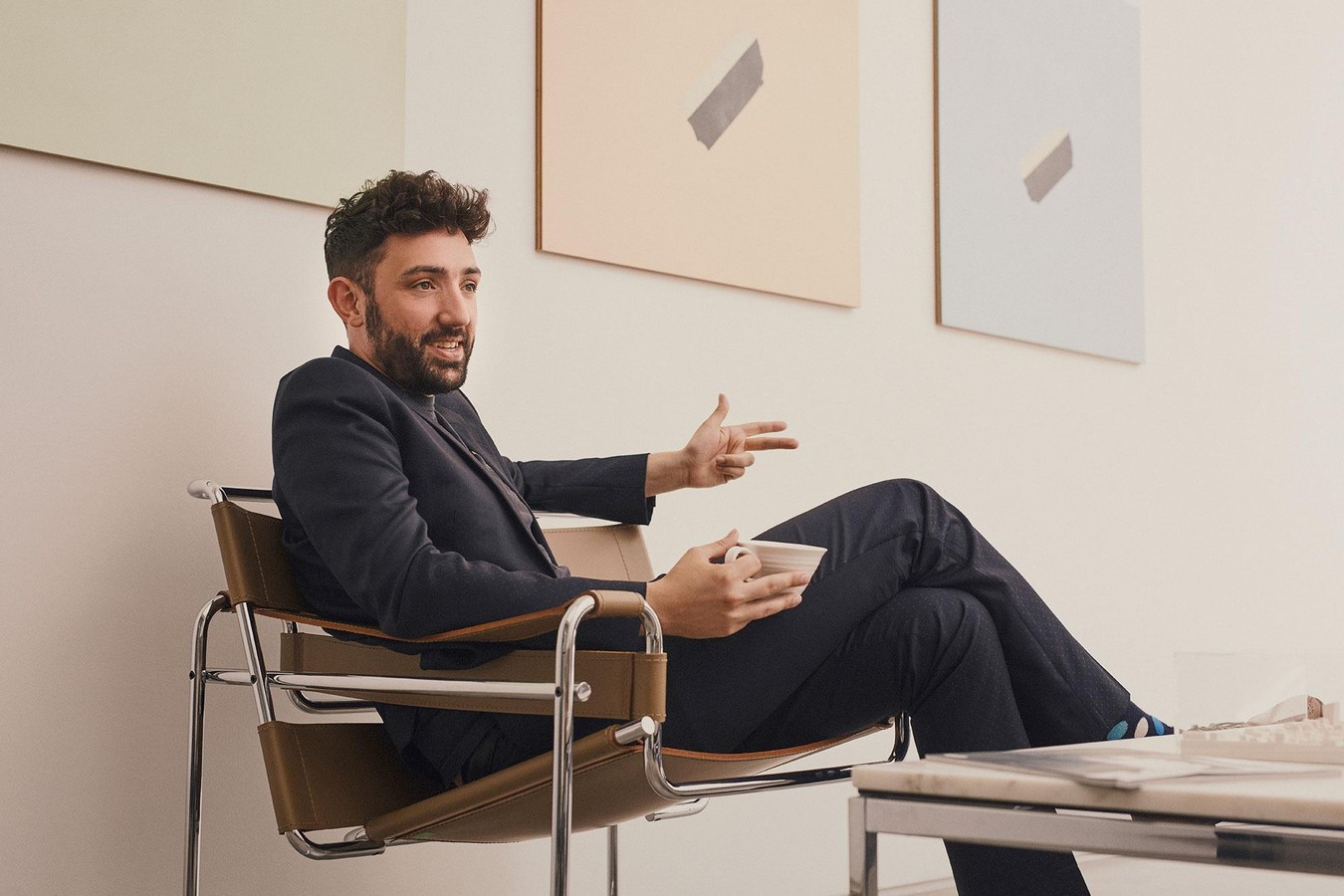
Petr is a ThirdWay Architecture founding partner and a Bartlett School of Architecture graduate, having previously worked with international firms Gensler and Foster + Partners. Petr previously worked at MATT Architecture, where he was a project manager on the redevelopment of two 45,000 sq ft sites in Wimbledon, Pinnacle House, and Wellington House, both of which included refurbishment and significant new build elements to unlock potential, extend, and re-brand the existing buildings.
ThirdWay Architecture is a forward-thinking architectural firm based in London’s Old Street. Throughout all stages of development, design, and delivery, we approach each project with an open mind, drawing on the best of our collective abilities to deliver great architecture while having a great time. They actively work in all sectors, particularly emphasizing creative office spaces, reworking existing structures, and complex mixed-use developments. Their diverse portfolio, team, and clientele demonstrate the absence of a manifesto based on fixed rules or styles. Instead, they’re concentrating on developing an exciting, commercially viable, and valuable product through a transparent and engaging process. They believe the industry can also work harder and smarter. Traditional architectural models are archaic, inefficient, and slow, and they don’t have to be. The ones embedded within The ThirdWay Group can quickly engage with the depth of cross-industry knowledge, project experience, and a dynamic cross-section of creators and innovators. They constantly challenge and improve how buildings are designed and procured across the group. There is no such thing as a duplicate project, site, brief, budget, or timeframe.
It is a traditional architecture firm that is part of the Thirdway group, a forward-thinking, cross-industry family of companies that includes D&B fit-out, property contracts, furniture dealerships, and workplace interior consultants. These companies collaborate to deliver projects that are well-aligned with their clients’ business agendas and end-user needs.
Architecture and the history of architecture, he believes, are full of profound narratives and complex ideas that are impenetrable even to the most academic of us, from which he happily excludes himself. All you must do to enjoy it and be good at it is to be present, try, and test your experiences against the briefs that are set at school, college, university, and beyond. It only becomes difficult when the ego enters the picture.
In an interview with Business of Architecture, Peter Esposito discusses how Thirdway Architecture identifies and communicates the economics of good design to their clients, how they create pitching documents, and how they use innovative business structures to deliver projects.
He emphasizes the importance of understanding client’s needs in order to improve the company’s setup. Understanding what the client wants and why they want it is the first step in meeting their expectations. You must define the project’s scope, objectives, budget, timeline, and quality criteria. You must also identify the key stakeholders, their roles and responsibilities, and their preferred modes of communication. He believes that there is no such thing as “finished design”; everything is a process. So, establish a standard for how developed your design should be. Stop and proceed once you and your client are satisfied.
He adds, “The next step is to develop your design concept, which is the overall vision and strategy of the project.” You must translate the brief into a coherent, workable design that responds to the site, context, and client requirements. Sketches, diagrams, models, and simulations can be used to explore and test various ideas and alternatives. Involve your client and other stakeholders in the concept development process as well and present your design clearly and convincingly. Before proceeding to the next stage, you should also seek feedback and approval from your client.
Bringing it up Initially, it is critical not to focus solely on the client’s immediate requests. Instead, we should strive to understand the client’s underlying needs and prioritize them. Clients may express their desires based on an aesthetic or emotion they have encountered elsewhere. It is, however, critical to assess how these preferences will fare in a different context or over time. Clients may fail to recognize that their initial preferences do not meet their expectations.
Finally, it is critical to supervise and evaluate the implementation of your design during the construction of your project. You must ensure the construction adheres to your design, meets quality criteria, and stays within the budget and timeline. Site visits, inspections, reports, and meetings can all be used to monitor and verify construction progress and performance. Throughout the construction phase, you should also collaborate and communicate with your client and other stakeholders to address any problems or disputes that may arise.
Eventually, he believes architects and designers must improve their sales skills. There will always be a need for new construction, but the existing fabric is often so rich and wonderful that why wouldn’t you use it? Often, you’ll see facade retentions or complete knock-down jobs where the original was not only fine but even exciting due to its awkwardness. Imperfections and unexpected discoveries are what make architecture so enjoyable. Within the office market, designers can be leaders in bringing tenants and landlords on that journey, which can be accomplished by speaking commercially rather than in architectural jargon, as is often the case.
Finally, one must always learn the art of providing designs that exceed the client’s expectations. This can also be accomplished through traditional methods of practice; one simply needs to follow the proper procedures. When starting a new business, one should be confident enough to attract the attention of many people through positive marketing strategies. After all, as Moshe Safdie says, “ The greatest satisfaction, I think, is when a building opens, and the public possesses it and you cut the umbilical cord and you see it taking on its own life. There’s no greater satisfaction .”
Podcast Available at :
Business of Architecture – Episode 106 : Redefining an Architecture Business with Petr Esposito, founding director Thirdway Architecture.
Available at : 106: Redefining an Architecture Business with Petr Esposito, Founding Director Thirdway Architecture (youtube.com)