Difference between a House and a Home
Le Corbusier, a renowned architect of the 20th century defined, “The house is a machine for living”.
Understandably, post the Industrial Revolution any object that performed a function was viewed as a machine. Just like an armchair is a machine for sitting. Although the definition of the house has changed over the years, the words ‘house’ and ‘home’ can be argued to have different definitions.
The difference between a house and a home is that a home is a space designed to invite life. A home is more like a lion’s den, a bird’s nest, a snail’s shell, a spider’s web, or an ant’s anthill. That home has a close connection to the life associated with it. What makes one feel at home for humans? The sheer simplicity of the Teakwood door at the entrance with money plants as if to greet the guests every time they enter. With the softness of sunlight filtering through the windows every time Mother lets the screens up.The ease of flow between spaces where the members of the family find themselves in the kitchen to get the last scoop of ice cream. The rich texture of the brick walls adds warmth to the space especially when freshly made chapatis fill the air with familiarity. A home is when abstract elements like memories, experiences, and aspirations add value to the architectural process of making a house, a home. A feeling of something familiar is a feeling of home.
Visual Images-a feeling of nostalgia
Memory, it suggests, involves the creation of mental images that represent habitual actions and spatial maps within an individual’s mind. Whether it is the colour of a wall, the veranda where one can observe the rain trickling down the sloping roof and the smell of the earth along with it. There is a sense of nostalgia in the visual images these memories form in the mind. Home for different people means different things.
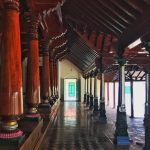
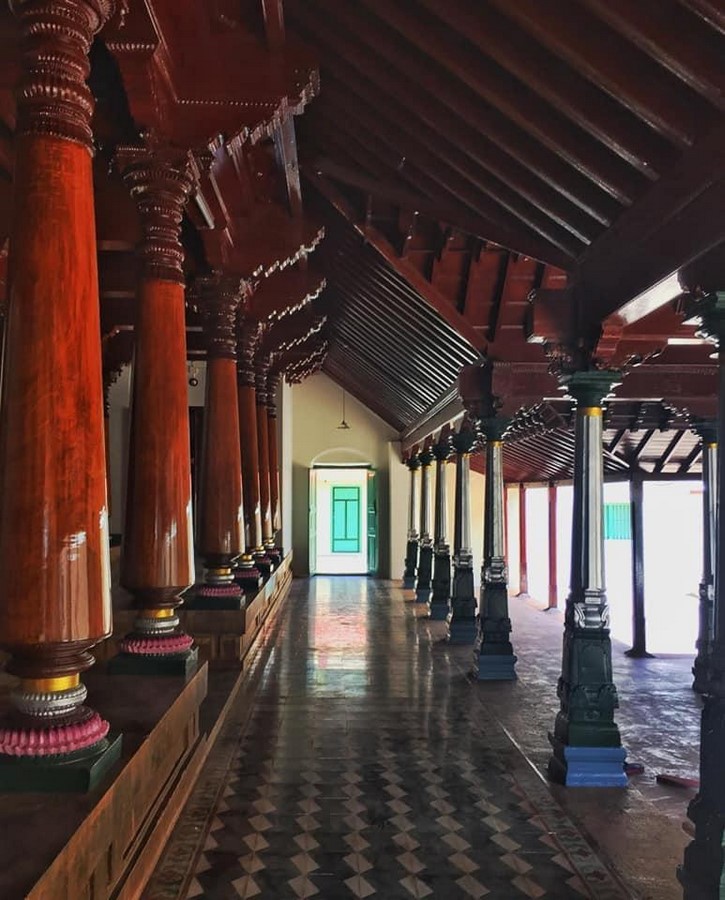
For Example, Elements of a Chettinad house are characterized by beautifully carved teak, marble, or granite pillars. A fine display of status, these pillars are used in the main courtyard. The echoes while walking in the corridor of these carved pillars remind one of the images of a forgotten childhood within the hushed confines of these hallways, enveloped by a comforting sense of home.
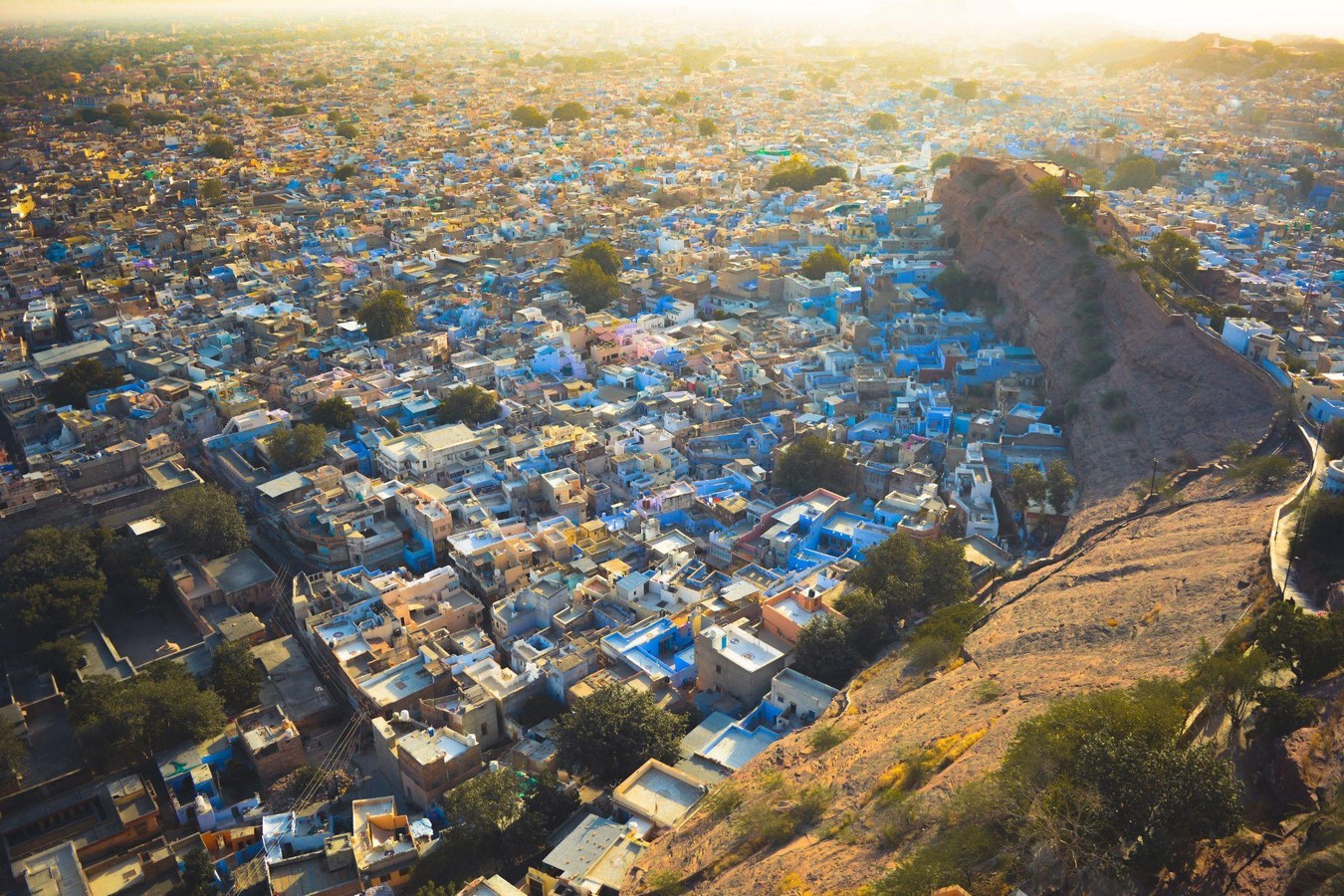
From the bird’s eye view of Jodhpur and its iconic blue houses in the old town of Jodhpur overlooking the Mehrangarh Fort. The blue color of these houses was used to reflect the sun’s rays and keep the house cool. Nowadays, the rendition of the same color blue is used to paint walls in homes that are reminiscent of the streets of Jodhpur.
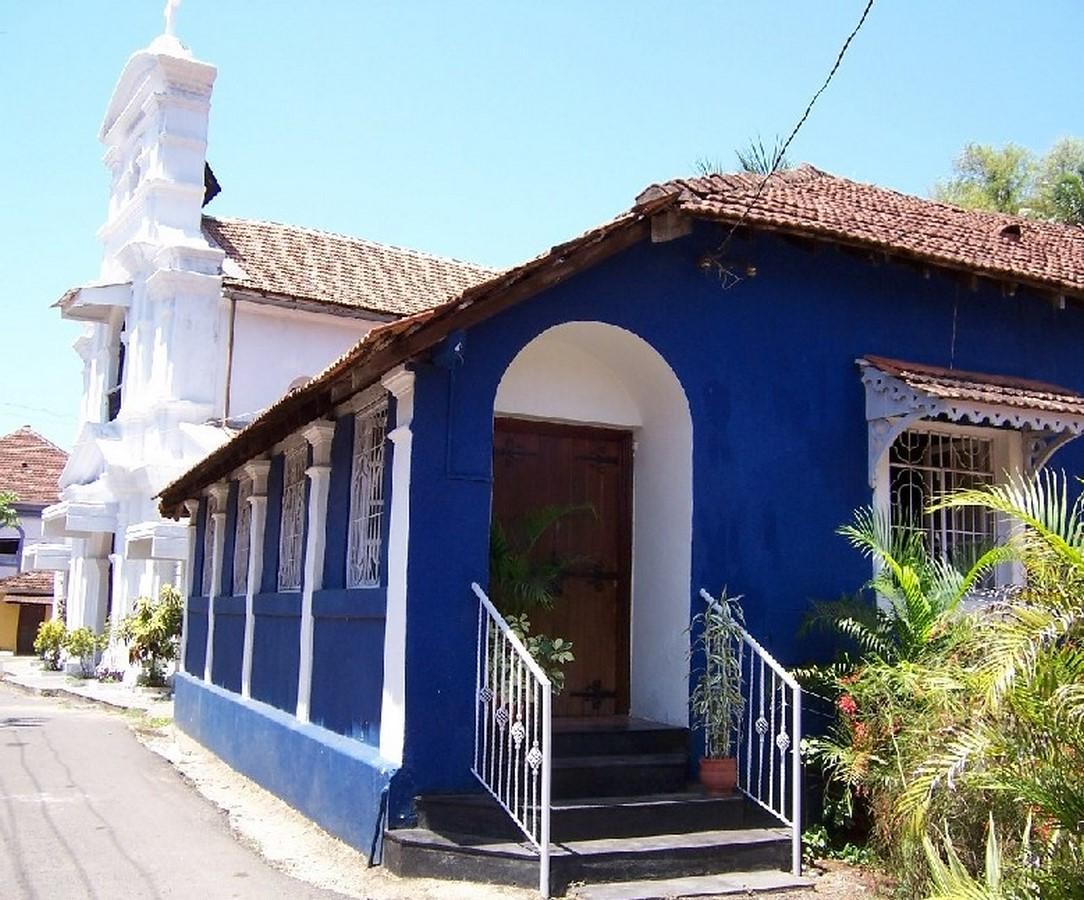
FountainHas Old houses of Goa -The majority of houses feature symmetrical frontages with three connected divisions and lavishly elaborate arched windows with stucco embellishments. The elements of Portuguese colonial design give homes a unique personality. The rendition of the arches and the vibrant color pay homage to the Portuguese background the city reminisces.
One carries memories along for years, and over time they often turn into visual symbols like in the above-mentioned cases – the color blue or the arches and the wooden columns are all examples of visual symbols that form a feeling of nostalgia- a part of home.
Nature – A feeling of home
The idea of a home also extends beyond physical spaces to experiences. The experiences can provoke a profound reaction and these responses may be connected to half-forgotten memories of a primordial landscape. It can be traced back to nature – the texture of the ground, the rustling of the leaves, the smell of mud, and the serenity of the lush green provoke these responses. These responses are the bridge the spaces architects design with the spaces the people who inhabit have personally experienced, sensed, heard, and smelled. Human sensitivity to their surroundings can be attributed to a fundamental aspect of human psychology: the presence of multiple selves within an individual, not all of which feel equally connected to their identity. In certain emotional states, individuals may feel disconnected or connected from their authentic selves. The level of connection can be influenced by the physical spaces they inhabit, including factors such as the color of the environment, the height of ceilings, and the layout, etc. For example, blue may evoke feelings of serenity and calmness, while green may signify peace and prosperity. Similarly, yellow may symbolize happiness, and all these are based on memories of spaces experienced, sensed, heard, and smelled.
For example, in a survey done in a local neighborhood of Kasba Peth, Pune. The residents were asked questions on changes they were willing to make to the respective residents, and the answers were illuminating.Despite confined space, One answered that they would like to only restructure and enhance the existing original elements like the courtyard spaces and the wooden traditional columns but not replace them. Instead use a certain color to incorporate indoor plants since it reminds them of nature, the texture of plants to bring the outside inside.
Every physical space, with its unique combination of color, light, materials, and spatial arrangement, can foster a sense of attachment to one’s surroundings. These experiences significantly impact an individual’s thoughts and consciousness. Consciousness, in this context, refers to an individual’s awareness and response to external stimuli. The senses subconsciously register the spaces around us, influencing our emotional states and moods. Therefore, by deliberately manipulating and personalizing our environments using color, light, and materials, it becomes possible to convey and communicate our inner psyche through these spaces.
Memory serves as a link between the realm of recollection and the realm of lived experience, further reinforcing the interconnectedness of our surroundings and our inner world.
The Subconscious Memory
According to the renowned architect Charles Correa, the work of architecture is usually experienced collectively in a state of distraction. When we inhabit it the best architecture emerges into our attention only intermittently. The real beauty of architecture lies in a setting that makes our everyday habitational actions look and feel unusually graceful.
Architecture possesses an extraordinary ability to evoke emotions and trigger memories. Spaces and places are imbued with meaning, acting as repositories of personal and collective memories. A family home, a place of worship, or a monument of historical significance all become reservoirs of cherished moments and transformative events. The architecture captures not just the physical aspects but also the essence of what transpired within its walls. Architecture and memory are inseparable companions, creating an intricate dance between the past, present, and future. The built environment serves as a vessel of expression, a canvas for storytelling, and a source of collective identity.
Architecture is a tool to shape one’s environment, whether it be in a dream or, one cannot picture ourselves anywhere without a built environment. That is the beauty of it really, Place gives space meaning, just like memory gives architecture meaning.
Home- A collection of memories
Designing a home means building memories in the built space. The Mechanistic worldview oversimplifies this perspective. A home is not soulless or lifeless. A home is a living thing, it’s more organismal than mechanical.
A home thereby is a collection of memories that with every new experience builds in the labyrinth of memories adding value to make the house more homelike.
References:
De Botton, A. (2014). The Architecture of Happiness. Penguin Books.
5 Design Lessons to Learn from a Chettinad House. (2020, May 6). Livspace. Retrieved September 13, 2023, from https://www.livspace.com/in/magazine/lifestyle-design-chettinad-house
Kalla, A., & Soni, S. (2021, March 20). Why is Jodhpur City Known as Suncity & Blue City of India? Interesting Fact & History. Jodhpur Search. Retrieved September 13, 2023, from https://www.jodhpursearch.com/why-jodhpur-city-is-known-as-suncity-blue-city-of-india-interesting-fact-history/
Menezes, V. (2017, November 13). ‘Portuguese architecture’ in Goa has little to do with the Portuguese and everything to do with Goa. Scroll.in. Retrieved September 13, 2023, from https://scroll.in/magazine/856585/portuguese-architecture-in-goa-has-little-to-do-with-the-portuguese-and-everything-to-do-with-goa
Morse, G. (2015, October 28). What is a Machine for Living In? Place Exploration Agency. Retrieved September 13, 2023, from https://placeexploration.com/2015/10/28/a-house-is-a-machine-for-living-in/