
Architecture is often associated with buildings, their construction and the creation of something that stands out. But an architecture degree is much more than that. After graduation, many expect the graduates to become architects and spend their entire career drafting buildings. But architecture branches into distinct paths, some familiar, some that may seem far removed yet still achievable with the skills developed during the studies.
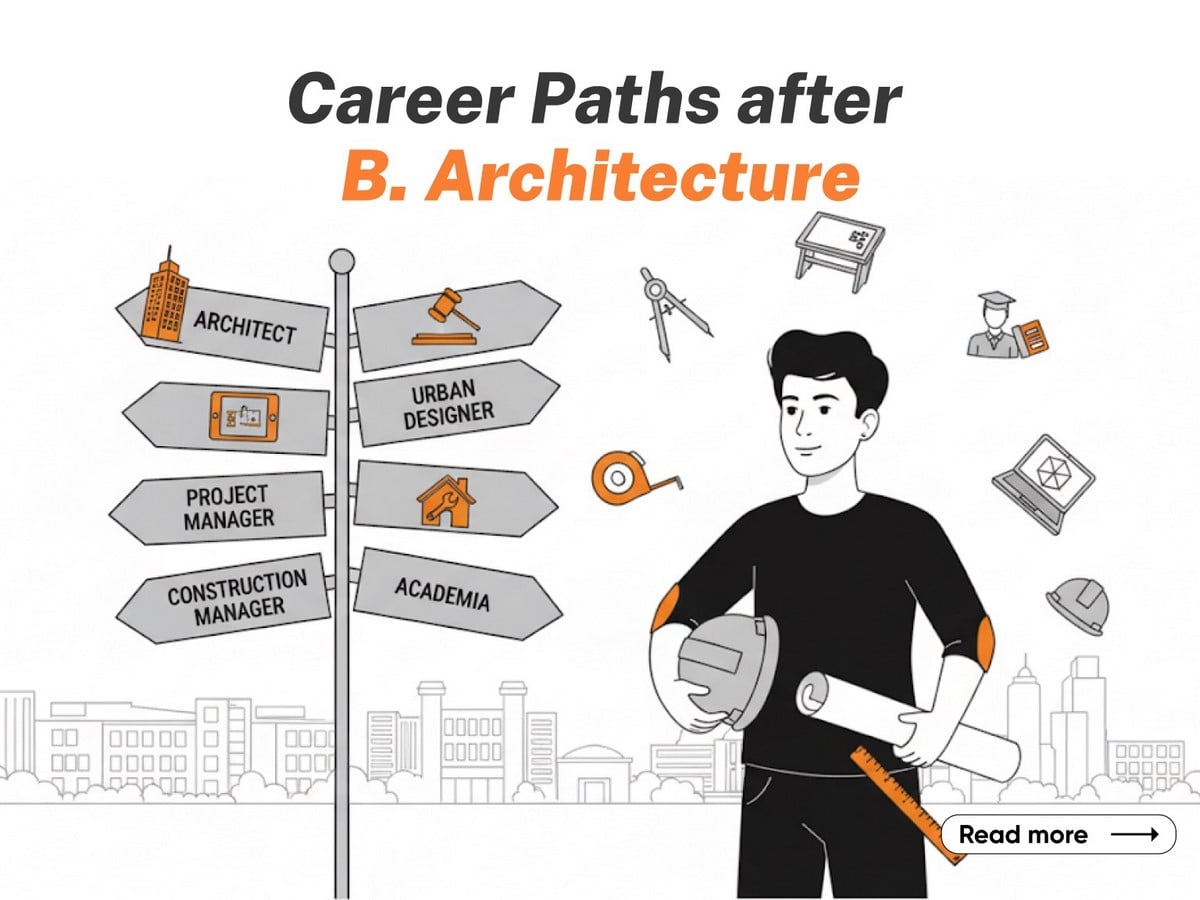
An architecture degree doesn’t confine a student to a particular career path if one looks closely. It is not just limited to careers as an architect, interior designer, landscape designer, urban designer, BIM, project management, etc but it can extend towards design research, journalism, and even, less obviously, to User Experience (UX) design.
But what exactly is User Experience?
User experience is about how people experience and interact with a product, a service or a system. While it is often associated with websites and apps, designing for users is not an unfamiliar concept in architecture.
Consider going through a public transport location like an airport, from entering, to check in, to security details, to finding the gate, the toilets and boarding; signs, maps, information desks, corridors, and spatial arrangement all planned contribute to how a person navigates a vast unfamiliar space. The user may barely notice the design behind everything when all these elements work together seamlessly. But when they don’t, the whole process and experience can become chaotic, leading to confusion and frustration.

The similar principle is what applies to UX but in the digital world. In this case, it is a website rather than a physical space. A user may enter a website or an app to do things ranging from finding information to booking something, and the design should be easy enough for them to understand where to go, what to do, etc. Confusing navigation, unclear or excessive steps can be the digital equivalent to getting lost in an unfamiliar space.
This is where UX comes into play. When creating something, understanding how people use it is as important as its aesthetics. The UX designer has to consider not just whether it works, but also how it works, whether it is accessible and user-friendly.
But where does an architecture degree fit here?
A degree in architecture might seem unrelated to digital web design at first, but the underlying concept shares more similarities than one might expect, involving understanding the user requirements, circulation or navigation, and the play between the elements working together. The most common and important thing about both is understanding the users, their needs, and how they use the space designed for them.
When studying architecture, a student generally learns to design a space, understanding the user requirements, including capacity, circulation, accessibility, etc., and these considerations are not very different from those of UX design.
Just as an architect plans the circulation within a space, a UX designer plans the navigation of a website.
Another similarity is in the design process itself. When designing a space, architectural projects rarely look the same from the initial idea to the final product. It involves exploring various applicable concepts, design development and most of all, making changes based on feedback. Ux design also follows the same process before arriving at the final interface, going through continuous improvements as problems are identified. This continuous process is familiar in architecture studies as well as practice, bringing them both a bit closer.
Architecture beyond buildings
An architecture degree develops a way of thinking that goes beyond designing a building. It helps the student develop and integrate the ability to understand people, observe information, analyse problems, and build solutions. And these skills can be applied in several fields, including those that may not be immediately connected to architecture.
Although the tools and methods and the final output may vary, the underlying intention of creating something for the users stays the same. However, transitioning into a ux designer from architecture involves learning and practising new tools and techniques. An architecture degree provides the thinking foundation, but it does not directly replace the specialised knowledge required for this field.
Just as each field is intricate with its own beauty, architecture and UX design might be distant branches of the same tree, growing in different directions but sharing the same roots.
Maybe architecture is not always about just designing physical spaces but about designing for people, and sometimes that can exist beyond physical boundaries, and ux design is just another form of it.
Reference:
Coursera. (2023). What does a UX designer do? [online] Available at: https://www.coursera.org/in/articles/what-does-a-ux-designer-do [Accessed 31 Oct. 2026].
The Interaction Design Foundation. (2016). What is user experience (UX) design? [online] Available at: https://ixdf.org/literature/topics/ux-design [Accessed 31 Oct. 2026].
DART Studios (2024). How architecture shaped UX design. [online] How Architecture Shaped UX Design. Available at: https://dartstudios.uk/blog/from-architecture-to-ux-design [Accessed 31 Oct. 2026].
Image source:
Figure 1: Wayfinding shaping the user experience within a public environment.
Image: AI-generated / OpenAI