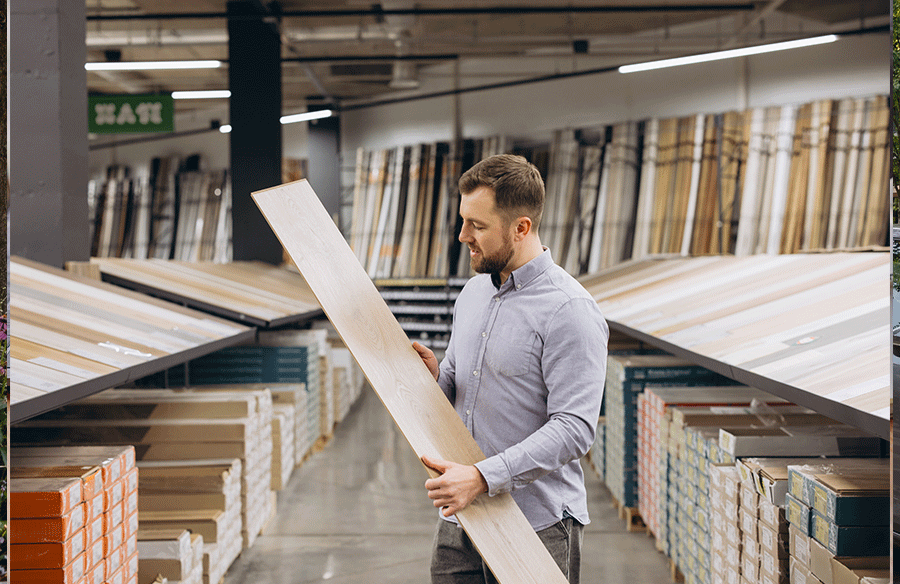
New floors are one of the few home upgrades you live on every single day, so the store you buy from matters almost as much as the material you pick. Showrooms in San Diego all look impressive. What separates them is how clearly they answer a handful of practical questions about brands, licensing, installation and warranties.
This decision impacts not just daily living but also the aesthetic and functional design of interior spaces, influencing light, acoustics, and the overall feel of a room. Thoughtful material selection and installation are fundamental to creating cohesive and enduring architectural environments.
Short answer: choose a store that names its brands so you can compare prices, uses licensed installers, measures and quotes at your home, and puts its warranty in writing. The seven questions below show you how to check each point.
What makes a good flooring store in San Diego?
A good San Diego flooring store treats the sale as a process, not a transaction: it helps you choose the material, confirms the room is ready for it, installs it properly and stays reachable afterward. One local example is Floor Store & Design Center, a family-owned business with showrooms in Point Loma, Encinitas and Sorrento Valley. Use its approach, or any competitor’s, as a yardstick while you shop.
1. Can I compare prices on named brands?
Some retailers sell flooring under their own private label, which makes a like-for-like price check almost impossible. Ask for the brand and product line of every sample you like, then price it elsewhere. The studio says on its website that it does not use private labels, and its showrooms carry recognizable names such as Mohawk, Shaw Floors, COREtec, Karndean, Armstrong and Mannington. Whatever store you choose, you should be able to write down exactly what you are being quoted.
2. Is the installer licensed in California?
In California, flooring work is licensed under the C-15 (Flooring and Floor Covering) classification issued by the state’s Contractors State License Board. Ask for the license number and check that it is in good standing through the state licensing board before you sign anything. Licensing also determines whether you have recourse if something goes wrong. The company states that owner Mike Perrino has more than 20 years in flooring and holds a C-15 license.
3. Will someone measure and quote at my home?
Online calculators give a ballpark. They cannot see an uneven subfloor, a step between rooms or the furniture that has to move. An in-home measure turns a ballpark into a scope you can compare line by line. The company offers a free in-home estimate and says it provides a detailed quote before work begins. Ask any store whether the estimate is itemized: materials, labor, removal of old flooring, trim and transitions.
4. Is this material right for this room?
Matching the floor to the room prevents most regrets. As a general rule, hardwood is sensitive to moisture, so bathrooms, laundry rooms and entryways usually call for tile or waterproof luxury vinyl plank instead. Carpet suits bedrooms. Laminate is a budget-friendly option for dry areas. Ask the salesperson to explain why a product fits your space, and ask how the subfloor will be checked and prepared. A store that skips this step is selling a product, not a solution.
This careful consideration of material properties and their suitability for specific environments is a cornerstone of sustainable design and architectural longevity. Understanding how different flooring types interact with humidity, foot traffic, and subfloor conditions ensures both aesthetic success and structural integrity over time.
5. Who will actually install it?
The best product still fails when it is installed badly. Ask whether the installers are employees or long-term partners and how they are vetted. The company says its installers have worked with the company since it opened in 2013 and that only 1 in 50 applicants is accepted. That is the company’s own claim, but it is the right kind of detail to ask about anywhere you shop.
6. What does the warranty cover, and for how long?
There are two warranties to understand: the manufacturer’s product warranty and the installer’s workmanship guarantee. Ask for both in writing. The company states that its products carry guarantees ranging from 20 years to a lifetime. Read the conditions, since many warranties require specific care and moisture limits.
7. Can I see and test real samples?
Colors and textures look different under showroom lighting than in your living room. Take large samples home and view them in morning and evening light. The company also offers online room visualization, free sample shipping and a mobile showroom, which can save you a trip.
Quick checklist: what a good answer sounds like
| Question | A good answer |
| Brands and pricing | Named brands and product lines, so you can compare |
| Licensing | A C-15 license number you can verify with the state |
| Estimate | Free, in-home, itemized, delivered before work starts |
| Room fit | A clear reason, plus a plan for the subfloor |
| Installers | Vetted, experienced, accountable for their work |
| Warranty | Product and workmanship coverage, in writing |
| Samples | Large samples you can take home |
Frequently asked questions
Do flooring stores in San Diego offer free estimates? Many do, and reputable stores often provide this service.
How do I check that a flooring contractor is licensed? Look up the contractor’s license number on the California Contractors State License Board website and confirm that it is active and that the classification covers flooring.
Should I order samples before buying? Yes. Samples show you true color and texture in your own light, and some stores ship them free.
Which flooring types do showrooms usually carry? Expect hardwood, luxury vinyl plank, laminate, carpet, tile and stone. Reputable showrooms often also list hardwood refinishing and countertops.
Before you decide
Compare two or three stores using the same seven questions and write down the answers. The store that answers plainly, quotes in detail and puts its promises in writing is usually the one that will still be easy to reach when the job is finished.