Three reminders. Two voicemails. One custodian who swears she never got the email. If that sounds like your preservation process, you already know the ugly truth: sending a notice is easy, and knowing whether anyone read it is where things fall apart.
Most teams treat legal hold like a shipping label. You attach it, you send it, you move on to the actual case. Then a custodian deletes a mailbox three weeks later and everyone scrambles to prove the warning ever landed. That scramble is the problem worth solving before the dispute arrives, not after.
The fix isn’t louder reminders. It’s treating acknowledgment as a tracked event rather than a hope. Teams that build that habit early tend to run preservation inside Legal Hold Software so every send, reminder, and read receipt lives in one auditable record instead of a shared inbox.
What actually happens after you hit send
Picture a mid-size company facing a contract dispute. In-house counsel sends a preservation notice to fourteen custodians across three departments. Four acknowledge the same day. Six acknowledge after the second reminder. Two are on leave. One left the company last quarter. One insists the message went to spam.
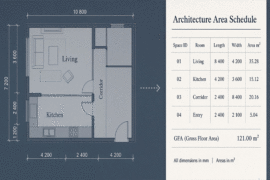
The physical and digital architecture of an organization’s departments significantly impacts how information flows. Thoughtful design of office layouts and digital collaboration spaces can either streamline or complicate the process of ensuring critical communications reach every intended recipient, highlighting the often-overlooked role of environment in operational efficiency.
None of those outcomes are unusual. What matters is whether you can reconstruct that timeline six months later when opposing counsel asks pointed questions about your process. A spreadsheet with a “sent” column won’t survive that conversation. A system that logs open times, reminder cadence, and custodian responses will.
Here’s the part I’d push back on: most teams blame custodian behavior when the real failure is process design. If your notice is buried in a weekly digest and your reminder schedule is “whenever someone remembers,” the ignore rate is doing exactly what your system taught it to do.
How do you know a hold was actually received?
You don’t, unless you collect evidence of receipt at the same moment you collect evidence of sending. That means three things working together: a named owner for each custodian, a timestamped acknowledgment record, and a reminder chain that escalates automatically instead of depending on a human to notice silence.
The acknowledgment record is the one people skip. It’s also the one that holds up best. Store it wherever your team can pull it in a single search, because a preservation audit shouldn’t require rebuilding history from scratch.
Legal preservation doesn’t exist in a vacuum, either. The Federal Rules of Civil Procedure set the baseline expectations courts apply to how parties preserve evidence once litigation is reasonably anticipated, and the U.S. Courts publish those rules for anyone who wants the primary text. Read them once with your current process open in front of you. The gaps show up fast.
The 72-Hour Custodian Map
Here’s a framework I’d hand any team running preservation on more than a handful of people. It’s built around a single deadline: within 72 hours of a trigger event, every custodian gets mapped to a data source, a department contact, and a named human responsible for confirming the acknowledgment.
| Window | Action | What you’re proving
|
| Hours 0 to 24 | Identify custodians and their likely data locations | Scope was reasoned, not guessed |
| Hours 24 to 48 | Send notices, assign an owner per custodian | Notice reached a responsible person |
| Hours 48 to 72 | Escalate non-acknowledgments to a manager | Silence was chased, not ignored |
The map does two jobs. It gives you a defensible timeline, and it kills the “we thought someone followed up” excuse before it forms. I’d pick this over a longer checklist any day, because three windows are harder to fudge than twenty steps.
Watch the records you already generate
A hold notice protects data you remember to preserve. The gaps usually hide in systems nobody thinks to flag, like collaboration exports, chat logs, or that one shared drive the sales team treats as their personal archive.
Just as physical archives require careful planning and organization to prevent loss or disarray, the digital spaces where data resides demand intentional architectural design. Treating shared drives as personal archives, rather than structured repositories, mirrors the chaos of an unmanaged physical storage room, underscoring the need for robust digital design principles.
This is where retention policy collides with preservation. Government agencies run into it constantly, and the National Archives publishes baseline guidance on how records schedules and preservation duties interact. Even if you’re in the private sector, that guidance is a useful gut check for which storage systems deserve a spot on your notice template.
Run the acknowledgment scorecard
Once a quarter, pull your numbers. Total custodians, acknowledged within 48 hours, acknowledgments after escalation, and custodians with zero response. Four numbers, one page. Hand it to whoever signs off on your process.
You’ll learn things a status meeting will never show you. Maybe one department’s custodians acknowledge at half the rate of everyone else, and it turns out their notices route through an alias nobody reads. Maybe leave coverage is the culprit. You can’t fix what you don’t count, and custodian silence is invisible in a send-and-forget workflow.
While you’re at it, check whether your reminders sound like a legal threat or a practical request. A short note explaining what to keep and how long it takes beats three paragraphs of dense warning language every time. Custodians respond to clarity. They ignore paperwork.
Where software earns its keep
I’m not going to pretend every team needs a platform on day one. If you’re running two holds a year for a handful of people, a tracked spreadsheet with a responsible owner will get you through. Past a certain volume, though, the manual approach quietly stops working, and the failure shows up at the worst possible moment.
What a dedicated system gives you is a single source of truth for sends, acknowledgments, escalations, and releases. When a hold ends, releases get tracked with the same rigor. That symmetry matters, because letting a hold linger after a matter closes creates its own problems.
The last piece is separation. Custodians who keep working with IT also manage preservation records, and the Department of Labor publishes general expectations around handling sensitive employment records that apply to plenty of teams outside government. The principle holds regardless of industry: sensitive records deserve a defined owner, not whoever happens to answer the phone.
Whichever path you pick, the moment to start is now. Pick one upcoming matter, run the 72-Hour Custodian Map against it, and count how many custodians acknowledge within two days. Then ask yourself whether you could prove that same number six months from today, in front of a judge. If the answer makes you uneasy, you’ve found the next thing worth fixing.