Cities are typically represented by their skylines, landmarks, and grand urban spaces. However, the real essence of urban life often happens in more mundane, less appreciated spaces. The sidewalk, often seen as a simple paved path from one point to another, is probably the most significant space within the city. It is where people stop to talk to their neighbors, stand in front of a shop window, purchase goods from a street vendor, watch a street artist perform, rest upon a step, or even take time to look at the city itself. These moments may seem insignificant, but together they make up much of a city’s everyday life.
Pedestrian paths have traditionally been seen as infrastructure that gives pedestrians a safe way to move alongside vehicular traffic. Discussions about pedestrian paths usually focus on mobility-related issues such as width, surface materials, accessibility, and connectivity. Although these elements matter, they do not fully capture sidewalks’ role in the urban environment.
The sidewalk may function as a place of communication, observation, exchange, and social interaction. It marks the boundary between private structures and the public realm and enables movement. The pedestrian walkway thus becomes an architectural infrastructure, raising the question: can the sidewalk be understood as one of the city’s smallest forms of public architecture?
From Movement to Public Life
The primary role of a sidewalk is to provide a route for movement through the urban fabric. Yet anyone who observes an active street will notice that people rarely use sidewalks only for walking.
People spend their time standing around the shop, meeting friends, chatting with a neighbor, sitting on the steps, buying something from the vendor, waiting for transport, or just watching what goes on. These behaviors are not separate from the role the sidewalk plays. They are part of what makes it a public space.
This distinction matters when considering walkability. A sidewalk that functions properly may help an individual move from one point to another quickly without necessarily making the experience pleasant and engaging. This is because walking behavior depends on the pedestrian’s surrounding context. Several things affect it, including street scale, building edges, shade, entrances, storefronts, crossings, seating, and other people. Walkability, therefore, relates to the act of walking rather than walking to a particular place.
This approach is evident in the theory of walkable cities, which includes connectivity, pedestrian infrastructure, mixed land use, and human-scale environments among its essential features. Hence, a sidewalk needs to be seen in another way as well – not only as a part of the walkable system but as an independent public space.
Jane Jacobs and the Sidewalk Ballet
Very few theorists and planners have observed this everyday dimension of the street as closely as Jane Jacobs. In The Death and Life of Great American Cities, Jacobs challenged planning theories that viewed streets purely as a transport route and separated elements of urban life into segregated zones. Instead, she focused on the dynamic interactions that give neighborhoods their vitality and diversity and help build social connections.
The principle of “eyes on the street” is particularly relevant to the sidewalk. According to Jacobs, people watching and engaging in street life can help ensure a neighborhood’s security. People watching from the window, people sitting alongside the pavement, pedestrians, and loiterers on the street can all serve as informal surveillance. To plan streets the same way, Jacob identified three basic conditions: the difference between public and private space, buildings oriented toward the street, and sidewalks people use over time.
Jacobs’ own Hudson Street in Greenwich Village illustrates this concept. She described the street as a “Sidewalk Ballet,” wherein the sidewalk continuously observed a changing sequence of users and activities. Mixed-use buildings, active storefronts, and diverse pedestrian activities created the everyday urban vitality that Jacobs described in her theories.
The success of this street did not depend on the architectural features of the buildings but rather on the intricate relationship between the buildings, the people, and the public space. Hudson Street was a place of movement, interaction, observation, and even accidental events, showing that sidewalk quality is shaped as much by interaction as by the space itself.
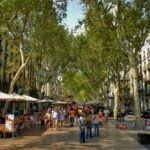
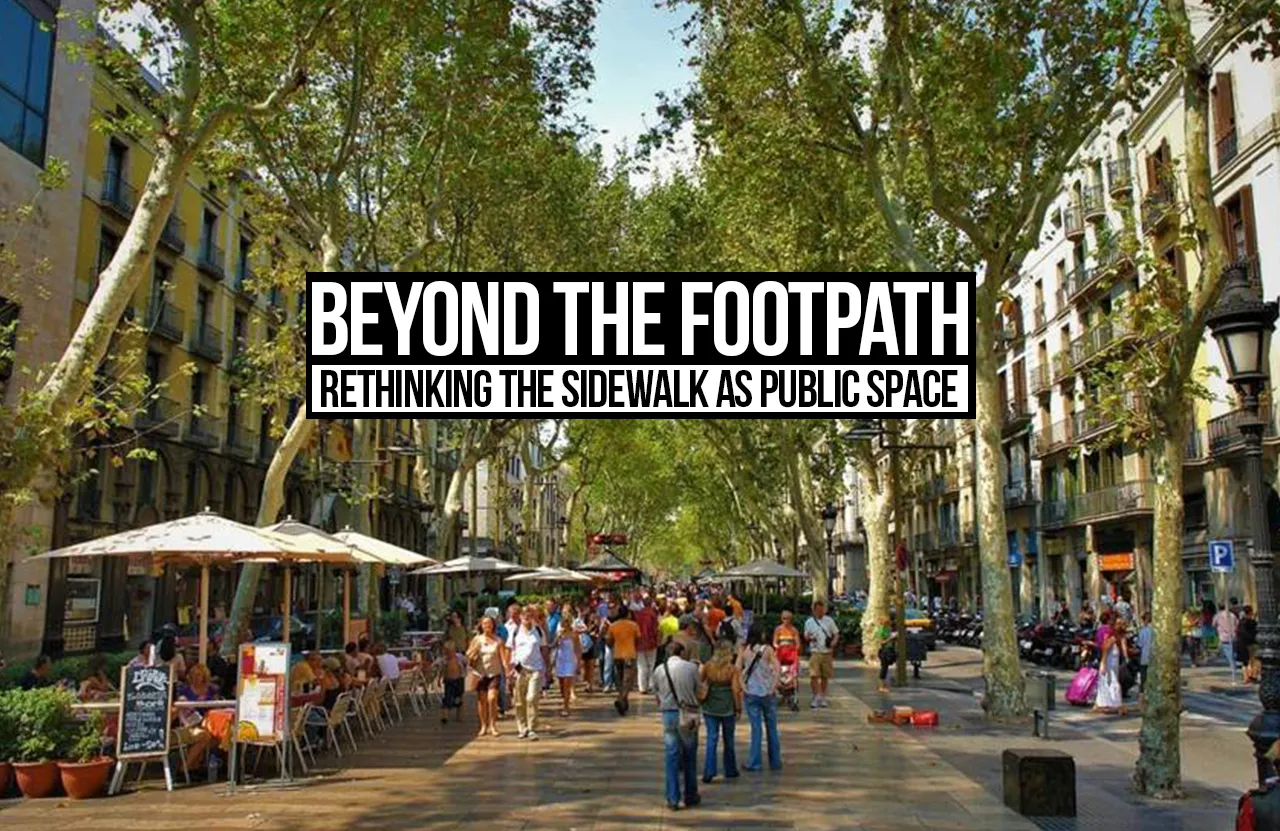
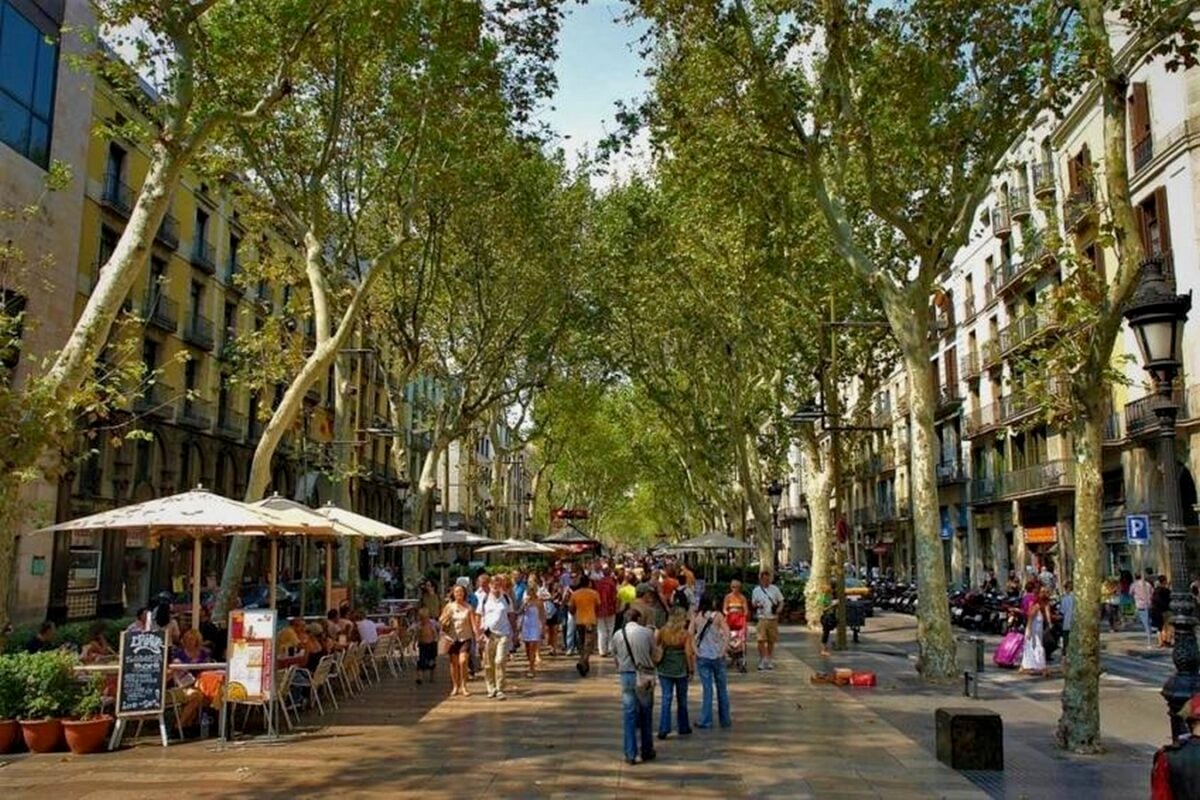
Similarly, La Rambla in Barcelona functions as an extended public room where residents, tourists, performers, vendors, and café guests take part in an ongoing social performance.
This suggests that the sidewalk does not become successful simply because it has been designed. It becomes successful when people occupy, observe, and share it.
Where Does Architecture End?
This raises a question that is particularly relevant to architects: where does architecture end and the sidewalk begin?
On a plan, the line that defines the edge between private property and public space is clear. However, in reality, though, the transition is much more subtle.
A facade opening right onto the sidewalk can turn steps into an impromptu bench and a veranda into a shaded place to gather. A café can spill out onto the street, bringing the activities inside out into the street. At the same time, a low wall can become an informal seat and a building entrance can become a point of interaction and movement.
These seemingly small elements blur the distinction between the private and the public. The building edge is therefore not simply a boundary. It is an active interface.
The threshold is particularly important. It is the space where private activity begins to interact with public life. Architecture does not stop at the property line because how a building meets the street shapes how people experience and occupy the public realm.
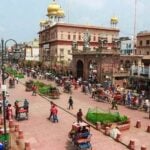
One such example is the Traditional Streets of Ahmedabad, especially Manek Chowk. The square and surrounding streets have developed through multiple layers of commercial, cultural, and informal activity. Shops, hawkers, pedestrians, and changing patterns of use allow the space to transform throughout the day. Studies of Manek Chowk emphasized the place’s multifunctionality and how its interaction with other uses creates cultural exchange, commercial activity, and public life.
This is where Manek Chowk’s importance becomes clear. Its public character does not come from the pavement alone. It emerges from the relationship between the built edge, commercial activity, movement, and the people who occupy the space. The sidewalks and streets become extensions of the architecture around them.
The architecture of the sidewalk, therefore, is not limited to its surface. It includes the thresholds, façades, and activities that define its edges.
The Sidewalk as a Public Room
Perhaps one way to rethink the sidewalk is to compare it to a room. A room is not defined by its floor alone; its walls, openings, furniture, light, and connections to neighboring rooms shape how it’s used. In the same way, a sidewalk is more than just its paved surface.
Buildings and trees may act as the boundaries of sidewalks. Steps, benches, and low walls may all serve as seating. Entrances, crossroads, and alleyways provide openings and connections. Businesses, homes, offices, schools, markets, and transportation create activity at the periphery.
However, this does not mean that every sidewalk will turn into a plaza. To be considered good, the most important requirement is that it fulfills its primary function as a sidewalk. The idea is not to replace movement with permanence, but to allow the two to coexist.
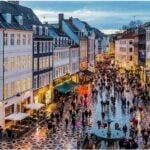
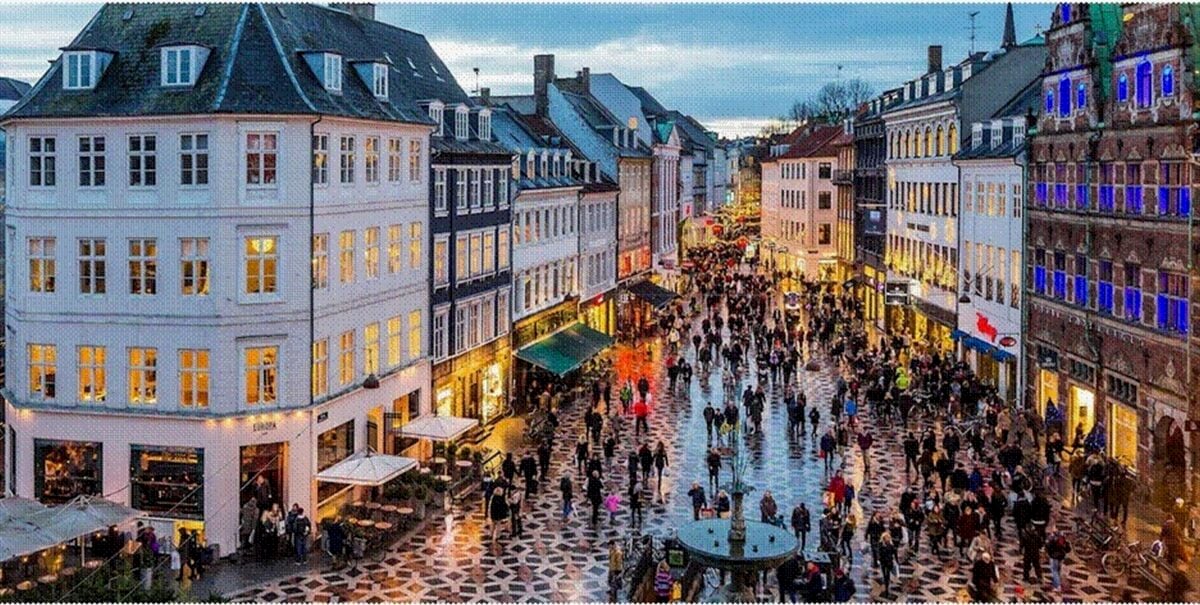
Copenhagen’s Strøget highlights how these relationships could work on a larger scale. When the 1.15-kilometer-long street was transformed into a pedestrian zone in 1962, it was initially seen as an experiment, especially since car numbers in the city center had increased. But pedestrian numbers increased greatly once the street became pedestrian-only, making the change permanent.
Strøget shows that the success of public space does not lie only in excluding cars. Strøget also shows how allocating different types of spaces along the street makes car-traffic limitations visible. The street becomes a place to shop, meet, sit, observe, and move through. This aligns with Jacobs’ view of streets as places where multiple forms of public life overlap.
The success of a pedestrian space therefore depends not only on what is removed, but on what the resulting space allows people to do.
The Indian Sidewalk: Order or Activity?
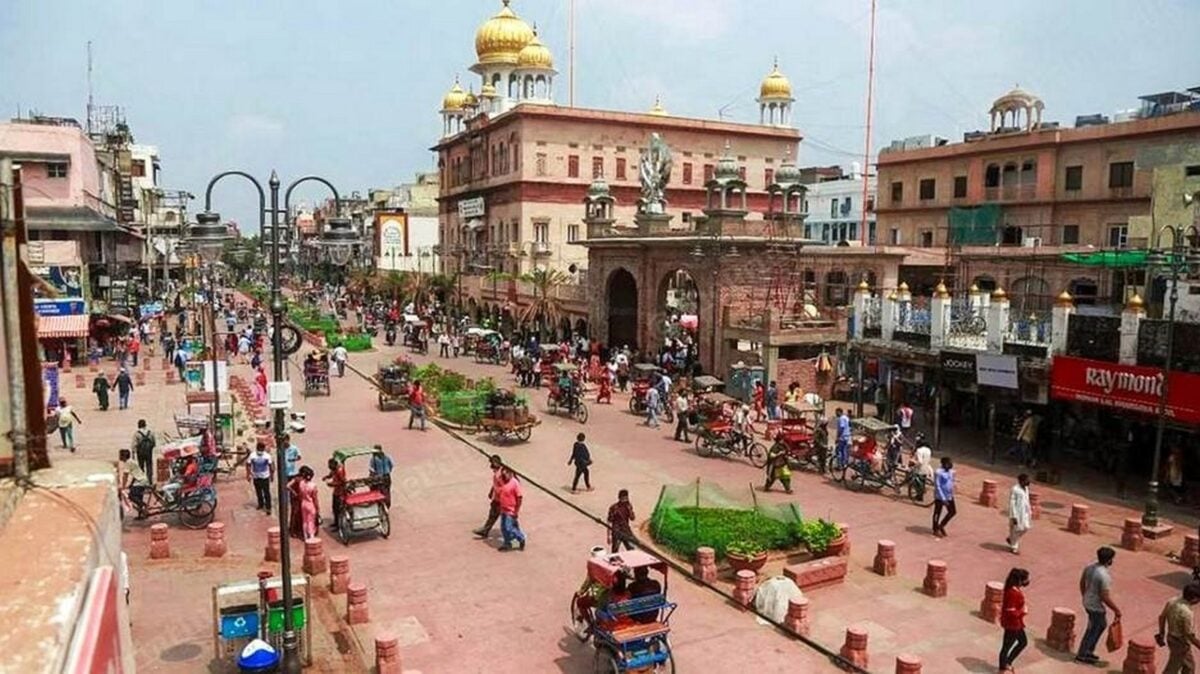
This issue becomes even more complicated in Indian cities, where footpaths serve not only as paths but also as sites for many other activities. Street vendors, parked two-wheelers, trees, utilities, shop windows, seating facilities, and delivery activities often compete for the same limited space.
It is tempting to see every single thing that takes up space on a footpath as an obstruction. However, in this approach, one should not forget that some of these very things also add to the street’s atmosphere and life.
Not only does the vendor cause obstruction, but it also adds to the crowd. Not only does the tree reduce the walkway width, but it also provides shade. The shop display may occupy the sidewalk, but it can also give the street an interesting look and help illuminate the space at night.
This creates a difficult design problem.
A completely clear footpath may be efficient for movement but disconnected from street life. A completely occupied footpath may be vibrant but inaccessible. The challenge is therefore not simply to choose between order and informality, but to accommodate different forms of public life without compromising accessibility, safety and movement.
The challenge is to accommodate different forms of public life without compromising accessibility, safety and movement.
Manek Chowk demonstrates this tension particularly well. Informal economic activity is central to the area’s identity and keeps the streets active, but it can also create congestion and make pedestrian movement difficult. Removing every informal activity in the name of pedestrian efficiency would risk removing some of the very qualities that make the place successful.
The transformation of Chandni Chowk Market into a vehicle-free market street created additional pedestrian areas and seating spaces alongside an existing commercial street. Seating and other amenities gave consumers a chance to sit and linger in the market area rather than pass through it. This project shows how even a commercially motivated street becomes a better public space by giving pedestrians room to stay, not just pass through.
These examples suggest that the Indian sidewalk needs to be handled differently than simply removing obstacles. The goal should be to organize conflicting activities while acknowledging that commerce, shade, socializing, and walking are all components of the public realm.
From Sidewalk to Street
The sidewalk cannot be separated from the larger street.
Its quality depends on what happens around it: how vehicles move, where buildings open onto it, where people cross, where trees provide shade, where businesses spill into public space, and where people can stop.
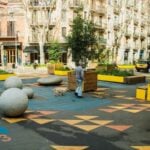
This reimagining of the pedestrian pathway as part of broader street rethinking is evident in Barcelona’s Superblocks. Rather than improving individual footpaths in isolation, the program reconsiders how street space is distributed across entire neighborhoods. By limiting through traffic in certain areas, streets and intersections offer room for walking, cycling, vegetation, seating, play, and other forms of public activity.
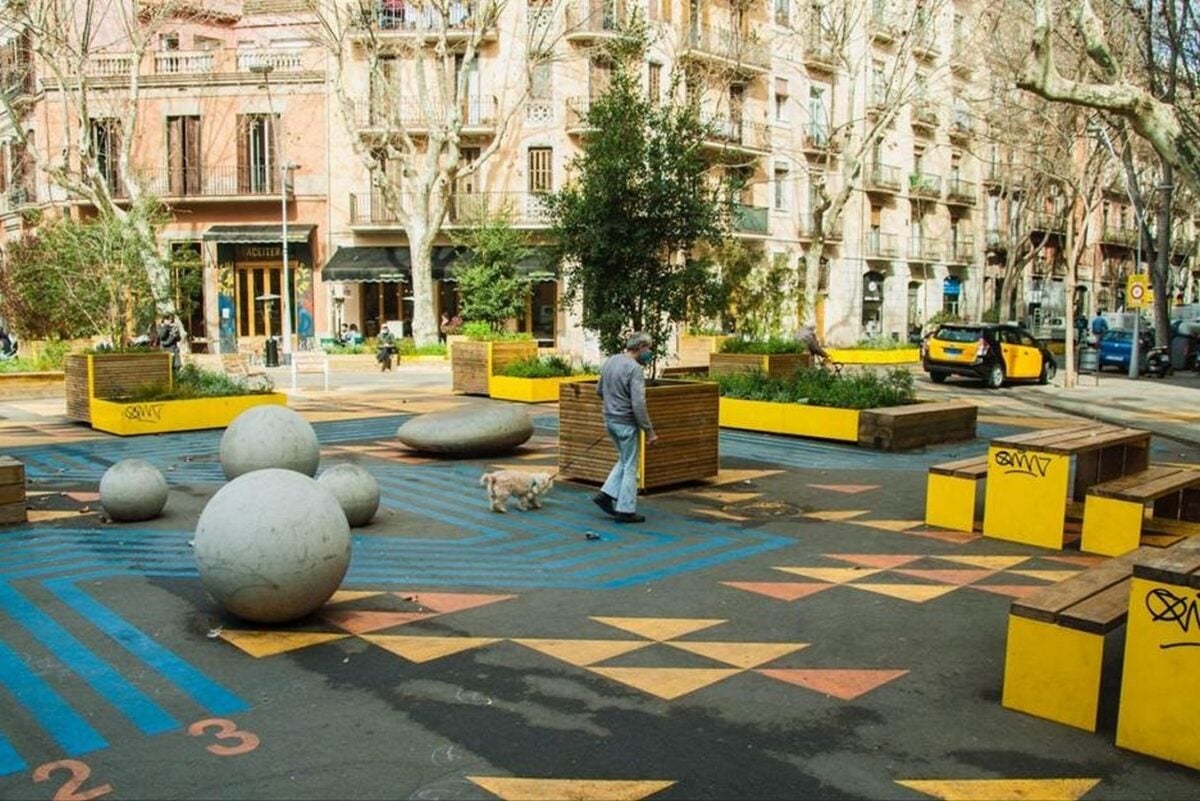
The street becomes less of a corridor for movement and more of a setting for public life.
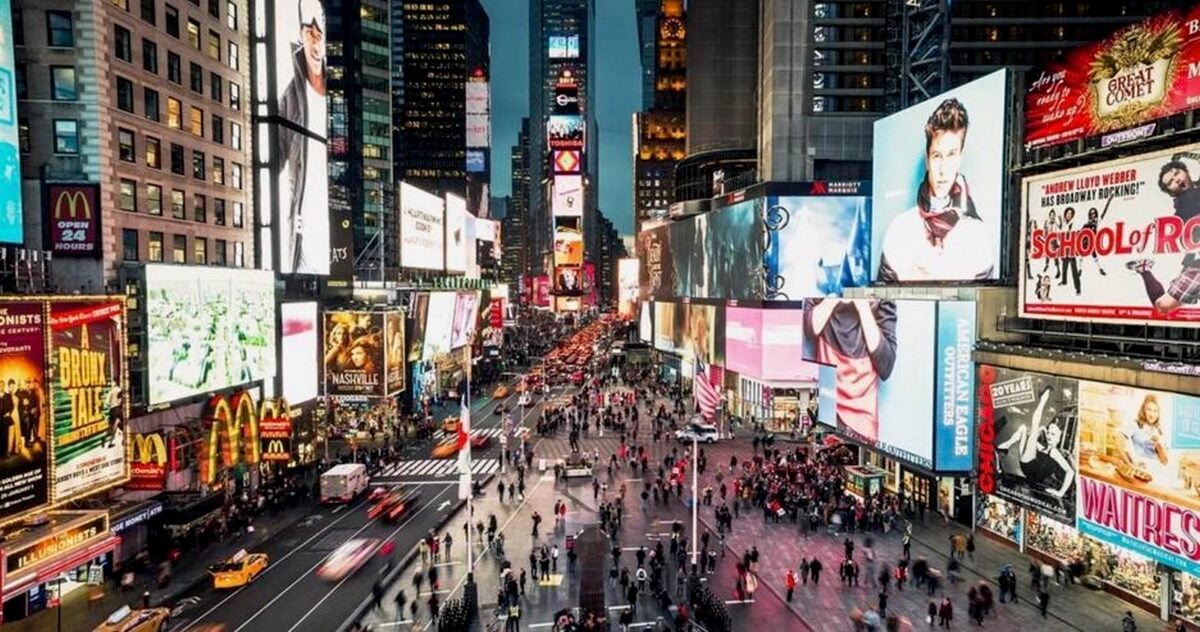
Likewise, pedestrianizing areas of Times Square in New York turned spaces once meant for moving vehicles into places of congregation. The simple measures of installing seats, landscaping, and managing the movement of vehicles turned out to be enough to transform the area into a popular public space.
These cases show that pedestrianization alone does not guarantee the success of public space. Mobility, economy, regulation, and occupation can lead to unpredictable results, even with sophisticated design.
While architecture and urban design can help create an appropriate environment, people will always give streets their special character. Hence, the question is not only how to make more space for pedestrians, but how to make the space they occupy meaningful.
The Sidewalk as the City’s Everyday Public Space
The sidewalk’s value lies precisely in its banality.
Unlike monuments, plazas, or parks, the sidewalk is encountered every day, usually without purposeful intent. It links residences to shops, structures to streets, transit stops to destinations, and private life to public life. Its value is not simply that it lets people get somewhere. It allows people to encounter the city along the way.
The sidewalk matters not just because it lets people get where they are going; it lets them experience the city along the way.
From Jacobs’ Hudson Street to Strøget in Copenhagen, from the informal lives of Manek Chowk to Delhi’s shopping streets and Barcelona’s Superblocks, the examples may differ vastly in scale, culture, and design. But they share a common denominator: public life becomes more vibrant when people have space to inhabit the city beyond mere movement.
This is not to say that all streets need to become pedestrian streets, all sidewalks plazas, or that all informal activities need to remain unregulated. For the city to function, it needs movement, accessibility, servicing, deliveries, and mobility in different forms. The difficulty lies in balancing these needs while recognizing that pedestrians are not units of movement.
They are participants in urban life.
Perhaps this is where the sidewalk’s architectural significance lies. It is where the building meets the street, where movement can become occupation, and where individual journeys become part of a collective urban experience.
The question for a walkable city, therefore, should not simply be whether there is enough space for people to walk. It should be whether that space allows them to walk, pause, observe, interact, and participate in the life of the street.
The most successful sidewalks may not be the ones that move people through the city most efficiently. They may be the ones that make people feel that, for a moment, the street belongs to them too.
References:
- https://unhabitat.org/sites/default/files/2020/08/streets_as_public_spaces_and_drivers_of_urban_prosperity.pdf
- https://www.petkovstudio.com/bg/wp-content/uploads/2017/03/The-Death-and-Life-of-Great-American-Cities_Jane-Jacobs-Complete-book.pdf
- https://www.sciencedirect.com/science/article/abs/pii/S2210670722004553?via%3Dihub