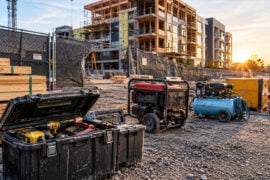
Reusing structural steel from old buildings is one of the most effective ways for architects and engineers to cut embodied carbon, but it only works when the strength of the salvaged steel can be confirmed. Beams and columns from demolished or refurbished buildings often come without reliable records, so designers can’t simply assume their properties. Material testing fills that gap, measuring yield strength and tensile behavior so reclaimed steel can be specified with confidence. Newer testing methods that need only small samples, or no cut samples at all, are making this process faster and more practical for real projects.
The future of sustainable architecture may depend as much on what we keep as on what we build new.
Why Reuse Beats Recycling
Steel is often praised as one of the most recyclable building materials, and in many countries a large share of structural steel is recycled at the end of a building’s life. Recycling, however, still requires melting the steel down and reprocessing it, which consumes significant energy and produces emissions.
Reuse avoids most of that. A beam that is carefully removed, checked and installed in a new structure keeps almost all of the carbon already invested in producing it. For architects working toward low-carbon or net-zero targets, that makes reclaimed steel an attractive option, especially as embodied carbon becomes a bigger part of how buildings are assessed.
Reuse also supports circular design thinking, where buildings are treated as material banks rather than waste at the end of their life.
The Barrier: Unknown Material Properties
If reuse is so beneficial, why isn’t it more common? The biggest obstacle is uncertainty. Before a salvaged steel section can be used again, designers need answers to several questions:
- What grade is the steel? Older buildings may use grades that are no longer standard.
- Are original records available? Drawings and mill certificates are often missing or incomplete.
- Has the material changed over time? Fire, corrosion, overloading or previous modifications can affect performance.
- Are all sections consistent? Steel from different phases of construction may vary.
- Can it meet current design requirements? Modern codes and safety factors may differ from those used originally.
Without clear answers, engineers often take a conservative approach, either rejecting reclaimed steel entirely or assuming lower strength values that reduce its usefulness.
The Problem With Traditional Testing
The conventional way to confirm steel strength is tensile testing. A sample is cut from the member, machined into a standard shape and pulled apart in a laboratory machine. The test provides reliable data, but it has drawbacks for reuse projects.
Cutting samples damages the beam or column, and each section may need its own test if its history is uncertain. Preparing and testing large numbers of samples also takes time and adds cost, which can make reuse less attractive compared with simply ordering new steel. For heritage buildings, removing material may not be acceptable at all.
Testing Steel Without Sacrificing It
Indentation-based testing offers a different approach. Instead of cutting out and breaking a sample, a spherical indenter presses into the steel surface, leaving a small dent. Software then analyzes the shape of the indent and calculates the material’s stress-strain behavior, including yield strength and tensile strength.
Companies such as Plastometrex have developed systems based on this approach, with both benchtop equipment for small samples and portable devices that can be used directly on larger components. For reuse projects, the process can look like this:
- Survey the existing structure and identify sections that could be salvaged.
- Group members by likely origin, such as building phase or section type.
- Test representative members, either on site or using small samples.
- Review the results to confirm strength and consistency across each group.
- Assign design values based on the measured properties and relevant guidance.
- Document everything, creating a material passport for the reclaimed steel.
Because testing is faster and causes minimal damage, more members can be checked, which gives engineers better confidence in the material.
What It Means for Architects and Designers
Material testing isn’t just an engineering task. It influences design decisions from the earliest stages of a project:
| Project stage | What to consider |
| Concept design | Identify opportunities to reuse steel from existing or nearby buildings |
| Pre-demolition audit | Record available sections, lengths and condition before removal |
| Testing and assessment | Confirm properties early so designs can adapt to available material |
| Design development | Shape structural grids and spans around reclaimed section sizes |
| Construction | Coordinate storage, cleaning, fabrication and installation |
| Handover | Provide documentation that supports future reuse |
Designing with reclaimed steel often means working more flexibly. Instead of selecting new sections from a catalog, architects and engineers may need to adapt layouts to the beams and columns available. That challenge can also inspire creative solutions and a clearer story about sustainability.
Beyond New Buildings
The same testing approach is valuable in other areas of architecture:
- Retrofit projects: Confirming the strength of existing steel frames before adding floors or new loads
- Adaptive reuse: Converting industrial buildings into homes, offices or cultural spaces
- Heritage conservation: Assessing historic metal structures with minimal intervention
- Infrastructure upgrades: Checking bridges, canopies and supporting structures before refurbishment
In each case, better information about existing materials can help keep more of the original structure in place, reducing waste and preserving architectural character.
Designing for a Circular Future
The construction industry is under growing pressure to reduce emissions, and the materials already standing in our cities represent an enormous resource. Steel reuse is one of the clearest ways to unlock that value, but it depends on knowing exactly what each piece of salvaged material can do.
Faster, less destructive testing is helping turn reuse from a niche idea into a practical option. For architects and designers, it opens the door to buildings that are not only well designed, but also built from materials with a story, a history and a much lower carbon footprint.