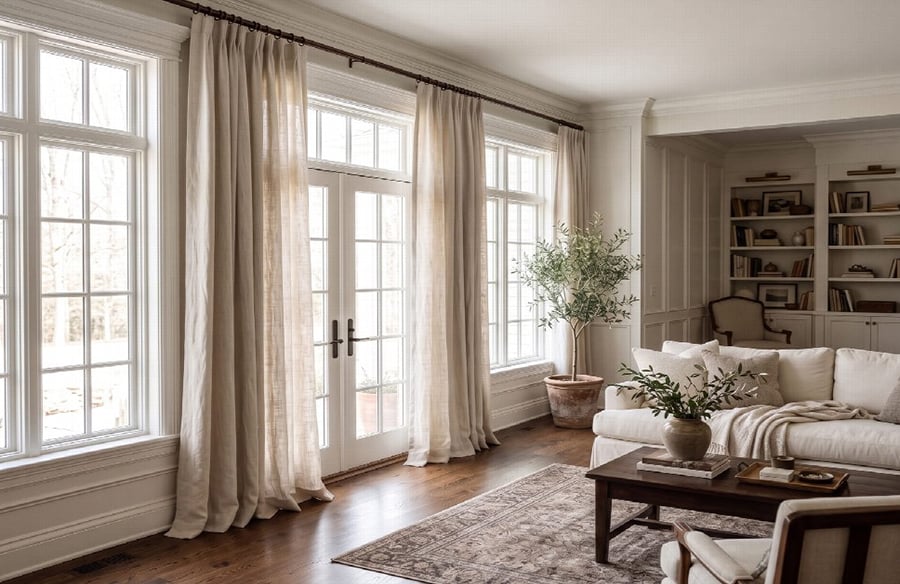
Here is the quick answer: most homeowners pay $150 to $600 per window for custom curtains (a pair of panels). Luxury fabrics, extra-wide windows, and motorized tracks can push a single window past $1,000. For a whole room, a realistic budget runs from $400 to $2,000.
That is the headline. But the number on your final quote is not random. It is built from a handful of choices you control, and once you see how they stack up, you can steer the total the way a driver steers a car, instead of just watching the meter run.
Think of this guide as a tailor walking around you with a measuring tape. We will look at what drives the price, what each room tends to cost, which extras sneak up on you, and how to spend smart. One caution first: every figure below is a typical market range, not a quote. Fabric, region, and brand all move the numbers.
The Short Answer: Custom Curtain Price Ranges at a Glance
Custom curtains fall into three broad tiers. Picture them as off-the-rack, tailored, and couture.
- Entry-level custom: about $150 to $300 per window. Polyester or poly-blend fabric, basic lining, simple headings such as grommet or rod pocket.
- Mid-range custom: about $300 to $600 per window. Cotton or linen blends, quality blackout lining, pinch pleats or other fuller headings.
- Premium custom: about $600 to $1,500+ per window. Velvet, heavy linen, silk-look fabrics, interlining, extra-wide spans, or motorized options.
Add up the windows and you get rough project totals:
- Bedroom (1 to 2 windows): $300 to $1,200
- Living room (2 to 4 windows): $600 to $2,500
- Whole home (8 to 10 windows): $1,500 to $6,000
Why such a wide spread? Because “custom” is not one product. It is a recipe, and fabric, fullness, lining, and size are the ingredients. Change one ingredient and the price shifts.
What “Custom” Really Means (And Why It Costs More Than Store-Bought)
Ready-made curtains come in a few fixed sizes, usually 84 or 95 inches long, in a few standard widths. If your window matches, great. If not, you live with panels that are too short, too skimpy, or both.
Custom curtains flip that logic. You give the width and height, and the curtains are made to match. You also choose the fabric, the lining, the heading style, and how full the curtains look. You are paying for fit and choice, not just cloth.
Interior design publications such as Architectural Digest and Houzz regularly stress that proportion makes a room look finished. Curtains that stop short of the floor or hang flat and narrow tend to look unfinished, no matter how nice the fabric is. Custom sizing fixes exactly that.
Custom Curtains vs. Bespoke
These two terms get mixed up constantly.
Custom Curtains means a brand takes standard patterns and sizes them to your exact dimensions. It is efficient, consistent, and priced for most households. This is where the $150 to $600 per window range mostly lives.
Bespoke means a workroom designs and hand-finishes every detail. Think hand-sewn pleats, custom trims, and one-of-a-kind patterns. It can be beautiful, but it often costs two to three times more.
For most homes,Custom Curtains delivers 90% of the look at a fraction of the price.
The 6 Factors That Shape Your Price
Every custom curtain quote comes down to six levers. Pull the right ones and you can cut the cost without cutting the beauty.
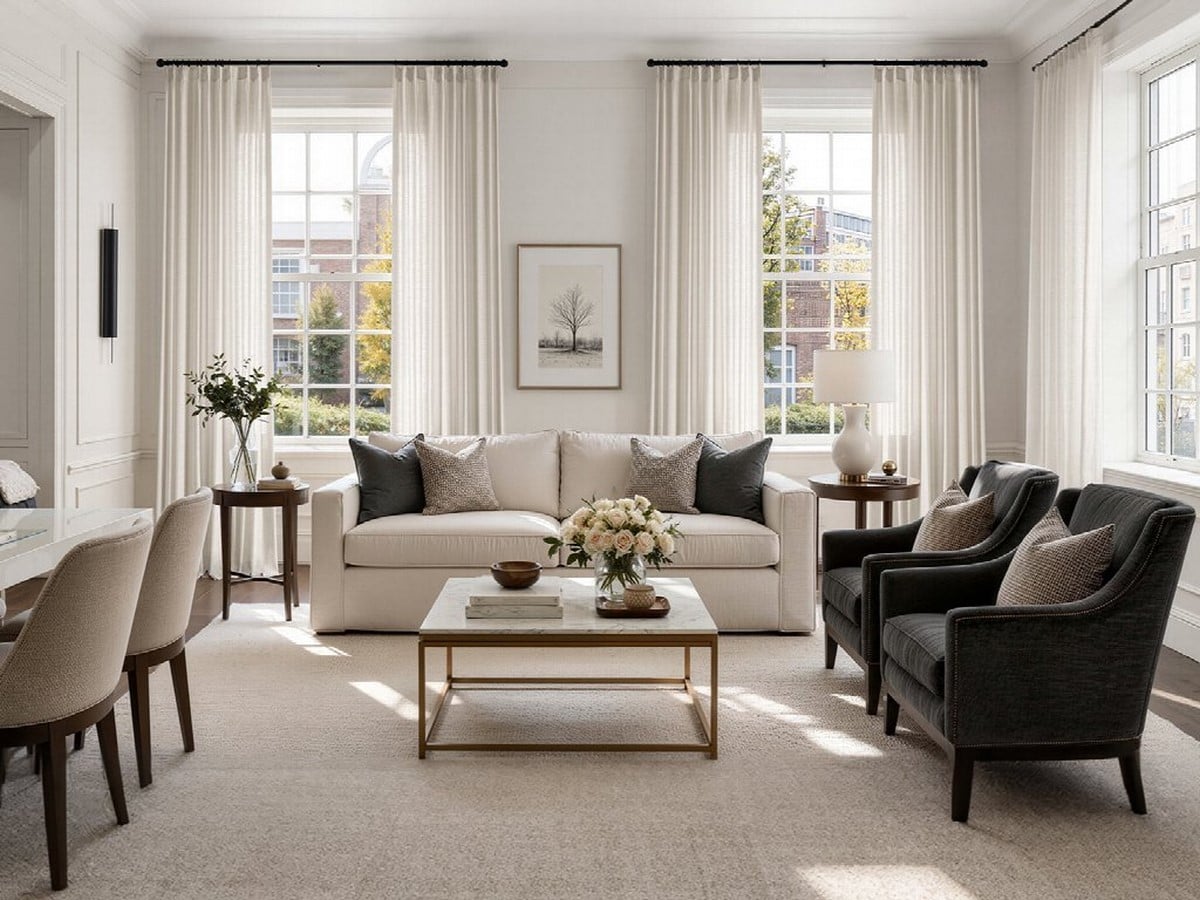 1. Fabric: The Biggest Line Item
Fabric usually takes the largest slice of the budget. Here is the general pecking order from lower to higher cost:
- Polyester and poly-blends: durable, wrinkle-resistant, budget-friendly
- Cotton and cotton blends: crisp, breathable, mid-range
- Linen and linen-look: relaxed, textured, mid to high
- Velvet: heavy, luxe, usually high
- Silk and silk-look: delicate, glossy, highest
A useful metaphor: fabric is the engine of the quote. A small upgrade in grade can change the total more than any other single decision.
A Quick Yardage Example
Let’s make this concrete. Say your window is 60 inches wide and you want curtains that finish 84 inches long, with standard fullness.
- Fullness of 2x means you need about 120 inches of flat fabric width.
- A typical fabric bolt is about 54 inches wide, so you need 3 widths.
- Each width needs roughly 96 inches of length once you add allowance for the header and hem. That is about 2.7 yards, which rounds up to 3.
- Total: about 9 yards of fabric.
At $20 per yard, the fabric costs about $180. At $45 per yard, it jumps to about $405. Same window, same style, more than double the fabric cost. Now you can see why two quotes for “the same curtains” can look so different.
2. Size and Fullness
Bigger windows need more fabric, and so does a fuller look. Fullness is the ratio of flat fabric to the width it covers. Most curtains look best at 2x fullness, while sheers often look best at 2.5x to 3x.
Skimping on fullness is tempting because it lowers the cost. But thin, flat curtains look like a stretched sheet instead of soft folds. If you need to trim the budget, drop a grade in fabric before you drop the fullness.
3. Lining: Quiet Cost, Loud Impact
Lining is the part nobody sees from the street, yet it changes how curtains hang, block light, and last. Common options include:
- Unlined: lowest cost, lets light through, fades faster in strong sun
- Standard lining: adds body, privacy, and protection for the face fabric
- Blackout lining: blocks nearly all light
- Thermal lining: adds an insulating layer
- Interlining: a soft middle layer that gives a rich, heavy drape, often found in premium work
Lining adds cost, but it often pays you back by protecting the main fabric from sun damage.
Blackout vs. Thermal Lining
They sound similar, but they do different jobs. Blackout lining is about light. It is a lifesaver in bedrooms, nurseries, and anywhere shift workers sleep during the day. Thermal lining is about temperature. The U.S. Department of Energy’s Energy Saver guidance on window coverings notes that well-fitted drapes can help reduce heat loss in winter and heat gain in summer.
Many fabrics combine both. If you need to choose, ask yourself which problem annoys you more: morning glare or drafty windows?
4. Heading Style
The heading is how the curtain gathers at the top, and it affects both the look and the price. Grommet and rod-pocket styles are simple and generally lower in cost. Pinch pleat, goblet, and similar styles take more fabric and more skilled sewing, so they sit higher.
Pick a heading that fits your style, then budget for it. A tailored pinch pleat in a modest fabric often looks better than a basic heading in an expensive one.
5. Length and Special Sizing
Floor-length is the classic choice, and it usually costs the same as a sill-length curtain once you account for fabric. Longer drops change the math, though. A “puddle” style that pools on the floor needs extra length. Windows that are very tall or very wide can also require extra seams or special handling, which can add a surcharge.
The takeaway: odd sizes cost more, and that is where measuring accurately saves real money.
6. Hardware and Extras
Curtains need something to hang from, and that something ranges from a simple rod to a ceiling track. Extras add up quickly:
- Rods and finials: from basic metal to decorative wood or brass
- Tracks: often chosen for wall-to-wall or ceiling-height looks
- Tiebacks, trims, and tassels: small upgrades with an outsized look
- Motorization: adds convenience and cost, so decide whether you truly want the remote
Budget for hardware separately so a gorgeous curtain does not end up hanging from an afterthought.
What Custom Curtains Cost Room by Room
Different rooms ask different things of their curtains. Here is how that tends to play out in the budget.
Bedrooms
Bedrooms lean on lining. A blackout lining turns a bright room into a calm cave, so expect to put money there. A pair of mid-range blackout curtains for a standard bedroom window often lands in the $250 to $500 range. If your bedroom has two windows, double it.
 Living Rooms
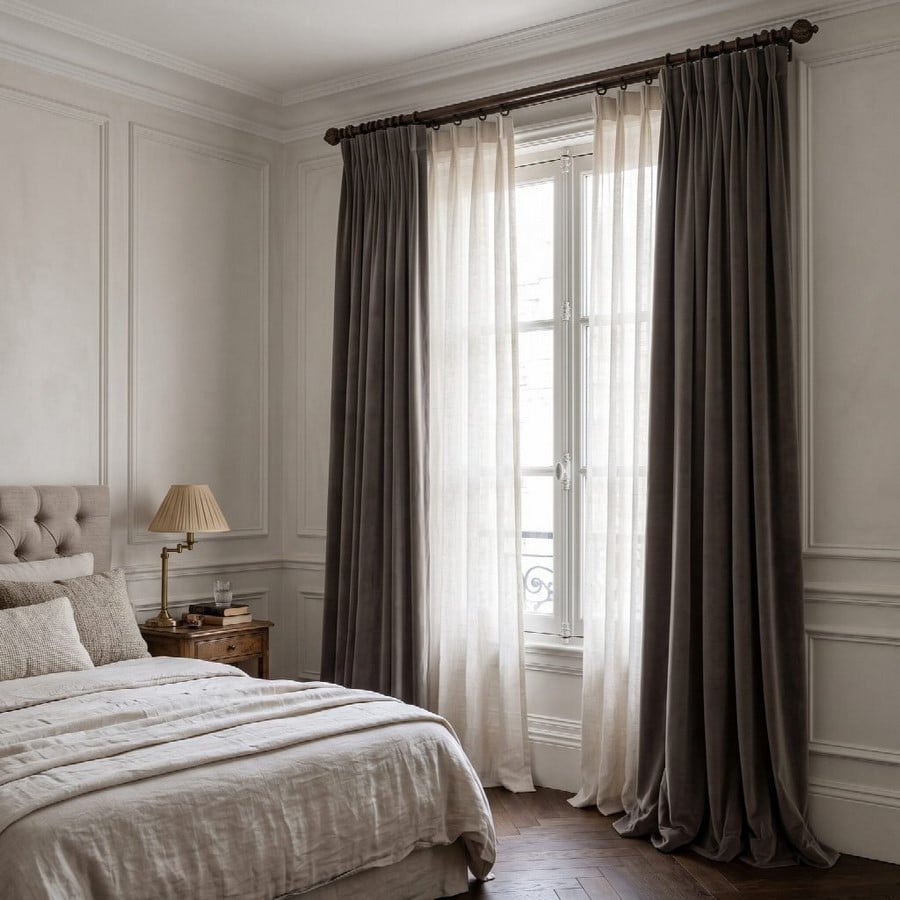
The living room is the stage. Windows are usually larger, the fabric is on display, and many people layer sheers behind heavier drapes. Layering looks wonderful, but it is effectively buying two sets of curtains. Plan on $500 to $1,200 per large window for a layered, mid-to-premium setup.
 Large Windows and Sliding Doors
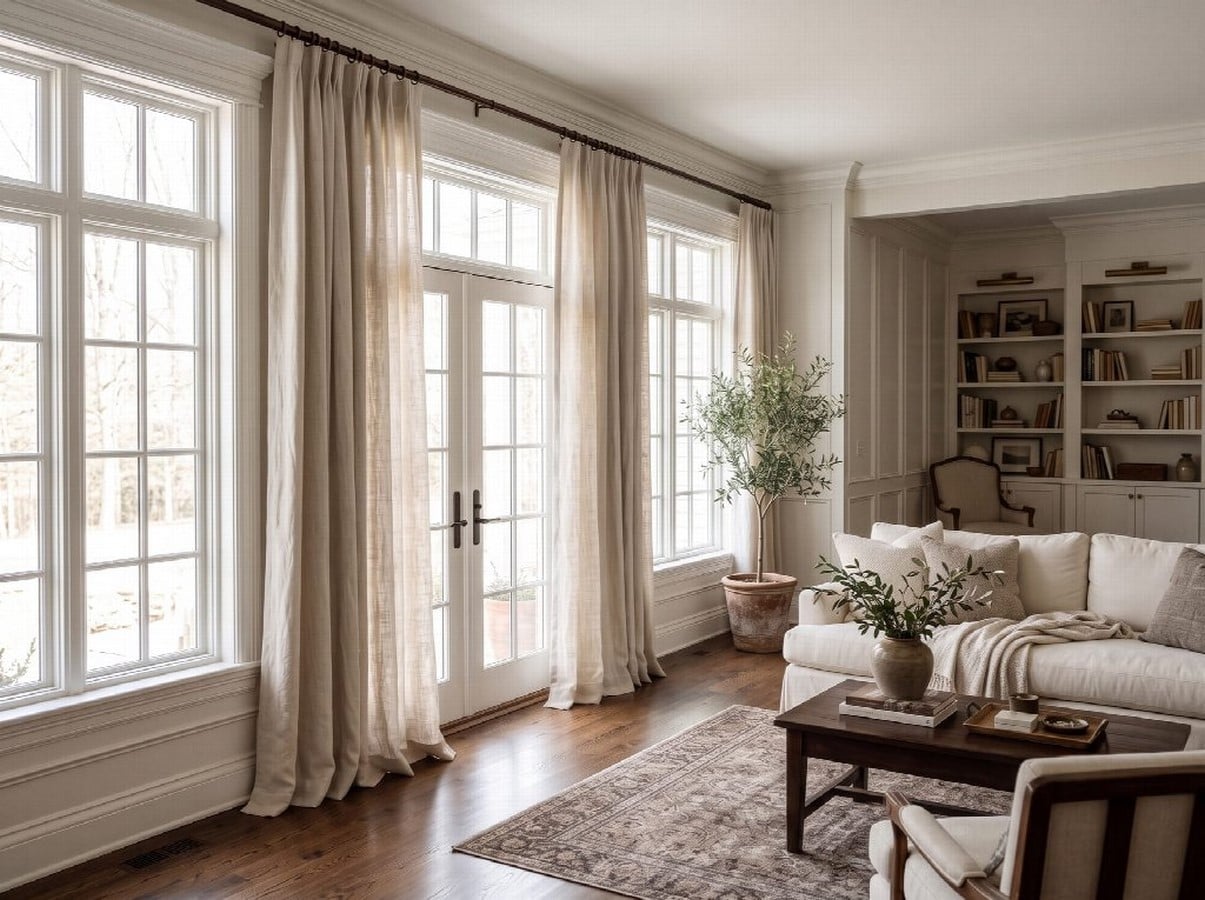
Wide spans eat fabric. A 10-foot sliding door can need as much material as three ordinary windows. If budget matters, consider a single fuller panel pair in a mid-range fabric rather than a premium cloth stretched thin. Fullness matters more than a fancy label here.
Hidden Costs to Budget For
The sticker price rarely tells the whole story. Keep an eye on these:
- Fabric samples. Often cheap or free, and worth every cent. Colors shift dramatically between a screen and your living room light.
- Made-to-measure panels are bulky, so freight can matter.
- Sales tax. Easy to forget when you compare totals.
- Measurement mistakes. Custom-made items often have limited return options, so a wrong measurement can cost you the entire order. Measure twice, then once more.
- If your quote covers curtains only, add the rod or track on top.
A simple rule: add 10% to 15% to your curtain total as a buffer. If you do not use it, you have a treat fund.
Custom vs. Ready-Made: Is the Upgrade Worth It?
Ready-made curtains win on speed and sticker price. Custom wins on fit, fabric choice, and the way a room feels when everything lines up.
Here is a fair way to decide. Go ready-made for a window that is standard size, rarely seen, or temporary, such as a rental or a guest room you barely use. Go custom for the windows people notice, for odd sizes, or whenever you want proper blackout and thermal performance with real fullness.
There is also the long game. A well-made lined curtain protects your furniture and flooring from fading and can stay in service for many years. Cheap panels that need replacing every few seasons can quietly cost more over time.
7 Smart Ways to Lower Your Bill
You do not have to choose between beautiful and affordable. Try these:
- Spend where it shows. Put the premium fabric on the front-facing living room windows and a sturdy poly-blend in secondary rooms.
- Keep fullness, trim the fabric grade. Fullness makes curtains look rich. Fabric label matters less.
- Choose a simpler heading. A clean grommet or pleat can save fabric and labor.
- Order samples first. A $5 sample beats a $500 mistake.
- Bundle windows into one order. Multi-window orders often unlock discount tiers and shipping savings.
- Time your purchase. Seasonal sales such as Black Friday are when made-to-measure items most often go on sale.
- Measure with care. The cheapest curtain is the one you only have to make once.
Conclusion
So, how much do custom curtains cost? For most homes, the sweet spot is $150 to $600 per window, with whole-room totals landing between $400 and $2,000. Premium fabrics, extra-wide windows, and extras like motorization can climb higher.
The good news is that you are in control. Fabric, fullness, lining, heading, size, and hardware are all levers. Decide which ones matter most to you, such as blackout bedrooms, a showpiece living room, or a lower total, then spend there and save everywhere else.
Think of your budget as a recipe, not a price tag. Get the ingredients right and the result will look far more expensive than it was.
See Your Custom Curtains Price with Joydeco
Ready to put real numbers on your windows? Joydeco makes made-to-measure curtains easy to price and easy to love. Choose your fabric, lining, and heading style, enter your exact dimensions, and see your total before you commit. Not sure about color? Order samples first and check them in your own light.
Browse Joydeco custom curtains today and turn your windows into the best-dressed part of your home.
Frequently Asked Questions
FAQ 1: Are custom curtains really worth the money?
Often, yes. Custom curtains fit your exact window, hang with proper fullness, and let you choose fabric and lining for your needs. If your windows are standard and rarely seen, ready-made may be enough. For prominent or oddly sized windows, custom usually delivers a noticeably better result.
FAQ 2: How much fabric do I need for one window?
It depends on width, length, and fullness. A common rule is to multiply your window width by 2 for standard fullness (2.5 to 3 for sheers), then divide by the fabric width and add allowance for the header and hem. A 60-inch window finishing 84 inches long typically needs about 9 yards.
FAQ 3: What is the cheapest way to get custom curtains?
Choose a poly-blend fabric, a simple heading, and a standard lining, and order several windows together to benefit from discount tiers. Keep fullness at 2x so the curtains still look rich. Seasonal sales can lower the cost further.
FAQ 4: Do blackout curtains cost more than regular curtains?
Yes, usually. Blackout lining adds material and construction, so expect a higher price than a standard-lined or unlined curtain. For bedrooms and nurseries, most people find the extra cost worthwhile because it improves sleep quality.
FAQ 5: Why do two quotes for the same window differ so much?
Quotes differ because the recipes differ. Fabric grade, fullness, lining type, heading style, and hardware can all change. Before comparing, make sure each quote lists the same fabric, fullness, and lining, otherwise you are comparing a sedan to a sports car.