Some vehicles in Big Sky work all winter. Others just sit there: the summer car, the second truck, the classic that gets driven on the Fourth of July and then goes back under a bedsheet. Sitting sounds like the easy job. It isn’t, quite. Leave a vehicle alone for six months in the Gallatin Canyon and it’ll probably come out in spring with a dead battery, flat spots on the tires and, every so often, a mouse who’s set up house in the glovebox.
First, be honest about how long it’s sitting
If you’ll drive it once a month, you need a lighter routine than if it’s parked from October to May. Half-measures are how a vehicle ends up neither stored right nor actually used, so pick one.
The type matters too. An electric vehicle skips the stabilizer and the oil change, but the battery has opinions. A lot of manufacturers suggest leaving the pack partly charged rather than full or empty, so check the manual for the number it wants. Diesels have their own thing in cold country, since diesel thickens as the temperature drops, and an anti-gel additive is a sensible precaution. Older and carbureted vehicles are the fussiest about fuel, which is why the classic needs stabilizer more than anything else on the list.
The week before you park it
Start with the tank. Fill it, because a full tank leaves less room for moisture to condense, and add a fuel stabilizer. Edmunds says a good one can keep gas from breaking down for up to a year. Then take it for a drive, fifteen or twenty minutes, so the treated fuel gets all the way through the system. Change the oil if it’s due. Used oil carries contaminants you don’t want sitting in the engine all winter. And check that the coolant is rated for the cold the vehicle will actually see, not the cold you’re hoping for.
Wash it, wax it, vacuum it, and get every crumb out, because mice up here find cars the way they find everything else, fast. Take out anything that can freeze (water bottles, cans of soda), plus the registration, insurance papers, spare keys and garage opener. Leave a note inside with the date you parked and the tire pressure you set. Small thing, saves you guessing in May.
Tires drop roughly a pound of pressure for every ten degrees the temperature falls, and a tire that sits in one spot for months can end up with a flat spot. Set the pressure to what the door-jamb placard says before you park. Lots of mechanics suggest skipping the parking brake for a long stretch and chocking the wheels instead, since pads can stick to the rotors if they stay clamped for months. Use a breathable cover. A plastic tarp just traps moisture against the paint.
Then there’s the battery, which goes first. AAA says a car battery has lost about a third of its starting power by the time it hits freezing, and roughly half at zero. Now picture that same battery slowly feeding the clock and the alarm for weeks. For anything that’ll sit two weeks or longer, AAA recommends a battery tender. Skip it and a dead battery by spring shouldn’t surprise you. If a tender isn’t an option, disconnecting the battery, or pulling it and keeping it somewhere you can charge it now and then, is the next best thing. While you’re making calls, ask your insurer if coverage can be adjusted for a stored vehicle. Some policies allow it.
Where it actually sits
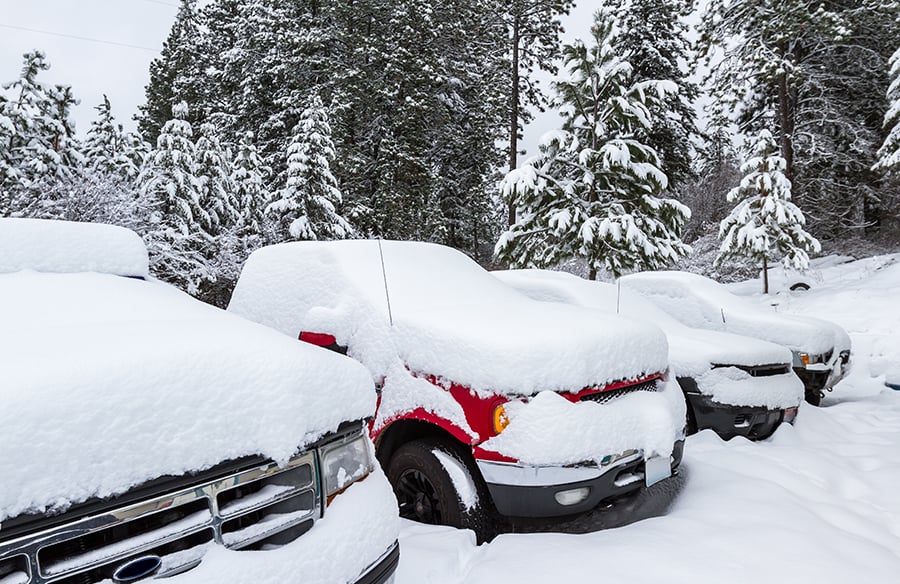
Leave it outside in the canyon and it takes everything the weather has: snow load, hard freezes, afternoon thaw, wind. An unheated garage helps, but it still follows the outside temperature. A heated space takes the extremes out, and that matters because condensation forms when warm and cold air trade places over metal. A steady temperature gives it far less to work with.
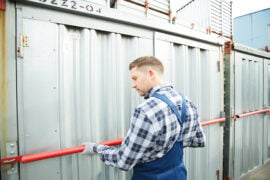
Big Sky Storage in the Gallatin Canyon is now open, minutes from Big Sky at 204 Blacksmith Loop, and every unit is heated or climate-controlled. The drive-up bays are heated too and run up to 12×45, which is plenty for a crew-cab pickup with room to spare. The gate is open to tenants around the clock, so the vehicle isn’t stranded if plans change in January.
Heat isn’t a substitute for prep. It lowers the odds of freeze damage and condensation, but the battery, the fuel, the tires and the mice are all still your problem. If you’re counting on a tender, ask whether there’s power in the bay before you rely on it. If there isn’t, pull the battery and keep it somewhere you can charge it.
Needing it in January
It happens. A trip comes together, plans change, suddenly you need the truck. If you take a stored vehicle out in the middle of winter, mechanics generally suggest driving it long enough to get fully warm, not just down the street, so the condensation that built up in the engine and exhaust has a chance to burn off. Then top up the fuel and reset the tires before it goes back in.
Waking it up in April
The first drive deserves a little care. Check tire pressure before you move it, then pop the hood and look for chewed wiring or a nest in the air intake, because a mouse that moved in over the winter can do real damage before you’ve gone a mile. Check the fluids, and let the engine run a minute before asking anything of it. The brakes may have a thin film of rust on the rotors that wipes off in the first few stops. Drive it gently for a few miles before you trust it at highway speed. If something feels off, get it looked at before you head up the canyon.
None of this is hard. It’s just easy to put off, and the first real storm in Big Sky likes to show up before anyone’s ready. Doing it on a warm Saturday in October beats doing it in a parka in November.