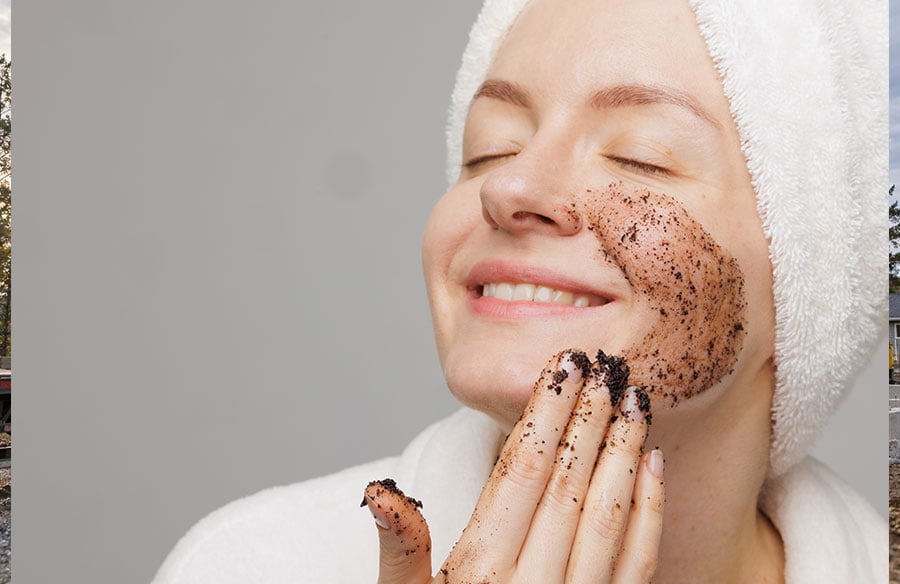
Blackheads around the nose, chin, or forehead can make skin look rough even when the rest of your routine is on track. They form when oil and dead skin cells collect inside pores, and the exposed buildup darkens when it comes into contact with air. Exfoliation can help remove this buildup, but not every type works in the same way. From physical scrubs to chemical exfoliants, here’s what to look for in the best exfoliating scrub for face and how to use one to keep your skin bright and healthy-looking.
Causes of Blackheads and Clogged Pores
Blackheads form when sebum and dead skin cells build up inside a pore. When this material comes into contact with air, it oxidises and turns dark, which can cause blackheads. Some common causes are:
- Excess sebum: Extra oil can mix with dead skin cells and form a plug inside the pore.
- Dead skin cells: When dead skin cells accumulate instead of shedding naturally, they can contribute to clogged pores.
- Oil trapped in follicles: Sebum and cellular debris can collect inside the follicle and create a blackhead.
- Heavy skincare or makeup: Certain products may contribute to congestion, particularly if your skin is already prone to clogged pores.
Exfoliation can help remove dead skin buildup, making it useful for blackhead-prone skin.
Physical vs Chemical Exfoliation: Which Works Better for Blackheads?
Physical exfoliation uses friction to remove dead skin cells from the surface. Face scrubs, cleansing brushes, and exfoliating pads work this way. A gentle face scrub can smooth rough skin and remove loose surface buildup. Chemical exfoliation uses exfoliating acids to loosen the bonds between dead skin cells, allowing them to shed more easily. Some chemical exfoliants can also work deeper within the pore.
So, which is better?
For blackheads and clogged pores, chemical exfoliation can be a better option because it can address buildup within the pores rather than only removing dead cells from the surface.
That said, physical exfoliation can still be useful when the goal is to smooth rough or dull-looking skin. If choosing a physical scrub, the particles should be fine and gentle, and the product should be used without applying heavy pressure.
This distinction between physical and chemical approaches mirrors the material science considerations in architecture and product design. Just as different materials are selected for their specific mechanical or chemical properties to achieve a desired finish or structural integrity, the choice of exfoliation method depends on the intended depth of action and interaction with the surface.
What to Look for in a Face Scrub for Blackheads and Clogged Pores
When looking for the best exfoliating scrub for face, pay attention to the formula and texture rather than how gritty it feels on the skin. Look for:
- Fine exfoliating particles: Pick a scrub with small particles, smooth enough to provide the skin with gentle exfoliation and removal of surface buildup.
- Pore-friendly ingredients: Ingredients suited to congested skin can make the scrub more useful for blackhead-prone areas.
- Non-comedogenic formula: A useful feature for skin that tends to develop clogged pores.
- Exfoliation with antioxidants: Ingredients rich in antioxidants could be helpful as a part of an exfoliating routine to support the skin against oxidative stress.
- Suitable texture: The scrub should spread easily without requiring pressure or repeated rubbing.
The emphasis on specific material properties such as particle size, texture, and the inclusion of protective agents like antioxidants resonates with principles of material selection in design. Architects and designers similarly scrutinize the composition and surface qualities of materials to ensure they perform optimally, resist environmental degradation, and contribute to the overall aesthetic and functional integrity of a space or product.
For example, The Chemist at Play Gentle Exfoliating Face Scrub includes Mandelic Acid and Lactobionic Acid that provide gentle physical exfoliation, along with Walnut Shell Powder for chemical exfoliation. This scrub is enriched with Acai Berry as an antioxidant ingredient, providing smooth skin without stripping it.
How to Use a Face Scrub for Blackheads the Right Way
Using the right technique can make physical exfoliation more comfortable and effective.
- Start with damp skin: Cleanse your face with a gentle face wash and leave the skin slightly damp before applying the scrub.
- Use a small amount: Apply enough to lightly cover the areas you want to exfoliate. Concentrate on blackhead-prone areas such as the nose, chin, and forehead.
- Massage gently: Use your fingertips to make small circular motions. Keep the pressure light rather than trying to scrub the blackheads away.
- Keep contact short: About 30-60 seconds is enough for a physical scrub. There is no need to leave it on your skin.
- Rinse thoroughly: Use lukewarm water and remove all the particles without rubbing the skin again.
- Moisturise afterwards: Apply a lightweight moisturiser to replenish hydration after exfoliation.
For most people, using a face scrub 2-3 times a week is enough. Reduce the frequency if your skin becomes tight, red or irritated. If you already use other exfoliating products, avoid piling them together on the same day.
Mistakes That Make Blackheads Worse
A few common habits can make exfoliation less helpful:
- Over-scrubbing: Pressing harder does not remove blackheads more effectively. It can simply create more friction and irritation.
- Using harsh particles daily: Coarse scrubs and very frequent use can disturb the skin, especially if it is sensitive.
- Skipping moisturiser: Exfoliation can leave skin dry, so moisturising afterwards helps maintain hydration.
- Picking or squeezing: Trying to manually remove blackheads can irritate the surrounding skin and may increase the risk of marks or scarring.
- Relying only on pore strips: Pore strips can lift surface material temporarily, but they do not address the buildup that causes pores to become clogged again.
- Combining too many exfoliants: Using a physical scrub alongside several strong exfoliating products can increase irritation without improving results.
Conclusion
The best face scrub for blackheads is not necessarily the one that feels the most abrasive. Look for gentle physical exfoliation and pore-focused ingredients such as Walnut Shell Powder, while keeping your routine consistent and your technique light. With the right frequency, cleansing and moisturising, exfoliation can help keep clogged pores under control without putting unnecessary stress on your skin.