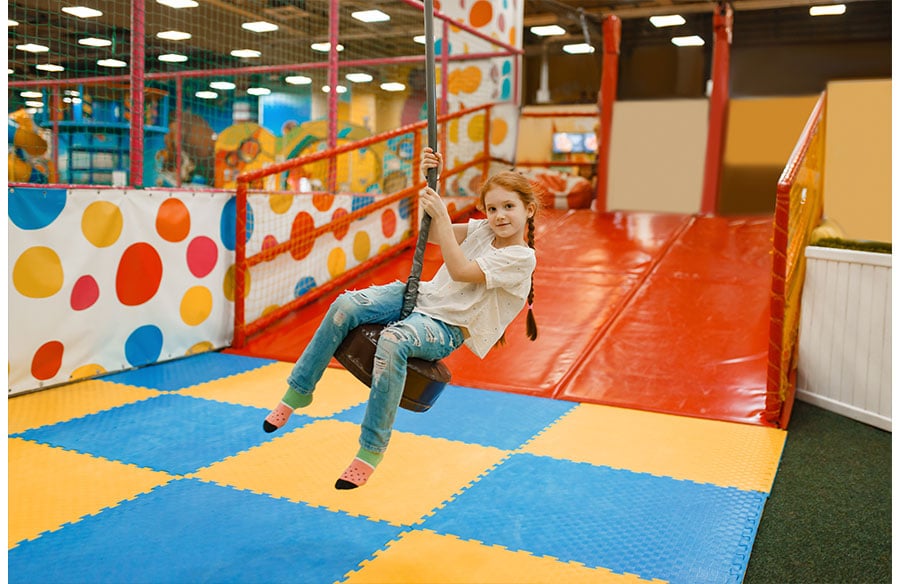
Two indoor playground proposals can show similar slides, climbing areas, and padded structures while covering very different purchases. One price may include equipment and packaging. Another may also include installation labor, design revisions, or a starter set of spare parts. The difference is difficult to see in a rendering.
For operators planning a family entertainment center, shopping-center play area, or dedicated indoor playground, the useful question is not simply which quote is lower. It is what each price covers, what remains your responsibility, and what evidence you will receive before opening.
A fair comparison starts with a shared project brief and an itemized scope. The following approach helps buyers turn a collection of prices into a set of clearly defined choices.
Prepare a Comparable Commercial Indoor Playground Equipment Brief
A quote is only as specific as the information behind it. Send each supplier the same dimensioned floor plan, destination, intended age groups, preferred activities, and opening target. Include photographs and the clear height beneath beams or other obstructions. Mark dimensions that still need verification.
Separate the leased area from the space available for equipment. Reception, seating, storage, circulation, and building services all affect the layout. A supplier working from gross floor area may propose a different arrangement from one working from a measured equipment zone. Neither price is meaningfully comparable until the assumptions are aligned.
This detailed spatial planning is crucial for integrating the play area seamlessly into the broader architectural context of the building. Thoughtful consideration of circulation paths, sightlines, and adjacency to other building services ensures that the facility functions not just as a play zone, but as a cohesive part of the overall design, enhancing both aesthetics and user experience.
Also explain your delivery and installation expectations. Can large components reach the site through the available doors and corridors? Who handles unloading? Is the room ready for installation, or will other contractors still be working? These details can change the scope even when the equipment remains the same.
Give the brief a revision date. If the layout or intended users change, send the update to all shortlisted suppliers and ask them to identify its effect on price and timing. This prevents an older, narrower proposal from appearing cheaper simply because it describes an earlier version of the project.
Compare Indoor Playground Equipment Beyond the Rendering
A rendering communicates appearance; an equipment schedule explains what you are buying. Ask each supplier to connect the proposed play elements to a numbered drawing and list the principal materials, intended users, and relevant care requirements. Check that alternatives still provide the activities you need.
Product ranges such as Haiber’s commercial indoor playground equipment can help a buyer describe possible configurations. The next step is to translate those possibilities into a site-specific proposal. A catalogue image does not establish the final footprint, access arrangement, or delivered specification.
Review changes that can be hidden behind similar-looking designs. Different play functions, material specifications, access arrangements, or replacement methods may explain part of a price difference. Ask what happens if a proposed material becomes unavailable and require significant substitutions to be approved before production.
Consider maintenance at this stage. A component may look attractive but be awkward to reach for inspection or replacement. Ask how staff will clean it, identify wear, and obtain replacement parts. Those answers help an operator assess the practical consequences of the design without relying on unsupported promises about lifespan or maintenance savings.
Separate Equipment Price from the Full Delivery Scope
The equipment price is one part of the purchasing decision. The comparison should also show the agreed delivery arrangements, installation responsibilities, documentation, and handover support. Items outside the supplier’s offer still need an owner and a place in the buyer’s budget.
For example, imagine Offer A includes equipment and packaging, while Offer B includes the same items plus installation labor. A lower total for Offer A does not reveal whether it is the better purchase. The buyer must first establish how installation will be supplied and funded. This is an illustrative comparison, not a price estimate or a description of a typical package.
Use the same scope checklist for each quote. Mark every item as included, excluded, optional, or awaiting confirmation. Blank entries should remain open questions. Where a cost belongs to the buyer or another contractor, record that explicitly rather than treating it as zero.
Check commercial boundaries as carefully as the equipment list. A named destination is not enough to explain who handles unloading, duties, local transport, accommodation, or installation assistance. Ask the supplier to state the delivery terms and specific inclusions in writing. Clarify quote validity and how approved changes will be priced.
The table below provides a practical starting point. It is intended to expose scope differences, not to imply that a broader service package is always the right choice.
| Scope item | Question to resolve for every quote |
| Design basis | Which plan revision and dimensions does the quote use? |
| Equipment | Which elements and material specifications are included? |
| Delivery | Who handles freight, unloading and onward transport? |
| Installation | Who provides labor, tools and site assistance? |
| Evidence | Which reports and instructions accompany the equipment? |
| Handover and support | Who accepts the work and resolves outstanding items? |
Record each answer as included, excluded, optional, or awaiting confirmation, and name the responsible party.
Ask for Evidence That Matches the Proposed Project
A standards reference is useful only when the supporting evidence applies to the equipment being offered. Ask for readable reports that identify the issuer, date, tested sample, and scope. A general certificate image does not answer whether a modified configuration or material is covered.
The scope of ASTM F1918-21, for example, concerns soft contained play equipment and describes a user range from the 5th-percentile two-year-old to the 95th-percentile twelve-year-old. BS EN 1176-10:2023 addresses additional requirements for fully enclosed play equipment and describes children up to 14 years old. These are scoped references, not interchangeable approvals for every attraction in a venue. [1][2]
Have the appropriate project professionals determine which requirements apply to the proposed equipment and destination. Keep product evidence, correct installation, and permission to operate the venue as separate review tasks. Confirm who is responsible for each and what records must be available.
Apply the same discipline to service descriptions. The manufacturer presents itself as a commercial playground manufacturer offering customized solutions. When reviewing custom playground design services, ask for the drawings, revisions, installation support, and handover deliverables included in your specific proposal. The project agreement should define the service boundary rather than leaving it to a broad description such as turnkey.
If evidence is missing or a responsibility remains unclear, make it a question to resolve before committing. A quotation can be attractive and still require further work before it supports a purchasing decision.
Agree on Acceptance Before Production Starts
Acceptance criteria explain how the buyer will determine whether the agreed work has been delivered. Confirm them while the scope is being negotiated, together with the approved drawing revision, equipment schedule, required documents, and process for handling discrepancies.
Separate pre-shipment checks from on-site acceptance. For overseas projects, playground components are pre-assembled at the factory before shipment to verify that the parts fit together correctly. Each component and its corresponding connection point is clearly labeled, such as A-to-A and B-to-B, helping the overseas installation team identify and assemble the correct parts on site. The manufacturer also calculates the load-bearing capacity and maximum allowable load of relevant components and provides the corresponding technical documentation. These preparations help reduce installation confusion and give buyers a clearer understanding of the equipment before it arrives. Packing records and photographs can show what was prepared for dispatch, but they cannot prove that the installed equipment matches the approved arrangement. Agree who will inspect the completed work and how outstanding items will be recorded and closed.
This emphasis on prefabrication, modularity, and structural documentation reflects best practices in architectural engineering and construction. Designing components for precise factory assembly and clear on-site integration minimizes errors, ensures structural integrity, and streamlines the construction process, aligning with principles of efficient and high-quality built environments.
Request the operating and maintenance instructions relevant to the supplied equipment, the agreed supporting reports, and a spare-parts identification list. Where training or orientation is included, specify who attends and what is covered. Avoid assuming that a warranty automatically includes every part, labor charge, or travel expense; review the written coverage and exclusions.
Before approving a deposit, bring the decision back to the original brief. Does the selected configuration serve the intended users? Are the supplier’s exclusions accounted for? Is there a realistic plan for site preparation and acceptance? The answers should be understandable to the operator who will inherit the project, not only the purchasing team.
For a project discussion with the supplier, prepare your country, venue type, floor plan, clear height, intended ages, budget boundaries, and required services. Request an itemized proposal and a list of information still needed for a firm quote. This gives the first conversation a useful focus without assuming that floor area alone can produce an accurate offer.
Conclusion
The most useful playground quote is one you can trace back to a defined project. Compare the equipment configuration, delivery responsibilities, relevant evidence, and acceptance process before judging the headline price.
A lower-cost proposal may be the right choice when it meets the brief and the remaining work is understood. A broader package may suit a buyer who needs more coordination support. In either case, make the boundaries explicit. A clear scope gives suppliers a better basis for quoting and gives the buyer a more reliable basis for deciding.