What Architects Can Learn from a Film About a World After Humanity
A Moment Before the Ruins
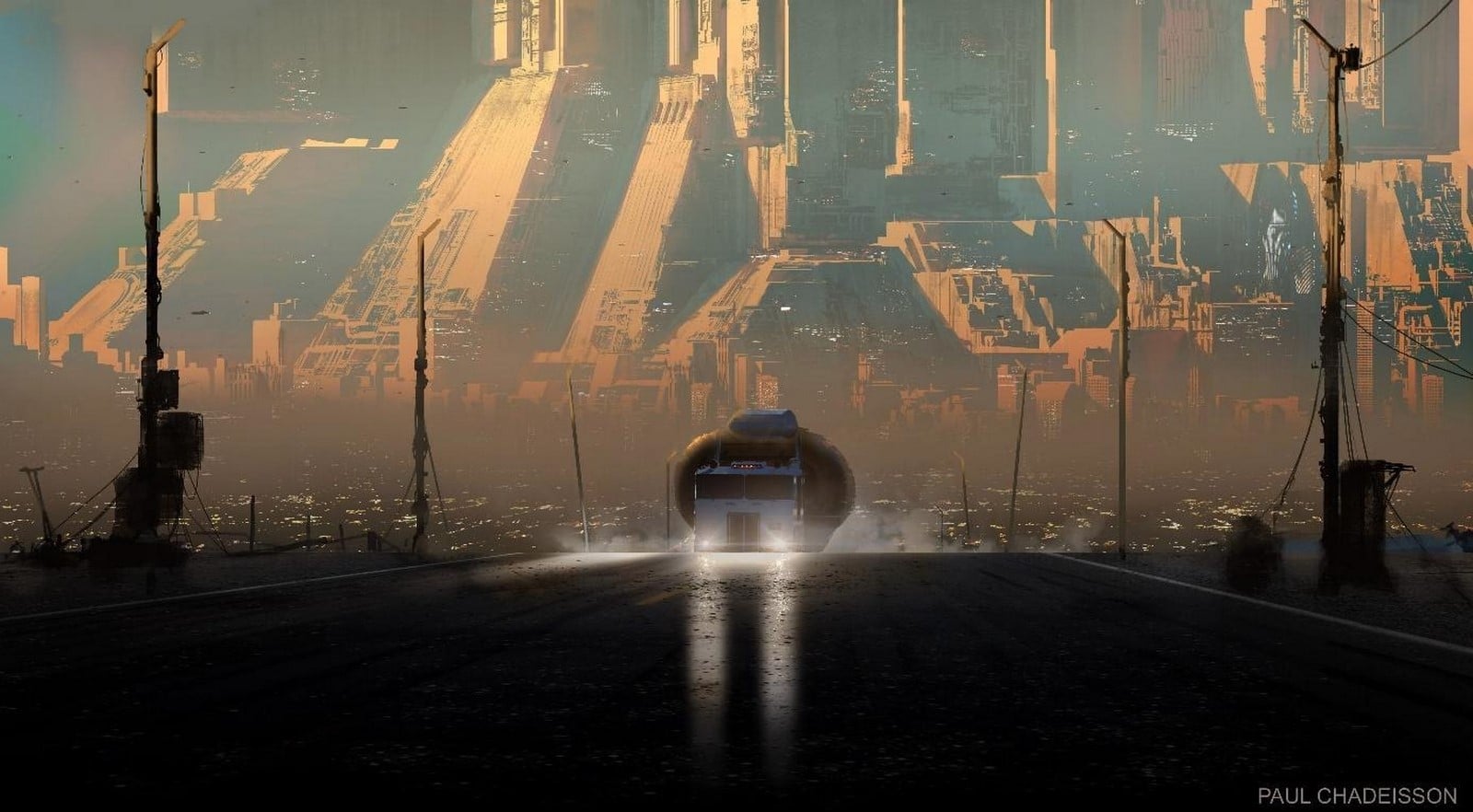
Imagine this: you are standing in a vast chamber. The ceiling is so high it disappears into shadow. The walls are raw concrete, massive, unadorned. Dust motes drift through shafts of amber light. Nothing moves. Nothing sounds. You are alone in a space designed for crowds that will never come. You feel, simultaneously, insignificant and profoundly present. Your smallness is amplified by this architectural vastness. You are confronted with the silence of abandonment.
This is the experience Denis Villeneuve’s Blade Runner 2049 offers its viewers. The film is not primarily about plot—though it has one, complex and spare, exploring memory and identity. Rather, it is an extended architectural meditation delivered through images. For architects and designers, this is essential viewing not for entertainment but for professional education. Villeneuve and cinematographer Roger Deakins have created something radical: a film that treats built environment as the primary character, space itself as narrative.
What the Story Holds (Without Spoiling Wonder)
Blade Runner 2049 is set thirty years after the original Blade Runner. The world continues, transformed and diminished. Civilisation persists, but something essential has been lost. You will not need plot recitation from me. What matters for architects is not what happens but where it happens- and how those places make us feel abandoned, awestruck, melancholic, and profoundly aware of our insignificance within the structures we build.
The film’s refusal to prioritise narrative over environment is its genius. Long sequences unfold with minimal dialogue. Instead, we observe: a character walking through devastated Los Angeles, dawn breaking over an abandoned radioactive landscape, the massive silhouette of brutalist architecture against burning sky. We are asked to feel the spaces before understanding the plot. This is architectural cinema.
Los Angeles as Character: The City as Witness
Notice first the light. When we see Los Angeles in Blade Runner 2049, it appears at dawn, bathed in warm amber glow. The light is beautiful, almost gentle. We observe second: the emptiness. Streets are abandoned. Buildings are hollow. A vast city exists as monument to absent humanity. Only then, observing third, do we understand: this architecture communicates longing. The spaces are built for communities that no longer inhabit them. Offices stand ready for workers who will never return. Streets curve expectantly, awaiting traffic that ceased years ago. The city has become a tomb
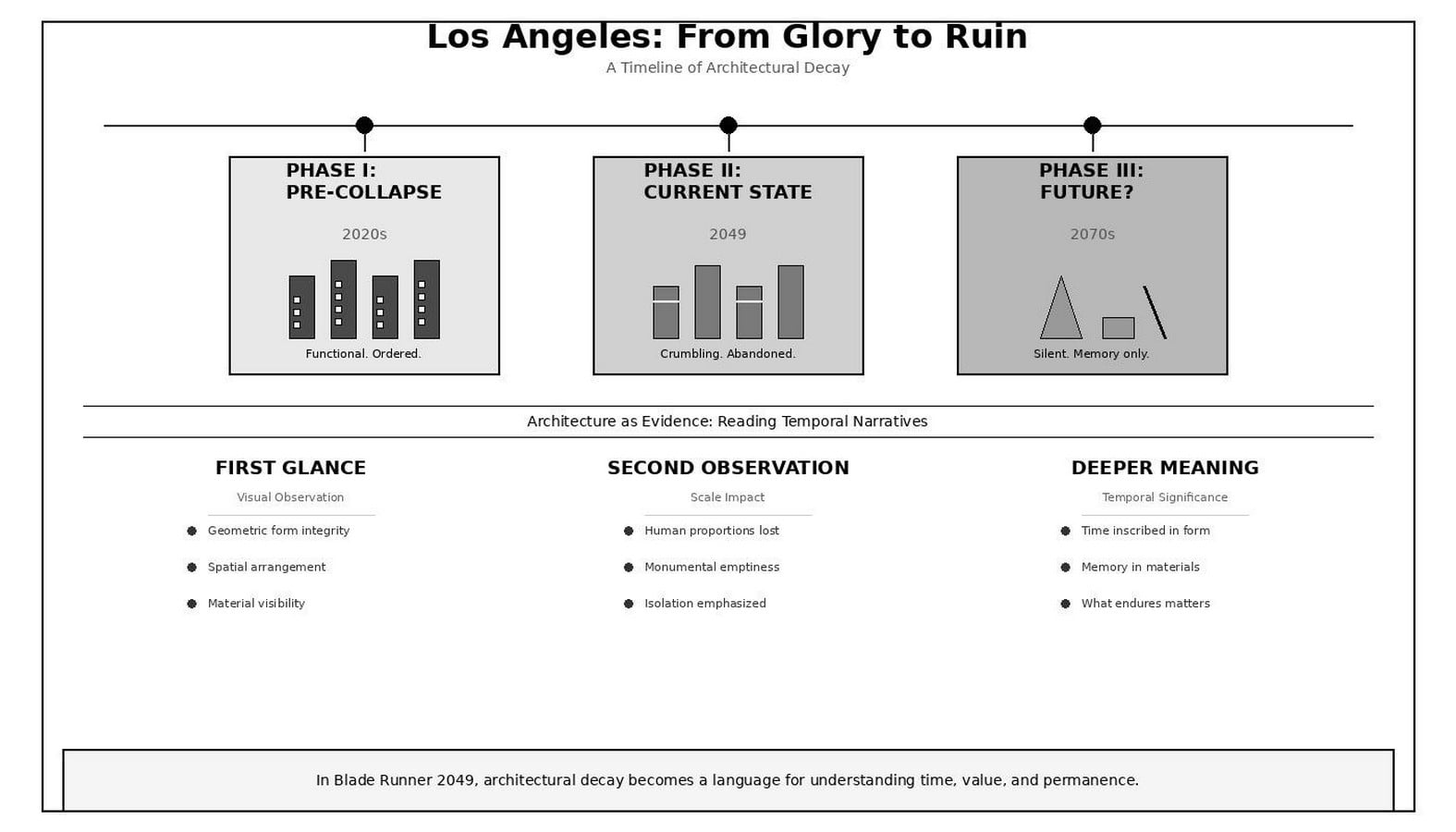
Here is the architectural lesson that many contemporary designers overlook: cities are not merely functional. They are emotional systems. The places we design communicate values through their very structure. A city designed for human commerce, gathering, and connection- once emptied- becomes an architecture of loneliness. Conversely, spaces designed with permanence and beauty can outlast their original purpose and still speak powerfully to future inhabitants.Blade Runner 2049 poses a question to architects: are you designing buildings for today’s users or for the possibility of tomorrow’s contemplators? Are you building to serve a moment, or to endure for ages?
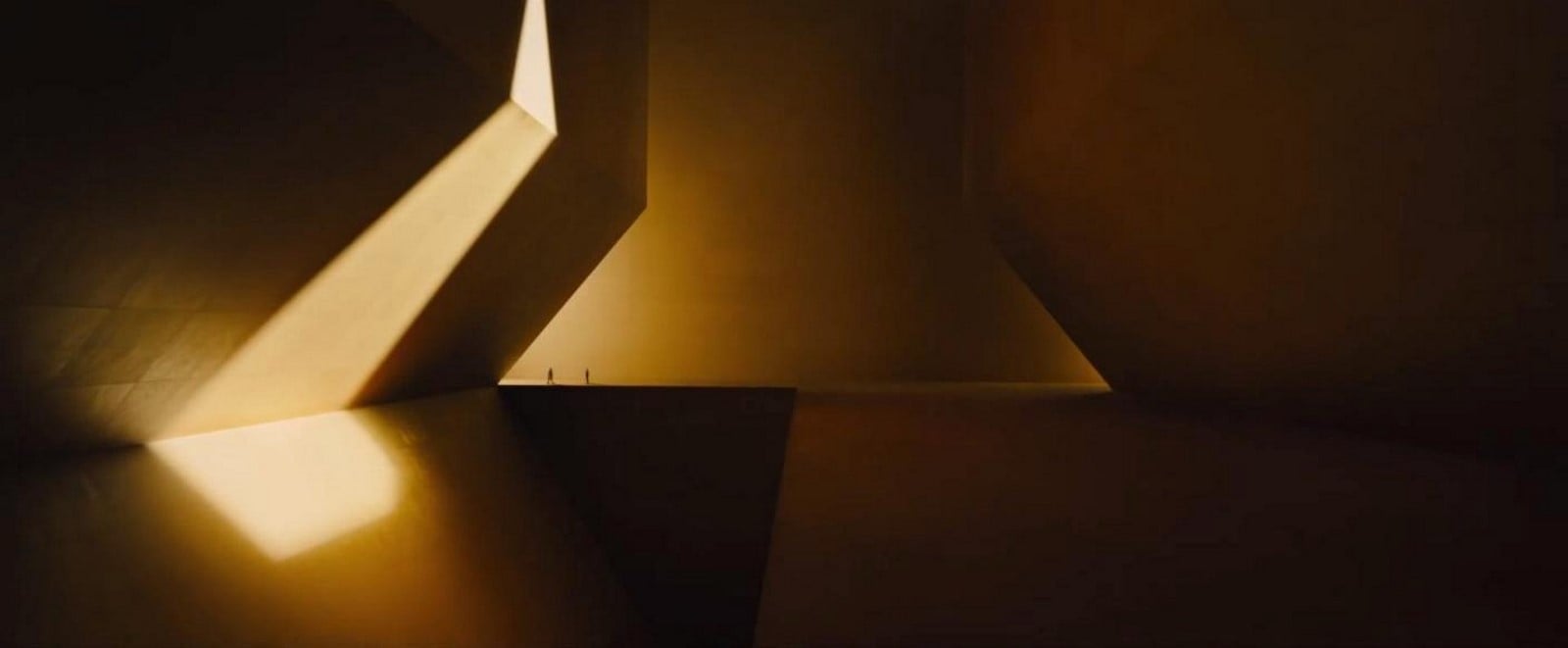
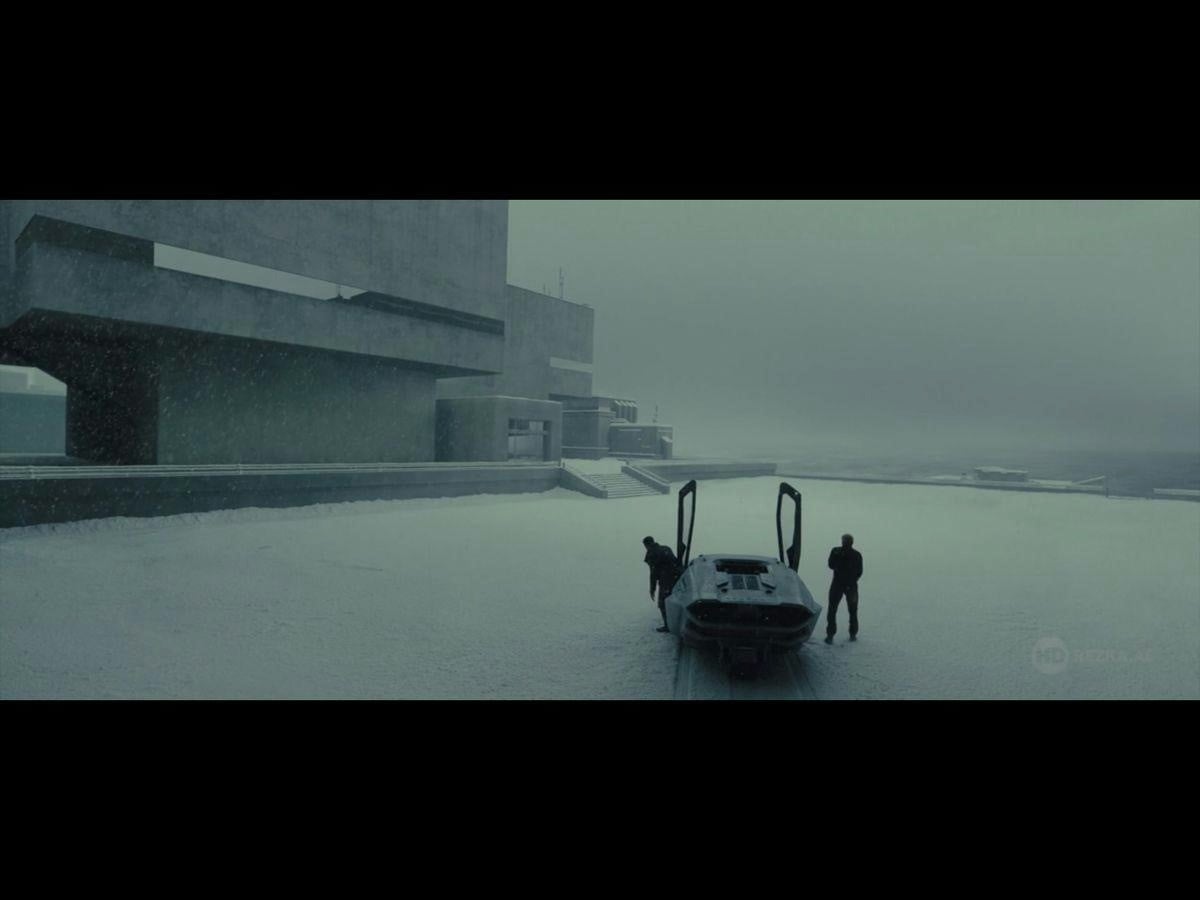
The film’s most striking architectural presence comes from brutalist structures. These are massive, geometric, built from raw concrete. They tower. They dominate. They demand respect through sheer scale. Brutalism emerged as an architectural philosophy rooted in honesty: here is concrete, revealed in its truth. Here is structure, unadorned. Here is power made manifest in material.
Brutalist buildings promise permanence. They appear indestructible. Yet in Blade Runner 2049, these monumental structures stand abandoned, magnificent in their solitude, terrible in their emptiness. A massive fortress serves no one. A colossal civic building echoes with human absence. The brutalist aesthetic, designed to express strength and endurance, instead communicates tragedy: our most confident assertions of permanence have become our most poignant monuments to failure.
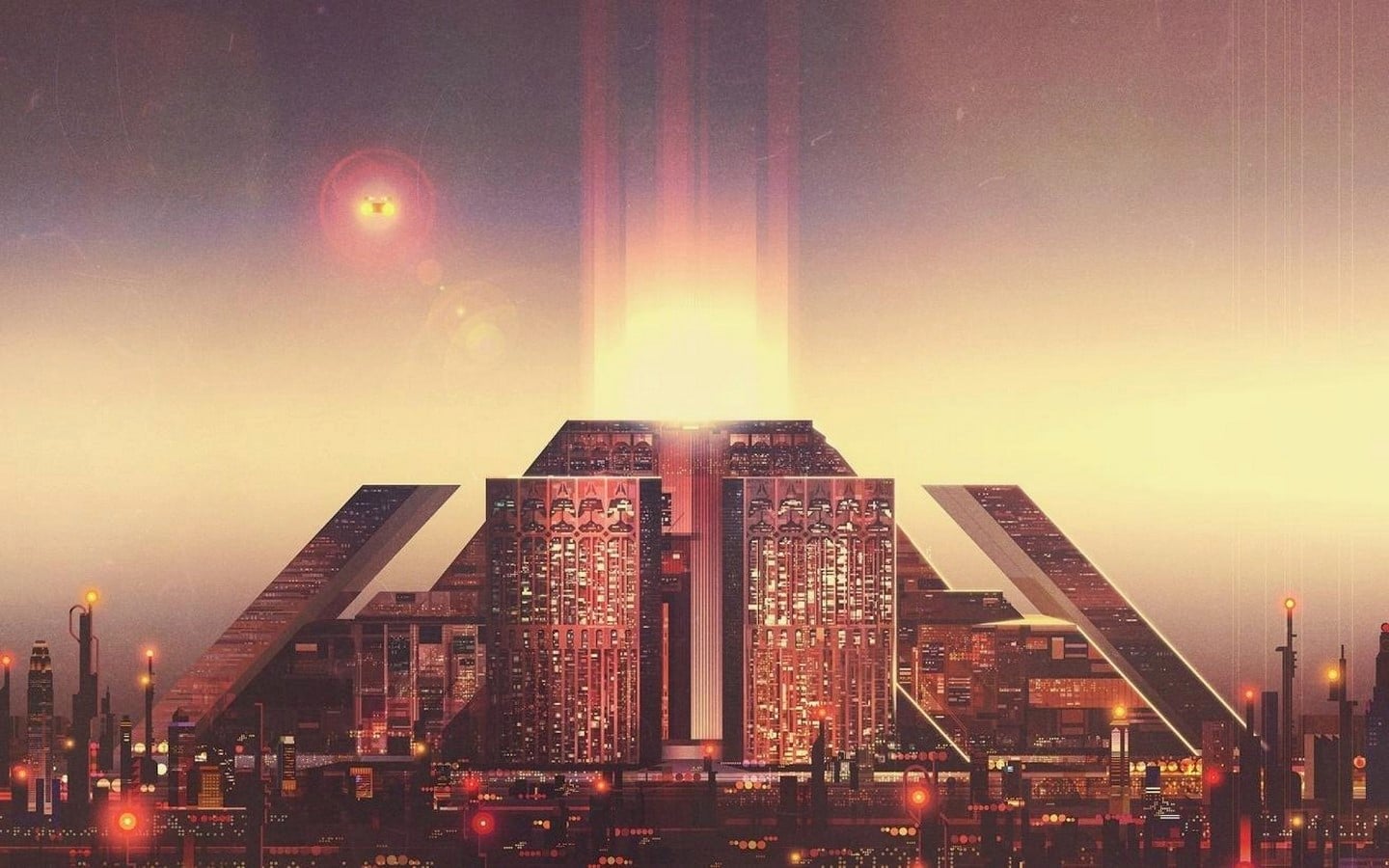
Alienation, permanence and loneliness. In Blade Runner 2049, they become monuments to absence. This raises an uncomfortable question for architects who work in brutalist idiom: are we designing spaces of power or spaces of domination? Are we creating shelter or temples to human ego? Villeneuve’s film does not answer this. Instead, it holds the paradox: brutalist architecture is
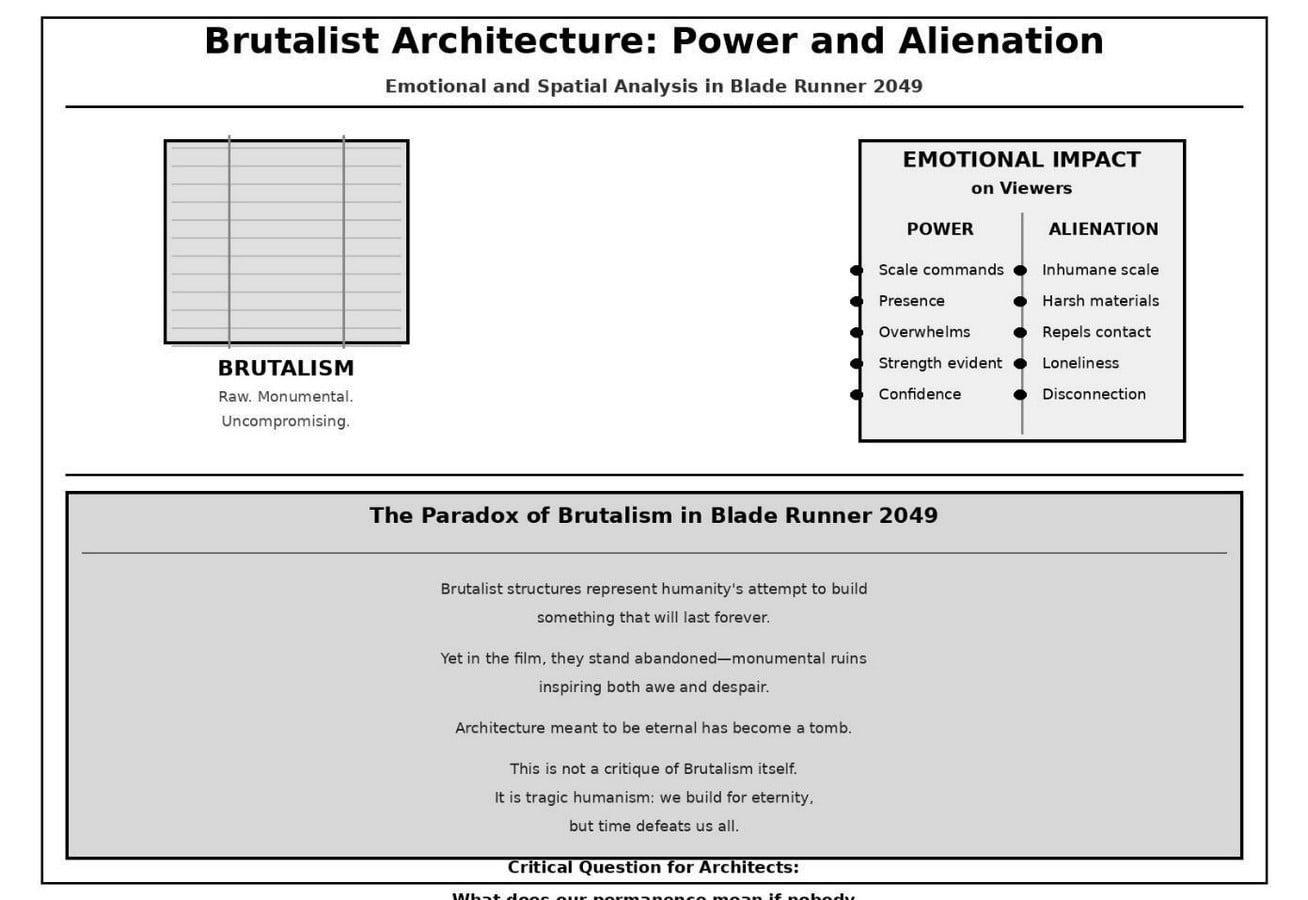
Simultaneously, it is one of humanity’s noblest aspirations (to build something that lasts) and one of our most profound failures (we build structures that outlast their meaning). The architect’s legacy might be beautiful ruins- or simply ruins.
The Desert as Timeline: What Cinematography Reveals
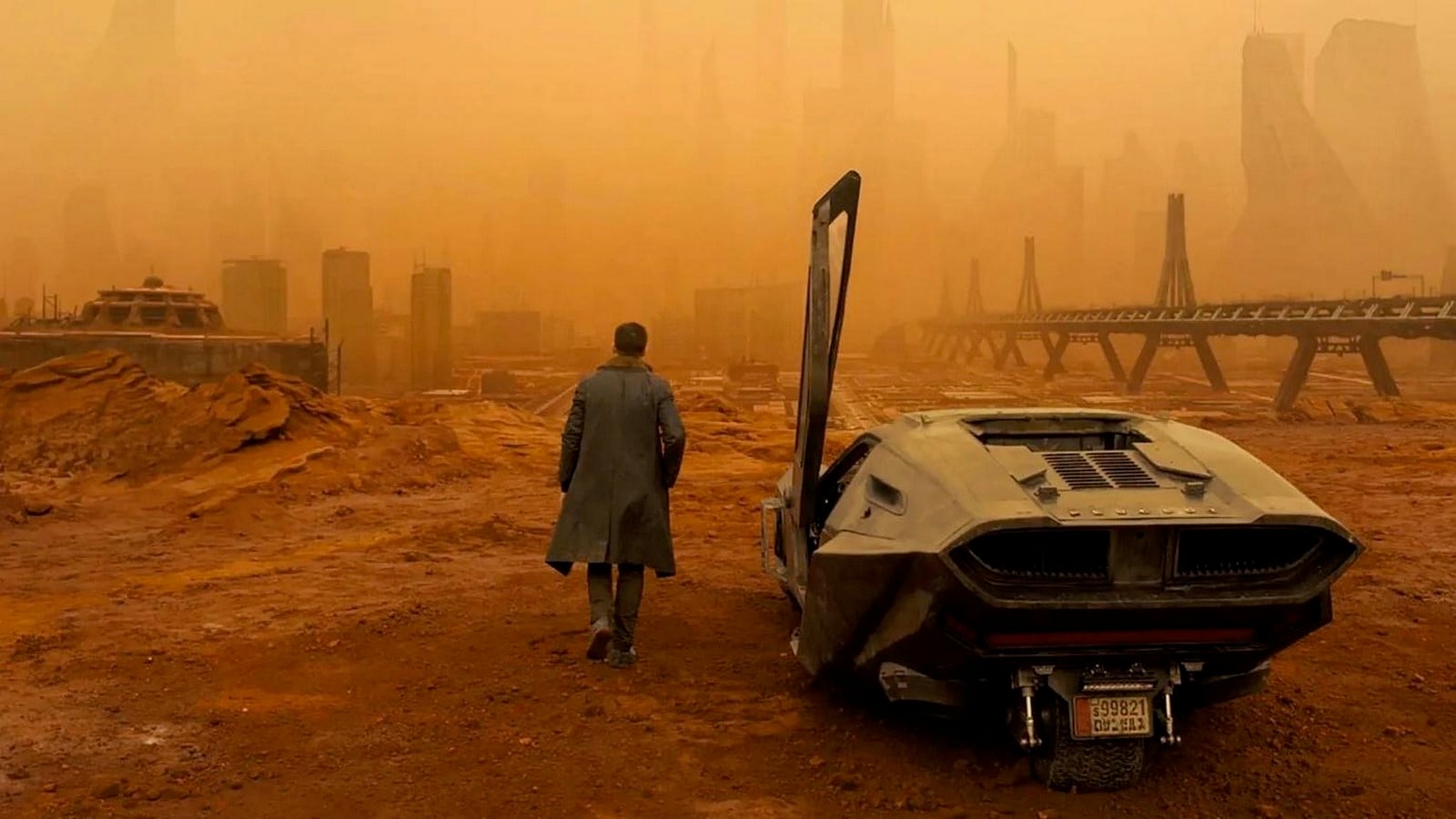
The film spends considerable time in an orange desert. This is not empty space filler. Observe first: the desert’s colour palette. Warm oranges, rusted golds, burnt siennas. The light breaks across dunes revealing texture. Observe second: the scale. A lone figure crosses vast distances. Human scale is annihilated by environmental vastness. Observe third: the silence. Wind, occasionally- but primarily, quiet. The absence of human sound. The desert becomes a material manifestation of time itself, slowly eroding all human effort.
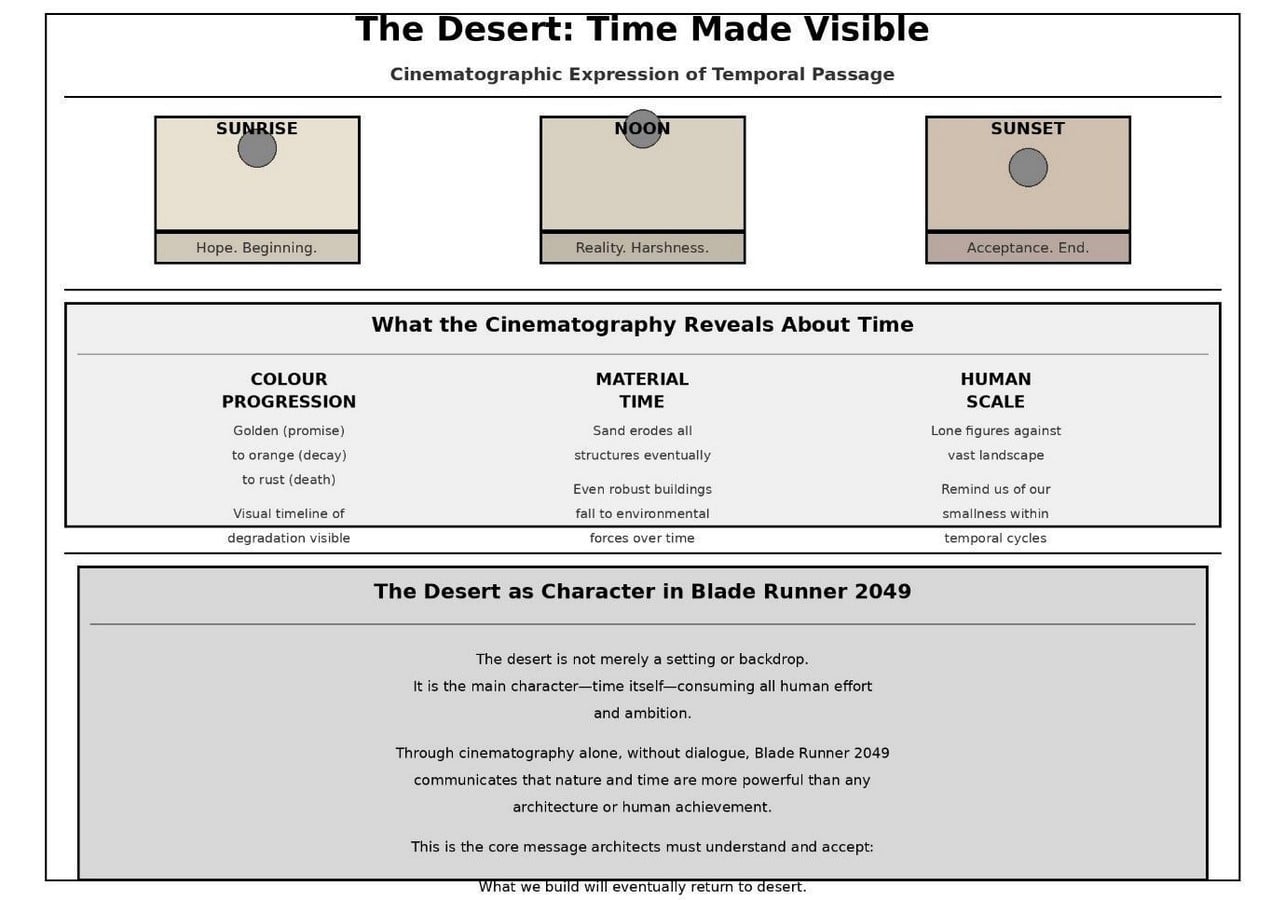
Roger Deakins’ cinematography teaches architects something crucial: colour is not decoration. It is temporal. It is emotional. It communicates narrative without dialogue. When Deakins films the desert at different times of day, the same geographical space communicates different stories. Sunrise suggests possibility. Midday reveals harshness. Sunset implies acceptance. The architecture of nature, like the architecture of cities, carries meaning in its form, colour, and light.
For architects: this is a masterclass in how material systems (concrete, steel, landscape) communicate without words. How colour carries meaning. How light transforms space. How scale positions humans within larger systems. These are not merely aesthetic concerns. They are questions of communication, ethics, and human experience.
The Architecture of a World After Consumption
Here the film shifts from aesthetic to ethical. Blade Runner 2049 depicts a world where consumption as we know it has halted. Building no longer proceeds at frantic pace. Nothing is planned to be obsolete. What exists was built to last. And that makes all the difference.
Contemporary architecture often serves consumption. Buildings are designed to be marketable, trendy, replaceable. We design for fashion cycles, not durability. We chase novelty rather than pursue permanence.
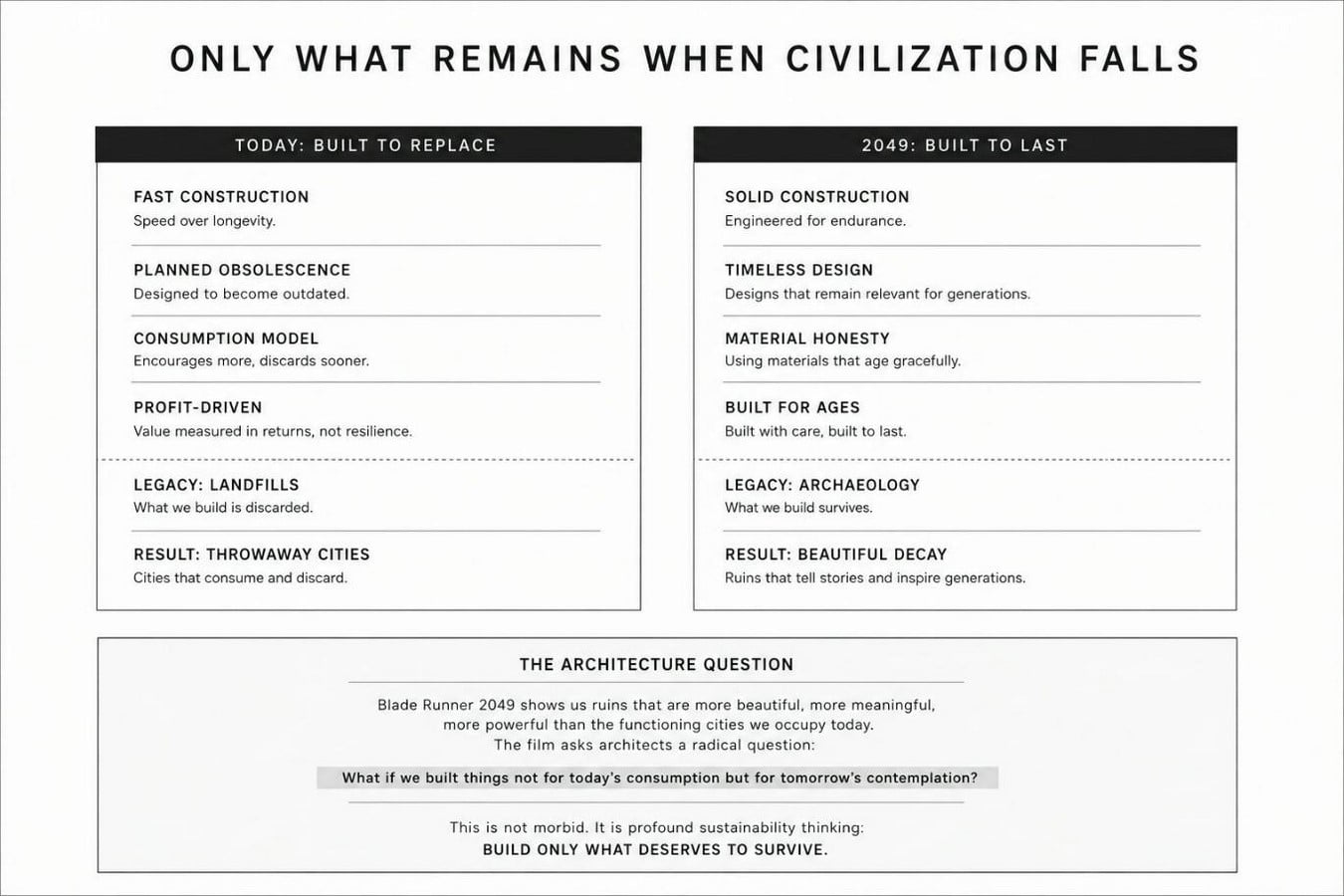
The result: cities filled with mediocre structures that serve briefly then are demolished and replaced. Landfills fill with discarded materials. Our architectural legacy becomes waste.
Blade Runner 2049 imagines the inverse: a world where we have built only things worth keeping. The brutalist fortress, however empty, maintains its dignity because it was built to endure, not to satisfy quarterly profits. The abandoned office building retains beauty because it was designed with care, not cost-cutting. These ruins, thirty years abandoned, are more compelling than most new construction today.
This raises a profound sustainability question, rarely discussed in architectural discourse: the most sustainable building is one that remains valuable across decades, even centuries. The least sustainable is one designed for rapid replacement. Blade Runner 2049 suggests that sustainability is not primarily a technical problem (insulation, energy efficiency, material sourcing) but a design philosophy problem. Will we design only for today? Or will we design for generations we will never meet?
Space as Memory: What the Film Teaches About Narrative Architecture
Blade Runner 2049 understands something fundamental about memory: it is spatial. We do not remember abstract concepts. We remember places. A childhood bedroom holds memories. A street corner holds history. A building contains narratives in its very form. The film communicates story through architectural space rather than through dialogue or plot exposition. Each location visited- a massive compound, an abandoned casino, underground chambers, radiation-poisoned streets- tells stories through their spatial design.
This is crucial for architects to understand: every space you design will become a container for other people’s memories. The hallway you proportion will be where someone experiences solitude. The plaza you design will be where strangers encounter connection. The building you create will hold decades of human stories. You are not designing for today’s program. You are designing a stage for lives not yet lived.
A Word on Wonder: Why This Film Matters for Designers
Blade Runner 2049 is slow. Some will find it difficult. It prioritises visual storytelling over narrative satisfaction. It refuses easy emotional payoffs. But for architects and designers, this is precisely why it matters. It models an approach to artistic communication that privileges space over plot, atmosphere over action, contemplation over entertainment.
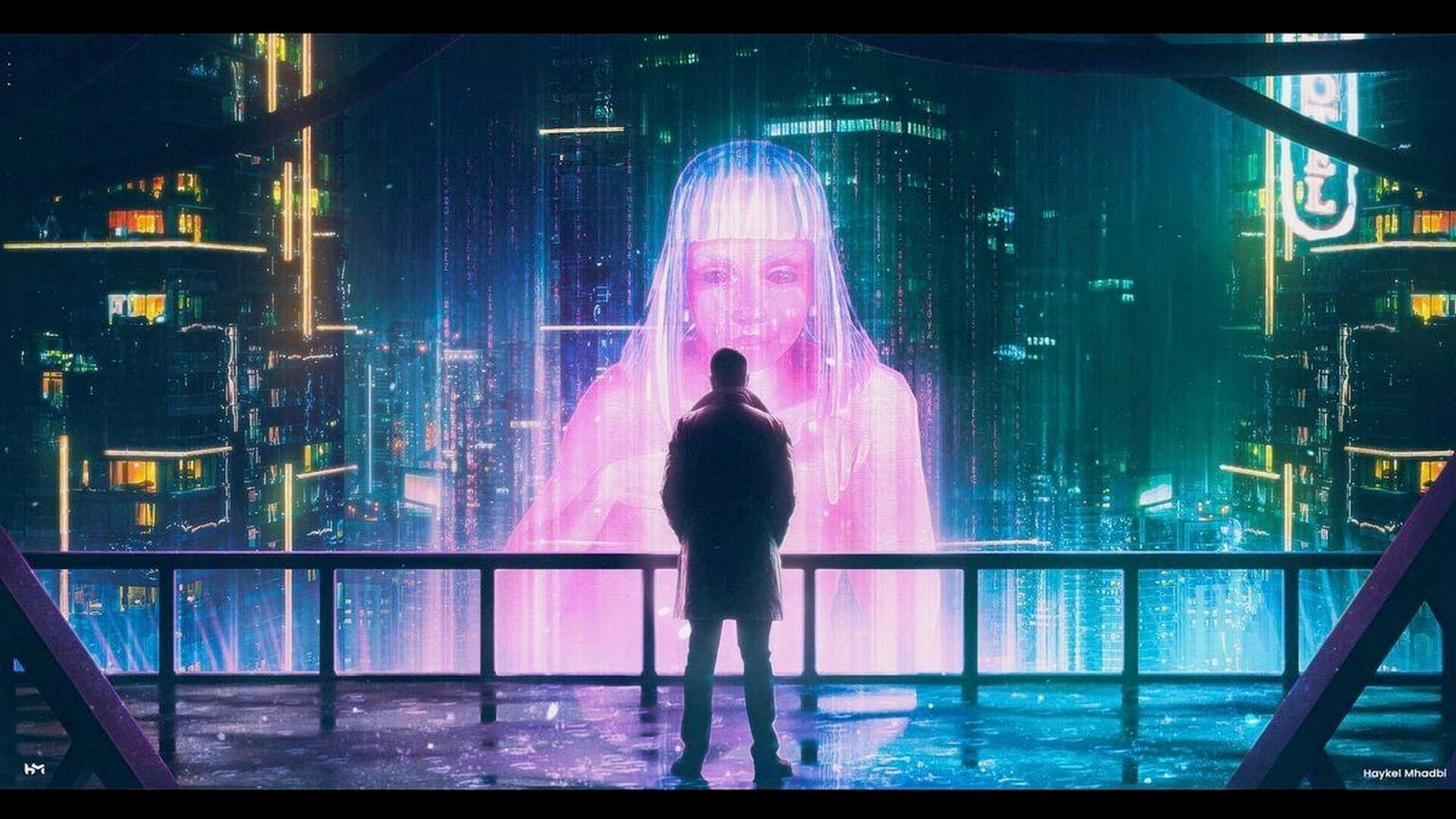
The film asks you to look. To notice. To feel spaces before understanding them conceptually. This is exactly what happens when we inhabit buildings. We feel them before we comprehend them. An overly tall ceiling makes us feel small. A narrow corridor makes us feel confined. A vast plaza makes us feel exposed. Colour, light, scale, material—these communicate before language arrives.
Personal Recommendation: Why You Should Watch This Film
I recommend Blade Runner 2049 unconditionally to architects and designers. Not as entertainment- though it is visually stunning- but as professional education. You will see how space communicates without words. You will understand how colour shapes emotion. You will comprehend how scale positions humans within larger systems. You will encounter the paradox of permanence: buildings designed to last centuries may serve no purpose after decades.
The film moved me precisely because it poses questions architects must answer but often avoid: For whom do we design? How long should our work endure? What legacy are we leaving? Will our buildings outlast their usefulness? When they do, will they be beautiful enough to justify their existence? Will they hold meaning for people we will never meet?
The Question That Remains
After watching Blade Runner 2049, ask yourself this: if my building stood empty and abandoned fifty years from now, would it still be beautiful? Would future archaeologists view it as a ruin worth preserving, or as debris to be demolished? Would the spaces I designed still communicate something meaningful, even without their original inhabitants? Would my work endure not because it is useful but because it is beautiful and true?
This is the film’s deepest gift to architects: it makes visible the relationship between beauty and permanence, between design integrity and longevity, between spaces we build today and the ruins they may become tomorrow. It suggests that the most sustainable architecture is not the most efficient—it is the most beautiful. Because we preserve what we love. We abandon what we do not value. What deserves to survive is what we design with care, honesty, and respect for its own material nature.
Blade Runner 2049 shows us ruins more powerful than functioning cities. It asks us to build spaces worth ruining.
References:
Books
Baudrillard, J. (2006). America. Translated by C. Turner. London: Verso.
Raban, J. (1974). Soft City: A Documentary Exploration of Metropolitan Life. London: Hamish Hamilton.
Solnit, R. (2011). Infinite City: A San Francisco Atlas. Berkeley: University of California Press.
Film
Villeneuve, D. (Director). (2017). Blade Runner 2049 [Film]. Warner Bros. Pictures, Columbia Pictures and Alcon Entertainment.
Online / Magazine Sources
Dezeen. (2017). Blade Runner 2049: Architecture of Abandonment. Available online: Dezeen
The Guardian. (2017). Denis Villeneuve Interview: Building Worlds. Available online: The Guardian