Cities, conventionally, are divided into home, workplace and public spaces – live, work and play. But what happens when these distinctions disappear?
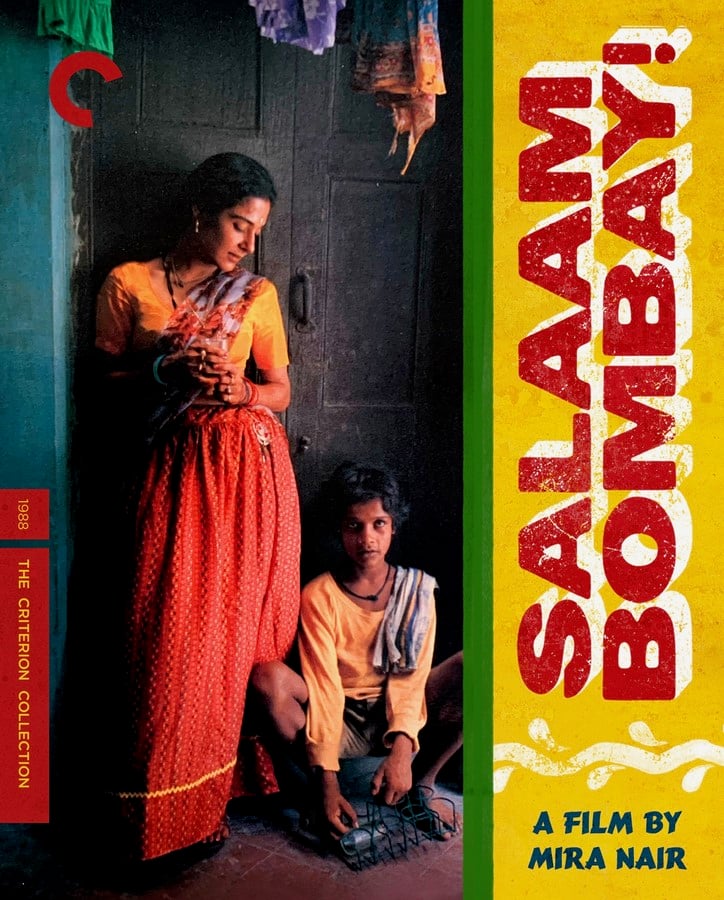
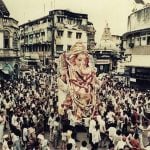
You arrive at the plot of a movie like Salaam Bombay, where streets function as workplaces, railway stations become points of pause and rest, doorways become thresholds that carry relationships, chai tapris – a place of gossip and the leftover spaces of architecture become homes to many. The Bombay one sees in the film is seldom expected. One would expect Bombay to be merely a setting or backdrop, but architecturally it functions as the movie’s protagonist. Set in the city’s infamous red-light district– Kamathipura- the character of the movie arises from this very slum, which evidently functions as an active spatial force that compels its users to move, gather and survive. The architecture of the movie is experienced less through the city’s infamous buildings than through Kamathipura’s streetscapes, thresholds, edges, and temporary occupations. What makes the film particularly compelling for an architect is this inversion: spaces that were never designed to become homes are constantly transformed into one. Salaam Bombay portrays Bombay not through the architecture it formally provides, but instead through the architecture its inhabitants create by occupying it.
The Third Spaces become the First.
Architecture conventionally offers a certain hierarchy of space:
Home is Private
Street is Public
Workplace is Economic and
Playground is Recreational.
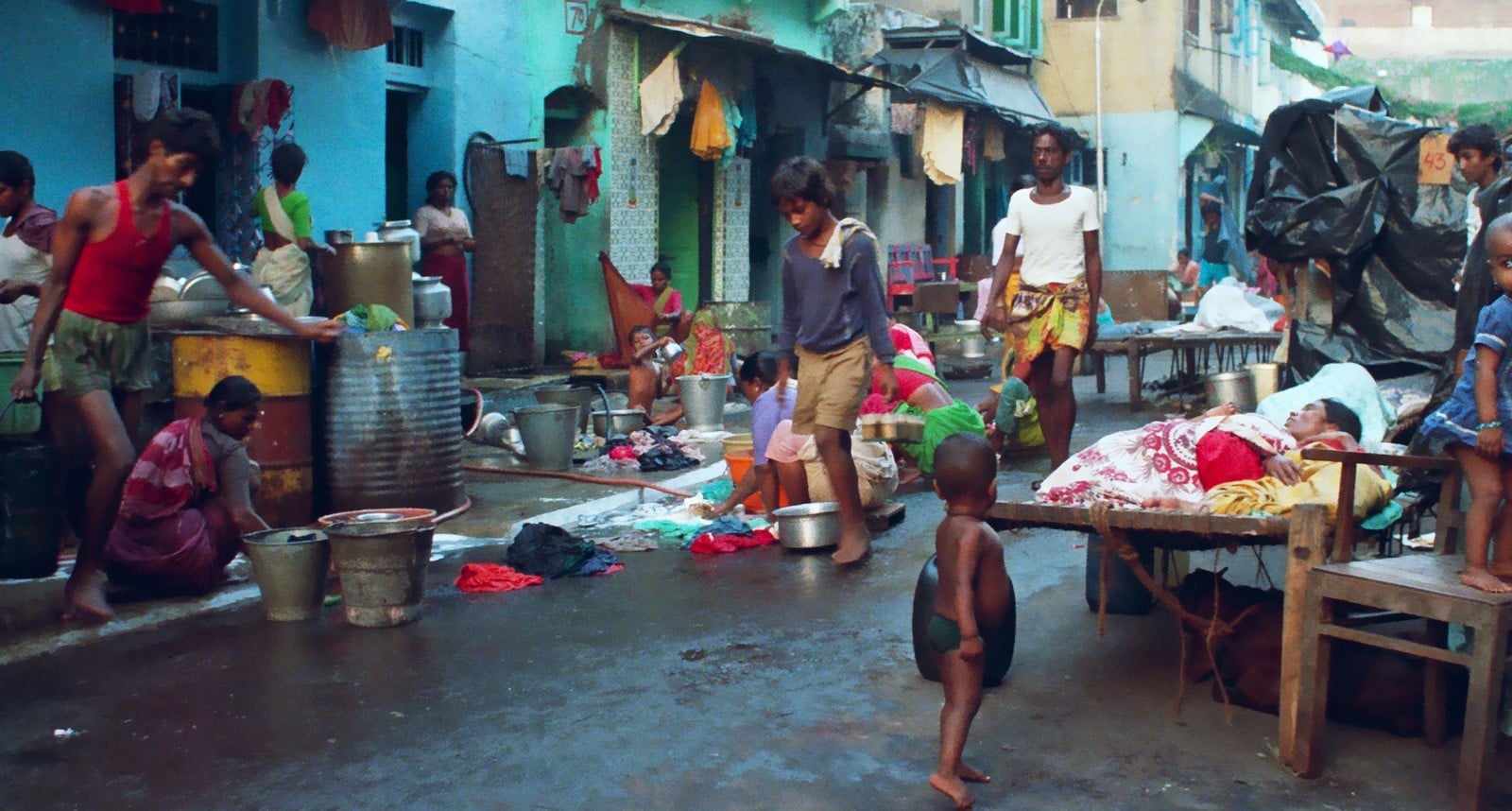
But the Bombay that the characters of this movie live in seems to be oblivious of all such hierarchies. It is rather a plain set of spaces, ones that even architects do not seem to think much of. The users of these very spaces, however, add character, with their unimaginably unique ways of using them. A street corner becomes significant when it’s transformed into an adda by the kids of the slum. Railway spaces become arenas of play and chai tapris become a space to dwell in thoughts the kids are too young for. None of them is mere space to pass by – they simultaneously become social, domestic, economic and recreational.
A key observation made was that the kids rarely wore footwear throughout the movie – while this was depictive of their financial condition, of course, it made sense architecturally too. It highlighted the fact that the absence of footwear was a spatial condition. For someone who did not experience a significant distinction between indoors and outdoors, the city was an extension of the body. The conventional threshold between domestic and public life vanished. The idea of ‘going home’ disappeared when one’s belongings, routines and relationships moved with them. For the young inhabitants portrayed in the film, a space isn’t familiar because it is designed for them; it is familiar from repeated occupation, ironically because nothing is ‘designed’ for them.
In this sense, Salaam Bombay is an exemplary portrayal of temporal architecture. The city does not offer any sort of permanence to the users in question, thus making the city itself their home. The third space in this case no longer signifies a space of leisure or of recreation; it rather becomes the only space known.
Architecture vs Appropriation:
In the Bombay that Nair particularly concerns herself with, the city serves as a laboratory of survival. The slum is as good as an urban labyrinth – not simply because it is physically confusing but because it offers hidden niches and pockets of survival that the slum dwellers thrive on. When the city fails to offer a conventional domestic space for those who can’t afford it, they begin to find possibilities in spaces that architecture blindsides. Kamathipura’s spatial complexity comes not only from the density of its construction but from the constant appropriation of spaces that were never designed for the human lives unfolding within them.
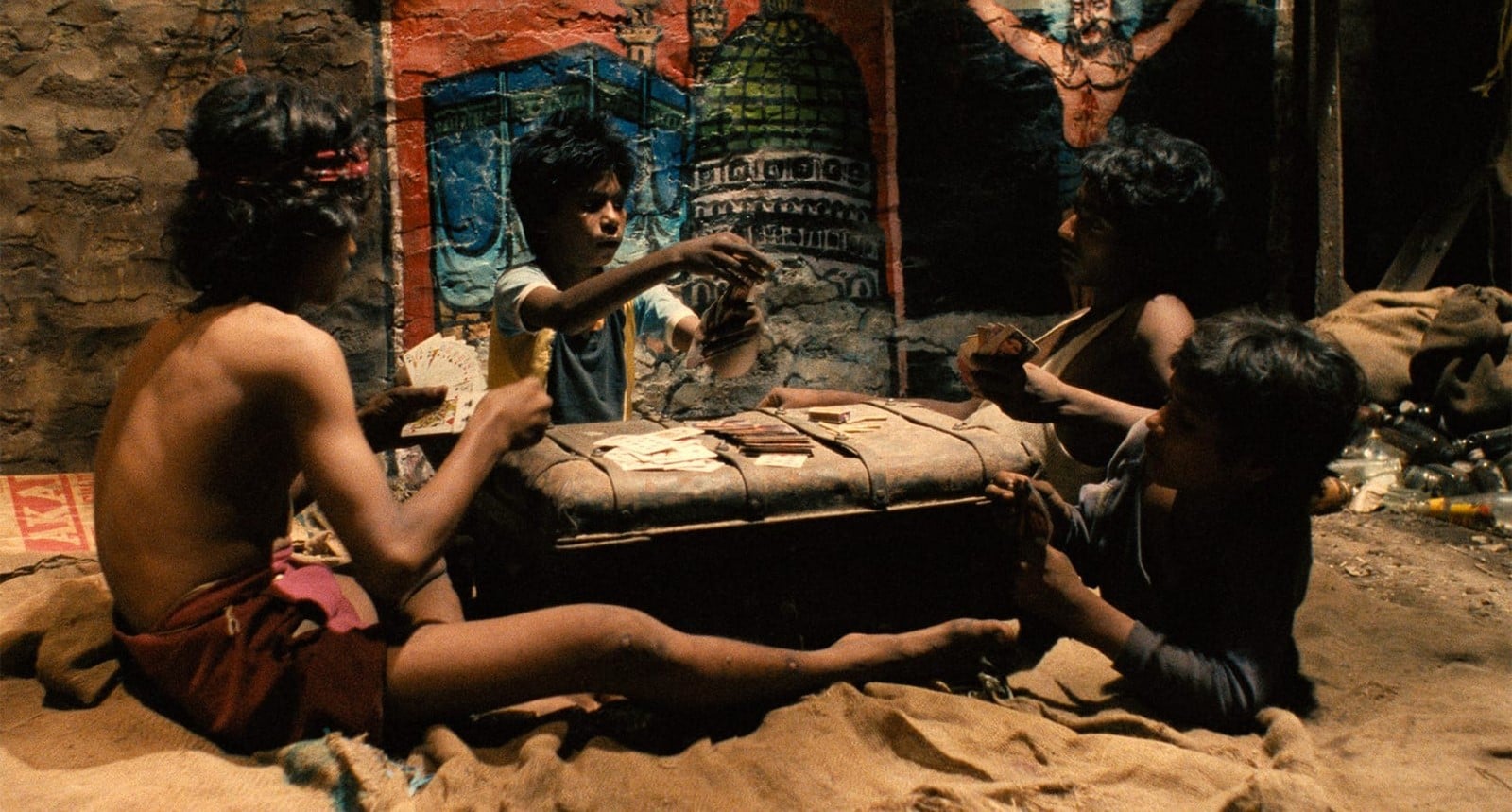
A doorway, for instance, is understood as a point of transition – one uses it to enter or exit a certain space. The movie, however, grants a doorway a more significant role – a place that allows encounters, conversations and unexpected relationships. The purpose of the doorway is now pivotal; it plays a significant role in the lives of its users, which is far beyond the simplistic architectural purpose that it was designed for. Similarly, a circular stairwell that is traditionally designed for movement across levels serves an entirely different purpose when occupied by people whose presence transforms it into a space of uncertainty and danger. The architecture physically remains the same, but its programme transforms with each occupation.
This raises a rather uncomfortable question – are these spatial ‘leftovers’ depictive of architectural failure or are they simply spaces that traditional architecture has failed to recognise? Salaam Bombay thus rightfully questions the common notion of architecture as a finished product. It compels one to think about the purpose of a space post human occupation.
Bombay as a Protagonist:
Beyond the slum, Bombay is a city filled with spatial hierarchies. Within a couple of metres, Bombay shuffles between the monumental and the marginal. The film makes use of this contrast to depict the lives unfolding within it, thus making the infrastructure an active participant in the storytelling process.
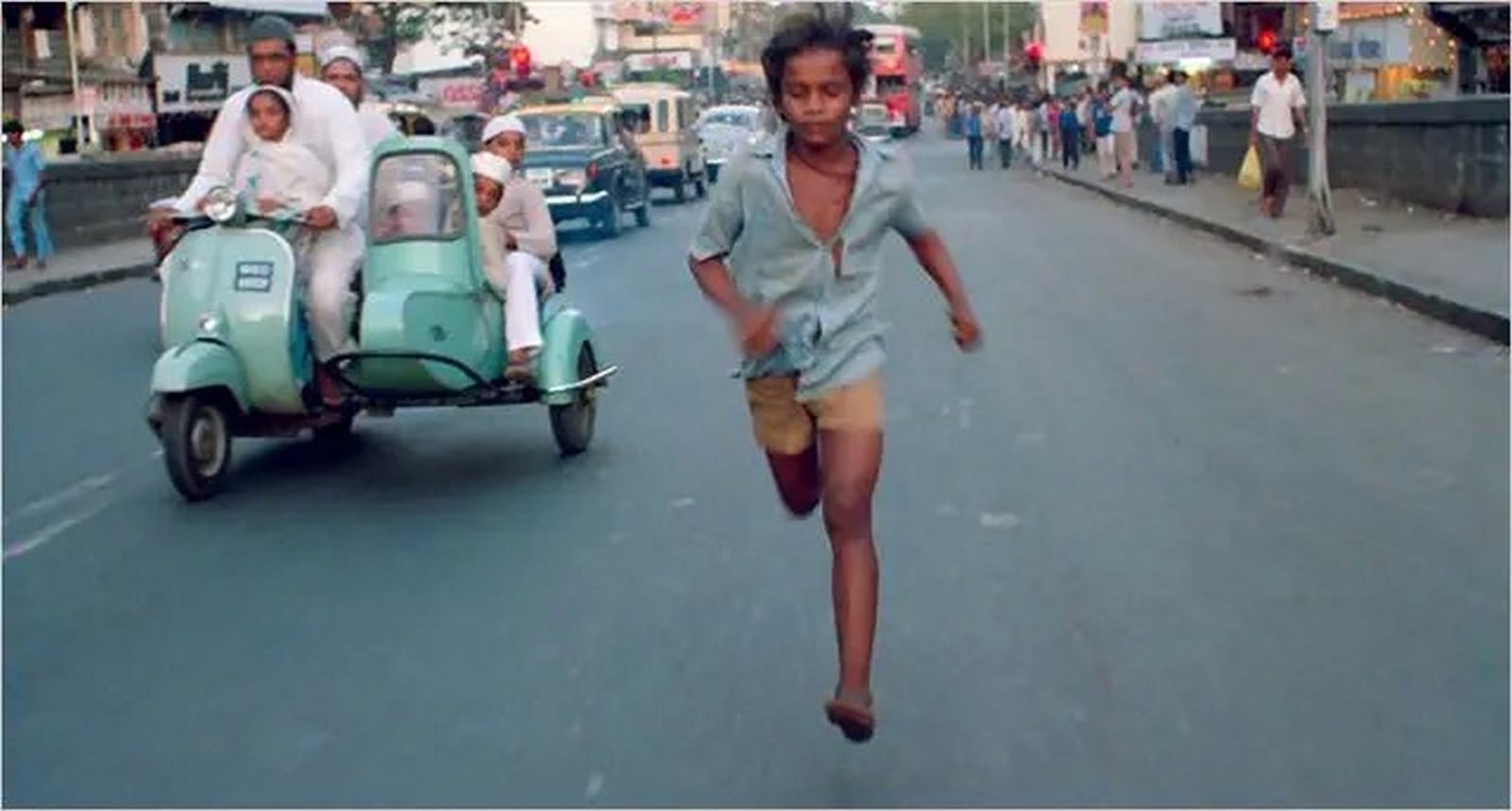
The visually imposing Victorian Gothic facades exist in ironic contrast with the squalor that unfolds at the foundations of these same buildings. The spatial juxtaposition is indicative of the two starkly different realities coexisting in the same urban frame. While one is constantly used to represent the city, the other lives hidden, invisible and unrecognised. The selective spatial inclusion of Bombay’s users and the varied hierarchy in its architecture is what makes Bombay more than just a mere backdrop. It’s as though the city is a narrator of sorts and is involved in narrating the stories of Kamathipura.
Architecture of Visibility:
One of the most striking contradictions in Salaam Bombay would have to be that the protagonists of the movie, who are permanently visible, somehow go unnoticed and unrecognised. The film thus suggests a very important idea – physical visibility does not necessarily mean social visibility too.
What better example of this than the residents of Kamathipura? But why do these slum dwellers go unrecognised despite their constant presence in the urban? It’s because visibility is entirely dependent on the kind of space the person occupies and the kind of occupation involved. A person sitting in a cafe is perceived differently from a person sitting on the pavement. A person waiting at a train station is read differently from a person sleeping there. Thus, social visibility is entirely dependent on the type of space a person is occupying and on what their act of occupation is – because both of them are quite often instantly depictive of the social status of the person and of their financial condition too. These are factors that have been known to be discriminative since time immemorial.
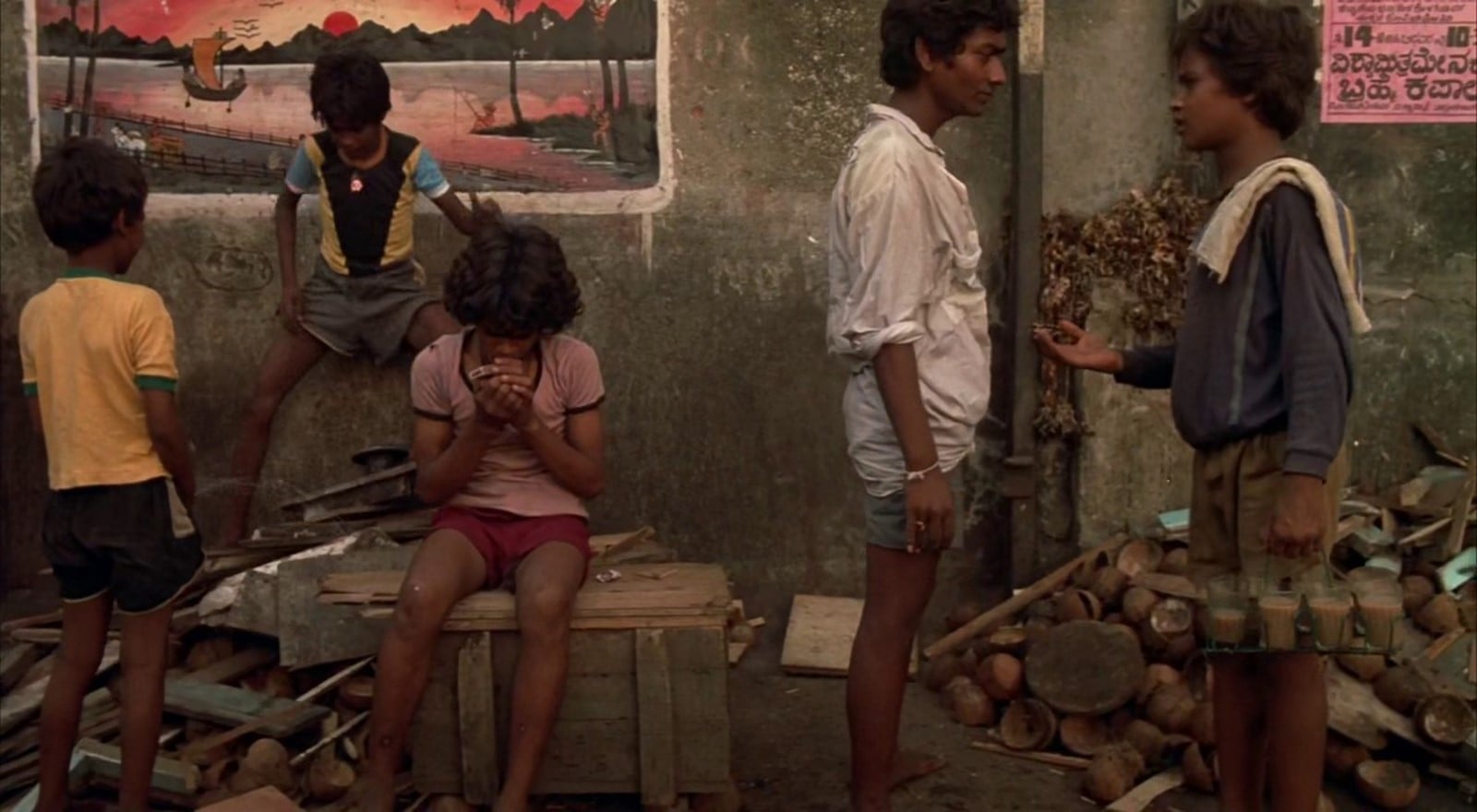
This creates an architecture of exclusion without walls. No fence or gate of any sort is required to determine authority, ownership and belonging. The people on the margins socially can thus be as involved as possible in the active parts of the city but will continue to go unnoticed or uncared for. The film portrays this contradiction quite spectacularly – the characters are always present in the public view; they are rarely ever hidden away. However, the spaces that create this constant visibility are also what categorise the dwellers as outsiders.
Bombay experienced through Movement:
The viewers of Salaam Bombay rarely witness a standalone building or a still sight. The city is experienced through its chaos, the bustle and the constant movement. The absolute chaos and constant shuffling present in the lives of the characters have been used to beautifully mirror the prominent bustle of the city itself. This helps encounter the architecture sequentially:
Street – Railway – Staircase – Doorway – Adda – Tapri – Slum – Infrastructure
The viewer never gets an opportunity to view any of the city’s architecture as an isolated object. It is rather a sequence of occurrences:
Compression – Release – Enclosure – Exposure – Movement – Pause – Transition
The city’s legibility, specifically in this movie, lies in Bombay’s chaos. The city is perceived through movement.
Bombay’s versatility is expressed specifically in the said manner because that is the only version our protagonists relate to!
Who Owns The City Then?
While the city fails to recognise these spaces as homes, the inhabitants nevertheless develop a relationship with them that resembles belonging, out of helplessness, albeit. Salaam Bombay thus depicts the perfect example of authority without ownership: a sense of belonging that is developed through repetition, familiarity and routine even though they cannot legally be possessed per se. A plain corner, an odd street, a platform or a regular doorway can become significant if they are revisited enough.
The movie makes the idea of a home rather temporal, which is in great contrast to the emotion of permanence that a home is usually representative of. The lives of these slum dwellers are proof of the fact that permanence isn’t always necessary for domesticity – where they sleep, eat and work changes each day, but life does go on. The film constantly challenges the idea that permanence is what gives architecture meaning. It is also proof of how permanent architecture lies specifically in the hands of the privileged. The city only has fragments to offer Kamathipura’s inhabitants – they make spaces architectural on their own.
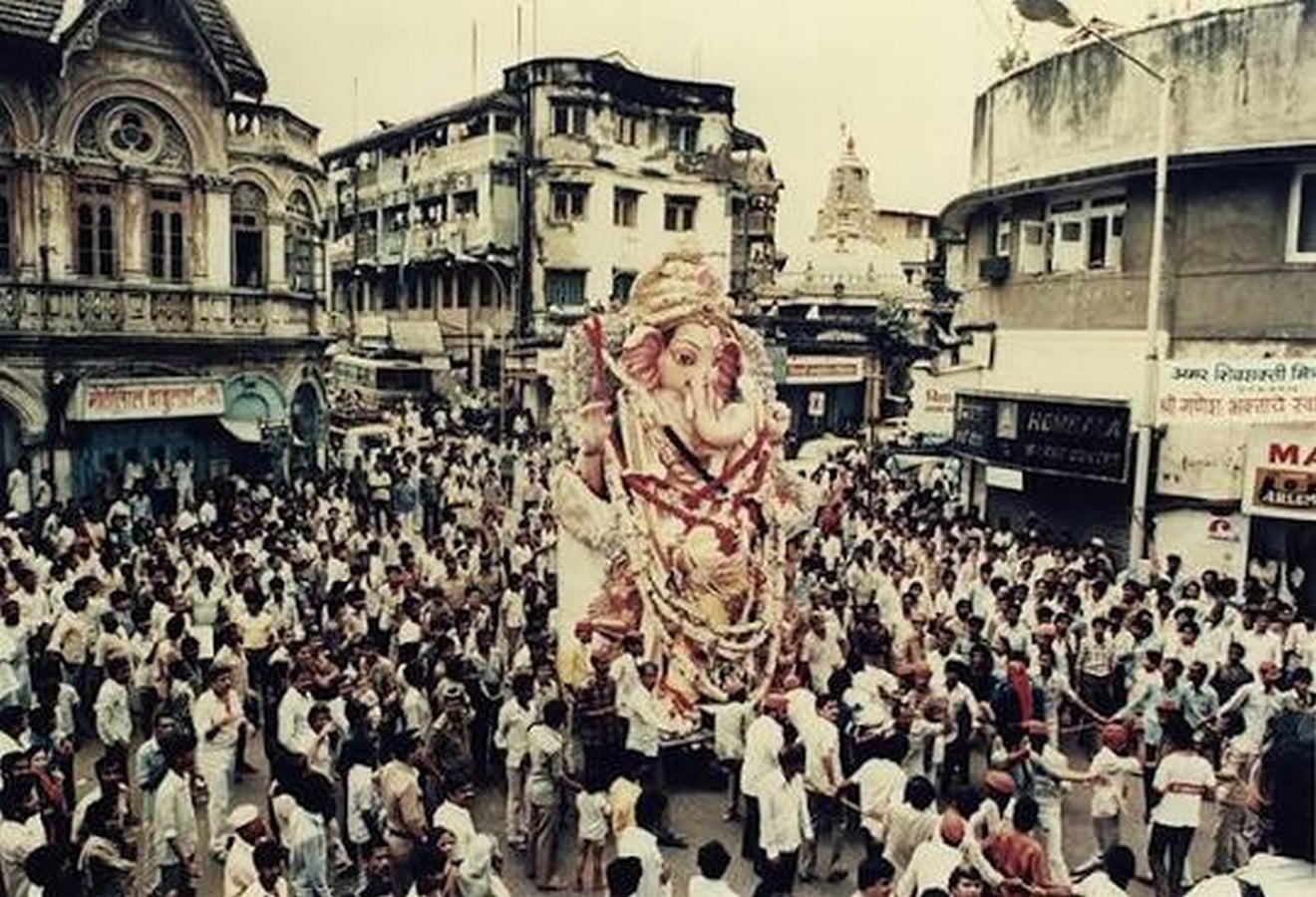
Salaam Bombay reveals a city whose boundaries between home and street, permanence and temporariness, visibility and invisibility all remain a blur. It is depictive of how architecture can be appropriated, redefined and given meaning to by those that it was never designed for. This movie is a study of how belonging is created in a city by those who never felt welcomed.
Every architect should watch this movie because it challenges members of the fraternity to look at architecture beyond the finished product, to not envision or observe a building in isolation. It encourages architects to reconsider all the leftover or intermediate spaces that conventional drawings tend to dismiss. It portrays the importance of observing and understanding how people are forced to adapt to space. It proves how important it is for architects to look beyond mere buildings and to start paying heed to a sense of belonging for the city’s users.
Citations:
- JioHotstar (1988). Salaam Bombay. [online]. Available at: https://www.hotstar.com/in/movies/salaam-bombay/1971313972?utm_source=gwa