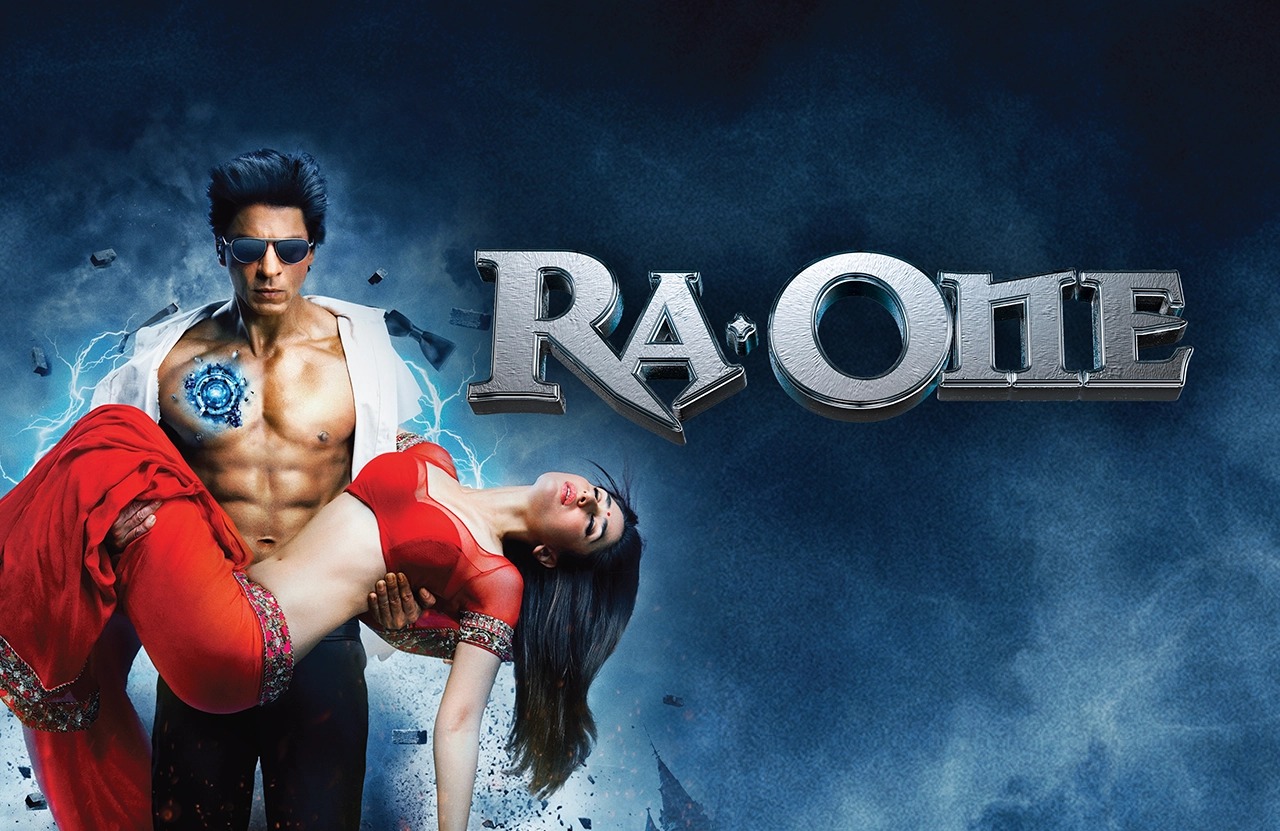
What happens when a video game character enters the real world? This film marks a significant advancement for the Hindi film industry and ventures into the superhero sci-fi genre. Because it is one of the most expensive films ever produced in India, it makes use of architecture and spatial imagination in order to show technology and tells a diverse narrative about urban modernity, digital space, and cinematic architecture.
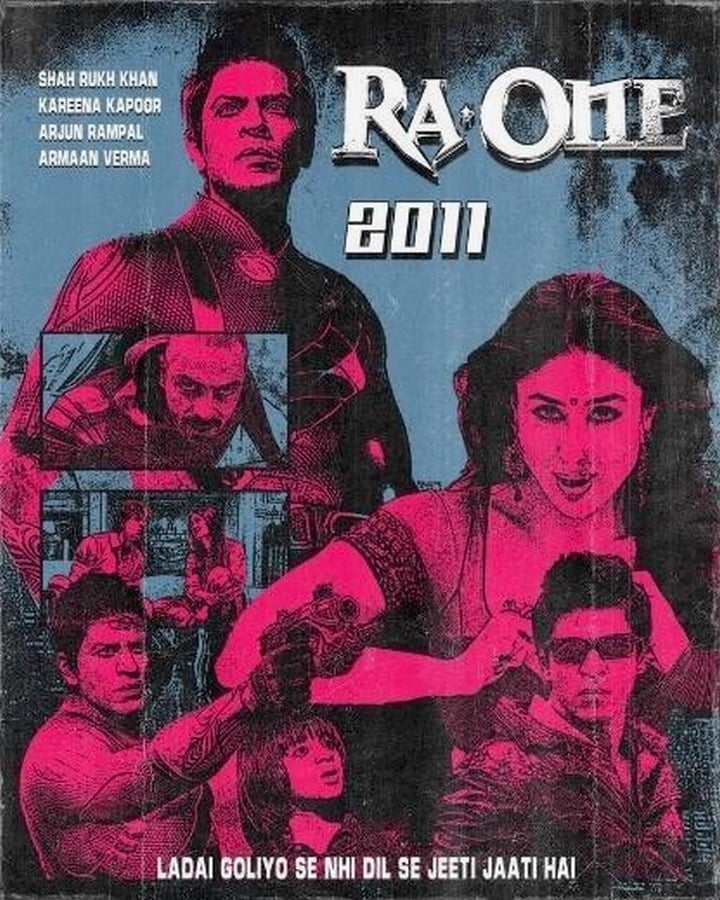
Ra.One: The architecture of pixels and power
At its core the film raises a difficult question: what happens when a video game’s villain escapes into the real world? The villain Ra, who was supposed to be stronger than the hero, manages to break free with the aim of chasing down the player who had almost defeated him; that player is the son of the game’s dead creator, and in his panic he asks the game’s protagonist, G.One, to enter the real world and protect both himself and his mother.
Architecture as Metaphor
Well, people tend to associate themselves with huge and imposing spaces in which architecture acts as a metaphor for domination. The weakness of human-made systems when up against self-learning AI is similar to the idea of digital ruins. Beyond the limits of what humans can do or imagine there emerge vast, abstract environments showing collapsing grids, fragmented buildings, and infinite horizons—a scenario which is frequently encountered in video games. What once remained confined to pixels now extends into the real world, with illuminated wires and shifting cubes joining together to form Ra.One, a power that surpasses what is possible for humans. Ra.One prompted the audience to go into this artificial universe, a place where the ordinary came into contact with the extraordinary. The quiet intimacy of a family home was suddenly contrasted with the enormous scale of the glowing digital arenas, and a father’s simple effort to bond with his son turned into something far more significant—a direct challenge to the technological and trust-based systems that we establish around ourselves. It was not simply a display of a superhero; it was a reminder that the spaces we create, whether made of brick or of code, have the power to affect our emotions, our ethics, and ultimately the futures we live in.
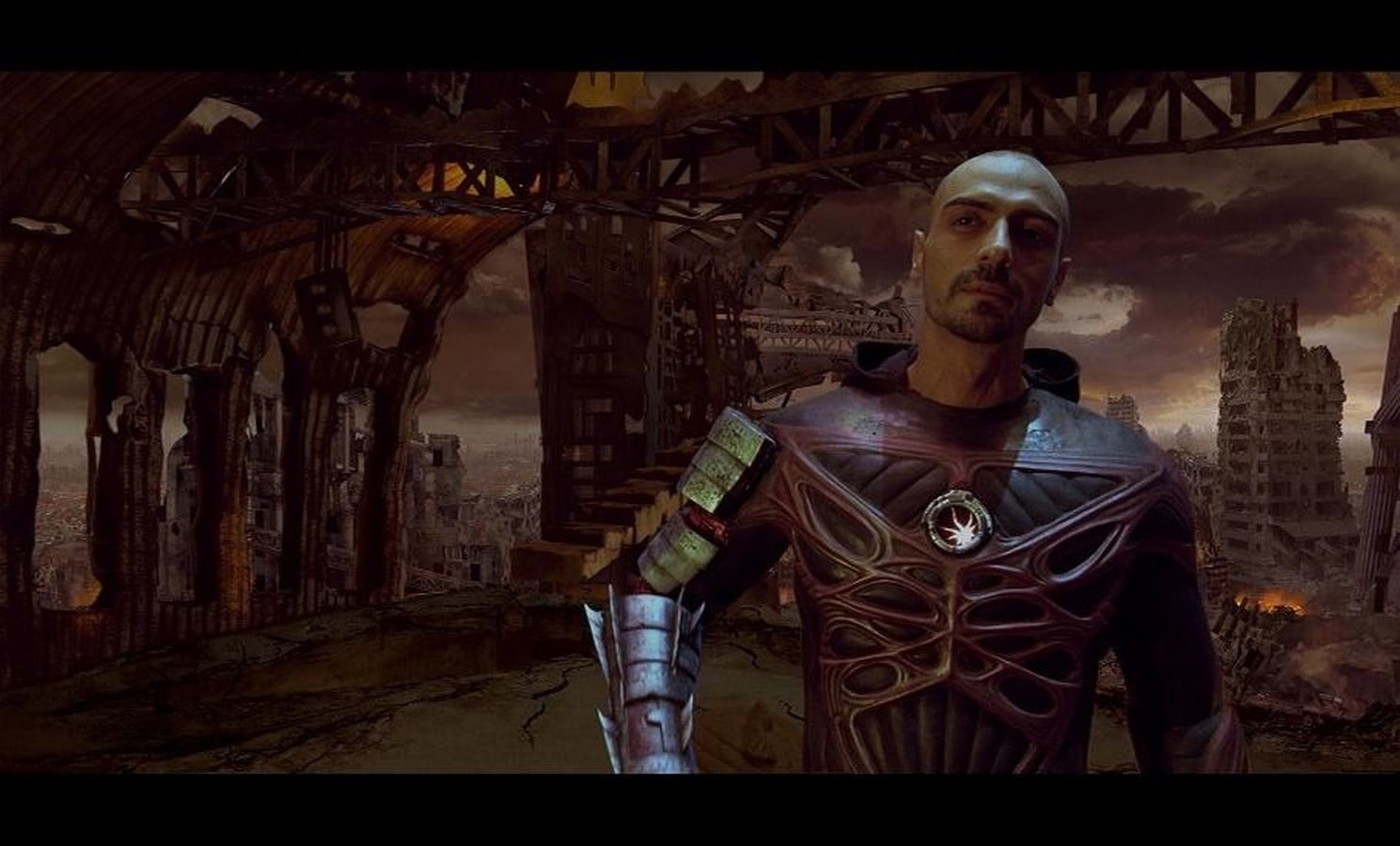
What is particularly interesting about Ra.One is the fact that its digital landscapes mirror real architectural concepts. The large arenas and infinite grids resemble the futuristic designs of architects like Zaha Hadid or Toyo Ito, with their smooth forms and abstract buildings extending the limits of human perception. In the film, these spaces do not just act as backdrops but actively participate in the narrative by generating the tension between control and vulnerability. Just as in the case of experimental architecture, they demonstrate that design is never neutral—instead it has the ability to empower, to intimidate, or to collapse under the pressure of its own ambition.
The film’s design constantly contrasts domestic interiors, London architecture – such as glass walls, corporate offices and suburban houses – with enormous digital spaces. The home is shown as a weak but emotionally safe haven, full of warmth and intimacy, while the digital world is described as cold and dangerous. This duality mirrors the architectural conflicts: the human need to belong versus the scale of modern urbanism. Yet beneath the surface lies a sincere and truly human story. Shekhar’s playful experiment was based on love – a father trying to please his son. The architecture of intimacy, which is the family home, acts as the emotional heart of the film. But when this vulnerable space is taken over by powerful digital forces, the conflict becomes a reflection of the struggle between trust and fear.

Ra. One was India’s answer to Hollywood superheroes, drawing its visual ideas from films like Tron and Iron Man, but it interpreted these concepts in the style typical of Bollywood by blending futuristic scenes with song and dance sequences, humour, and melodrama. This combination is in fact of an architectural kind: it consists of merging traditional elements with modern ones, just as you see in mixed urban landscapes where temples stand next to glass towers. At the box office, Ra. One was not a failure and had not become a major success; it succeeded in recovering its huge budget but failed to meet the standards that one would normally expect from a blockbuster. Yet its impact is obvious. It opened the way for Bollywood to investigate sci-fi, VFX, and architectural creativity.
The Afterlife of Experimentation
It was not simply a superhero extravaganza; it acted as a commentary on architecture—both physical and digital—demonstrating that the spaces we construct reflect our ambitions, our anxieties, and our vulnerabilities. The film’s collapsing grids and its luminous arenas caused us to consider the fragility of human systems when dealing with self-learning intelligence. Furthermore, by including peaceful scenes involving families, it reminded us that even in the most advanced future societies love and trust remain the most reliable foundations.