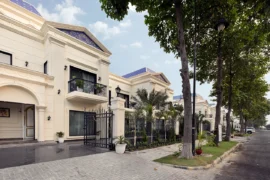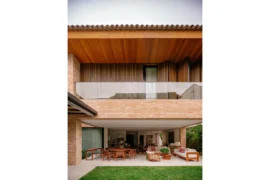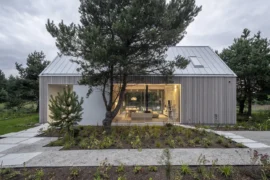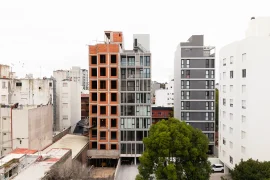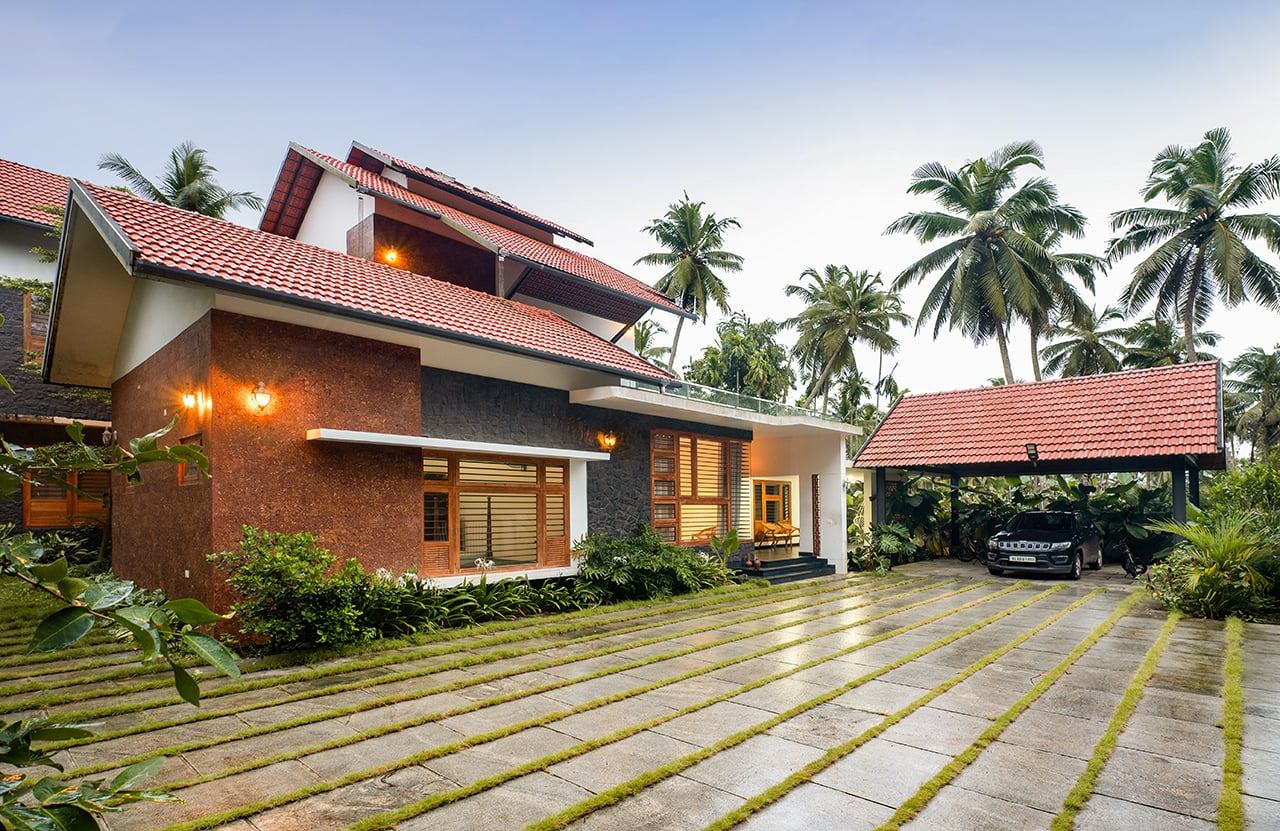
Stone does not resist time the way concrete tries to. It takes on the weather instead, and over enough seasons it starts to carry a record of everything that has touched it. That idea, more than any single material choice, is what gives House of Aging Stones its name, and its argument.
Project Name: House of Aging Stones
Studio Name: Uru Consulting
Location: Parappanangadi, Malappuram
Completion Year: 2025
Plot Area: 13000 Sqft
Built-up Area: 4260 Sqft
Photographer: Nathan Photography
The house began, in 2020, as an unfinished conversation. Faisal and Shamna had already built the ground floor when they approached Uru Consulting, a Calicut-based practice working across architecture, engineering and project management. Still, the structure on site did not yet resemble the home they had pictured for themselves. Rather than start over, the team chose to work with what already stood, treating the existing shell as a condition to design around rather than a mistake to erase.
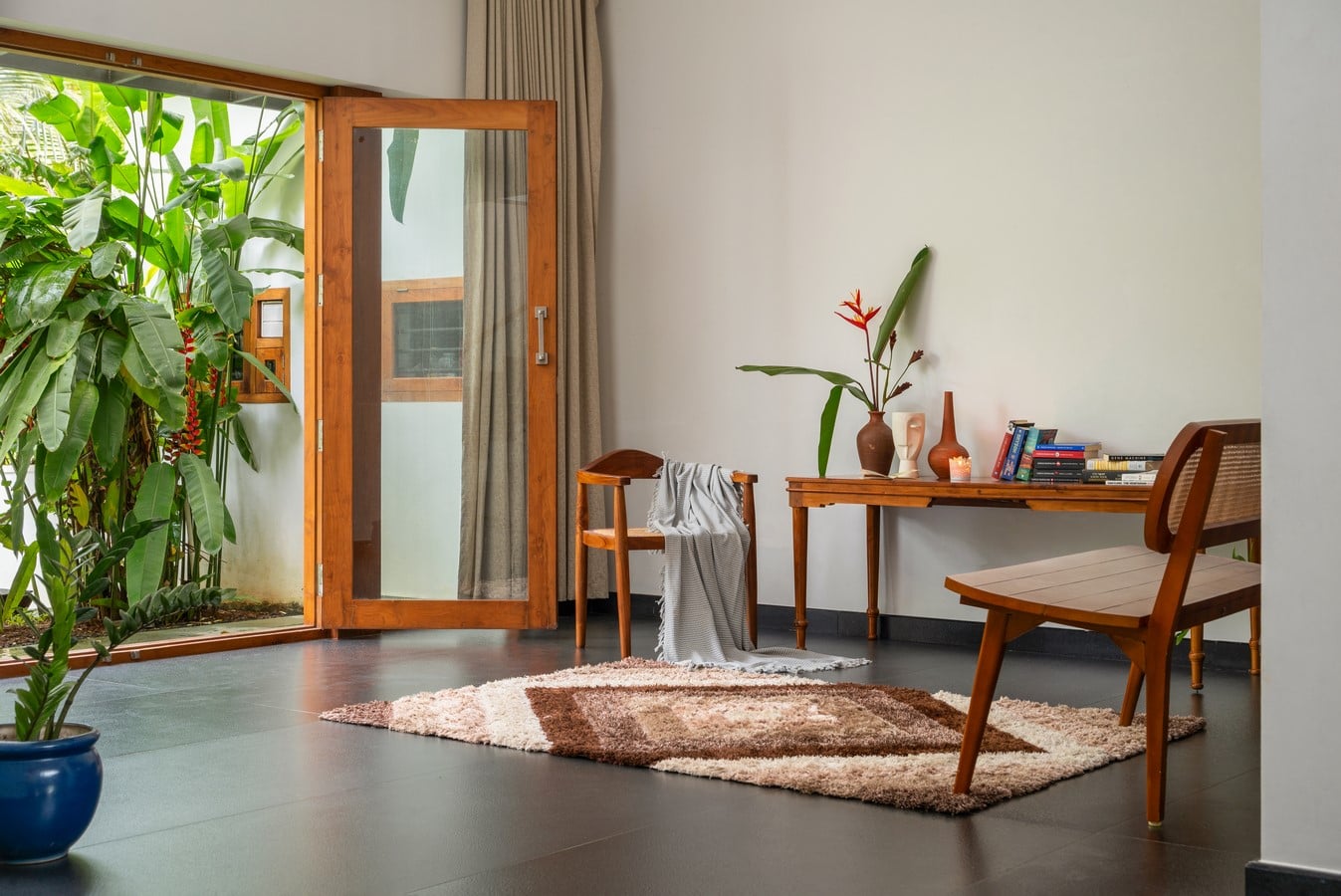
The site made its own case early. Parappanangadi sits inside open agricultural land, green and working, yet the half-built house had turned its back on nearly all of it, shut behind a wall of foliage. Team Uru’s first site visit surfaced that contradiction directly, and it became the brief, in effect if not on paper: open the house back out to the land on which it stood.
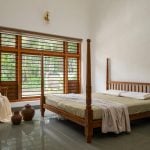
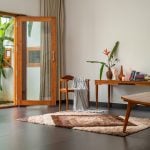
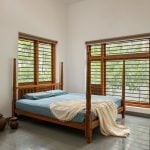
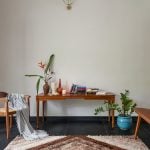
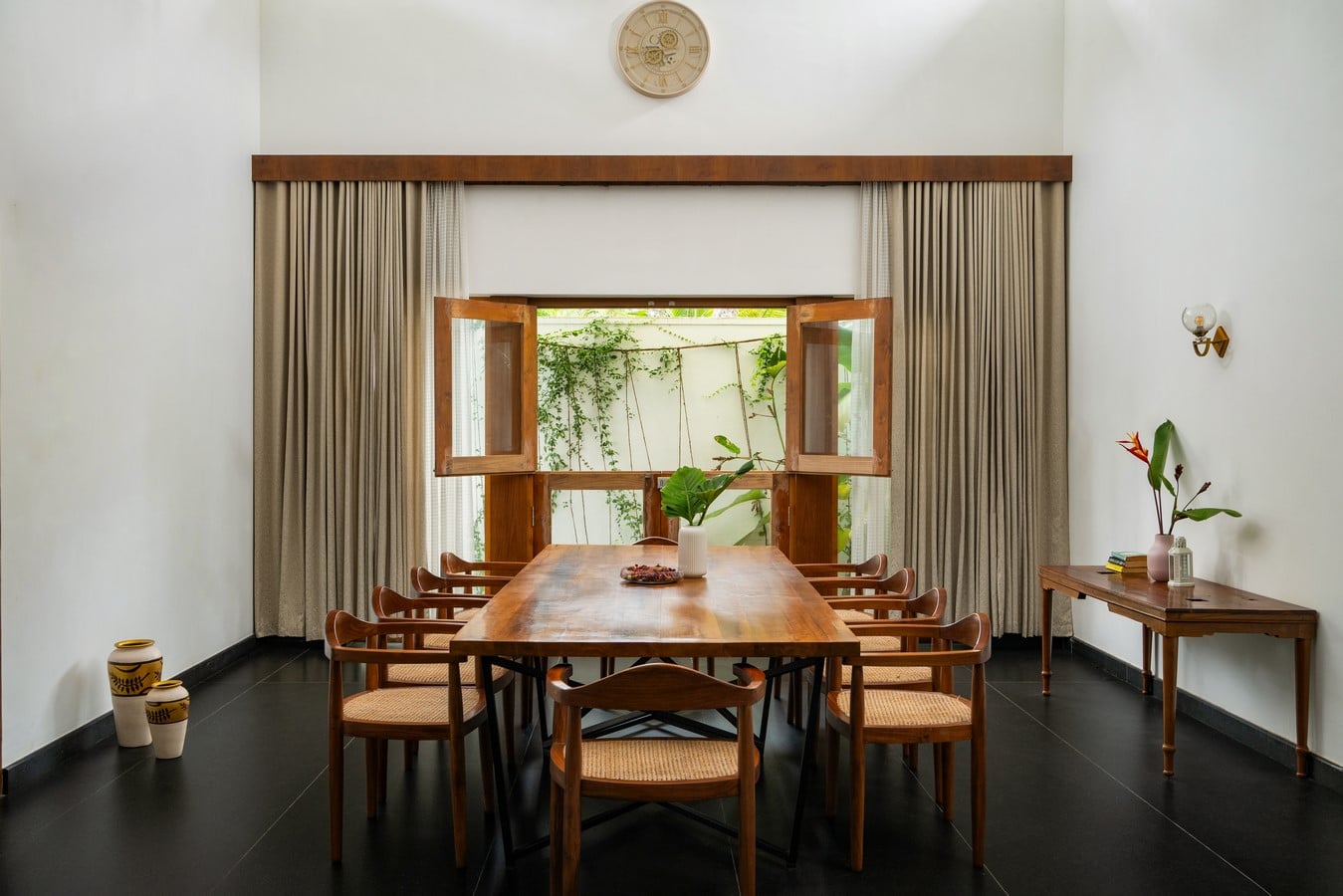
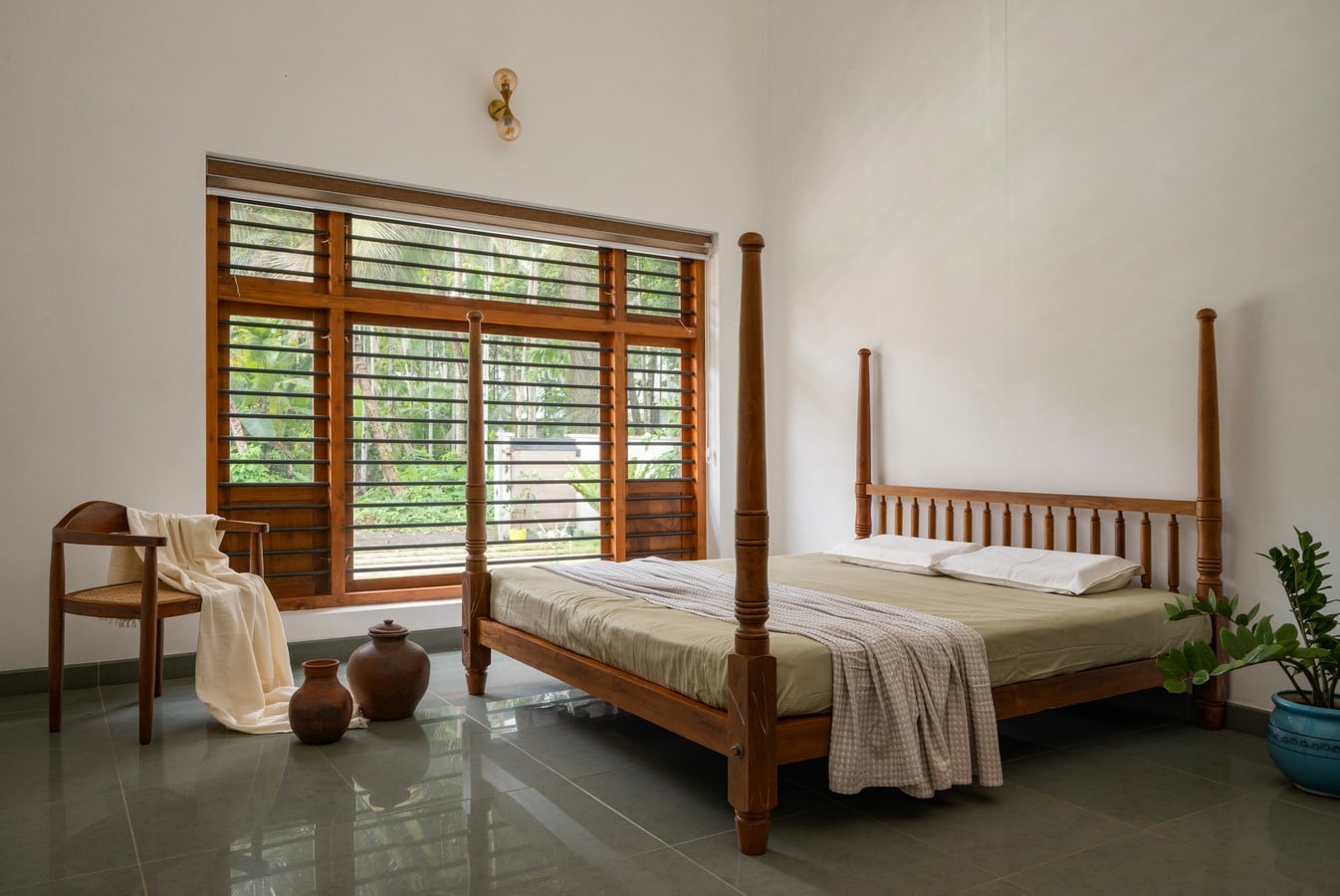
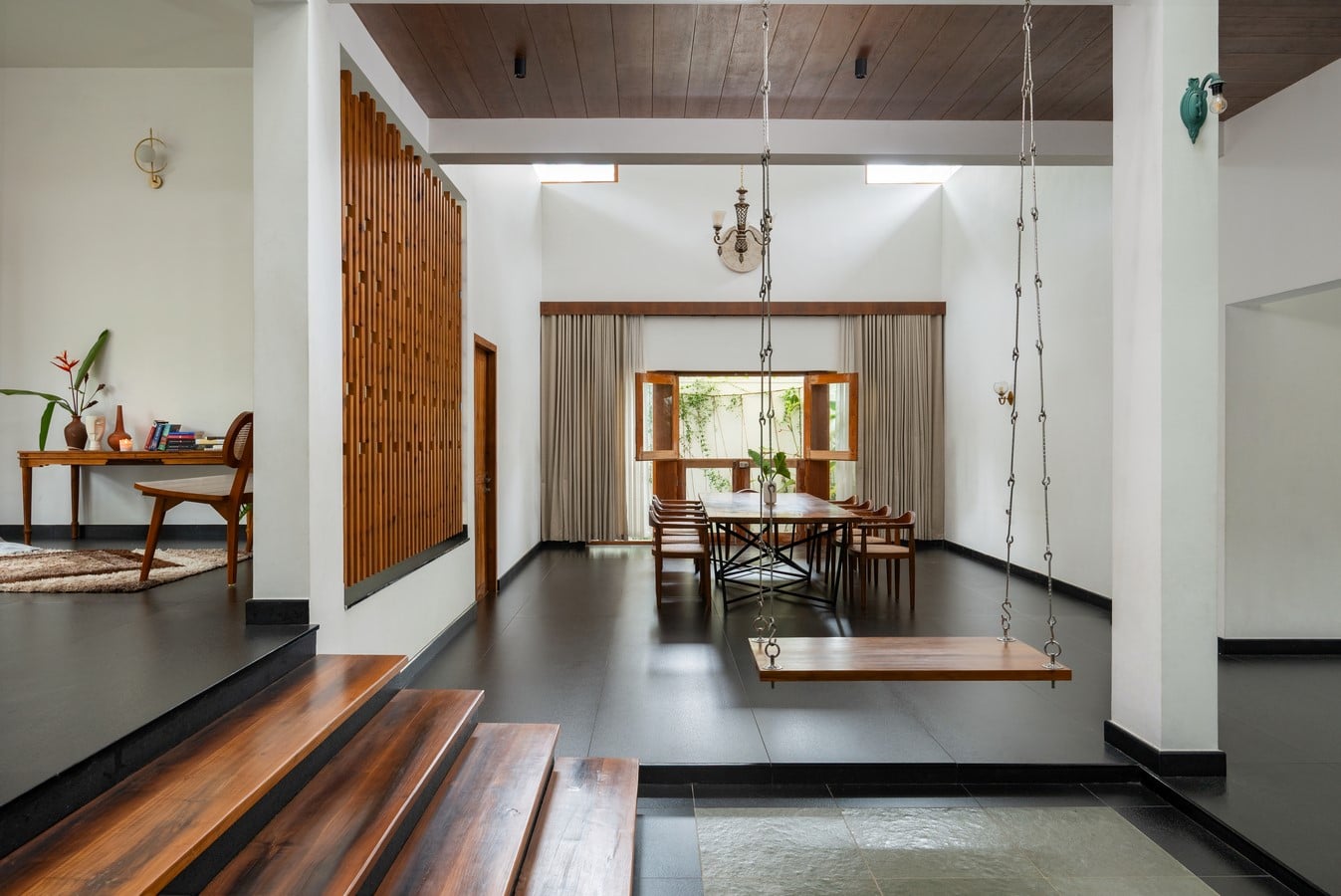
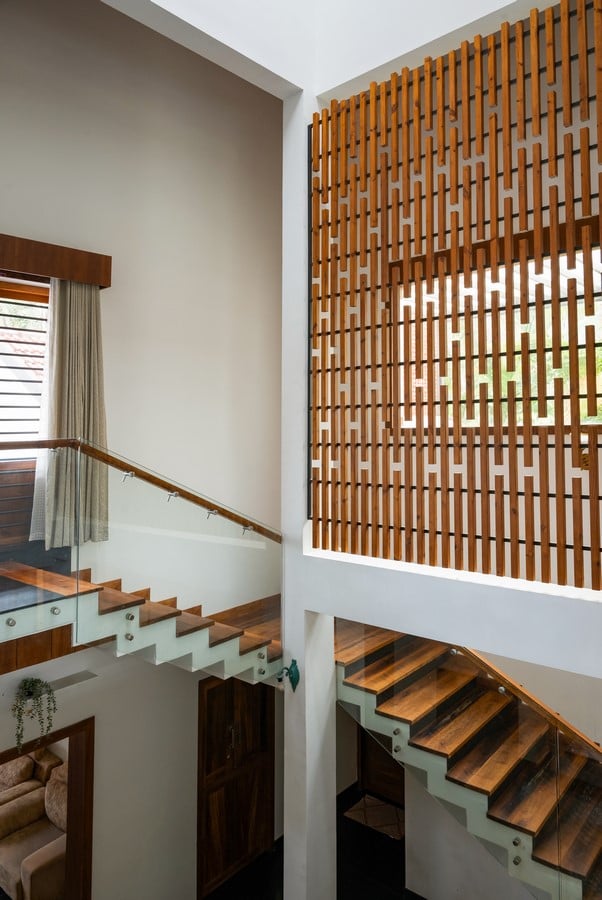
What followed was a house built to blend rather than announce itself. Natural stone was chosen for the flooring, selected less for its appearance on installation day and more for how it would weather afterwards. Timber carried the rougher, more textured moments of the interior, reinforcing rather than smoothing the stone’s own unfinished character. The palette across the house draws from the earth around it, ochres and greys pulled from the land rather than a materials catalogue.
Inside, the plan resists ornament in favour of quiet directness: five bedrooms, a living room, a separate family living area, and a shared dining and kitchen space, threaded together as one continuous, interactive whole. A child can work through a school project in one corner while someone else reads through a slow afternoon and a third cooks, each occupying their own moment while staying within reach of the others. It is a house built for togetherness without requiring everyone to share a room to get there.
Design closed out in 2020. Construction did not begin until 2021, and the years that followed were repeatedly interrupted by the pandemic. The house was finally completed, in stages, by 2025, its stone and timber already weathering into the character the design had anticipated. The interiors took a further two years to complete.
People do not last. What lasts is what they leave behind in memory, and stone, in its own quiet way, works the same. It takes on individuality, responds to weather and time, and carries that response as character, the way a person does. House of Aging Stones is not timeless because its stone stays unchanged. It is timeless because the stone holds every season inside it, alongside the people who lived through those seasons with it, which is why the family returns to it every time they leave, with the particular nostalgia reserved for a place built to be theirs.