When earthquakes strike, why do traditional buildings absorb punishing ground shocks while base-isolated structures stay virtually unharmed? For decades, conventional structural engineering relied on making building frames stronger, stiffer, and more ductile to withstand powerful seismic waves. However, this traditional approach often resulted in extensive non-structural damage and costly post-earthquake repairs.
Modern architectural engineering has shifted toward a more sophisticated design philosophy based on avoidance rather than resistance. By decoupling a structure from violent ground motion through flexible base isolators, architects can protect both the structural frame and the occupants inside. Consequently, base isolation represents a leap forward in resilient building design.
Comparing Spring Isolators and Elastomeric Bearings
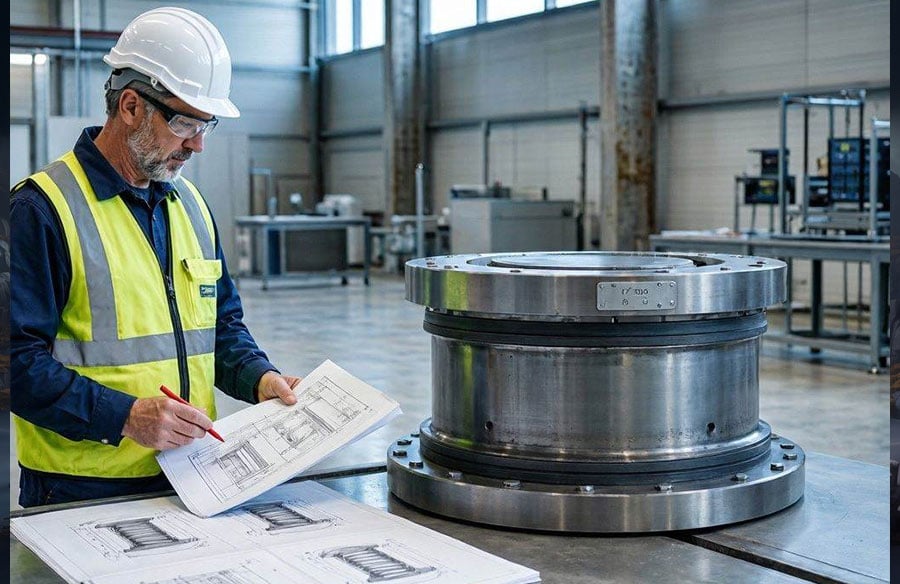
Understanding how base isolation works requires examining the fundamental mechanical differences between elastomeric rubber bearings and heavy-duty steel spring isolators. Traditional elastomeric bearings rely on alternating layers of vulcanized rubber and solid steel shims to provide high vertical stiffness while allowing horizontal movement. Conversely, spring-based isolators utilize coiled high-tensile steel springs paired with viscous fluid dampers to absorb both lateral and vertical seismic forces simultaneously.
The primary objective of any seismic isolation system is tuning the building’s natural frequency away from the dominant frequencies of destructive earthquake ground shaking. If a structure’s natural period is lengthened, then the building experiences lower kinetic acceleration during a seismic event. Furthermore, integrated damping units dissipate vibrational energy through controlled mechanical resistance, preventing excessive displacement that could damage structural joints.
Based on recent data on seismic base isolation performance, isolating a building foundation reduces peak floor accelerations by forty to sixty percent. While rubber bearings remain the industry standard for massive reinforced concrete structures, spring isolators provide distinct advantages for specific architectural projects. Understanding these mechanical differences helps design teams select the ideal isolation system for their specific site conditions.
Do Base Isolation Springs Make Buildings Safer in Retrofits
Spring-based isolators are exceptionally well suited for lightweight structures, slender architectural pavilions, and sensitive historical retrofits where massive rubber bearings are physically impractical. Because historic masonry buildings often lack the structural ductility required for traditional reinforcement, inserting compact spring assemblies beneath load-bearing columns prevents destructive masonry cracking. This non-invasive approach preserves delicate historic facades while providing modern earthquake protection.
When architects and structural engineers evaluate high-tensile alloy compositions and exact load-deflection tolerances, consulting the technical range of durable custom springs available here from Leeco Spring International provides a reference for understanding custom spring rates, material grades, and precision manufacturing processes. Selecting appropriate coil diameters, pitch angles, and corrosion-resistant coatings guarantees that the isolation system responds predictably during ground motion. High-grade industrial fabrication ensures that isolation units perform reliably under extreme conditions.
As shown in studies on structural retrofits, spring-damper assemblies reduce inter-story drift by forty-five percent in historic restorations. Before integrating spring isolators into a project design, architects should request three preliminary assessments from their engineering team:
- Calculate the target natural frequency offset relative to local seismic fault spectra
- Establish the maximum horizontal displacement perimeter around the foundation moat
- Verify static vertical load distribution to prevent uneven foundation settlement
Engineering Checks, Inspection, and Material Fatigue
Maintaining long-term seismic safety requires regular inspection and careful monitoring of mechanical fatigue over time. Unlike organic rubber pads that can degrade from ozone exposure, temperature shifts, or chemical leaks, steel spring isolators offer exceptional mechanical predictability over long lifecycles. Nevertheless, routine visual inspections are essential to check for coil distortion, damper fluid levels, and protective coating integrity across the foundation grid.
As highlighted in structural engineering fatigue benchmarks, proactive inspection protocols ensure isolation springs maintain specified stiffness for over fifty years. Providing adequate crawlspace clearance allows maintenance teams to access, test, and replace individual spring units without disrupting active building operations. Regular monitoring gives managers complete confidence in their seismic protection systems.
Designing Resilient Architecture for the Future
Evaluating whether base isolation springs make buildings safer confirms that flexible foundations dramatically improve structural resilience. From historic masonry retrofits to modern lightweight architecture, tuned spring isolators protect structures against severe ground shaking.
As seismic design standards continue to advance, integrating proactive isolation systems will remain a cornerstone of resilient urban planning. How do you incorporate seismic safety into your architectural designs? Share your project experiences and engineering thoughts in the comments section below.