A wig can look beautiful in a product photograph and still become uncomfortable halfway through the day. The hair may be soft, the lace nearly invisible, and the styling flawless, but none of those qualities matter much when the cap feels too tight or the wearer constantly worries about it shifting.
For a long time, wig shopping has focused heavily on appearance. Length, density, texture, and hairline realism tend to receive the most attention. Yet the part of the wig that sits closest to the body—the cap—is just as important to the overall experience.
This is where ergonomics enters the conversation.
In product design, ergonomics means adapting an object to the people who use it rather than expecting users to adapt themselves to the object. Applied to wigs, that means considering head shape, pressure distribution, adjustability, movement, and everyday comfort.
The growing interest in glueless wigs reflects a broader shift toward hair products that fit more naturally into daily life.
Why Wig Comfort Is an Ergonomic Problem
Think about how long someone might wear a wig during an ordinary day.
There may be a morning commute, several hours at work, lunch outdoors, an evening appointment, and the journey home. Throughout those activities, the wig has to remain comfortable and reasonably secure.
A cap that feels acceptable during a five-minute fitting may behave differently after extended wear.
Pressure around the temples, friction near the ears, and tightness at the back of the head can become increasingly noticeable. Heat and moisture may also affect comfort, especially in warmer environments.
These issues aren’t always caused by poor-quality hair. They often come down to the relationship between the cap and the wearer’s head.
A well-designed wig should account for that relationship from the beginning.
One Size Doesn’t Fit Every Head
Human heads vary in circumference, contour, and proportion.
Two people with the same head circumference may have different forehead shapes, ear positions, and crown profiles. A wig that fits one comfortably may feel unstable or restrictive on the other.
This is one reason adjustability matters.
A cap that can accommodate modest variations in fit may be more practical than one that relies on a rigid, fixed shape.
However, adjustable features aren’t a substitute for choosing the correct starting size.
Tightening a cap that’s fundamentally too large may create uneven pressure. Stretching a cap that’s too small can produce discomfort and place unnecessary stress on the construction.
The goal is not simply to make the wig stay on.
It’s to achieve a fit that feels balanced.
The Role of Adjustable Straps and Elastic Bands
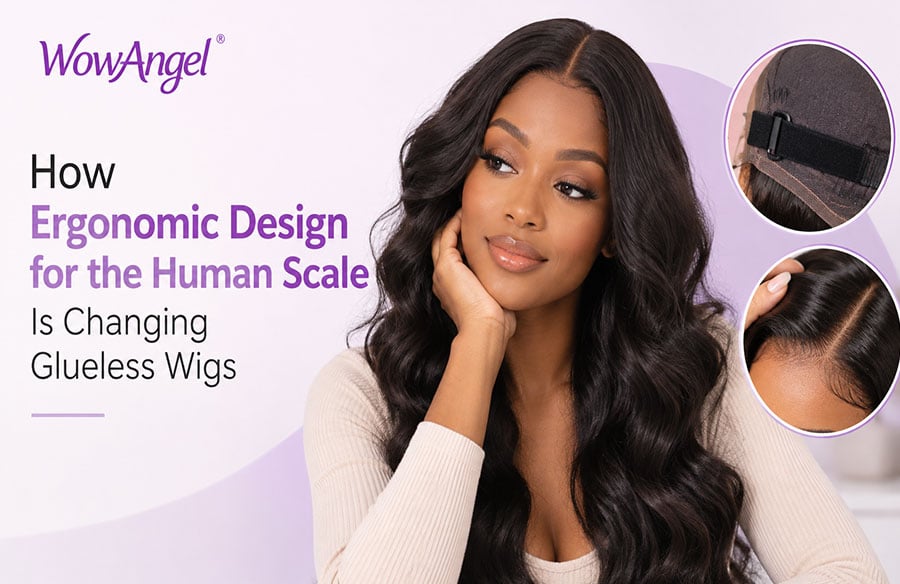
Many glueless wigs use adjustable straps, elastic bands, or other built-in securing features to help maintain their position without relying on adhesive.
These components may seem minor compared with the visible hair, but they can have a substantial influence on the wearing experience.
An adjustable strap allows the wearer to fine-tune the fit within the range supported by the cap.
An elastic band may help distribute holding force across part of the head rather than concentrating it at one attachment point.
The design and placement of these features matter.
A band that’s too tight can create pressure. A poorly positioned strap may cause discomfort near the ears or nape. And an overly loose adjustment may allow the wig to shift during normal movement.
Effective adjustability is about finding the appropriate balance between security and comfort.
Pressure Distribution Matters More Than Tightness
A common assumption is that a tighter wig must be a more secure wig.
That’s not always true.
Excessive tightness can make a wig uncomfortable without necessarily improving its fit.
From an ergonomic perspective, pressure distribution is often more important than simply increasing tension.
A well-fitting cap should sit evenly against the head without creating obvious pressure points.
This is particularly relevant for people who wear wigs for extended periods.
If the wearer experiences persistent headaches, soreness, or irritation, the fit or securing method may need to be reconsidered.
Comfort shouldn’t require enduring pain.
How WowAngel Fits Into the Glueless Design Conversation
The broader shift toward easier wig installation has encouraged shoppers to look beyond appearance and examine how a product is constructed.
Wowangel’s Glueless Wigs can be considered within this trend, where features such as cap fit, securing mechanisms, lace preparation, and styling convenience influence the purchasing decision.
For consumers comparing products, the important question isn’t simply whether a wig is labeled “glueless.”
It’s how the specific construction supports that claim.
Does the cap offer adjustment? Is the lace already prepared? How is the wig intended to stay in place? Does the design accommodate the wearer’s preferred hairstyle?
These are practical questions that help distinguish a genuinely convenient wearing experience from a product description focused only on marketing terminology.
The Rise of Wear-and-Go Wig Design
Convenience has become an important consideration for people who wear wigs regularly.
Not everyone wants to spend time applying adhesive, waiting for it to set, or cleaning residue after removal.
This helps explain the appeal of wear-and-go wigs.
The concept emphasizes reducing preparation steps so that putting on a wig feels closer to getting dressed than completing a complicated beauty procedure.
Features such as pre-cut lace, pre-styled hair, and adjustable caps may support that experience, depending on the product.
However, “wear-and-go” shouldn’t be interpreted as a guarantee that no preparation is ever necessary.
The wig still needs to fit correctly. Hair may require occasional styling, and maintenance remains part of ownership.
The benefit is reducing unnecessary complexity rather than eliminating all care.
Breathability and Heat Management
Another important part of ergonomic design is thermal comfort.
The scalp produces heat and moisture, and a wig introduces another layer between the skin and the surrounding air.
Different cap constructions influence how that layer feels.
Lace and open mesh areas can allow greater airflow than more continuous, less permeable materials. However, the overall experience also depends on cap coverage, hair density, weather, and activity level.
A breathable design may be particularly valuable for people who commute in warm conditions or spend long periods outdoors.
Still, no wig can guarantee a completely cool scalp in every environment.
The goal is to reduce avoidable discomfort through appropriate material selection and construction.
The Importance of Ear Tabs and Nape Design
When evaluating a wig, shoppers often focus on the front hairline.
But the sides and back deserve equal attention.
Ear tabs help influence how the wig sits around the temples and ears. If they’re poorly positioned, they may rub against the skin or make the cap feel uneven.
The nape area also affects comfort and security.
A bulky or overly tight construction at the back can become uncomfortable when sitting against a chair or moving the head.
These details may be difficult to judge from a standard product photograph.
That’s why interior cap images, fit demonstrations, and clear construction descriptions can be useful when comparing wigs.
Why Hair Weight Belongs in the Comfort Discussion
Cap design is only one part of the ergonomic equation.
The amount and length of hair also matter.
Long, dense hair adds weight, which may influence how the wig feels during extended wear.
This doesn’t mean long wigs are automatically uncomfortable. A well-fitted cap can make a meaningful difference, and weight varies by hair type and construction.
But someone choosing between two otherwise similar wigs should consider whether additional length and density are worth the extra bulk.
For everyday wear, a lighter, more manageable hairstyle may sometimes be preferable to maximum volume.
Comfort and appearance should be evaluated together.
How to Evaluate Fit Before a Full Day of Wear
A short fitting can reveal obvious problems, but it doesn’t always predict long-term comfort.
Before wearing a new wig for an entire workday or important event, try it at home for a reasonable period.
Walk around, sit down, turn your head, and bend forward.
Check whether the wig shifts during normal movement.
Notice whether any area begins to feel tight or uncomfortable.
You should also examine the hairline and side placement in a mirror.
If the cap requires extreme tightening to remain secure, the underlying size or design may not be appropriate.
A successful fitting should feel stable without excessive pressure.
Ergonomics Also Includes Ease of Maintenance
Comfort doesn’t end when the wig comes off.
The effort required to clean, store, and prepare the wig also shapes the ownership experience.
Adhesive-free installation may reduce the need for glue removal, but the hair and cap still require care.
Sweat, natural skin oils, and styling products can accumulate over time.
A practical design should make routine cleaning manageable without requiring unnecessarily complicated procedures.
For someone who wears wigs frequently, small improvements in daily convenience can matter more than an impressive feature used only occasionally.
What the Next Generation of Glueless Wigs Should Prioritize
Future improvements in wig design don’t necessarily need to be dramatic.
They may come from refining details that wearers notice every day.
Better sizing guidance could help customers choose an appropriate cap before purchasing.
More thoughtfully positioned adjustable features could reduce pressure points.
Improved construction transparency could help buyers understand how a wig stays secure.
And clearer demonstrations could show how a product behaves during ordinary movement rather than only in carefully styled photographs.
For brands operating in the glueless wig category, these practical considerations offer meaningful opportunities to improve the customer experience.
The most useful innovation is often the one that makes a product easier to live with.
Conclusion: A Beautiful Wig Should Also Feel Good
A natural hairline and attractive texture may catch a shopper’s attention, but comfort determines whether a wig becomes part of their everyday routine.
Ergonomic design asks a simple question: how can a product better accommodate the person wearing it?
For glueless wigs, the answer involves more than eliminating adhesive.
Cap sizing, adjustability, pressure distribution, breathability, weight, and maintenance all contribute to the experience.
As brands such as WowAngel participate in the evolving glueless wig market, these human-centered considerations provide a useful way to evaluate product design.
The future of convenient wig wearing isn’t only about making installation faster.
It’s about making the entire experience—from putting the wig on to taking it off—more comfortable, practical, and adaptable to real life.