Many architecture students get tired of seeing the same things everywhere: glass towers in rows, plain hallways, and endless parking lots. That’s why escapist architecture is important. Hogwarts, with its moving staircases and a ceiling that looks like the night sky, offers something daily life rarely does—spaces full of possibility. Fantasy architecture is more than just a setting for stories; it brings our wishes to life. This essay looks at why magical buildings can feel more real than those built for muggles, and what that reveals about our shared need for wonder.
The Muggle Frustration: Why the Ordinary World Feels Incomplete
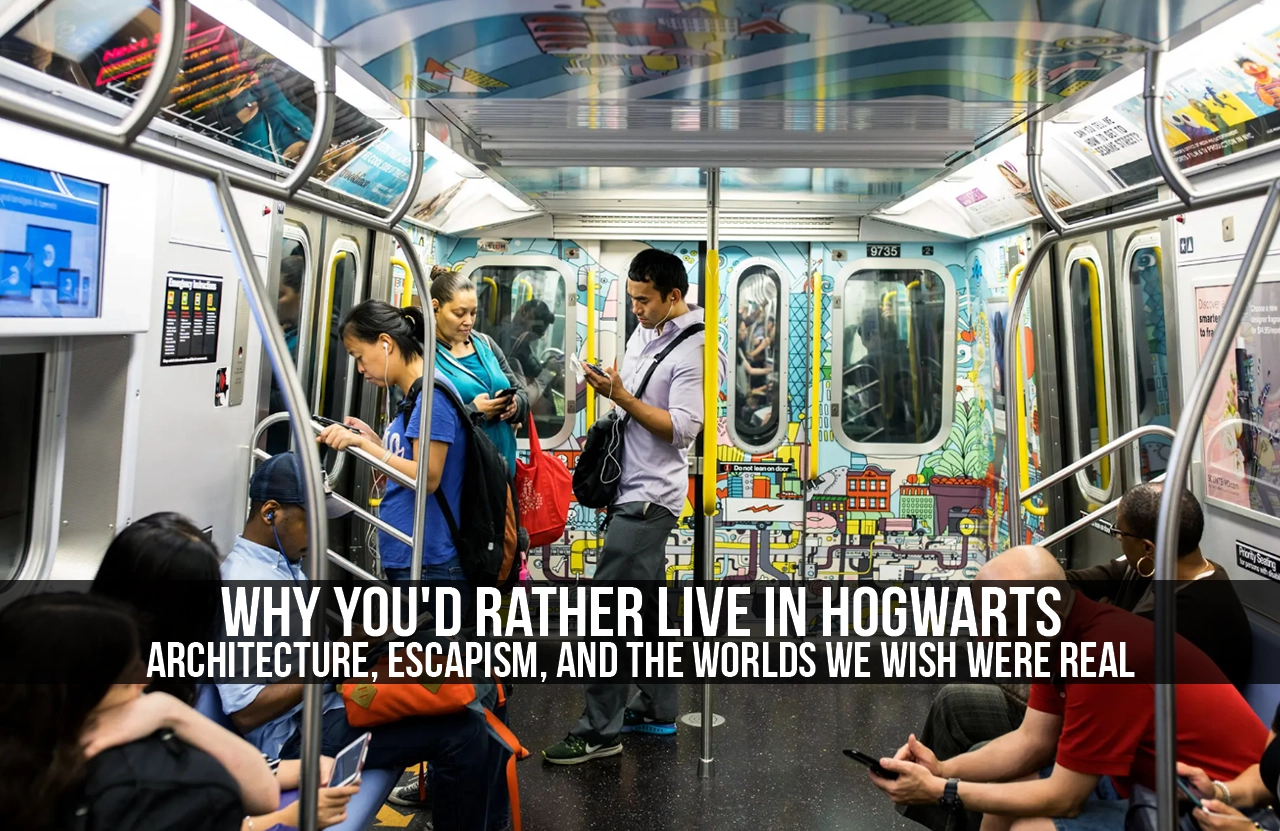
Most of the time, we live in spaces built for usefulness, not for wonder. Offices are made for work, homes are designed to sell easily, and cities are planned for smooth traffic. In this way of thinking, wonder is a luxury, not a goal. It’s no surprise that many people secretly wish they could leave their ordinary world and go somewhere buildings still have some mystery. The real frustration isn’t just missing magic, but missing the feeling that a building can surprise you. Escapist architecture fills this gap by showing that spaces can be strange, layered, and full of life, not just practical. Hogwarts stands out because it breaks away from the plainness of everyday life and feels almost alive.

Architecture as the Machinery of Escapism
Architecture has always helped people escape, even before fantasy stories gave it a name. Cathedrals were built to make us look up, palaces were designed to impress with their size and decoration, and theme parks create whole imaginary worlds for us to enjoy. Fantasy architecture goes even further by ignoring limits like gravity, materials, or budget. Escapist architecture is not separate from real design; it’s a version where every creative idea can be pushed to its limit. Hogwarts is a perfect example, which is why it stays in our minds so strongly.
Hogwarts as the Ultimate Architecture of Escapism
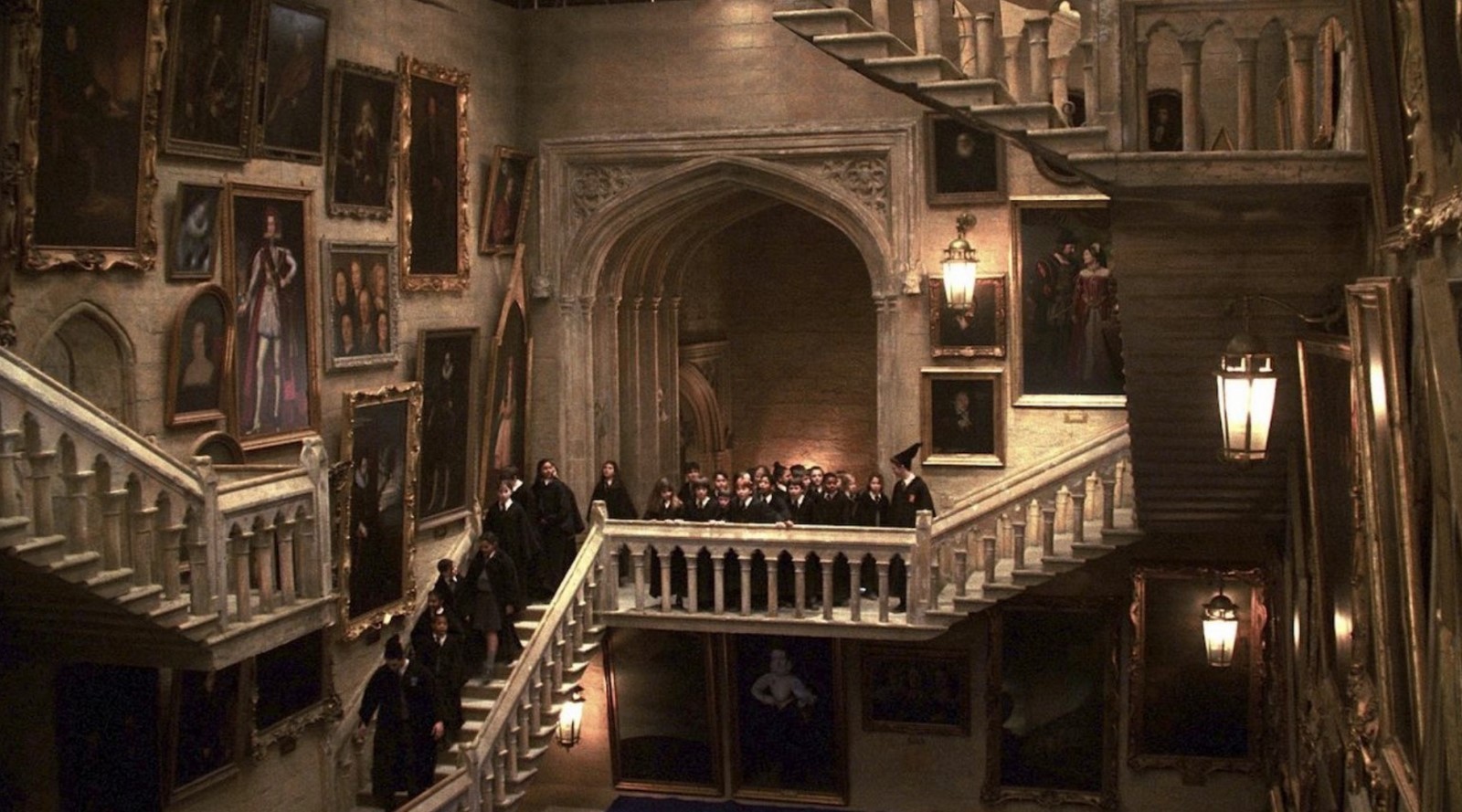
Hogwarts works as a fictional building because it acts less like a fixed structure and more like something alive. Staircases move on their own, portraits talk, and the Great Hall’s ceiling shows the sky above, blurring the line between inside and outside. Each house common room adds to the school’s story, turning personality and values into hallways, colors, and doorways. Here, architecture is used to tell a story, not just as a background. It shows how escapist architecture can put identity and emotion into a building, making the school feel like a character instead of just a setting for the story.
Myth Made Material: Why Imagined Buildings Feel More Real
Part of the appeal comes from how fantasy architecture gives shape to myths that already live in our shared memory. The idea of a hidden world beneath the one we see, with secret passages and forgotten rooms, taps into old fears and wishes: the maze, the tower, the safe place. When these ideas are shown in enough detail, like at Hogwarts, they stop feeling like metaphors and start feeling like memories. This is the deeper purpose of escapist architecture: it doesn’t create longing, but gives it a floor plan. Readers know Hogwarts not because they’ve been there, but because its rooms remind them of places they’ve always imagined just out of reach.
The Psychology Behind Escapist Design
There’s a reason why these kinds of spaces feel so satisfying. People like places that reward curiosity—spaces with hidden views, surprising turns, and layers that invite you to explore instead of understanding everything right away. Most modern buildings are the opposite; they’re easy to figure out as soon as you walk in. Escapist architecture works differently: it holds back, surprises, and reveals itself slowly. That’s what keeps readers turning pages or viewers looking at a film set longer than they need to. In other words, wonder is partly created by spaces that don’t explain themselves all at once.

Conclusion: Designing for Wonder in the Real World
This doesn’t mean that ordinary buildings have to stay boring forever. Architects already take ideas from fantasy design—hidden gardens, secret staircases, and playful doorways show up in modern homes and public spaces because they bring a bit of that Hogwarts magic. The popularity of fictional buildings shows that people want more than just practical shelter; they want spaces that can still surprise them. Escapist architecture isn’t just a fantasy—it’s a lesson for design: even the most ordinary building can have a little magic, if architects are willing to make it happen.
Images:
Image 01: The Metropolitan Transportation Authority has removed seats at either end of some subway cars on the E line, which runs between Manhattan and Queens, in an effort to reduce delays caused by overcrowding.Source: Demetrius Freeman for The New York Times https://www.nytimes.com/2017/10/17/nyregion/subway-standing-room.html
Image 02: Art reference to Escher’s Relativity in Harry Potter and the Sorcerer’s Stone. Source: Directed by Chris Columbus, 2001, Warner Bros Pictures Nerdist. https://www.dailyartmagazine.com/art-in-harry-potter-films/
Image 03: Solivagant No More, Architectural render, Source: Joe Parayno, https://architizer.com/blog/inspiration/collections/rendering-utopian-environments/